
Taku occupies a quiet address in Nishiazabu, Minato City, placing it inside one of Tokyo's most concentrated corridors for serious counter dining. The venue sits in a neighbourhood where French-influenced omakase and kaiseki formats coexist, and where the daytime and evening rhythms of service shape how and when a reservation makes most sense to pursue.
Pearl is the En Primeur Club membership app — saves, bookings, and concierge access live there. Same editors, same standards.
- Address
- Japan, 〒106-0031 Tokyo, Minato City, Nishiazabu, 2 Chome−11−5 カパルア西麻布 1階
- Phone
- +81357744372
- Website
- nishiazabu-taku.com
 Saves & bookings on Pearl
Nishiazabu and the Counter Dining Tier It Belongs To
Minato City's Nishiazabu district has spent the better part of two decades consolidating a reputation that sits slightly apart from the Ginza-Roppongi axis. Where Ginza rewards visibility and Roppongi attracts footfall, Nishiazabu operates on a quieter logic: low signage, residential side streets, and a dining room culture that presumes the guest already knows where they are going. The building at 2-chome 11-5, housing Taku on its first floor, fits that pattern. There is no marquee, no street-level theatre. The approach is residential in character, which in Tokyo's counter dining shorthand signals a format built around the meal rather than around being seen having it.
That neighbourhood context matters because it sets the competitive frame. Nishiazabu and the broader Minato ward sit alongside venues like L'Effervescence, which operates in the French fine dining register, and Crony, which works an innovative French angle. The price tier implied by this comparable set (¥¥¥¥ across the board) is not incidental. It reflects a Tokyo-wide pattern in which counter formats at this level have converged around a cost structure driven by ingredient sourcing, small team ratios, and the kind of reservations architecture that keeps seat counts deliberately limited. For comparison, Harutaka operates within the same tier for sushi, while RyuGin anchors the kaiseki end of the same bracket. Taku's Nishiazabu address places it in this company geographically and, by inference, in terms of the dining proposition it is making.
Lunch Versus Dinner: How the Divide Plays Out in This Format
At Tokyo's counter restaurants in the ¥¥¥¥ tier, the lunch-versus-dinner question is rarely just about time of day. It is about menu depth, pacing, and cost efficiency. Dinner service at venues operating in this format typically runs longer, offers more courses, and carries a price premium that reflects both the ingredient load and the extended kitchen commitment. Lunch, where it exists, tends to compress the sequence and adjust the price point downward, giving first-time visitors a lower-risk entry to a format that would otherwise require a more substantial outlay.
Internationally, the pattern holds across comparable formats: Le Bernardin in New York has historically used its lunch service to offer a more accessible version of the same kitchen's output, and Atomix structures its tasting entirely around the evening, refusing to dilute the format with a daytime alternative. Tokyo counters occupy a spectrum between those two approaches. Some treat lunch as a genuine alternative; others offer it as a convenience for guests who cannot book evenings. The practical implication for Taku, given the Nishiazabu setting and the tier it occupies, is that dinner is where the full format plays out.
What Positions This Address in Tokyo's Broader Scene
Tokyo's fine dining map has fragmented in productive ways over the past decade. Tokyo's fine dining map has become more layered: some counters compete on lineage and ingredient access, others on format innovation, others still on a specific cuisine register. Sézanne, for instance, has built a position in Tokyo's French fine dining conversation that is partly about technique and partly about a French sensibility applied with Japanese precision. That kind of positioning signals something about how the city's upper-tier restaurants now differentiate themselves.
The Nishiazabu address connects Taku to a cluster of venues that have chosen neighbourhood credibility over central visibility. Across Japan more broadly, comparable choices show up in Kyoto with Gion Sasaki, in Osaka with HAJIME, and in Fukuoka with Goh, all of which operate in formats where the location is deliberate rather than aspirational. Further afield, venues like akordu in Nara demonstrate how counter formats in secondary cities can punch well above their geographic weight when the format discipline is tight. Taku's Nishiazabu footing puts it in the same structural category: a destination address that asks the guest to travel to it, not one that relies on passing traffic.
Smaller regional venues across Japan, from Nanao to Sapporo and Takashima, have increasingly adopted this model, treating remote or residential settings as a trust signal rather than a liability. Nishikawa Machi, Birdland in Sakai, and Bistro Ange in Toyohashi each illustrate how Japanese dining culture has distributed serious intent well beyond the metropolitan core. Tokyo counters like Taku sit at the summit of that distribution, but they operate within the same logic.
Planning a Visit: What to Know Before You Go
For a venue at this address and in this tier, the booking window in comparable Tokyo counters typically runs between four and eight weeks for dinner, shorter for lunch where available. Prospective guests should confirm hours, menu format, and allergy accommodation procedures directly with the venue. Given the residential character of the address, navigation via a map application rather than street signage is the practical approach.
Booking and Cost Snapshot
Comparable venues nearby, for context on price, style, and recognition.
| Venue | Cuisine | Price | Notes |
|---|---|---|---|
| TakuThis venue — the venue you are viewing | Not listed | $$$$ | Not listed |
| Ginza 1954 | Ginza, Japanese Bar | $$$$ | Not listed |
| Kawasaki | Not listed | $$$$ | Minato, Seasonal Japanese Kaiseki / Omakase |
| 福鮨 | Minato, Hokkaido-style Omakase Sushi | $$$$ | Not listed |
| Kien | Minato, Traditional Japanese Kaiseki | $$$$ | Not listed |
| Wagyumafia The Cutlet Sandwich | Meguro, Wagyu Beef Cutlet Sandwiches | $$$$ | Not listed |
Recognition history
Dated appearances from independent guides and award organizations, with the underlying list record or original source where available.
Opinionated About Dining Top Restaurants in Japan Recommended
Opinionated About Dining














At a Glance
- Intimate
- Elegant
- Sophisticated
- Modern
- Date Night
- Special Occasion
- Chefs Counter
- Private Dining
- Sake Program
- Extensive Wine List
Current opening hours
- Monday
- 5–11 PM
- Tuesday
- 5–11 PM
- Wednesday
- 5–11 PM
- Thursday
- 5–11 PM
- Friday
- 5–11 PM
- Saturday
- 1–11 PM
- Sunday
- Closed
Hours can change for holidays and private events. Last verified .
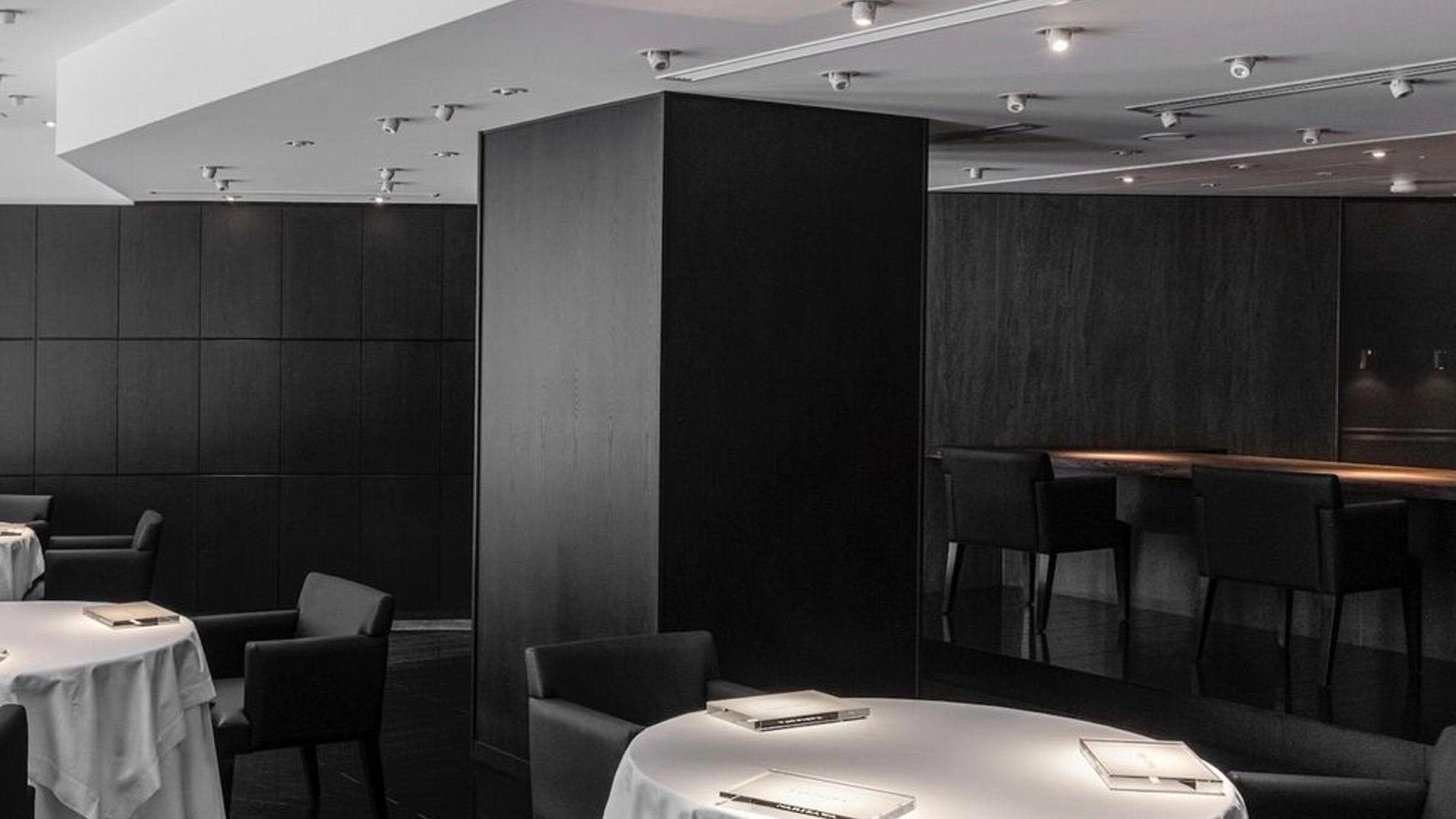
Cozy and welcoming with a mix of traditional and modern elements, featuring a counter for 8 seats and private room in a minimalist interior of exposed concrete softened by wood accents.