Michelin Bib Gourmand
Our verdict
A Michelin Bib Gourmand standup sushi counter in Sasazuka, Tachiguisushi Sushikawa revives the Edo-era tradition of hawker sushi with a no-frills format: nigiri only, ordered piece by piece, at a price point (¥¥) that keeps regulars returning daily. Chef Shigeru Sagara's deliberate resistance to the upmarket sushi trend makes this one of Tokyo's more honest counters for those who want craft without ceremony.

Pearl is the En Primeur Club membership app, where members save venues, book tables and use the concierge.
Sushi Before It Became a Luxury Product
Long before the omakase counter became a fixture of Tokyo's high-end dining calendar, sushi was street food. In Edo-period Tokyo, vendors set up stalls along the riverbanks and market edges, pressing vinegared rice and fresh fish into quick, affordable bites for labourers, merchants, and anyone passing through. That origin story gets polished over at the city's top-tier counters, places like Harutaka, Sukiyabashi Jiro Roppongiten, and Sushi Kanesaka, where the same tradition now commands four-figure prices per head. Tachiguisushi Sushikawa in Sasazuka is a deliberate corrective to that trajectory.
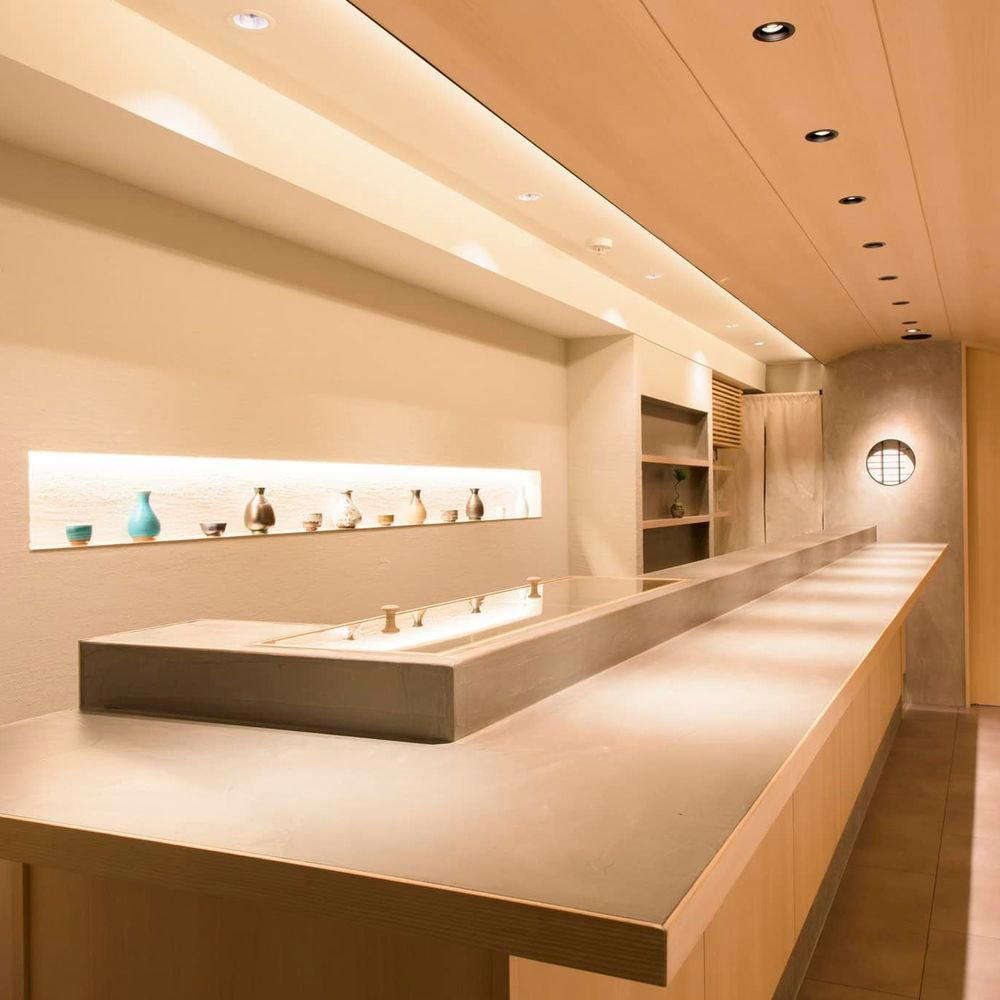
The name states the format plainly: tachigui means eating while standing. This is a standup sushi bar, the direct descendant of those Edo hawker stalls, operating in a residential corner of Shibuya at a price point (¥¥) that sits two full tiers below Tokyo's premium omakase set. Chef Shigeru Sagara has made no secret of his reservations about the direction sushi has taken at the high end, and the counter at Sasazuka 1 Chome is his argument in built form.
The Format Is the Philosophy
The standup format strips away the elements that have come to define contemporary prestige sushi: the intimate counter ritual, the sake pairings, the tasting menu arc, the choreographed service. What remains is the fundamental transaction, a piece of nigiri, made with care, handed to you to eat immediately. The menu is nigiri only, ordered piece by piece according to individual preference. There are no drinking snacks, no supplementary courses, no structured progression imposed from the kitchen side.
This kind of format discipline is rarer than it sounds. Tokyo has many affordable sushi options, from conveyor-belt chains to casual neighbourhood spots, but a standup nigiri bar with demonstrable old-school craftsmanship that has earned a Michelin Bib Gourmand (2024) sits in a narrow category.
The comparison with contemporaries like Edomae Sushi Hanabusa or the more formal Hiroo Ishizaka clarifies the positioning. Those venues operate seated, with curated progressions and higher price brackets. Sushikawa occupies the same Edomae tradition, the Tokyo-style of sushi that emphasises marinating, curing, and ageing techniques developed before refrigeration, but delivers it in a format that makes the craft accessible without spectacle.
Who Comes Back, and Why
The regulars at a standup counter like this one develop a different relationship with the chef than you find at a reservation-only omakase room. These are not destination diners arriving with a printed reservation. They are people who return because the counter is close, the nigiri is consistent, and the conversation with Sagara is part of the visit.
Social texture of that kind of local is worth understanding on its own terms. A regular at Sushikawa is not seeking the controlled silence of a high-end omakase room, where interaction with the chef follows a precise ritual. They are seeking the opposite: an informal exchange over a counter, the freedom to order what they want in the sequence they prefer, and the knowledge that the person making their food has an opinion about it. That quality of relationship, between a craftsperson and a local clientele, is harder to find as Tokyo's sushi scene bifurcates between international destination restaurants and low-cost chain formats.
Sasazuka as Context
Sasazuka sits on the western edge of Shibuya, removed from the concentrated dining density of Ginza, Shinjuku, or the central Shibuya crossing area. It is a working residential neighbourhood, the kind of place where food businesses succeed on repeat custom rather than tourist traffic. That location is not incidental to what Sushikawa does. A counter operating on the premise that regulars are the core constituency needs a neighbourhood that produces them, and Sasazuka, with its mix of commuters and long-term residents, is that kind of place.
For visitors staying in central Tokyo, Sasazuka is accessible but requires a deliberate choice. It is not on the route between the major sightseeing points. The decision to go there is the point: this is a counter you visit because you are interested in what sushi was before it became a global luxury category, not because it is convenient.
Placing Sushikawa in the Broader Sushi Conversation
Tokyo's sushi offer spans a wider range than almost any other city. At one end, internationally known counters attract reservation requests from across Asia and beyond. At the other, conveyor-belt formats handle volume efficiently with standardised product. Sushikawa operates in neither of those zones. The Bib Gourmand places it in the category of serious cooking at accessible prices, and the standup format gives it a social character that the seated, silent omakase room cannot replicate.
For readers interested in the wider geography of serious sushi outside Tokyo, Sushi Shikon in Hong Kong and Shoukouwa in Singapore represent how the Edomae tradition has travelled to other Asian cities, where it operates in premium-only formats. The contrast with Sushikawa makes the original democratic premise of sushi clearer by comparison.
Elsewhere in Japan, the diversity of approach is equally instructive. HAJIME in Osaka, Gion Sasaki in Kyoto, akordu in Nara, Goh in Fukuoka, 1000 in Yokohama, and 6 in Okinawa each represent distinct regional approaches to high-craft dining. Sushikawa's refusal to follow the upmarket trajectory makes more sense when you understand how thoroughly that trajectory has shaped the wider conversation.
For a full picture of where to eat, drink, and stay in the city, EP Club's Tokyo restaurants guide, Tokyo hotels guide, Tokyo bars guide, Tokyo wineries guide, and Tokyo experiences guide cover the full range.
Planning Your Visit
Tachiguisushi Sushikawa is located at 1 Chome-62-6 Sasazuka, Shibuya, Tokyo (Prime Bless Sasazuka 1F). No website or phone number is publicly listed, which is consistent with the counter's local-first orientation. Given its Bib Gourmand recognition and limited capacity as a standup bar, arriving early or at off-peak hours on a weekday is advisable. The price range is ¥¥, making it one of the more accessible serious sushi options in the city. Nigiri is ordered piece by piece; there is no set menu or omakase format.
Quick reference: Standup nigiri counter, Sasazuka (Shibuya), ¥¥, Michelin Bib Gourmand 2024, no booking required, nigiri only ordered à la pièce.
Frequently asked questions
Is Tachiguisushi Sushikawa suitable for children?
The standup format and piece-by-piece nigiri ordering make it a practical option for children who eat sushi, since there is no fixed course or minimum spend pressure. The no-drinking-snacks, nigiri-only menu keeps the experience simple and focused. That said, the standing-only format may be tiring for very young children during a longer visit.
What is the atmosphere like at Tachiguisushi Sushikawa?
Sushikawa is a deliberate recreation of the Edo-period sushi stall: standing room, no elaborate counter ritual, and a chef who engages directly with regulars. Chef Shigeru Sagara built the format as a counterpoint to the increasingly formal, reservation-heavy end of Tokyo sushi, and the Michelin Bib Gourmand recognition in 2024 places it in a category that prizes value and character over ceremony. It functions as a neighbourhood local first, destination second.
Is Tachiguisushi Sushikawa Michelin-listed?
Tachiguisushi Sushikawa has received recognition including: Sushi got its start as hawker food that flourished in Edo (old Tokyo). To impart a feeling for that culture, Tachiguisushi Sushikawa is a standup sushi bar (and is what the name means). No drinking snacks; this is nigiri only, which you can….
What dish is Tachiguisushi Sushikawa famous for?
The menu is nigiri only, ordered piece by piece, with toppings prepared using what the venue describes as old-school craftsmanship rooted in Edo-era technique.
What's the cuisine at Tachiguisushi Sushikawa?
Is Tachiguisushi Sushikawa more mid-range or high-end?
Pricing at Tachiguisushi Sushikawa is listed as ¥¥.
A Lean Comparison
| Venue | Cuisine | Price | Awards | Notes |
|---|---|---|---|---|
| Tachiguisushi SushikawaThis venue (the venue you are viewing) | Edomae Stand-up Sushi | $50–100 | Michelin Bib Gourmand | Not listed |
| Harutaka | Edo-Style Omakase Sushi | $200–300 | 3 Michelin Stars · World's 50 Best #76 | Sushi |
| RyuGin | Modern Kaiseki | $500+ | 3 Michelin Stars · World's 50 Best #41 | Kaiseki, Japanese |
| L'Effervescence | Modern French with Japanese Influences | $200–300 | 3 Michelin Stars · World's 50 Best #69 | French |
| HOMMAGE | Modern French with Japanese Influences | $150–200 | 2 Michelin Stars · World's 50 Best #78 | Innovtive French, French |
| MAZ | Innovative Peruvian-Japanese Fusion | $150–200 | 2 Michelin Stars · World's 50 Best #28 | Innovative |
Recognition history
Dated appearances from independent guides and award organizations, with the underlying list record or original source where available.
Michelin Bib Gourmand
Michelin
Full recognition history (2 entries)
Michelin Bib Gourmand
Michelin