


Michelin Plate · Tabelog 100 #62
Our verdict
Behind an unmarked corridor near Ebisu Bridge, SŌWADŌ is one of Hiroo's more deliberate izakayas, a Michelin Plate recipient in 2024 and 2025 with a kitchen committed to Kyushu-sourced ingredients. The genshiyaki charcoal grill anchors the menu, while dishes like Unzen ham cutlet and steamed squid dumpling signal a clear regional identity over trend-chasing.

Pearl is the En Primeur Club membership app, where members save venues, book tables and use the concierge.
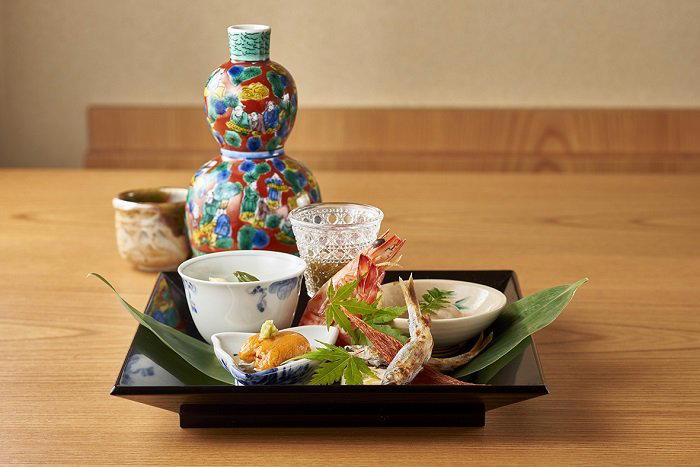
The menu
What to order
- Unzen ham cutlet
- Genshiyaki skewers
- Chawanmushi with grouper
Izakaya Without a Sign: The Deliberate Obscurity of Hiroo's Back Streets
The signless entrance is a recurring motif in Tokyo dining, but SŌWADŌ carries the convention without affectation. The address puts it just past Ebisu Bridge, where the Shibuya River passes under Hiroo's quieter residential fringe, a neighbourhood that sits between the expat density of central Hiroo and the low-key bar culture spilling north from Daikanyama. There is no board outside, no illuminated logo. A grey corridor leads in, and the contrast with the lively interior beyond it is, by design, complete.
This kind of deliberate threshold, unremarkable exterior, animated interior, has a long lineage in Japanese dining. The logic is partly cultural (understatement as signal of confidence) and partly practical (regular clientele doesn't need a sign). What matters is what the kitchen does once you're inside, and at SŌWADŌ, that argument rests on two pillars: a specific regional sourcing philosophy rooted in Kyushu, and an ancient grilling technique called genshiyaki.
Kyushu Sourcing as Editorial Stance
Within the broader izakaya category, ingredient provenance has become a meaningful differentiator. The mid-tier of Tokyo's casual dining market often sources from aggregated wholesale channels, and the menu reads accordingly, competent but anonymous. The more considered houses take a regional position, letting geography shape what appears on the table rather than the reverse.
At SŌWADŌ, the Kyushu orientation is not ornamental. The Unzen ham cutlet references a specific cold-smoked product from the Nagasaki highlands, where Unzen's volcanic terrain and cooler temperatures have supported a distinct pork-curing tradition. Nanbanzuke, the vinegar-and-vegetable marinade applied here to fish, connects to the Portuguese-influenced food culture of Nagasaki, one of Japan's earliest international trading ports. The steamed squid dumpling draws on coastal Kyushu's deep relationship with cephalopods, a product the region's fishing communities have worked for centuries. These are not decorative references. They are the actual sourcing logic made edible.
For a reader comparing Tokyo izakayas, this matters because it shifts the evaluation criteria. The ¥¥ price range places SŌWADŌ in the accessible mid-tier, well below the kaiseki rooms at Gion Sasaki in Kyoto or the technically elaborate long-form menus at HAJIME in Osaka, but the kitchen's sourcing specificity earns it recognition in a different register. Michelin awarded a Plate in both 2024 and 2025, a signal of consistent kitchen quality rather than a star-level ambition, and the Opinionated About Dining guide listed it in the Casual Japan 2025 rankings, a publication that weights ingredient honesty and value-to-quality ratios heavily.
The Genshiyaki: An Ancient Technique, Still Working
The eye is drawn immediately to the genshiyaki station, skewers of fish and meat suspended over a charcoal brazier and cooked slowly, the method tracing back to Japan's earliest fire-cooking practices. The word roughly translates to "primitive grilling," and the technique predates the ceramic ovens, steel pans, and precision-temperature equipment that define most contemporary professional kitchens. Fat drips into coals. Smoke rises. The proteins cook from radiant heat at a pace that modern high-heat methods cannot replicate.
Charcoal-based cooking has a deep infrastructure in Japanese cuisine, binchotan, the dense white charcoal used at yakitori counters and high-end kappo restaurants, is the refined descendant of the same tradition. Genshiyaki sits at the older, less processed end of that spectrum. The experience of watching it in operation is part of the restaurant's spatial language: cooks in crisp whites working an open station provides both transparency and theatre without reaching for the theatrical formats common in Tokyo's higher-priced tasting-menu rooms.
The contrast with how similar ingredients are handled elsewhere in the city is instructive. At Hakata Hotaru or Hakata Issou, the Kyushu-Tokyo pipeline runs through ramen, a different register of cooking, different product focus. SŌWADŌ occupies the grilled and marinated end of that regional supply chain, sitting closer in spirit to the izakaya traditions of northern Kyushu than to the refined urban adaptation of those flavours at places like Goh in Fukuoka.
Where It Fits in Tokyo's Izakaya Tier
Tokyo's izakaya category spans an enormous range, from standing-bar yakitori with handwritten menus to multi-floor chains with laminated photographs, and then a smaller cohort of independent rooms that hold Michelin recognition and operate with genuine kitchen discipline. SŌWADŌ belongs to this last group. It is not the only example: Daikanyama Issai Kassai operates in the same recognisable tier, and further afield, Benikurage in Osaka and Berangkat in Kyoto demonstrate how the format translates across Japan's second and third cities.
What marks SŌWADŌ out within its peer tier is the combination of price restraint with sourcing specificity. At ¥¥, it prices closer to the neighbourhood izakaya market than to the upmarket casual dining rooms in Ginza, Ginza Nominokoji Yamagishi or Ginza Shimada occupy a different price band and dining register entirely. For a visitor calibrating spend and experience, SŌWADŌ offers Michelin-documented quality at a cost level that Tokyo's mid-tier casual category rarely matches with this degree of ingredient intentionality.
For wider context on Tokyo's dining scene, see our full Tokyo restaurants guide, and for planning the broader trip, consult our full Tokyo hotels guide, our full Tokyo bars guide, our full Tokyo wineries guide, and our full Tokyo experiences guide. Elsewhere in Japan, akordu in Nara and 1000 in Yokohama and 6 in Okinawa each show how ingredient-led thinking plays out in different regional contexts.
Planning Your Visit
Location: 1 Chome-12-15 Riverside Building 1F, Hiroo, Shibuya, Tokyo, just past Ebisu Bridge on the Shibuya River. No exterior signage; look for the grey corridor entrance. Reservations:Budget: ¥¥ price range puts this in Tokyo's accessible mid-tier for an evening meal. When to go: The Kyushu sourcing focus means seasonal variation in what's available from the grill and cold preparations, so a weekday evening visit allows a more unhurried experience of the full menu range.
Frequently asked questions
What do regulars order at SŌWADŌ?
The genshiyaki skewers are the kitchen's defining technique and the natural starting point. Beyond those, the Michelin and OAD guides both point to specific Kyushu-origin preparations as the dishes that most clearly express the kitchen's sourcing focus: the Unzen ham cutlet, nanbanzuke, and steamed squid dumpling. These are the dishes the kitchen identifies with most directly, and they represent the clearest expression of the Nagasaki and coastal Kyushu supply relationships that define the menu.
How far ahead should I plan for SŌWADŌ?
At the ¥¥ price point with two consecutive Michelin Plates and OAD Casual Japan recognition, this is not a walk-in room on a Friday evening. Tokyo's mid-tier izakayas at this recognition level tend to fill quickly, particularly for prime evening slots. Planning at least a week ahead for weeknight visits and two or more weeks for weekends is reasonable, though exact booking lead times depend on direct contact with the venue. No online booking platform is listed in the available record.
What do critics highlight about SŌWADŌ?
The Michelin Plate (2024 and 2025) recognises consistent kitchen quality rather than formality or elaborateness, it is the guide's marker for cooking worth seeking out at a casual register. The Opinionated About Dining Casual Japan 2025 listing reinforces this, placing SŌWADŌ in a category where value discipline and ingredient honesty carry significant weight alongside technique. Critics across both frameworks converge on the same point: the Kyushu sourcing specificity and the genshiyaki technique deliver at a price level where that combination is genuinely rare in central Tokyo.
Cuisine Context
A quick peer check to anchor this venue’s price and recognition.
| Venue | Cuisine | Price | Awards | Notes |
|---|---|---|---|---|
| SŌWADŌThis venue (the venue you are viewing) | Modern Japanese Izakaya | $100–150 | Michelin Plate · Tabelog 100 #62 | Not listed |
| Harutaka | Edo-Style Omakase Sushi | $200–300 | 3 Michelin Stars · World's 50 Best #76 | Sushi |
| RyuGin | Modern Kaiseki | $500+ | 3 Michelin Stars · World's 50 Best #41 | Kaiseki, Japanese |
| L'Effervescence | Modern French with Japanese Influences | $200–300 | 3 Michelin Stars · World's 50 Best #69 | French |
| HOMMAGE | Modern French with Japanese Influences | $150–200 | 2 Michelin Stars · World's 50 Best #78 | Innovtive French, French |
| MAZ | Innovative Peruvian-Japanese Fusion | $150–200 | 2 Michelin Stars · World's 50 Best #28 | Innovative |
Recognition history
Dated appearances from independent guides and award organizations, with the underlying list record or original source where available.
Michelin Plate
Michelin
Opinionated About Dining Casual in Japan Ranked #129
Opinionated About Dining
Tabelog 100 #62 · No. 62
Tabelog · Tabelog 100 - Izakaya - EAST - 2025
Full recognition history (6 entries)
Michelin Plate
Michelin
Opinionated About Dining Casual in Japan
Opinionated About Dining
Michelin Plate
Michelin
Continue exploring
More in Tokyo
Restaurants in Tokyo
All restaurants in Tokyo →



Bars in Tokyo
All bars in Tokyo →





Details
- Lively
- Trendy
- Sophisticated
- Date Night
- Special Occasion
- Celebration
- Open Kitchen
- Sake Program
- Natural Wine
- A La Carte
- Omakase
- Sake
- Wine
Current opening hours
- Monday
- 5–11 PM
- Tuesday
- 5–11 PM
- Wednesday
- 5–11 PM
- Thursday
- 5–11 PM
- Friday
- 5–11 PM
- Saturday
- 5–11 PM
- Sunday
- Closed
Hours can change for holidays and private events. Hours as of .
Lively interior with cooks in crisp whites at work, casual pub vibes blending high-end casual atmosphere with fun deco.