
Michelin Bib Gourmand
Our verdict
Negima in Toshima City revives negima-nabe, the Edo-period tuna and spring onion stew that dates to shogunate Japan. Holding a 2024 Michelin Bib Gourmand, the restaurant follows original recipes, no kombu, no mirin, and closes the meal with pepper rice seasoned from the pot. For a price point of ¥¥, it offers one of Tokyo's most historically grounded dining experiences.

Pearl is the En Primeur Club membership app, where members save venues, book tables and use the concierge.
The menu
What to order
- Negima Nabe
- Tamago
- Grilled Mackerel
A Dish Older Than Modern Tokyo
Long before Tokyo was Tokyo, when the city was still called Edo and governed by shoguns, the citizens of that teeming metropolis were already working out how to eat tuna. The problem, by contemporary standards, is almost counterintuitive: toro, the fatty belly cut now treated as the apex of sushi consumption, was considered too rich, too heavy, too hard to digest. The solution was negima-nabe, a simmered stew in which toro is combined with negi (Japanese spring onion), the vegetable's sharpness cutting the fat, transforming what was seen as a problematic cut into something a merchant-class Edo household could eat with satisfaction.
That culinary logic never disappeared, but the dish itself nearly did. Negima-nabe survived in historical texts and in the occasional specialist kitchen, but it largely dropped out of Tokyo's mainstream dining vocabulary as refrigeration changed attitudes toward fatty fish and as the city's restaurant culture reorganised around newer formats. The restaurant Negima, located below street level in Toshima City's Kitaotsuka neighbourhood, is one of very few places where you can eat it today, prepared according to original Edo recipes, without the kombu dashi or mirin that modern Japanese cooking tends to lean on as structural crutches.
What the Bib Gourmand Signals Here
Michelin's Bib Gourmand category, awarded to Negima in 2024, is designed to identify quality that doesn't require a high price outlay. In Tokyo's context, that distinction carries specific weight. The city's Michelin-starred tier, kaiseki counters like Kagurazaka Ishikawa, or the tasting-menu Japanese restaurants like Azabu Kadowaki, occupies a price bracket where a single dinner can reach five figures in yen. Negima's ¥¥ positioning sits several tiers below that, and the Bib Gourmand is Michelin's way of flagging that the quality-to-cost ratio is, by their inspectors' judgment, genuinely strong.
More specifically, the award points toward something Tokyo's dining economy does well at the mid-tier: specialty restaurants that go very deep on one dish or one tradition rather than building broad menus. The city has dozens of such places, tempura specialists, unagi-focused counters, ramen houses with decades of recipe refinement. Negima belongs to that same logic, but its speciality is rarer, anchored in a historical recovery project rather than a continuously practiced craft. The Bib Gourmand is, in this case, partly an endorsement of the cooking and partly a recognition that what's being preserved here has no equivalent elsewhere in the city at this price point.
The Mechanics of the Meal
Negima-nabe arrives as a hot pot at the table. The recipe, as reconstructed by the restaurant's proprietress from Edo-era sources, excludes kombu and mirin, two ingredients so standard in Japanese simmered dishes that their absence is immediately apparent to anyone familiar with the usual dashi base. The resulting broth is leaner in its umami profile, relying instead on the interaction between the toro fat and the negi, which sweetens and softens as it cooks. The pepper used in seasoning was itself a historically significant ingredient in Edo cooking, an imported spice that appears repeatedly in period accounts of the city's food culture.
The meal closes with pepper rice: fresh-cooked rice seasoned with the broth left in the pot, finished with pepper. In the context of nabe dining, this is a traditional way of ending the meal, the accumulated flavour of the hot pot absorbed into plain rice, but the version here follows the specifically Edo logic of the rest of the dish, with pepper as the defining seasoning rather than the more common additions like sesame or citrus.
For comparative context elsewhere in Japan, chefs like those behind Gion Sasaki in Kyoto and Isshisoden Nakamura represent the Kansai tradition of deep historical culinary continuity. Negima operates from a different regional heritage, Edo rather than Kyoto kaiseki, but belongs to the same broader category of cooking rooted in documented historical practice rather than contemporary innovation. Similar archival seriousness can be found at Kashiwaya Osaka Senriyama in Osaka and at HAJIME in Osaka, though both of those operate at significantly higher price points.
Toshima City and the Logic of the Neighbourhood
Kitaotsuka sits in Toshima City, the ward anchored by Ikebukuro. It is residential and commercial in the way that much of inner Tokyo is, dense but not tourist-facing, built around the rhythms of people who live and work there rather than visitors passing through. The restaurant's basement location on a Kitaotsuka side street fits that grain: this is not a destination for people drifting through a famous dining district, but a place you go to specifically, because you know what it is.
That geography is part of why Negima sits outside the usual Tokyo dining narrative. The well-documented restaurant districts, Ginza, Minami-Aoyama, Roppongi, pull most international attention, and venues like Ginza Fukuju, Myojaku, or Jingumae Higuchi benefit from the foot traffic and editorial coverage those areas generate. Negima's Toshima address requires more deliberate navigation. For the full scope of what Tokyo's dining, drinking, and hospitality scene covers across all neighbourhoods, our full Tokyo restaurants guide maps the city by area and category. You can also find curated coverage in our full Tokyo hotels guide, our full Tokyo bars guide, our full Tokyo wineries guide, and our full Tokyo experiences guide.
Beyond Tokyo, the same orientation toward historically rooted Japanese cooking appears at akordu in Nara, at Goh in Fukuoka, at 1000 in Yokohama, and at 6 in Okinawa, each working with regional food traditions that don't often reach international audiences.
Planning Your Visit
Know Before You Go
- Address: 2 Chome-31-19 B1, Kitaotsuka, Toshima City, Tokyo 〒170-0004 (basement level)
- Price range: ¥¥, accessible mid-tier pricing relative to Tokyo's restaurant market
- Awards: Michelin Bib Gourmand 2024
- Booking: No website or phone number is publicly listed in; reservation method requires direct local research on arrival or through a hotel concierge familiar with Toshima City restaurants
- Getting there: Kitaotsuka is accessible from Ikebukuro Station (multiple lines) or Otsuka Station (JR Yamanote Line), both within a short walk of the address
- Languages: Given the neighbourhood and the historical specificity of the, arriving with a Japanese-speaking companion or a translation app is advisable
What Dish Is Negima Famous For?
Negima is the address most directly associated with negima-nabe in contemporary Tokyo: the Edo-period hot pot of toro (fatty tuna belly) simmered with negi (spring onion) in a broth made without kombu or mirin, following original shogunate-era recipes. The meal closes with pepper rice, cooked in the remaining broth from the pot. The 2024 Michelin Bib Gourmand specifically cites this dish and its historical continuity as the basis for recognition.
Frequently asked questions
What's Negima's location?
Negima is located at Japan, 〒170-0004 Tokyo, Toshima City, Kitaotsuka, 2 Chome−31−19 B1, Tokyo.
Has Negima won any awards?
Negima has received recognition including: Negima-nabe, a tuna and spring onion stew, is a tradition handed down since the days of the shoguns. At a time when lean meat was treasured, this stew was contrived as a way of lightening the texture of toro, the fatty cut of tuna. Enchante….
What dish is Negima famous for?
Negima is the address most directly associated with negima-nabe in contemporary Tokyo: an Edo-period hot pot of toro (fatty tuna belly) simmered with spring onion. The recipe, reconstructed from shogun-era sources by the restaurant's proprietress, uses neither kombu nor mirin, keeping it aligned with the original formula developed to temper the richness of fatty tuna. The meal closes with pepper rice, fresh-cooked rice seasoned with broth from the pot. Michelin awarded the restaurant a Bib Gourmand in 2024, recognising the cooking on its own terms rather than as a curiosity.
Is Negima expensive?
Pricing at Negima is listed as ¥¥.
Price and Recognition
| Venue | Cuisine | Price | Awards | Notes |
|---|---|---|---|---|
| NegimaThis venue (the venue you are viewing) | Traditional Edomae Negima Nabe | $50–100 | Michelin Bib Gourmand | Not listed |
| Harutaka | Edo-Style Omakase Sushi | $200–300 | 3 Michelin Stars · World's 50 Best #76 | Sushi |
| RyuGin | Modern Kaiseki | $500+ | 3 Michelin Stars · World's 50 Best #41 | Kaiseki, Japanese |
| L'Effervescence | Modern French with Japanese Influences | $200–300 | 3 Michelin Stars · World's 50 Best #69 | French |
| HOMMAGE | Modern French with Japanese Influences | $150–200 | 2 Michelin Stars · World's 50 Best #78 | Innovtive French, French |
| MAZ | Innovative Peruvian-Japanese Fusion | $150–200 | 2 Michelin Stars · World's 50 Best #28 | Innovative |
Recognition history
Dated appearances from independent guides and award organizations, with the underlying list record or original source where available.
Michelin Bib Gourmand
Michelin
Full recognition history (2 entries)
Michelin Bib Gourmand
Michelin
Continue exploring
More in Tokyo
Restaurants in Tokyo
All restaurants in Tokyo →


Bars in Tokyo
All bars in Tokyo →



Details
- Intimate
- Cozy
- Classic
- Date Night
- Special Occasion
- Chefs Counter
- Sake Program
- Counter Dining
- Sake
Current opening hours
- Monday
- Closed
- Tuesday
- 6–10:30 PM
- Wednesday
- 6–10:30 PM
- Thursday
- 6–10:30 PM
- Friday
- 6–10:30 PM
- Saturday
- 6–10:30 PM
- Sunday
- Closed
Hours can change for holidays and private events. Last verified .
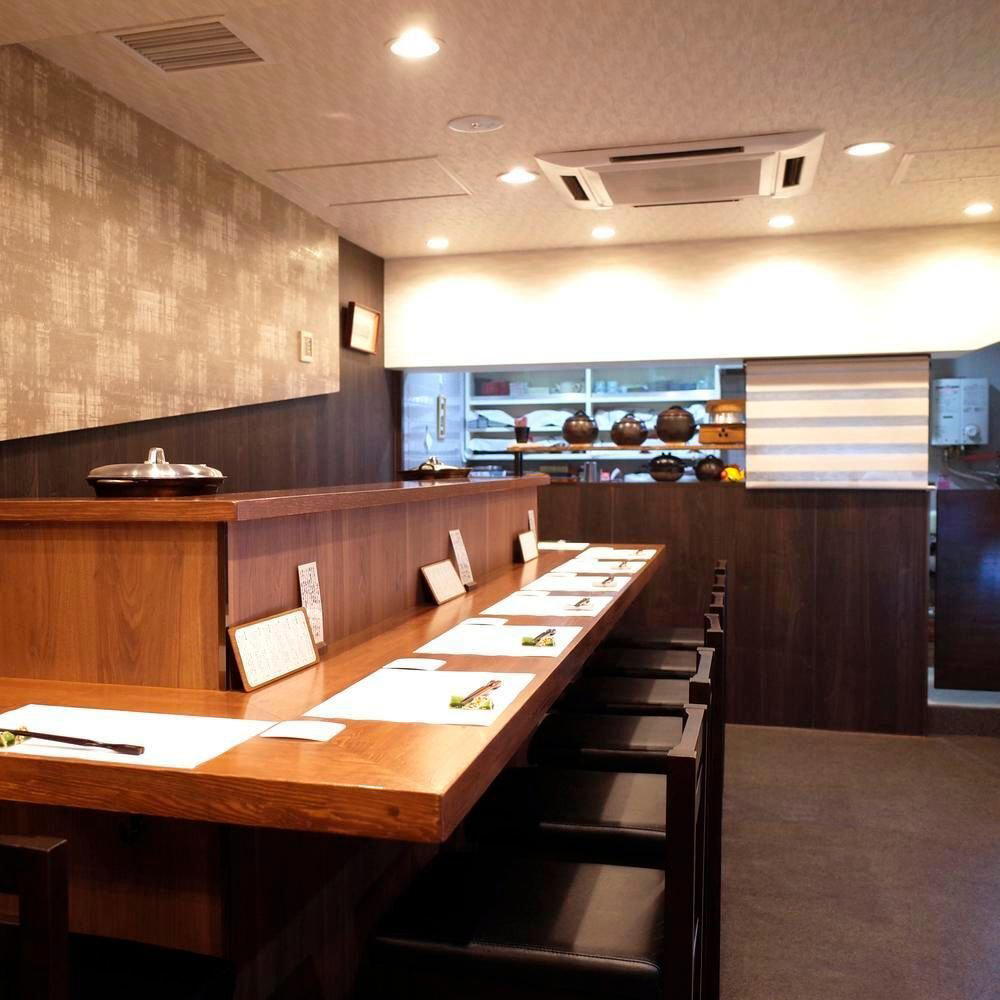
Warm, inviting, and clean with a nostalgic domestic atmosphere focused on the chef's counter.