
Our verdict
Hakata Hotaru is an izakaya in Azabu-Juban, Tokyo, that has climbed steadily through Opinionated About Dining's Casual Japan rankings, from #74 in 2023 to #95 in 2024 to #108 in 2025 (with a broader, more competitive list each year). Open from 5 pm daily, it represents the kind of neighbourhood izakaya that Tokyo does at a different register than Kyoto, louder, faster, and anchored in the city's appetite for quality without ceremony.

Pearl is the En Primeur Club membership app, where members save venues, book tables and use the concierge.
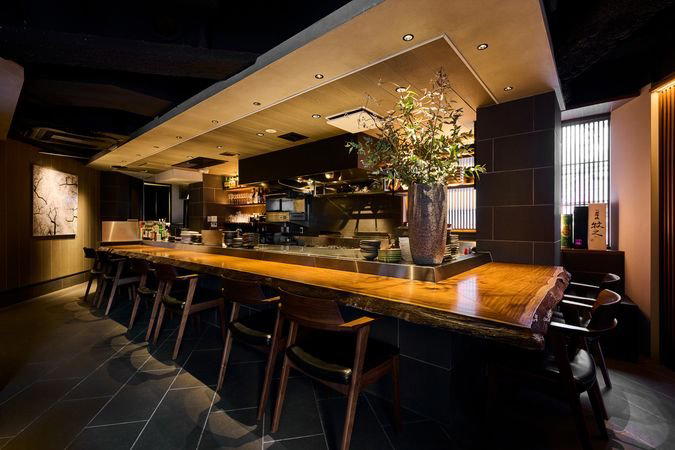
The Street You Walk Down to Get There
Azabu-Juban has a particular quality at dusk: the narrow lanes behind the main shopping street retain a low-key residential texture even as the restaurants fill. Hakata Hotaru sits at street level in a building on Nanamenosaka, the sloped lane that locals use as shorthand for this part of the neighbourhood, its presence understated in the way that Tokyo's better izakayas tend to be. No queue management systems, no social media signage. The room announces itself through sound before sight: the particular rhythm of a table in full motion, orders called, glasses refilled.
This is the operating mode of the serious Tokyo izakaya, and it is worth distinguishing from what the same format looks like elsewhere in Japan. In Kyoto, izakaya culture bends toward the measured, smaller portions, quieter rooms, menus that defer to seasonal kaiseki logic. Tokyo's version runs hotter. It is a city that eats late and quickly, that rewards the place willing to keep pace with a table that has been drinking since six. Hakata Hotaru, drawing its culinary reference from Fukuoka's Hakata tradition, adds a third register to that comparison: the directness and generosity that defines northern Kyushu's food culture, translated into a Minato City setting.
Where Hakata Tradition Meets Tokyo's Tempo
Fukuoka's food identity is built around accessibility and abundance. The city's izakayas are among the least precious in Japan: portions are large, sake lists are practical rather than academic, and the kitchen's job is to keep the room fed and drinking. That sensibility travels well to Tokyo, where the same directness reads as confidence rather than informality. Hakata Hotaru operates within this tradition, bringing a distinctly Kyushu character to a neighbourhood better known for its proximity to Roppongi's international dining cluster than for regional Japanese cooking.
The contrast with Kyoto's izakaya tradition is instructive for anyone mapping Japan's food culture. Berangkat in Kyoto represents the kind of izakaya that Kyoto produces: attentive, considered, shaped by proximity to a kaiseki tradition that insists on restraint. Hakata Hotaru operates without that restraint as its governing principle. The Hakata style prizes generosity and a certain directness of flavour, richer broths, more assertive seasoning, dishes that do not ask to be contemplated at length. Tokyo absorbs that style without friction. The city's appetite is broad enough to hold both registers simultaneously.
For context on what the broader izakaya category produces at its most refined in the Osaka direction, Benikurage in Osaka shows how the western Kansai tradition handles the same format, with its own distinct character and regional logic.
The OAD Rankings and What They Signal
Opinionated About Dining's Casual Japan list is one of the more reliable external signals for quality in this category, compiled from a network of frequent diners and food professionals rather than from a single inspection model. Hakata Hotaru has appeared on the list three consecutive years: ranked #74 in 2023, #95 in 2024, and #108 in 2025. The ranking direction requires some context. OAD's Casual Japan list has expanded significantly over this period, meaning a rise in absolute number does not necessarily reflect a decline in relative standing, the competitive field is simply larger. Three consecutive appearances in a list of this type indicates consistent performance across different visiting parties over multiple years, which is a more demanding standard than a single award cycle.
For comparison, many of Tokyo's higher-profile casual Japanese venues carry ratings in the 4.2 to 4.5 range, where the difference in dining experience is often more about format and price tier than about any meaningful quality gap.
Tokyo's high-end restaurant scene at the other end of the spectrum, the Michelin three-star tier occupied by Harutaka, RyuGin, and L'Effervescence, operates in a different register entirely, with four-symbol pricing and formal progression menus. Hakata Hotaru's position in the casual category is deliberate and coherent. It belongs to a different conversation than the kaiseki or omakase tier, and it is worth reading its credentials on those terms. Venues like Ginza Shimada and Ginza Nominokoji Yamagishi serve as useful reference points for the more formal Japanese dining register in Tokyo, while Daikanyama Issai Kassai offers a different angle on Tokyo's izakaya spectrum.
Azabu-Juban as a Dining Neighbourhood
The neighbourhood context matters. Azabu-Juban sits between Roppongi's international-leaning dining density and the quieter residential blocks of Hiroo, and it occupies an interesting middle ground: international enough to have a wide range of dining formats, grounded enough that neighbourhood restaurants built for repeat local custom have survived and thrived. It is not the neighbourhood where Tokyo's most experimental kitchens operate, that energy concentrates further north, toward Shinjuku and Shibuya, but it produces a reliable tier of serious casual dining that its residents return to weekly rather than for occasions.
For those building an itinerary around this part of Tokyo, Kan Coffee Fujifuji anchors the neighbourhood's daytime options, while the broader Tokyo restaurants guide maps the full range of the city's dining across neighbourhoods and price tiers. Tokyo's hotel and bar infrastructure around Minato City is well covered in the Tokyo hotels guide and Tokyo bars guide respectively.
For those travelling beyond Tokyo on the same trip, the comparison with regional Japanese dining is worth making in person. Gion Sasaki in Kyoto represents the refinement end of the Kansai tradition, while Goh in Fukuoka, Hakata's own city, shows what the same regional tradition produces at its most technically ambitious. HAJIME in Osaka and akordu in Nara complete the western Japan frame for serious diners building a multi-city itinerary. For more unusual eating situations, 1000 in Yokohama and 6 in Okinawa represent the range the region produces. The Hakata Issou ramen counter in Tokyo is worth noting for those tracing Fukuoka's culinary exports across the capital.
Planning Your Visit
| Detail | Hakata Hotaru | Typical Tokyo Izakaya | Formal Tokyo (e.g. Michelin tier) |
|---|---|---|---|
| Opening hours (weekday) | 5–11 pm | 5–11 pm (varies) | Typically two sittings, 6 pm / 8:30 pm |
| Opening hours (weekend) | 3–11 pm (Sat/Sun) | Often noon onwards | Same as weekday |
| Format | Izakaya (casual, shared) | Izakaya (casual, shared) | Set menu / omakase |
| OAD Casual Japan | #108 (2025) | Not listed | Separate list (OAD Leading) |
| Typically 3.8–4.3 | 4.3–4.8 (fewer reviews) | ||
| Price tier | Not published | ¥¥–¥¥¥ | ¥¥¥¥ |
The weekend earlier opening, from 3 pm on Saturdays and Sundays, is worth noting for those who prefer to eat on the early side of the evening, before the room reaches full volume. Weekday access begins at 5 pm.
What's the Must-Try Dish at Hakata Hotaru?
What the Hakata tradition reliably produces in an izakaya context: pork-forward dishes (Berkshire-breed tonkotsu preparations being a Fukuoka signature), chicken preparations drawing on Kyushu's high-quality regional poultry, and mentaiko in multiple applications, the spiced cod roe that Hakata claims as its own and exports to the rest of Japan. Whether these appear on Hakata Hotaru's current menu is something leading confirmed directly. The Tokyo experiences guide and Tokyo wineries guide round out the broader planning picture for visitors to the city.
At-a-Glance Comparison
A quick peer check to anchor this venue’s price and recognition.
| Venue | Cuisine | Price | Awards | Notes |
|---|---|---|---|---|
| Hakata HotaruThis venue (the venue you are viewing) | Hakata Izakaya | $50–100 | Not listed | Not listed |
| Harutaka | Edo-Style Omakase Sushi | $200–300 | 3 Michelin Stars · World's 50 Best #76 | Sushi |
| RyuGin | Modern Kaiseki | $500+ | 3 Michelin Stars · World's 50 Best #41 | Kaiseki, Japanese |
| L'Effervescence | Modern French with Japanese Influences | $200–300 | 3 Michelin Stars · World's 50 Best #69 | French |
| HOMMAGE | Modern French with Japanese Influences | $150–200 | 2 Michelin Stars · World's 50 Best #78 | Innovtive French, French |
| MAZ | Innovative Peruvian-Japanese Fusion | $150–200 | 2 Michelin Stars · World's 50 Best #28 | Innovative |
Recognition history
Dated appearances from independent guides and award organizations, with the underlying list record or original source where available.
Opinionated About Dining Casual in Japan Ranked #142
Opinionated About Dining
Full recognition history (4 entries)
Opinionated About Dining Casual in Japan Ranked #108
Opinionated About Dining
Opinionated About Dining Casual in Japan Ranked #95
Opinionated About Dining
Opinionated About Dining Casual in Japan Ranked #74
Opinionated About Dining
Continue exploring
More in Tokyo
More from Chef Various
Browse all →
Restaurants in Tokyo
All restaurants in Tokyo →


Bars in Tokyo
All bars in Tokyo →




Details
- Elegant
- Cozy
- Sophisticated
- Date Night
- Business Dinner
- Group Dining
- Family
- Private Dining
- Sake Program
- Local Sourcing
- A La Carte
- Small Plates
- Sake
- Shochu
- Wine
Current opening hours
- Monday
- 5–11 PM
- Tuesday
- 5–11 PM
- Wednesday
- 5–11 PM
- Thursday
- 5–11 PM
- Friday
- 5–11 PM
- Saturday
- 3–11 PM
- Sunday
- 3–11 PM
Hours can change for holidays and private events. Last verified .
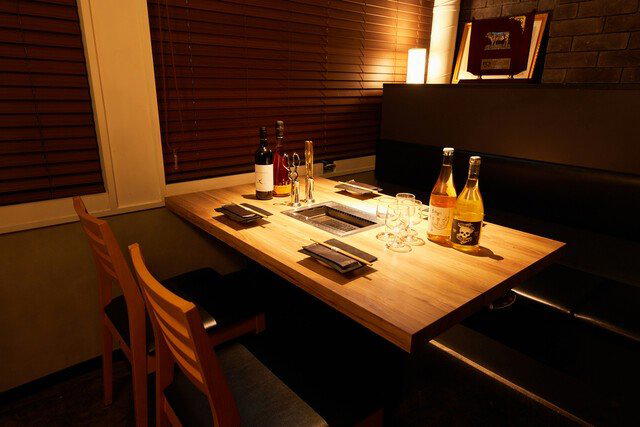
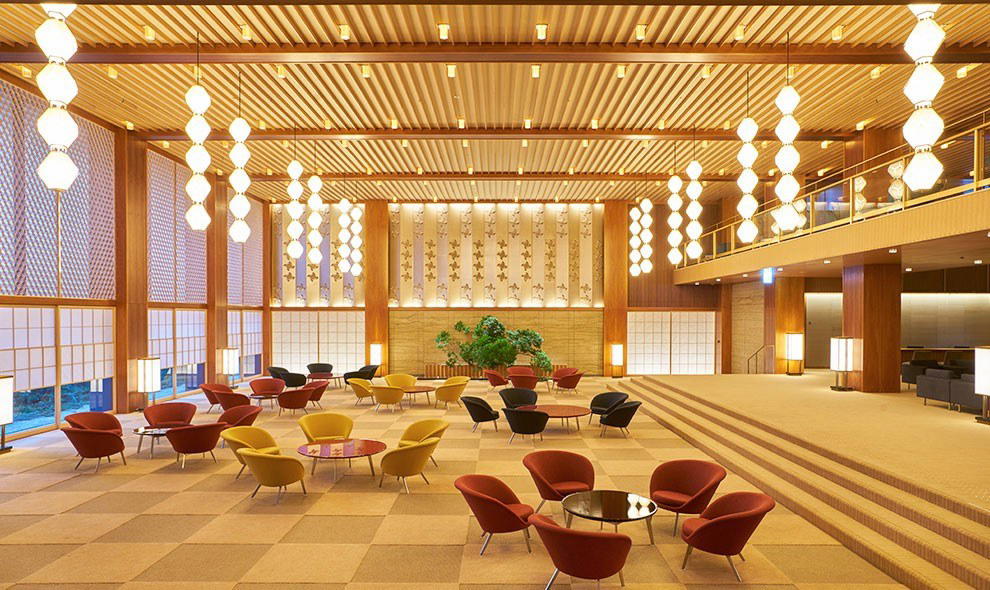
Stylish and open with high ceilings, spacious seating, relaxing atmosphere, and cozy private rooms.