
Michelin Plate
Our verdict
The warmly lit counter, kimono-wearing proprietress, and a menu built around shared plates, sashimi platters, potato salad, steamed siu mai, and takikomi-gohan, make it one of the neighbourhood's more considered casual options at the ¥¥ price point.

Pearl is the En Primeur Club membership app, where members save venues, book tables and use the concierge.
The menu
What to order
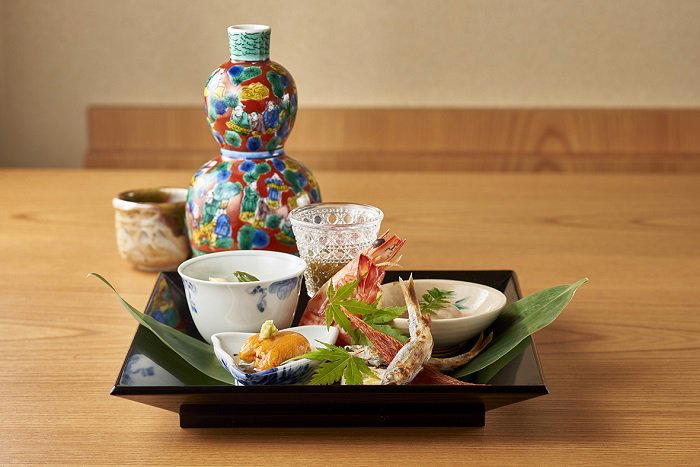
- Clay pot rice
- Assorted sashimi
- Charcoal grilled wagyu
The izakaya format is one of Japan's most durable social institutions, less a dining style than a framework for the evening. Shared plates arrive as conversation dictates, not on a fixed schedule. Drinks anchor the table while food orbits around them. At the ¥¥ price point, an izakaya like Issai Kassai competes not with the kaiseki counters of RyuGin or the omakase tiers at Harutaka, but with a much larger peer group: neighbourhood establishments where the room matters as much as the plate, and where returning regulars are the real measure of quality.
What the Room Tells You
The visual identity of the space is doing deliberate work. The proprietress greets guests in kimono, a gesture that roots the experience in a specifically Japanese hospitality tradition even as the kitchen draws from elsewhere. In a city where izakayas can range from fluorescent-lit chain operations to curated neighbourhood institutions, the considered atmosphere here signals intent.
That intent carries through to the kitchen. The chef's background includes time in New York, and the menu reflects a cross-pollination that shows up in texture and technique rather than in fusion gestures for their own sake. The result at Issai Kassai, according to the Michelin assessment, is food that carries playful creativity, a quality that distinguishes the more interesting izakayas from those that treat the format as a reason to avoid ambition.
The Plates That Define the Evening
Izakaya menus are designed for accumulation. You order in rounds, responding to hunger and mood, and the leading plates are the ones that invite another order of the same. At Issai Kassai, the sashimi arrives as a mixed platter rather than individual selections, a communal presentation that fits the format. Potato salad and steamed shrimp siu mai dumplings have become perennial favourites, the kind of dishes that regulars return for specifically and first-time visitors tend to order on recommendation. The siu mai, a form with Chinese origins absorbed thoroughly into Japanese izakaya culture, appears here as evidence of how porous the boundaries of Japanese casual cooking have always been.
The meal closes, typically, with takikomi-gohan, rice cooked with soy sauce and various ingredients, a deeply grounding finisher that resets the table before the last round of drinks. In the structure of an izakaya evening, the appearance of rice signals the transition from eating to lingering, which is exactly when the evening gets interesting. For context on how the izakaya tradition translates across Japanese cities, Benikurage in Osaka and Berangkat in Kyoto offer instructive comparisons, the format shifts in atmosphere and emphasis depending on the city, but the communal logic remains consistent. The neighbourhood has enough critical mass of food-literate residents to support venues that would struggle for visibility in higher-footfall areas. Understanding the izakaya as a social structure rather than just a food category changes how you approach a night here.
Elsewhere in the city's casual-to-mid tier, venues like HAJIME in Osaka, Gion Sasaki in Kyoto, akordu in Nara, Goh in Fukuoka, 1000 in Yokohama, and 6 in Okinawa.enprimeurclub. Further city coverage: hotels, bars, wineries, and
Cuisine-First Comparison
| Venue | Cuisine | Price | Awards | Notes |
|---|---|---|---|---|
| Daikanyama Issai KassaiThis venue (the venue you are viewing) | Modern Japanese Izakaya | $100–150 | Michelin Plate | Not listed |
| Harutaka | Edo-Style Omakase Sushi | $200–300 | 3 Michelin Stars · World's 50 Best #76 | Sushi |
| RyuGin | Modern Kaiseki | $500+ | 3 Michelin Stars · World's 50 Best #41 | Kaiseki, Japanese |
| L'Effervescence | Modern French with Japanese Influences | $200–300 | 3 Michelin Stars · World's 50 Best #69 | French |
| HOMMAGE | Modern French with Japanese Influences | $150–200 | 2 Michelin Stars · World's 50 Best #78 | Innovtive French, French |
| MAZ | Innovative Peruvian-Japanese Fusion | $150–200 | 2 Michelin Stars · World's 50 Best #28 | Innovative |
Recognition history
Dated appearances from independent guides and award organizations, with the underlying list record or original source where available.
Michelin Plate
Michelin
Full recognition history (3 entries)
Michelin Plate
Michelin
Michelin Plate
Michelin
Continue exploring
More in Tokyo
Restaurants in Tokyo
All restaurants in Tokyo →



Bars in Tokyo
All bars in Tokyo →




Details
- Cozy
- Intimate
- Sophisticated
- Elegant
- Date Night
- Business Dinner
- Special Occasion
- Chefs Counter
- Open Kitchen
- Sake Program
- Omakase
- Small Plates
- Counter Dining
- Sake
- Shochu
- Wine
- Vegetarian Friendly
Current opening hours
- Monday
- Closed
- Tuesday
- 5–11 PM
- Wednesday
- 5–11 PM
- Thursday
- 5–11 PM
- Friday
- 5–11 PM
- Saturday
- 4–10:30 PM
- Sunday
- 4–10:30 PM
Hours can change for holidays and private events. Last verified .
Warmly lit counter visible through glass walls, Japanese style with Western mood, lively yet relaxing atmosphere.