1 Michelin Star
Our verdict
Sushi Tanaka in Adachi City earns its Michelin Plate recognition through a sourcing philosophy rooted in the chef's Kumamoto origins: seafood from the Amakusa islands, salt, soy, and sake from the same prefecture. Rice is matched to red or rice vinegar by variety and cooked separately by region before combining.

Pearl is the En Primeur Club membership app, where members save venues, book tables and use the concierge.
The menu
What to order
- Black abalone with liver sauce
- Toro-taku
- Uni nigiri
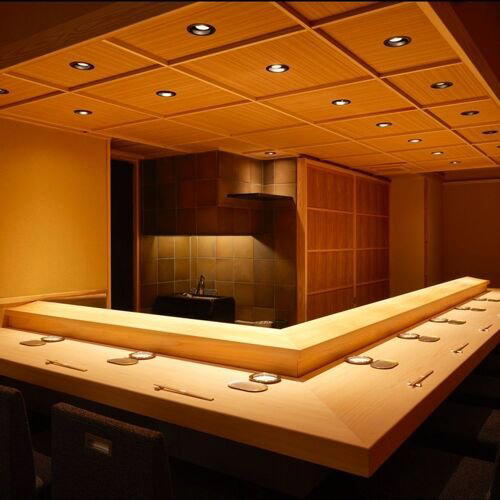
A Counter Built on Where the Chef Comes From
Tokyo's sushi scene is often discussed as a monolith, but geography fractures it along sharp lines. Sourcing decisions, vinegar choices, and the particular character of a rice blend tell you more about a counter's identity than its postcode. At the upper end, restaurants like Harutaka and Sushi Kanesaka have built their reputations on Edomae discipline and premium Tsukiji sourcing.
The principle is not merely regional pride. Sourcing seafood from the same waters where a chef learned to understand fish, its texture, its fat cycle, its optimum state, produces a coherence that disconnected luxury sourcing rarely achieves. The salt, soy sauce, and local sake served here come from Kumamoto Prefecture for the same reason: the chef's palate was formed there, and the seasoning logic flows from that formation rather than from a procurement checklist.
The Arc of the Meal: How the Sequence Unfolds
The tasting progression at a counter like this one is the real editorial subject. Sushi, reduced to its structural essence, is a technology for eating rice. The topping is context; the shari is the argument. Tanaka's approach makes this explicit in its rice preparation, which separates varieties by region, cooks them independently, then combines and vinegars them according to the character of the fish they will carry. Red vinegar and rice vinegar are applied selectively, not uniformly, because the pairing logic treats each piece as a discrete composition rather than a repeated format.
This matters across the arc of a meal. Early pieces in an omakase progression typically feature leaner, more delicate fish, where the acidity of the rice must read as a lift rather than a contrast. As the meal moves toward richer cuts, the rice's seasoning profile shifts accordingly. The Amakusa sourcing provides a consistent flavour register throughout: fish from those waters tend toward clean, mineral-driven profiles rather than the aggressive fat of premium Pacific tuna. That consistency allows the rice's role to remain legible from first piece to last.
For comparison, the progression logic at Edomae Sushi Hanabusa or Hiroo Ishizaka reflects the Edomae tradition of curing, marinating, and ageing in ways that build intensity as the sequence advances. Tanaka's Kyushu-anchored approach produces a different kind of arc: more lateral than ascending, with variety built through the contrasting textures and salinity of Amakusa species rather than through progressive richness.
The Michelin Plate Signal and What It Says About Position
Michelin has awarded Sushi Tanaka its Plate designation in both 2024 and 2025, a recognition that marks quality cooking without the starred tier's implication of destination dining. The Plate is, in practice, a positioning signal: the cooking meets Michelin's threshold for recommendation, but the counter operates in a different register from the three-starred rooms like Sukiyabashi Jiro Roppongiten, where every element of the experience is calibrated for international culinary tourism.
That distinction is relevant for the reader making a decision. Tokyo's ¥¥¥ sushi tier contains counters ranging from neighbourhood workhorses with no critical recognition to venues like this one, where a specific sourcing philosophy and Michelin acknowledgment place it clearly above casual omakase. Adachi City's location, north of the Sumida River and outside the usual Ginza-Minami Aoyama circuit, keeps it off the radar for most hotel concierges, which is both its limitation and its appeal: the room is more likely to hold local regulars than first-visit tourists.
Kyushu Sourcing as Editorial Lens
The Amakusa islands sit in the Yatsushiro Sea between Kyushu's Shimabane Peninsula and the Amakusa archipelago itself, in waters known for yellowtail, sea bream, and a range of shellfish whose flavour profiles differ noticeably from Hokkaido or Pacific sourcing. The decision to draw ingredients from these specific waters rather than from the Tsukiji or Toyosu market's available premium inventory is unusual in Tokyo's sushi context and gives the counter a regional specificity more commonly associated with kaiseki restaurants, which tend to build narratives around local terroir.
The Kumamoto sake pairing reinforces this. Sake from the region carries its own character, the prefecture produces junmai styles with a relatively full texture, and matching them to fish from adjacent waters creates a internal logic across the meal's beverage arc, rather than sourcing sake from nationally recognised prestige producers as a separate credential layer.
This kind of regional coherence appears in other Japanese contexts: Goh in Fukuoka draws heavily on Kyushu produce and has built a distinct Fukuoka identity in doing so. In Tokyo, pulling a full Kumamoto-origin sourcing program into a sushi counter is less common and gives Tanaka a meaningful point of difference from counters in the same price tier.
Placing Tanaka in a Wider Regional Frame
For readers building an itinerary across Japan, Sushi Tanaka connects to a broader pattern of cuisine-driven restaurants that express regional origin rather than default to a national prestige template. Gion Sasaki in Kyoto, HAJIME in Osaka, and akordu in Nara each anchor their identity in place-based sourcing at varying price points and formalities. Tanaka's approach fits that pattern, applying it within a sushi format that often gravitates toward abstraction from origin.
For those interested in sushi specifically beyond Japan, Sushi Shikon in Hong Kong and Shoukouwa in Singapore represent the export version of Tokyo's omakase tradition, calibrated for international clientele and priced accordingly. Tanaka, by contrast, reads as a counter built for a local audience with a specific regional allegiance, which places it closer to the working logic of Japanese sushi culture than to its international presentation.
Planning Your Visit
Sushi Tanaka is located at 1 Chome-4-7 Senjuazuma, Adachi City, Tokyo 120-0025. Adachi City sits in Tokyo's northeast, reachable by the Tobu Skytree Line or Chiyoda Line, depending on approach.
The ¥¥¥ price range positions this counter below the ¥¥¥¥ tier occupied by most destination omakase rooms and well above casual conveyor or standing-sushi formats. For a full picture of Tokyo's dining options across categories, see our full Tokyo restaurants guide, our full Tokyo hotels guide, our full Tokyo bars guide, our full Tokyo experiences guide, and our full Tokyo wineries guide. Those extending travel beyond the capital can also reference 1000 in Yokohama and 6 in Okinawa for regional comparisons.
Quick reference:
Frequently asked questions
What's the address for Sushi Tanaka?
Sushi Tanaka is located at 1 Chome-4-7 Senjuazuma, Adachi City, Tokyo 120-0025, Japan, Tokyo.
Is Sushi Tanaka award-winning?
Sushi Tanaka has received recognition including: Seafood largely comes from the Amakusa islands off Kyushu’s west coast, because that’s where the chef is from. For the same reason, salt, soy sauce and local sake are sourced from Kumamoto. The providence of sea and land are all used in nat….
What do people recommend at Sushi Tanaka?
The counter's sourcing philosophy points directly to pieces featuring seafood from the Amakusa islands off Kyushu's west coast, where waters yield yellowtail and other species prized in that region. Rice is matched to each topping using red or rice vinegar as appropriate, and condiments including salt, soy sauce, and sake are sourced from Kumamoto, the chef's home prefecture. That coherence between origin and preparation is the through-line worth tracking across the meal. Sushi Tanaka holds a Michelin Plate for 2024 and 2025, placing it in the recognised-quality tier without the reservation pressure of starred counters.
What type of food is Sushi Tanaka known for?
A Quick Peer Check
| Venue | Cuisine | Price | Awards | Notes |
|---|---|---|---|---|
| Sushi TanakaThis venue (the venue you are viewing) | Edomae Omakase Sushi | $150–200 | 1 Michelin Star | Not listed |
| Harutaka | Edo-Style Omakase Sushi | $200–300 | 3 Michelin Stars · World's 50 Best #76 | Sushi |
| RyuGin | Modern Kaiseki | $500+ | 3 Michelin Stars · World's 50 Best #41 | Kaiseki, Japanese |
| L'Effervescence | Modern French with Japanese Influences | $200–300 | 3 Michelin Stars · World's 50 Best #69 | French |
| HOMMAGE | Modern French with Japanese Influences | $150–200 | 2 Michelin Stars · World's 50 Best #78 | Innovtive French, French |
| MAZ | Innovative Peruvian-Japanese Fusion | $150–200 | 2 Michelin Stars · World's 50 Best #28 | Innovative |
Recognition history
Dated appearances from independent guides and award organizations, with the underlying list record or original source where available.
Michelin 1 Star
Michelin
Full recognition history (3 entries)
Michelin Plate
Michelin
Michelin Plate
Michelin