

La Liste Top Hotels · Leading Hotels of World Member
Few hotels in Asia carry the institutional weight of Imperial Hotel Tokyo. Founded in 1890 at the request of the Imperial government, it has served as a diplomatic anchor in Chiyoda for over a century, earning a 90.5-point placement in the 2026 La Liste Top Hotels ranking and membership in The Leading Hotels of the World. For travellers who read a hotel as a city document, this is Tokyo's primary text.

Pearl is the En Primeur Club membership app — saves, bookings, and concierge access live there. Same editors, same standards.
- Address
- 1-chōme-1-1 Uchisaiwaichō, Chiyoda City, Tokyo 100-8558
- Phone
- +81 3-3504-1111
- Website
- imperialhotel.co.jp
- Directions
- Get directions
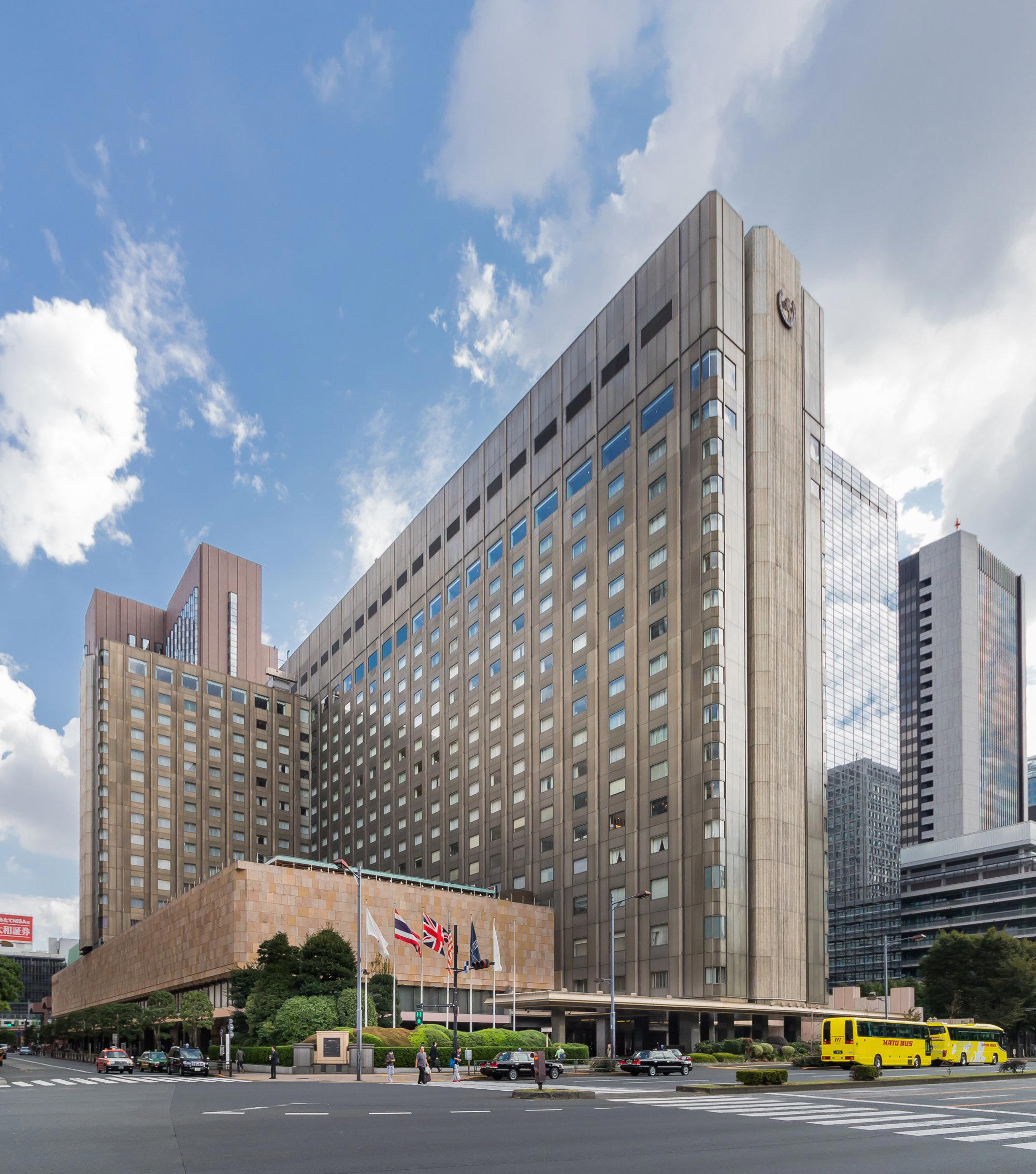
The Address That Defines Central Tokyo
There is a particular quality to arriving at Uchisawaichō by car in the early evening. The broad government avenues of Chiyoda give way to a frontage that reads less like a hotel entrance and more like a civic institution — which, in many respects, Imperial Hotel Tokyo is. Positioned between the Imperial Palace grounds to the north and Ginza to the east, the hotel occupies one of the most consequential addresses in Japan. Everything within reach is a function of that positioning: the financial corridors of Marunouchi and Hibiya are a short walk; the retail density of Ginza begins within minutes. For a hotel that first opened in 1890 at the request of the Imperial government — built explicitly to receive Western dignitaries in a city then reconfiguring its relationship with the outside world, the location was never incidental. It was the point.
A Building With Institutional Memory
Tokyo is a city that demolishes and rebuilds with a regularity that most other capitals find unsettling. Against that background, a property that traces its origins to 1890 occupies a different category entirely. The hotel has gone through several physical reincarnations over more than a century, but its institutional continuity has held. That continuity shows up in how the hotel operates: a formality of service that does not read as performative, a lobby pace that is unhurried without being inert, and a staff-to-guest ratio that reflects the expectations of government-level hospitality rather than contemporary boutique minimalism.
The La Liste Leading Hotels ranking awarded Imperial Hotel Tokyo 90.5 points in its 2026 edition, placing it inside a competitive set of properties evaluated for accumulated reputation and consistency rather than novelty. Membership in Leading Hotels of the World since 2025 adds a further positioning signal: the hotel aligns itself with a peer group defined by longevity, service depth, and institutional weight rather than design-forward or lifestyle-driven branding. That puts it in a different conversation from newer entrants such as Bvlgari Hotel Tokyo or Aman Tokyo, both of which operate with a very different set of priorities.
Location as Practical Infrastructure
The Hibiya and Uchisawaichō addresses carry specific value for guests whose Tokyo schedule is built around Chiyoda-ku business, Imperial Palace adjacency, or Ginza access. Hibiya Station sits directly below the hotel's immediate neighbourhood, connecting to the Tokyo Metro Hibiya Line and Chiyoda Line, routes that thread efficiently toward Roppongi, Akihabara, and Shinjuku without requiring the surface-level navigation that longer cab rides demand. For guests arriving from Haneda, the Keikyu Line to Shinbashi and a short onward connection puts the hotel within approximately 40 minutes of the airport during off-peak hours. The hotel's Chiyoda positioning also means guests are within a manageable walk of the Imperial Palace East Gardens, Hibiya Park, and the Kabuki-za theatre district in Ginza, three very different anchor experiences that rarely align so neatly at a single address.
Internationally-branded competitors in the same tier have distributed across multiple Tokyo neighbourhoods. Four Seasons Hotel Tokyo at Otemachi sits one neighbourhood over, with a strong financial-district orientation. Palace Hotel Tokyo addresses the Imperial Palace directly, competing on views rather than transit access. Andaz Tokyo anchors Toranomon, closer to the emerging tech and embassy quarter. JANU Tokyo and The Capitol Hotel Tokyu occupy their own distinct neighbourhood positions. Imperial Hotel's particular value is that its address sits at the convergence of old Tokyo civic geography and contemporary transit infrastructure, a combination that newer builds cannot replicate regardless of budget.
What the Competitive Set Looks Like
Tokyo's luxury hotel market has fragmented significantly over the past decade. The upper end now splits between ultra-limited-key design properties, international brand flagships, and a smaller category of historic institutional hotels. Imperial Hotel sits in the third group, alongside a short list of properties globally that have absorbed enough history to operate partly on accumulated cultural authority. That is a different proposition from the precision-designed restraint of Aman Tokyo or the fashion-house positioning of Bvlgari Hotel Tokyo. Both of those hotels are competing on aesthetic vision and contemporary luxury credentials. Imperial Hotel competes on something harder to manufacture: a record of continuous operation at the highest level of Japanese hospitality through more than a century of the city's transformation.
For guests travelling beyond Tokyo, the broader Japan luxury hotel network offers very different textures. Ryokan properties such as Gora Kadan in Hakone and Asaba in Izu represent the traditional inn tradition at its most refined. HOTEL THE MITSUI KYOTO performs a similar function in Kyoto to what Imperial Hotel does in Tokyo: historic institutional weight mapped onto contemporary luxury expectations. Further afield, Amanemu in Mie, Benesse House in Naoshima, and Zaborin in Kutchan occupy entirely different registers, remote, design-led, experience-specific. Halekulani Okinawa, Jusandi in Ishigaki, and ENOWA Yufu serve guests whose Japan itinerary extends to the southern archipelago or Kyushu hot-spring regions. For those building multi-city Japan stays, Fufu Kawaguchiko, Fufu Nikko, Nishimuraya Honkan in Kinosaki-cho, and Sekitei in Hatsukaichi-shi round out a network of properties where the Japanese hospitality tradition is expressed at its most concentrated.
Planning Your Stay
Reservations for high-demand periods, Golden Week in late April and early May, the autumn foliage window in November, and the cherry blossom peak in late March, should be made well in advance, as Chiyoda-ku properties at this level fill quickly during those windows. The hotel's Hibiya location makes it viable as a base for both business-focused Tokyo visits and leisure itineraries built around the palace grounds, Ginza, and Marunouchi. For guests arriving internationally, Narita connections via the Narita Express to Tokyo Station, followed by a short taxi or metro ride, are the standard approach. Haneda provides the faster ground transfer by Keikyu Line. Our full Tokyo restaurants guide covers dining options across the city's major neighbourhoods, useful context for building an itinerary around a Chiyoda base. For those comparing institutional luxury hotel experiences in other world cities, Aman New York, The Fifth Avenue Hotel, and Aman Venice occupy analogous positions in their respective markets.
Comparable Venues
Comparable venues nearby, for context on price, style, and recognition.
| Venue | Cuisine | Price | Awards | Notes |
|---|---|---|---|---|
| Imperial Hotel TokyoThis venue — the venue you are viewing | Classic luxury heritage property with modern amenities | Not listed | La Liste Top Hotels · Leading Hotels of World Member | Not listed |
| The Prince Park Tower Tokyo | Contemporary luxury hotel with Japanese design elements and park-integrated architecture, positioned as a sophisticated urban retreat. | $300–500 | Forbes 4-Star · Preferred Hotels L.V.X. Collection | Minato |
| Conrad Tokyo | Modern luxury high-rise with Japanese influences | Not listed | Michelin Selected · La Liste Top Hotels | Minato |
| The Strings by InterContinental Tokyo | Intimate boutique-style luxury tower hotel with contemporary Japanese influences occupying upper floors for spectacular views. | Not listed | Michelin Selected · World Luxury Hotel Awards WLHA Continent Winner | Minato |
| mesm Tokyo, Autograph Collection | Artistic luxury hotel blending music, performing arts, and Japanese culture in a waterfront setting. | Not listed | Michelin Selected · Star Wine List | Minato |
| InterContinental Tokyo Bay | Luxury waterfront high-rise | Not listed | World Luxury Hotel Awards WLHA Continent Winner | Minato |
Recognition history
Dated appearances from independent guides and award organizations, with the underlying list record or original source where available.
La Liste Top Hotels
La Liste
Leading Hotels of World Member
Leading Hotels of World
Continue exploring
More in Tokyo
Hotels in Tokyo
Browse all →
Bars in Tokyo
Browse all →

Restaurants in Tokyo
Browse all →


Details
- Elegant
- Classic
- Sophisticated
- Well Known
- Business Trip
- Romantic Getaway
- Family Vacation
- Historic Building
- Panoramic View
- Pool
- Spa
- Sauna
- Fitness Center
- Room Service
- Concierge
- Business Center
- Valet Parking
- Garden
- Wheelchair Accessible
- Elevator
- Accessible Parking
Comfortable nostalgic atmosphere with spotless rooms, excellent lighting, and attentive service creating a home-like yet distinctly luxurious Tokyo experience.