







1 Michelin Star · La Liste Top Restaurants · Star Wine List
Our verdict
est Tokyo elevates contemporary French cuisine to new heights on the 39th floor of Four Seasons Hotel Otemachi, where Michelin-starred Chef Guillaume Bracaval transforms 95% locally-sourced Japanese ingredients into sophisticated tasting menus that honor both French technique and seasonal terroir.

Pearl is the En Primeur Club membership app, where members save venues, book tables and use the concierge.
Thirty-Eight Floors Above Otemachi
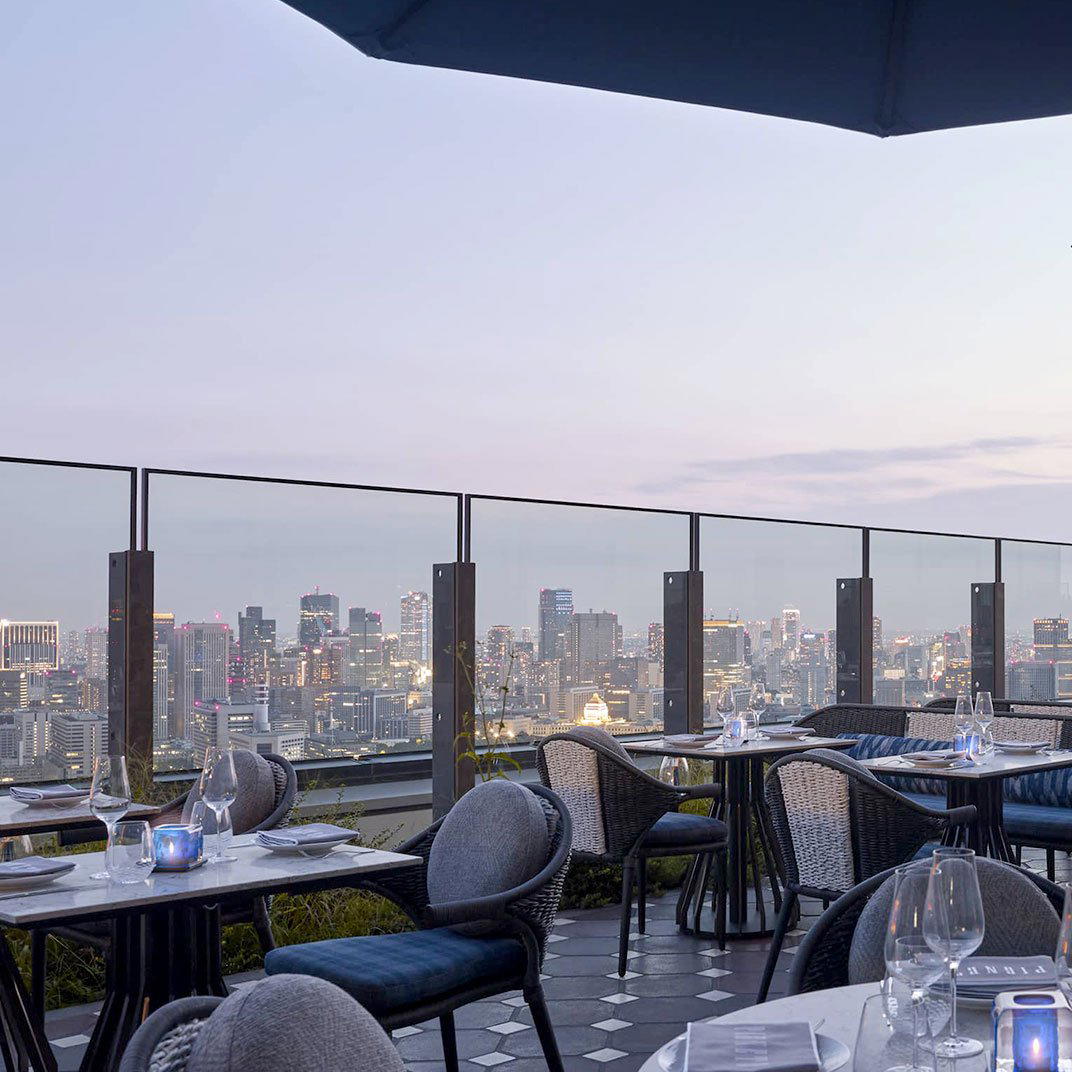
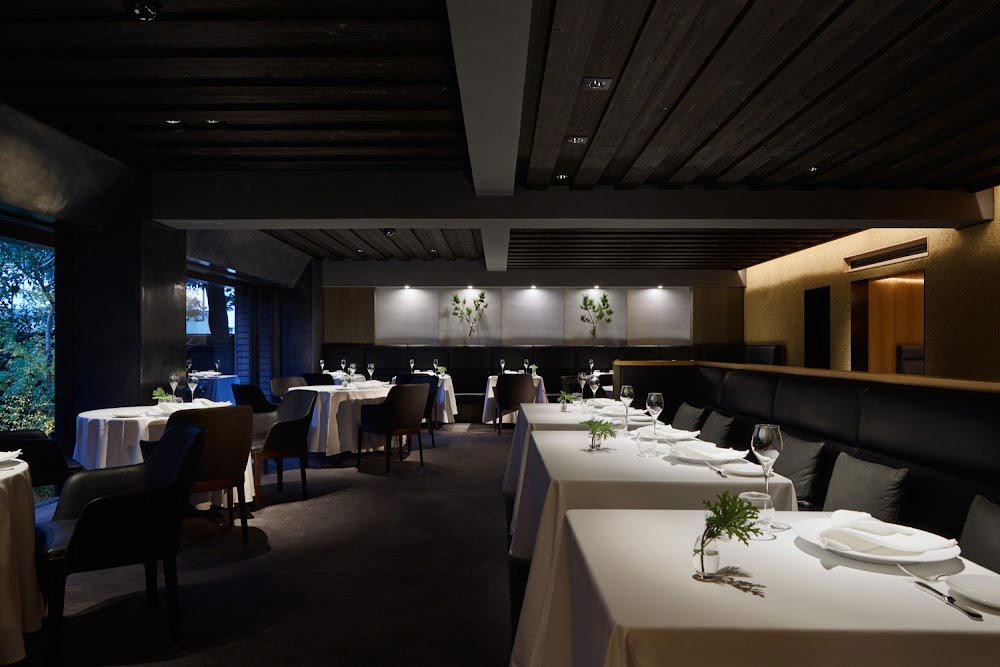
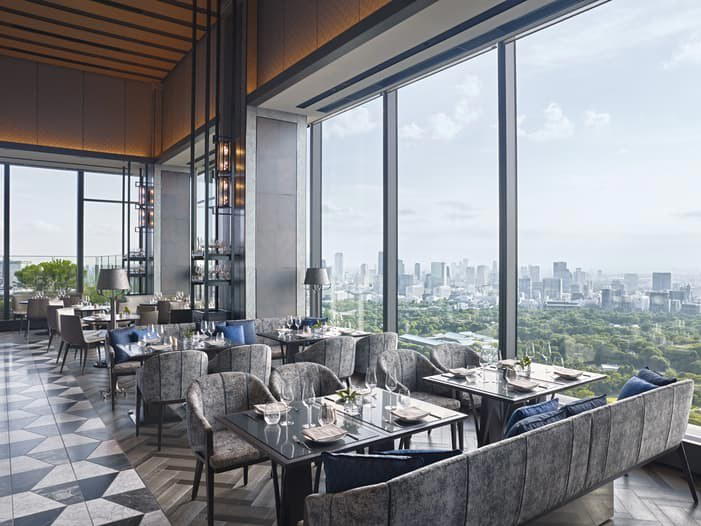
The elevator opens directly into a room where Tokyo spreads in every direction, a hard-edged grid dissolving into haze at the horizon. By the time you reach your table at Est on the 38th floor of the Four Seasons Hotel Tokyo at Otemachi, the city has already done half the work. The dining room itself runs in beige and ecru, with a curtain-glass wall exposing the working kitchen, where brigade movement is constant and visible. The effect is less theatrical than at some high-rise peers and more like sitting inside a functioning atelier that happens to have a panoramic view of one of the world's densest urban concentrations.
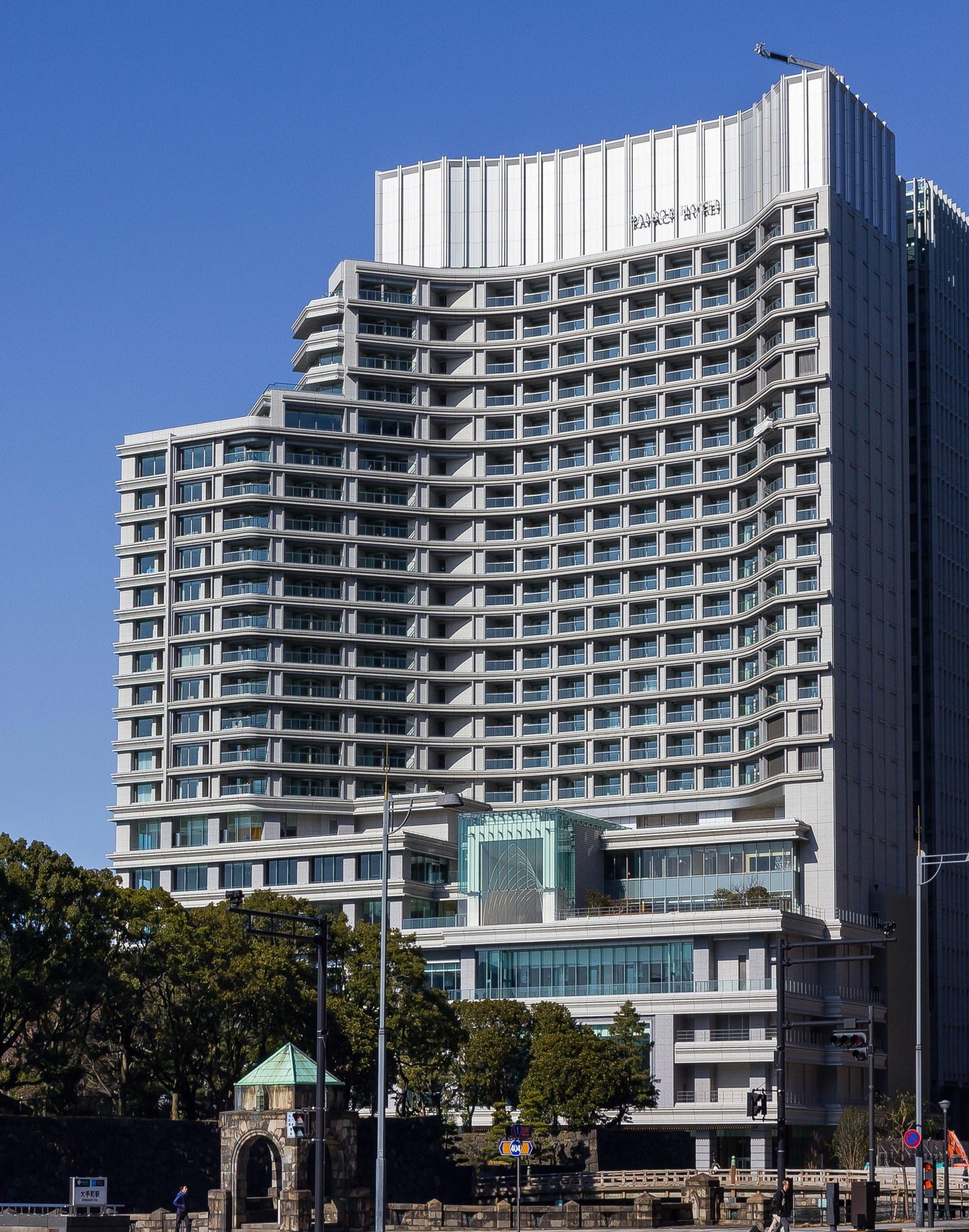
Est opened in 2020 alongside the hotel's launch in Otemachi One Tower, one of the newer downtown high-rises in a district that anchors Tokyo's financial and corporate core. The setting matters beyond aesthetics. Otemachi puts Est in a different competitive orbit from the French restaurants that cluster around Ginza and Roppongi. Where those neighbourhoods draw a mixed international crowd with strong tourist representation, the Otemachi address skews toward corporate dining and high-end hotel guests who treat French cuisine as a default register for serious meals, not a novelty.
French Cuisine Sourced Through Japanese Terroir
Tokyo's French restaurant field has matured into distinct sub-categories over the past two decades. The first wave built on classical technique and imported credentials. The current generation, of which Est is a working example, operates differently: the French framework stays in place, but ingredient sourcing and conceptual orientation point inward toward Japan rather than outward toward France. A map of Japan displayed in the dining room marks the provenance of Est's ingredients, which functions less as decoration than as a statement of method.
Chef Guillaume Bracaval, who trained under Christian Le Squer at Le Cinq in Paris and has worked in Japanese kitchens, structures the menu around what Japan's 72 micro-seasons make available. The implication is that the menu changes more frequently than a conventional seasonal rotation would suggest. Black cod, yuzu, and artisanal soy products appear across seasons as anchor ingredients, while proteins and produce shift according to regional harvest timing. This is the operational logic that separates an ingredient-led French-Japanese kitchen from one that simply applies Japanese garnishes to French classical structure.
The sustainability orientation runs deeper than sourcing. Est substitutes imported butter and cheese with house-made tofu cheese and hummus, a move motivated by reducing carbon from transatlantic freight. Whether that reads as constraint or creative premise depends on your position on the debate around ingredient substitution in haute cuisine, but the kitchen's execution holds the approach to a high technical standard. The peau de soja dessert made from tofu and Japanese citrus has developed a following among regulars for its textural range: creamy, crunchy, and acidic in the same preparation. Pastry chef Michele Abbatemarco builds the dessert section around fruit-forward compositions using artisanal Japanese sugar rather than processed white sugar.
Lunch operates on a one-, two-, or three-course format, making Est one of the more accessible entry points among Tokyo's Michelin-starred French restaurants for a midday commitment. Dinner runs to a full chef-designed course menu. Reservations are recommended for both services.
The Wine Programme: Burgundy, Bordeaux, and the Japanese Cellar
Est's wine programme, overseen by Wine Director Takahiro Kawasaki, operates at a scale that places it in a different tier from most hotel restaurant wine lists in Tokyo. The cellar holds approximately 3,420 bottles across 530 selections, with declared strengths in Burgundy, Bordeaux, and French wines broadly, alongside a selection of Japanese wines.
The presence of a dedicated Japanese wine section is editorially significant. Japanese wine production has expanded considerably, particularly in Hokkaido and Yamanashi, and restaurants that source Japanese bottles seriously rather than as a novelty gesture are still a minority even in Tokyo. Kawasaki's decision to place Japanese wines alongside Burgundy and Bordeaux rather than in a supplemental section reflects a different view of what the domestic category represents.
The organic French Champagne offering reinforces the sustainability thread that runs through the food programme. Pairing the Champagne selection with the beverage's local-first orientation creates a coherent identity for the drinks programme, rather than the disjointed lists that hotel restaurants sometimes produce when food and beverage procurement operate independently.
For Burgundy-focused diners, Est's wine positioning creates an interesting comparison with the French restaurants operating at similar price points in Tokyo. Sézanne and L'Effervescence both operate at ¥¥¥¥ price points with their own wine identities, but neither sits in a hotel context that implies a cellar of this scale.
Awards and Recognition
Est holds a Michelin one star as of its 2024 listing, an award it had earned by 2024 after opening in 2020. La Liste, which aggregates global restaurant data to produce its annual ranking, placed Est at 94.5 points in 2025 and 93 points in its 2026 assessment, situating it in the upper tier of the La Liste global chart without reaching the sub-100 global bracket. The property itself carries Forbes Travel Guide four-star status, a designation for the Four Seasons Hotel Tokyo at Otemachi rather than the restaurant independently. Together, these signals position Est as a restaurant with institutional credentials that has continued to move up in specialist aggregator rankings across its first five years of operation.
Planning Your Visit
| Factor | Est | L'Effervescence | Sézanne |
|---|---|---|---|
| Cuisine | French / Japanese terroir | French / vegetable-led | French / Japanese-influenced |
| Price tier | ¥¥¥¥ | ¥¥¥¥ | ¥¥¥¥ |
| Setting | 38th floor, hotel, city views | Stand-alone, residential Nishiazabu | Hotel (Four Seasons Marunouchi) |
| Wine cellar scale | 3,420 bottles, 530 selections | Not published | Not published |
| Michelin recognition | 1 Star (2024) | 2 Stars | 2 Stars |
| Lunch service | Yes (1–3 course options) | Yes | Yes |
Est is located at 1 Chome-2-1 Ōtemachi, Chiyoda City, Tokyo 100-0004, inside the Four Seasons Hotel Tokyo at Otemachi on the 38th floor. Otemachi Station on the Tokyo Metro provides direct access. Valet and self-parking are available. Dress code runs business casual. Private dining is available, as are outdoor seating, gluten-free options, and vegetarian options. Reservations are recommended for both lunch and dinner services.
For a broader view of Tokyo's restaurant scene, see our full Tokyo restaurants guide. Related city guides cover hotels, bars, wineries, and experiences. For French cuisine in a comparable technical register elsewhere in Asia, Les Amis in Singapore and Hotel de Ville Crissier in Crissier provide useful reference points. Within Japan, HAJIME in Osaka, Gion Sasaki in Kyoto, akordu in Nara, Goh in Fukuoka, 1000 in Yokohama, and 6 in Okinawa represent different expressions of serious cooking across the country.
Frequently asked questions
Is est okay with children?
Est is not oriented toward young children. The restaurant operates at ¥¥¥¥ price points inside a Forbes Travel Guide Four-Star hotel, with a chef-designed course menu and a formal dining room on the 38th floor. Families with older children who are comfortable in structured, quiet settings may manage, but the format is built around adult pacing.
What kind of setting is est?
The dining room sits on the 38th floor of Four Seasons Tokyo at Otemachi, with floor-to-ceiling views across the city grid and an open kitchen behind a glass wall. The interior runs in beige and ecru tones, formal without being theatrical. A map of Japan marking each ingredient's origin replaces conventional decor as the room's visual focal point, a design choice that signals the kitchen's sourcing logic.
Is est Michelin-listed?
est has received recognition including: Serving innovative French cuisine with a Japanese twist on the top of Tokyo, Est sits on the 38th floor of Four Seasons Hotel Tokyo at Otemachi. The Forbes Travel Guide Four-Star property is housed in Otemachi One Tower, which is one of the….
What do regulars order at est?
Inspector documentation consistently flags the peau de soja: a dessert made from tofu and Japanese citrus that delivers a creamy, crunchy, and tangy textural range simultaneously. Beyond that, the menu rotates across Japan's 72 micro-seasons, with black cod, yuzu preparations, and artisanal soy products appearing throughout the year as near-permanent anchors in Chef Guillaume Bracaval's French-through-Japanese-terroir framework.
What's the pricing like at est?
Pricing at est is listed as ¥¥¥¥.
What part of town is est in?
est is located at 1 Chome-2-1 Ōtemachi, Chiyoda City, Tokyo 100-0004, Japan, Tokyo.
Compact Comparison
A short peer table to compare basics side-by-side.
| Venue | Cuisine | Price | Awards | Notes |
|---|---|---|---|---|
| estThis venue (the venue you are viewing) | Modern French with Japanese Influences | $300–500 | 1 Michelin Star · La Liste Top Restaurants | Not listed |
| Harutaka | Edo-Style Omakase Sushi | $200–300 | 3 Michelin Stars · World's 50 Best #76 | Sushi |
| RyuGin | Modern Kaiseki | $500+ | 3 Michelin Stars · World's 50 Best #41 | Kaiseki, Japanese |
| L'Effervescence | Modern French with Japanese Influences | $200–300 | 3 Michelin Stars · World's 50 Best #69 | French |
| HOMMAGE | Modern French with Japanese Influences | $150–200 | 2 Michelin Stars · World's 50 Best #78 | Innovtive French, French |
| MAZ | Innovative Peruvian-Japanese Fusion | $150–200 | 2 Michelin Stars · World's 50 Best #28 | Innovative |
Recognition history
Dated appearances from independent guides and award organizations, with the underlying list record or original source where available.
Michelin 1 Star
Michelin
La Liste Top Restaurants
La Liste
Star Wine List
Star Wine List
Opinionated About Dining Top Restaurants in Japan Recommended
Opinionated About Dining
Wine Spectator Best of Award of Excellence
Wine Spectator
Full recognition history (14 entries)
Forbes 4-Star
Forbes
La Liste Top Restaurants
La Liste
Opinionated About Dining Top Restaurants in Japan Ranked #449
Opinionated About Dining
The Best Chef One Knife
The Best Chef
Wine Spectator Best of Award of Excellence
Wine Spectator
Michelin 1 Star
Michelin
Opinionated About Dining Top Restaurants in Japan Ranked #488
Opinionated About Dining
Opinionated About Dining Top Restaurants in Japan Recommended
Opinionated About Dining
Tabelog 100 #56 · No. 56
Tabelog · Tabelog 100 - Bar - 2022
Continue exploring
More in Tokyo
Restaurants in Tokyo
All restaurants in Tokyo →

Bars in Tokyo
All bars in Tokyo →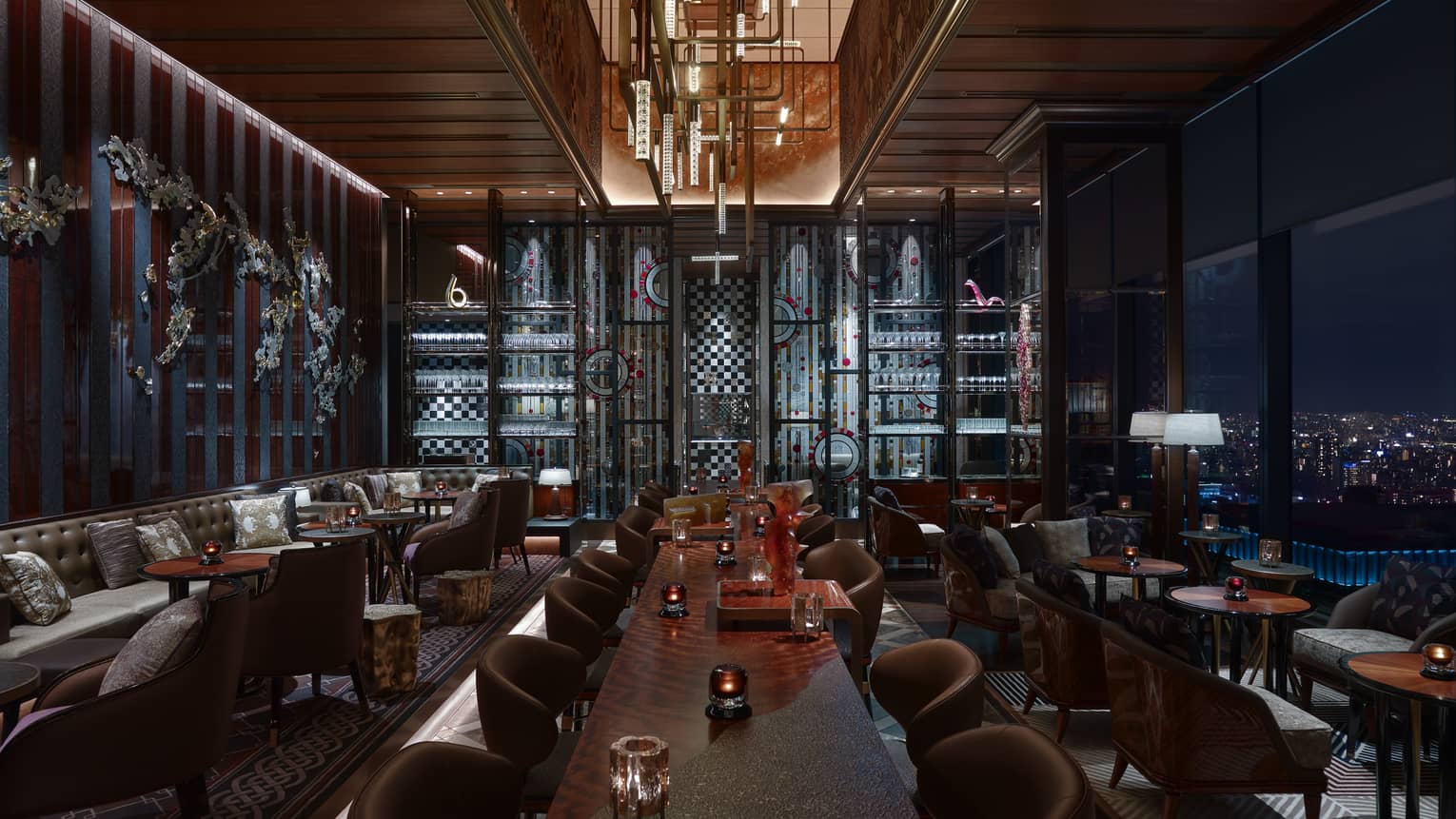


est
The wine
est holds the Wine Spectator Best of Award of Excellence, which Wine Spectator gives to lists of usually 350 or more selections.
- Wine program
- Deep wine list
- Wine Spectator
- Wine Spectator Best of Award of Excellence
- Selections
- 530
- Bottles in cellar
- 3,420
- List strengths
- Burgundy, Bordeaux, France, Japan
- Wine director
- Takahiro Kawasaki
- Extensive wine list
- Sommelier-led
- Sake program
Details
- Elegant
- Sophisticated
- Modern
- Intimate
- Date Night
- Special Occasion
- Celebration
- Hotel Restaurant
- Open Kitchen
- Panoramic View
- Extensive Wine List
- Sake Program
- Sommelier Led
- Local Sourcing
- Farm To Table
- Skyline
Current opening hours
- Monday
- Closed
- Tuesday
- 12–3 PM, 6–10 PM
- Wednesday
- 12–3 PM, 6–10 PM
- Thursday
- 12–3 PM, 6–10 PM
- Friday
- 12–3 PM, 6–10 PM
- Saturday
- 12–3 PM, 6–10 PM
- Sunday
- 12–3 PM, 6–10 PM
Hours can change for holidays and private events. Hours as of .
Light, airy space with modern neutrals, high ceilings, and far-reaching city views from every table, creating a sophisticated and relaxing atmosphere.