
A former professional boxer turned sushi chef, Satoru Araki runs a compact omakase counter in Ebisu that has earned consecutive Michelin Plate recognition in 2024 and 2025. The format is direct and deliberate: sourcing through a trusted tuna broker, a counter designed for chef-to-guest proximity, and a sequence that opens with aubergine before moving into the main tuna program. Reservations at this ¥¥¥ counter are competitive.
Pearl is the En Primeur Club membership app — saves, bookings, and concierge access live there. Same editors, same standards.
- Address
- Japan, 〒150-0022 Tokyo, Shibuya, Ebisuminami, 1 Chome−17−16 グランベル恵比寿Ⅴ 2階
- Phone
- +81 3-6452-2992
- Website
- instagram.com
- Directions
- Get directions
 Saves & bookings on Pearl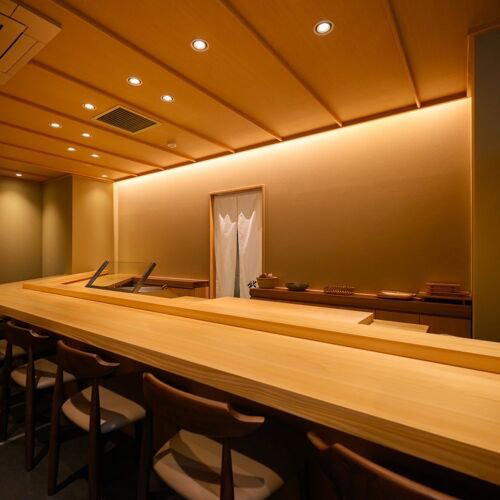
Where Sourcing Is the Argument
Tokyo's omakase circuit has long operated on a clear hierarchy: the Ginza and Azabu counters command the highest prices and the longest waiting lists, while neighbourhood sushi in Ebisu and Daikanyama occupies a different tier, less ceremonial in setting, but often sharper in its sourcing commitments. Sushi Satoru sits in Ebisu, on the second floor of a low-key building on Ebisuminami 1-chome, and its Michelin Plate recognition in both 2024 and 2025 places it inside the documented mid-tier of Tokyo's omakase scene: credentialled, worth tracking, and priced at ¥¥¥ rather than the ¥¥¥¥ bracket occupied by peers such as Harutaka or Sukiyabashi Jiro Roppongiten.
What separates the counters in this tier from one another is rarely technique alone. The question that matters more is where the fish comes from and who is making decisions about it. At Sushi Satoru, the tuna supply chain runs through a single trusted broker, a relationship the counter treats as foundational rather than incidental. In a city where the volume of sushi restaurants makes it easy for sourcing to become anonymous and interchangeable, that kind of fixed broker relationship is a structural choice with real implications for what lands on the rice.
The Broker Relationship and What It Produces
Japan's wholesale fish trade is not monolithic. Tokyo's Toyosu Market handles enormous throughput, but particularly serious omakase kitchens in the city tend to work with specialist intermediaries who have long-term relationships with specific fishing operations or auction buyers. When a counter anchors its tuna program to a single broker, it is effectively betting that one relationship will consistently deliver better product than open-market sourcing. The risk is supply volatility; the reward, when it works, is consistency of quality and access to preferred cuts before they reach the wider market.
This model has precedent across Tokyo's serious sushi counters. Sushi Kanesaka, operating at a higher price point in Ginza, built much of its reputation on long-term supplier discipline of exactly this kind. Sushi Satoru operates at a different tier and scale, but the underlying logic is the same: the chef-broker relationship is where quality is decided, before a knife touches anything.
The tuna work at Sushi Satoru is described as reflecting shared purpose between chef and supplier, less a transactional arrangement and more a collaborative one, where both parties have a stake in the outcome. In edomae sushi tradition, that kind of sourcing integrity is understood as craft, not marketing. Restaurants further down the omakase hierarchy, including well-regarded counters like Edomae Sushi Hanabusa, have built reputations on similar foundations.
Opening With Aubergine
The omakase sequence at the restaurant opens not with raw fish but with aubergine, prepared with attention to flavour, texture, and aroma. This matters because it signals something about how the counter thinks about the meal as a whole. In many Tokyo omakase formats, the opening courses function as palate preparation: something acidic, something warming, something that slows the pace before the nigiri begins. An aubergine opening is not unusual in kaiseki-adjacent formats, but it is a meaningful choice in a sushi context, where many counters move almost immediately to seafood.
It also reflects a broader shift in how the more considered Tokyo sushi counters are building their sequences. The pure nigiri-only format still exists, particularly at the upper end of the Ginza tier, but counters at the ¥¥¥ level increasingly treat the opening section of the meal as an opportunity to show range and to pace the guest into the fish work that follows. The aubergine course at the restaurant is documented as crafted with specific attention to all three sensory registers: flavour, texture, and aroma, not just taste.
The Counter and Its Design Logic
The physical format of the counter at the restaurant is built around direct transfer: the moment when the chef's hand passes the nigiri to the guest's hand. This is not a novel idea in sushi, hand-to-hand service at the counter has deep roots in edomae tradition, and it remains the preferred format at serious counters across Tokyo, from neighbourhood spots in Ebisu to the high-end rooms in Ginza. But it is a deliberate rejection of the more theatrical, distance-maintaining plating styles that have crept into some contemporary omakase formats.
The counter's location in Ebisu, rather than Ginza or Azabu, is itself part of the design logic. After operating a fully booked restaurant, one that could have continued on commercial momentum alone, the decision to relocate reflects a prioritisation of the counter format over scale. Tokyo's sushi scene rewards that kind of discipline. The counters with the deepest reputations tend to be the ones that chose intimacy over volume at a moment when volume was available. Hiroo Ishizaka, operating nearby in the same Ebisu-Hiroo corridor, represents a comparable approach to neighbourhood-based precision.
Placing Sushi Satoru in the Tokyo Omakase Picture
Tokyo holds more Michelin-starred and Michelin-recognised sushi counters than any other city. The restaurant is rated 4.7 on Google, sits in the ¥¥¥¥ price tier, and is notable for its modern omakase sushi. It is Michelin's signal that the food is good, that the kitchen is consistent, and that the inspector considers it worth a visit. For a ¥¥¥ counter operating in a competitive neighbourhood, consecutive Plate awards carry real weight as a trust signal.
Compared to the ¥¥¥¥ tier, where counters like Harutaka operate with longer lead times and higher price floors, the restaurant represents a more accessible entry point into documented-quality Tokyo omakase. For travellers building a broader Japan itinerary, the Ebisu counter fits alongside other precision-led restaurants across the country: HAJIME in Osaka, Gion Sasaki in Kyoto, or the more experimental akordu in Nara. For sushi specifically, the comparison set extends internationally to Sushi Shikon in Hong Kong and Shoukouwa in Singapore, both of which transplant Tokyo-trained technique to different markets, a useful frame for understanding what the Tokyo source looks like in its home context.
For those extending south, 1000 in Yokohama and Goh in Fukuoka are worth the detour. For something further afield, 6 in Okinawa offers a different register entirely.
Planning Your Visit
The restaurant is located on the second floor at 1-17-16 Ebisuminami, Shibuya, Tokyo. The counter holds Michelin Plate recognition for 2024 and 2025 and is priced in the ¥¥¥ range. Advance booking is advisable; the combination of a small counter format and documented recognition keeps availability tight.
Quick reference: Ebisu, Shibuya, Tokyo, ¥¥¥¥ modern omakase sushi.
Comparison Snapshot
Comparable venues nearby, for context on price, style, and recognition.
| Venue | Cuisine | Price | Awards | Notes |
|---|---|---|---|---|
| Sushi SatoruThis venue — the venue you are viewing | Modern Omakase Sushi | $$$$ | Michelin Plate | Not listed |
| Sushi Miyuki | Edomae Sushi Omakase | $$$$ | Michelin Plate | Chūō |
| Soan Mitate | Modern Japanese Soba Omakase | $$$$ | Michelin Plate | Minato |
| Miyawaki | Kyoto-style Kaiseki | $$$$ | Michelin Plate | Minato |
| Akebonobashi Kazu | Modern Kaiseki Omakase | $$$$ | Michelin Plate | Shinjuku |
| Kagurazaka Marutomi | Kaiseki with Iwate Wagyu | $$$$ | Michelin Plate | Shinjuku |
Recognition history
Dated appearances from independent guides and award organizations, with the underlying list record or original source where available.
Michelin Plate
Michelin
Michelin Plate
Michelin
Michelin Plate
Michelin










At a Glance
- Intimate
- Cozy
- Elegant
- Sophisticated
- Modern
- Date Night
- Special Occasion
- Chefs Counter
- Sake Program
- Sustainable Seafood
Current opening hours
- Monday
- 5:30–10:30 PM
- Tuesday
- 5:30–10:30 PM
- Wednesday
- 5:30–10:30 PM
- Thursday
- 5:30–10:30 PM
- Friday
- 5:30–10:30 PM
- Saturday
- 5–10 PM
- Sunday
- Closed
Hours can change for holidays and private events. Last verified .
Quiet, serene space with cozy hexagonal counter seating fostering personal connection to the chef.