
Michelin Plate
Our verdict
A Michelin Plate kaiseki counter in Shinjuku's quiet Arakicho district, Akebonobashi Kazu sits at the accessible end of Tokyo's Japanese dining spectrum without conceding on seasonal discipline. The menu follows kaiseki structure — wanmono, grilled fish, takikomi-gohan — with creative flourishes threaded through a framework of studied simplicity. For a mid-price entry into serious Japanese seasonal cooking, few addresses in this neighbourhood offer comparable rigour.

Pearl is the En Primeur Club membership app — saves, bookings, and concierge access live there. Same editors, same standards.
The menu
What to order
- Squid sashimi
- Wagyu beef
- Takikomi-gohan
A Back-Street Room Where Kaiseki Loses Its Formality
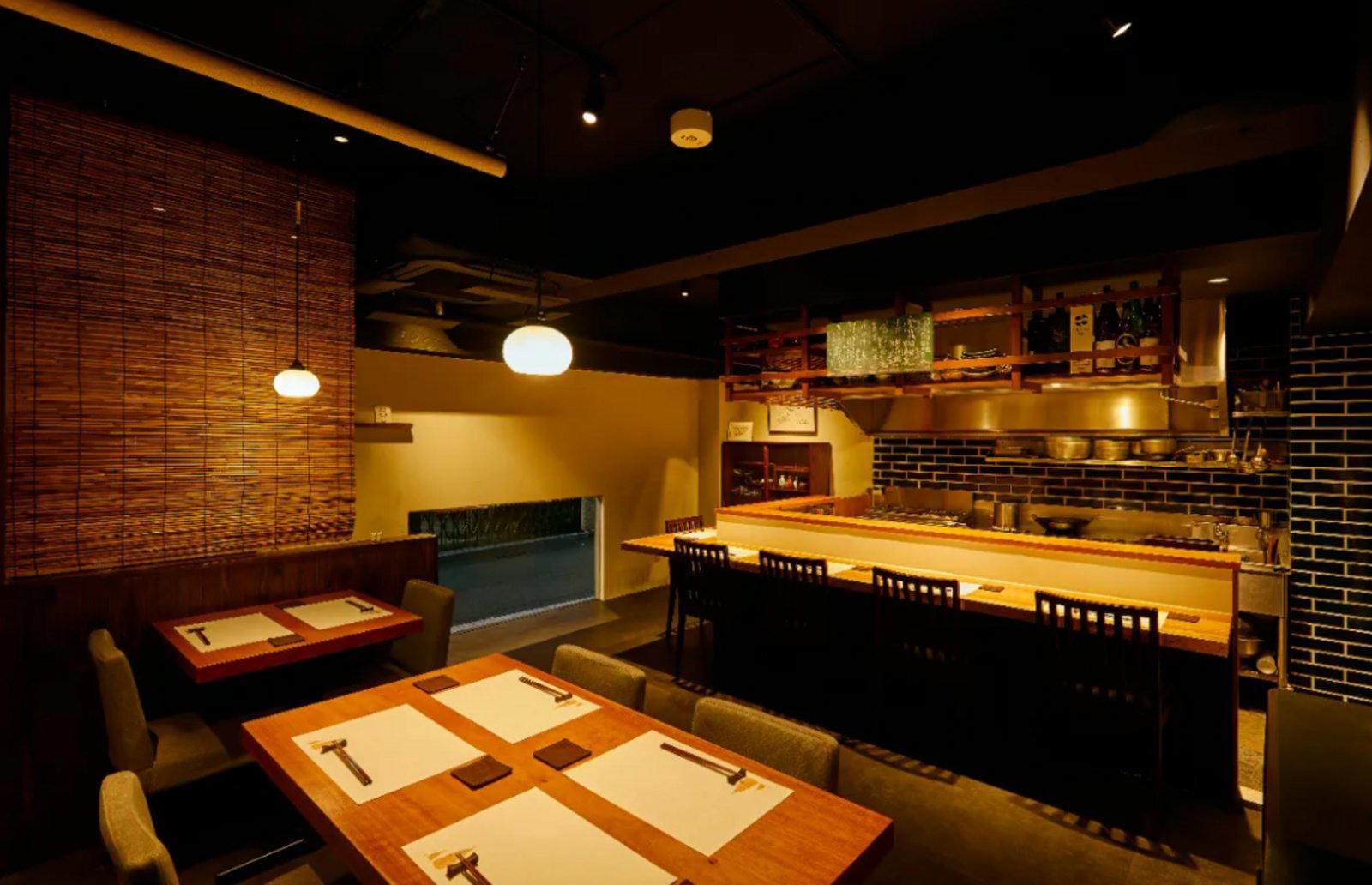
Arakicho is the kind of neighbourhood that Tokyo keeps for itself. Tucked into the southern edge of Shinjuku City, the district is dense with narrow lanes, older residential buildings, and the kind of small-counter restaurants that fill on reputation alone. There are no bright signs here competing for attention. Akebonobashi Kazu occupies the first floor of the Espero Building on Arakicho 16-26, a low-profile address that fits neatly into that texture. Walking toward it in the evening, the city's larger noise drops away, and the scale of the room — small, contained, designed for a specific pace — announces itself before you step inside.
That physical restraint is not incidental. Much of Tokyo's kaiseki culture at the higher price tiers has migrated toward architectural statements: high ceilings, curated garden views, lacquered surfaces that signal ceremony before a dish has arrived. Akebonobashi Kazu operates at the opposite end of that axis. The ¥¥ price positioning places it two full tiers below venues like RyuGin or Kagurazaka Ishikawa, and the room reflects that different register: the design is spare rather than grand, and the spatial logic is built around proximity rather than spectacle. In a city where kaiseki is frequently packaged as occasion dining, this counter reads more like a working kitchen with a dining component attached, which, for the format's original purpose, is closer to the spirit of the thing.
The Kaiseki Framework, Interpreted With Seasonal Precision
Kaiseki as a structure has remained durable across centuries precisely because it is a discipline, not a style. The sequence, from lighter, cleaner courses toward heartier, grain-based conclusions, is a scaffold onto which each kitchen places its own seasonal interpretation. At Akebonobashi Kazu, that scaffold is followed with care. The wanmono course, the lidded soup that sits at the emotional centre of any kaiseki progression, includes fishcake preparations that deepen the surrounding broth rather than competing with it. Fish in season is salted and grilled over charcoal: a technique that prioritises the ingredient's own character over intervention. The meal closes with takikomi-gohan, a seasoned rice dish cooked with seasonal ingredients, which shifts with the calendar and serves as both practical conclusion and quiet statement of where the season currently stands.
That closeness to season is a consistent signal in Michelin's recognition of the venue, awarded a Michelin Plate in both 2024 and 2025. The Plate designation, often misread as a minor credential, specifically marks restaurants offering food of good quality: it sits above generic recommendation and represents a deliberate editorial position by the guide. For a mid-price kaiseki counter in a residential neighbourhood without the marketing infrastructure of Ginza or Minami-Aoyama addresses, two consecutive Plate recognitions confirm that the cooking is operating at a level the city's most demanding food publication considers worth signalling.
The menu's creative flourishes are woven into the kaiseki conventions rather than placed on top of them. This is a meaningfully different approach from the innovation-first kitchens that have shaped Tokyo's more experimental Japanese dining over the past decade. At venues like Den, the format itself is an intervention. Here, the structure is respected, and the ingenuity operates inside it, in the specific combination of fishcake and broth, in the timing and choice of charcoal-grilled fish, in the seasonal attunement of the closing rice. The premise is that simplicity and attention to detail are not mutually exclusive: if anything, one demands the other.
Positioning Within Tokyo's Mid-Range Japanese Dining Tier
Tokyo's Japanese dining spectrum is longer and more internally differentiated than most cities' entire restaurant scenes. At the upper end, three-Michelin-star kaiseki venues set international reference points and price accordingly. Below that tier, a significant number of kitchens, including many that Michelin recognises at Plate or Bib Gourmand level, offer serious seasonal cooking at price points accessible to repeat visits rather than occasional pilgrimages. Akebonobashi Kazu belongs to that second group, where the competitive set is defined less by international profile and more by consistency, neighbourhood trust, and seasonal discipline.
Compared to kaiseki counters in more trafficked dining districts, the Arakicho location means the room draws a local and word-of-mouth audience rather than tourists cross-referencing multiple guide apps. That audience tends to return, and the kitchen's attunement to the seasonal calendar makes returns rewarding. For visitors building a Tokyo dining itinerary that covers more than one price tier, pairing this address with a higher-ticket kaiseki dinner, at Azabu Kadowaki or Ginza Fukuju, for instance, produces a useful comparison. The structural logic of kaiseki is the same; what differs is the register in which that logic is executed and the spatial statement surrounding it.
Other Michelin-recognised Japanese counters in Tokyo at comparable or adjacent price points, Myojaku and Jingumae Higuchi among them, operate in their own neighbourhood contexts with their own interpretive emphases. What links them is a shared conviction that the kaiseki discipline remains productive at price points that do not require occasion-level justification.
Planning a Visit
The restaurant sits at Arakicho 16-26 in Shinjuku City, on the first floor of the Espero Building. Akebonobashi Station on the Tokyo Metro Marunouchi Line is the most direct access point, and the neighbourhood is walkable from Yotsuya and Shinjuku-Sanchome stations as well. Given the small scale of the room and the counter format, reservations are advisable, walk-in availability at kaiseki counters of this type in Tokyo tends to be limited, particularly on weekdays when the local clientele is most active. Phone and online booking details are best confirmed directly; the venue does not publish hours or booking channels on widely indexed platforms, which is consistent with how smaller Arakicho addresses tend to operate.
For context on Tokyo dining more broadly, from the neighbourhood-level dynamics of Shinjuku to the full range of the city's Japanese and international kitchens, see our full Tokyo restaurants guide. If your itinerary extends beyond the capital, comparable seasonal Japanese cooking can be found at Gion Sasaki in Kyoto, Isshisoden Nakamura in Kyoto, Kashiwaya Osaka Senriyama, and HAJIME in Osaka. For broader Tokyo planning, our Tokyo hotels guide, bars guide, and experiences guide cover the full range. Those extending the trip to Nara, Fukuoka, Okinawa, or Yokohama will find further reference points at akordu in Nara, Goh in Fukuoka, 6 in Okinawa, and 1000 in Yokohama.
Frequently asked questions
Where is Akebonobashi Kazu located?
Akebonobashi Kazu is located at Japan, 〒160-0007 Tokyo, Shinjuku City, Arakicho, 16−26 「エスペロビル/1F」, Tokyo.
What distinctions does Akebonobashi Kazu have?
Akebonobashi Kazu has received recognition including: In search of cuisine that only his native country could conceive, the chef devoted himself to the path of Japanese cuisine. The menu observes the basics of kaiseki while imparting creative flourishes. Wanmono include items with fishcake tha….
What should I order at Akebonobashi Kazu?
The kitchen sets the course, so ordering is not how a visit here works. The menu follows a kaiseki sequence, and Michelin's recognition specifically calls out the wanmono course with fishcake in broth, charcoal-grilled seasonal fish, and takikomi-gohan served at the meal's close. Each of those three anchors the progression, and the kitchen adjusts all of them to the season.
Is Akebonobashi Kazu more mid-range or high-end?
Pricing at Akebonobashi Kazu is listed as ¥¥.
The Short List
A quick peer reference to anchor this venue in its category.
| Venue | Cuisine | Price | Awards | Notes |
|---|---|---|---|---|
| Akebonobashi KazuThis venue — the venue you are viewing | Modern Kaiseki Omakase | Not listed | Michelin Plate | Not listed |
| Harutaka | Edo-Style Omakase Sushi | $200–300 | 3 Michelin Stars · World's 50 Best #76 | Sushi |
| RyuGin | Modern Kaiseki | $500+ | 3 Michelin Stars · World's 50 Best #41 | Kaiseki, Japanese |
| L'Effervescence | Modern French with Japanese Influences | $200–300 | 3 Michelin Stars · World's 50 Best #69 | French |
| HOMMAGE | Modern French with Japanese Influences | $150–200 | 2 Michelin Stars · World's 50 Best #78 | Innovtive French, French |
| MAZ | Innovative Peruvian-Japanese Fusion | $150–200 | 2 Michelin Stars · World's 50 Best #28 | Innovative |
Recognition history
Dated appearances from independent guides and award organizations, with the underlying list record or original source where available.
Michelin Plate
Michelin
Full recognition history (3 entries)
Michelin Plate
Michelin
Michelin Plate
Michelin
Continue exploring
More in Tokyo
Restaurants in Tokyo
All restaurants in Tokyo →


Bars in Tokyo
All bars in Tokyo →





Details
- Intimate
- Elegant
- Cozy
- Date Night
- Special Occasion
- Chefs Counter
- Sake Program
- Omakase
- Sake
Current opening hours
- Monday
- 5–11 PM
- Tuesday
- 5–11 PM
- Wednesday
- 5–11 PM
- Thursday
- 5–11 PM
- Friday
- 5–11 PM
- Saturday
- 4–10 PM
- Sunday
- Closed
Hours can change for holidays and private events. Last verified .
Warm and understated with a focus on personalized service in a small counter seating setting.