Akahoshi Ramen


OpenTable Top 100 Restaurants
Our verdict
Akahoshi Ramen in Logan Square has earned a place on Opinionated About Dining's 2025 Cheap Eats list for North America by making everything in-house: soups, noodles, seasonings, and toppings. The name translates to 'Red Star,' a reference to both Sapporo and Chicago that frames the kitchen's dual Japanese-American sensibility.

Pearl is the En Primeur Club membership app, where members save venues, book tables and use the concierge.

The menu
What to order
- Akahoshi Miso
- Aburasoba
- Soupless Tantanmen
- Midwest Shoyu
Where Logan Square Meets Sapporo
Logan Square has been Chicago's most reliably interesting food neighbourhood for the better part of a decade, the kind of place where a serious ramen operation can open without fanfare and fill seats on the strength of the bowl alone. Akahoshi Ramen, at 2340 N California Ave, operates within that tradition. There is no elaborate concept to navigate, no imported chef mythology propping up the menu. What the room offers is what the name promises: a ramen shop with a clear point of view, shaped equally by Sapporo and Chicago.
The name itself, translating to 'Red Star,' functions as a declaration of that dual allegiance. Sapporo's ramen culture, one of Japan's most distinctive regional traditions, leans toward miso-heavy broths, butter, corn, and a richness that separates it from the cleaner Tokyo or Hakata styles. Chicago's food identity, particularly at the affordable end, has always rewarded intensity and directness. Akahoshi Ramen draws from both, which is what places it outside the category of mere Japanese import or nostalgic American noodle bar.
In-House Production as Editorial Statement
Within the broader American ramen scene, the in-house production question has become a meaningful dividing line. Shops that make their own noodles, ferment their own seasonings, and build broths from scratch occupy a different tier than operations relying on commercial bases or pre-cut noodle blocks. Akahoshi Ramen falls into the former category: soups, seasonings, toppings, and noodles are all produced on site. That commitment carries a cost in time and labour, which is precisely why most mid-volume operations avoid it.
This is the same logic that animates the kaiseki tradition in Japanese cuisine, where the preparation of each component is treated as an act of intention rather than expediency. Kaiseki, in its classical form, is not defined by luxury ingredients but by the discipline of making each element correctly, seasonally, and with purpose. A ramen shop is not a kaiseki restaurant, but the underlying philosophy, that what you control in-house, you control in quality, runs through both. At Akahoshi, every element on the tray reflects a decision made in the kitchen, not a specification from a supplier.
For comparison, consider what distinguishes serious ramen destinations in Japan from their casual counterparts. At venues like Afuri in Tokyo, the specificity of broth construction and the precision of noodle calibration are what separate them from the street-level majority. Afuri's Portland outpost extended that philosophy to the American Pacific Northwest. Akahoshi operates within that same tradition of intentionality, applied to a Chicago context.
The Chicago Ramen Tier
Chicago's ramen offer has expanded considerably in recent years, but the serious in-house operators remain a smaller subset. High Five Ramen represents another point on that map, and both venues serve as evidence that Chicago can support ramen at a level that goes beyond convenience dining. Logan Square, specifically, provides the right conditions: a neighbourhood with low tolerance for mediocrity, a customer base that reads menus carefully, and rent structures that still allow small operations to function without scaling up to the point of dilution.
OAD's cheap eats list does not reward novelty or marketing visibility. It rewards consistency and cooking integrity, which means Akahoshi has earned its position on the merits of what lands in the bowl, not the story around it.
Chicago's high-end dining tier, which includes operations like Alinea, Smyth, and Oriole at the Michelin three-star level, and Kasama with its Michelin star and Filipino tasting menu, occupies a completely different price and format bracket. Akahoshi sits at the opposite end of that spectrum without sacrificing the seriousness of intent. The city's dining identity is broad enough to hold both, and the OAD recognition signals that the cheap eats tier deserves the same attention as the tasting menu circuit.
Chef Michael Satinover and the Sapporo Influence
Chef Michael Satinover's operation reflects the kind of focused single-cuisine commitment that defines the leading ramen shops in Japan's regional traditions. Sapporo-style ramen carries specific technical requirements: the miso tare that forms the backbone of the broth, the fat that floats on the surface, the noodle calibration suited to a heavier soup. Building that from scratch in Chicago, without the supply chain infrastructure of a Japanese ramen district, requires both skill and stubbornness. The in-house production model is the practical expression of that commitment.
The dual identity of the name, Red Star referencing both Sapporo and Chicago, is more than branding. It signals an intention to take both influences seriously rather than using one as a veneer over the other. That kind of specificity about culinary origin tends to produce more coherent results than vague fusion premises.
Planning a Visit
Akahoshi Ramen is located at 2340 N California Ave, Suite B, in Logan Square. California Avenue is accessible by the Blue Line CTA, making it reachable from the city centre without a car. Booking details and current hours are best confirmed directly via the venue's current online presence, as operating schedules at independent ramen shops can shift seasonally.
For broader Chicago planning, EP Club covers the city across all categories: restaurants, hotels, bars, wineries, and experiences. For comparative reference across North American dining, EP Club also covers venues at every tier, from Le Bernardin in New York City and The French Laundry in Napa to Lazy Bear in San Francisco, Single Thread Farm in Healdsburg, Providence in Los Angeles, and Emeril's in New Orleans.
Frequently asked questions
What's the must-try dish at Akahoshi Ramen?
The kitchen's identity is rooted in Sapporo-style ramen, with miso as the dominant tare tradition of that region. Given that all soups, noodles, seasonings, and toppings are produced in-house, the miso ramen is the most direct expression of what Akahoshi has built. It is the dish that connects most directly to the Sapporo lineage the name references and the one that leading demonstrates the in-house production philosophy that earned the OAD 2025 Cheap Eats recognition. Chef Satinover's dual Japanese-American framing means the bowl carries Chicago's appetite for intensity alongside Sapporo's technical tradition.
In Context: Similar Options
| Venue | Cuisine | Price | Awards | Notes |
|---|---|---|---|---|
| Akahoshi RamenThis venue (the venue you are viewing) | Modern Sapporo-Style Ramen | $20–30 | OpenTable Top 100 Restaurants | Not listed |
| Alinea | Avant-Garde Molecular Gastronomy | $300–500 | 2 Michelin Stars · World's 50 Best #37 | Progressive American, Creative |
| Smyth | Modern American Tasting Menu | $200–300 | 3 Michelin Stars · World's 50 Best #1 | Progressive American, Contemporary |
| Kasama | Modern Filipino | $30–50 | 2 Michelin Stars · World's 50 Best #31 | Filipino |
| Next Restaurant | Avant-Garde Themed Tasting Menus | Not listed | 1 Michelin Star · We're Smart World 2 Radishes | American Cuisine |
| Boka | Modern American Seasonal Fine Dining | $150–200 | 1 Michelin Star · La Liste Top Restaurants | New American, Contemporary |
Recognition history
Dated appearances from independent guides and award organizations, with the underlying list record or original source where available.
Opinionated About Dining Cheap Eats in North America Recommended
Opinionated About Dining
OpenTable Top 100 Restaurants
OpenTable
Full recognition history (3 entries)
Opinionated About Dining Cheap Eats in North America
Opinionated About Dining
Continue exploring
More in Chicago
Restaurants in Chicago
All restaurants in Chicago →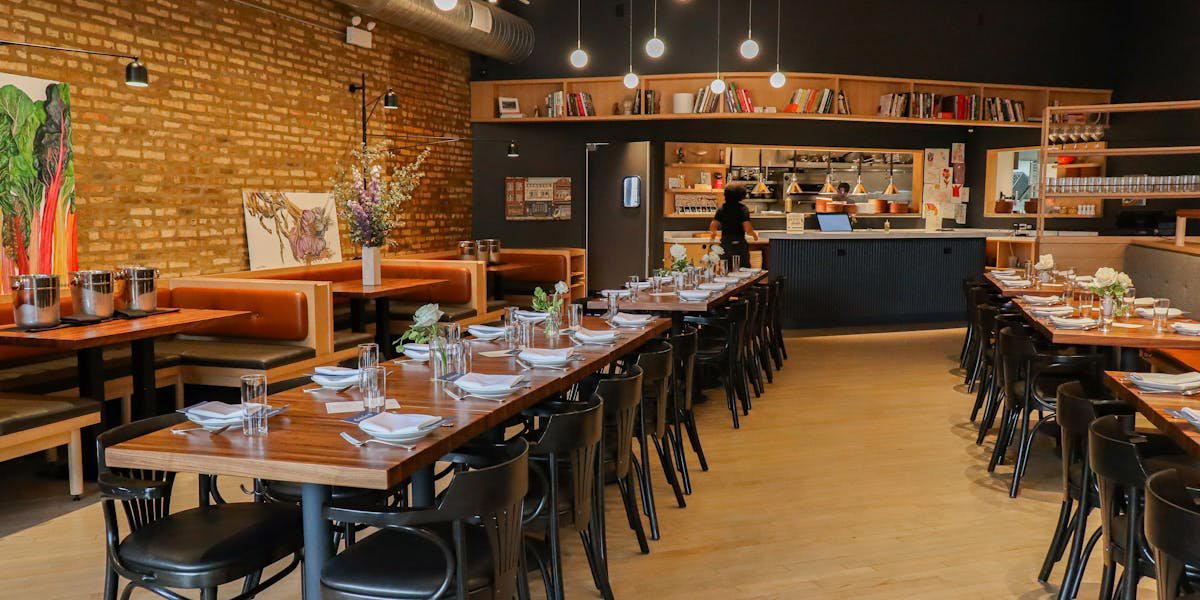
Bars in Chicago
All bars in Chicago →

Details
- Minimalist
- Lively
- Trendy
- Intimate
- Casual Hangout
- Solo
- Group Dining
- Open Kitchen
- Chefs Counter
- Sake Program
- Craft Cocktails
- A La Carte
- Counter Dining
- Sake
- Cocktails
Current opening hours
- Monday
- Closed
- Tuesday
- 5–9 PM
- Wednesday
- 5–9 PM
- Thursday
- 5–9 PM
- Friday
- 5–9 PM
- Saturday
- 5–9 PM
- Sunday
- Closed
Hours can change for holidays and private events. Hours as of .
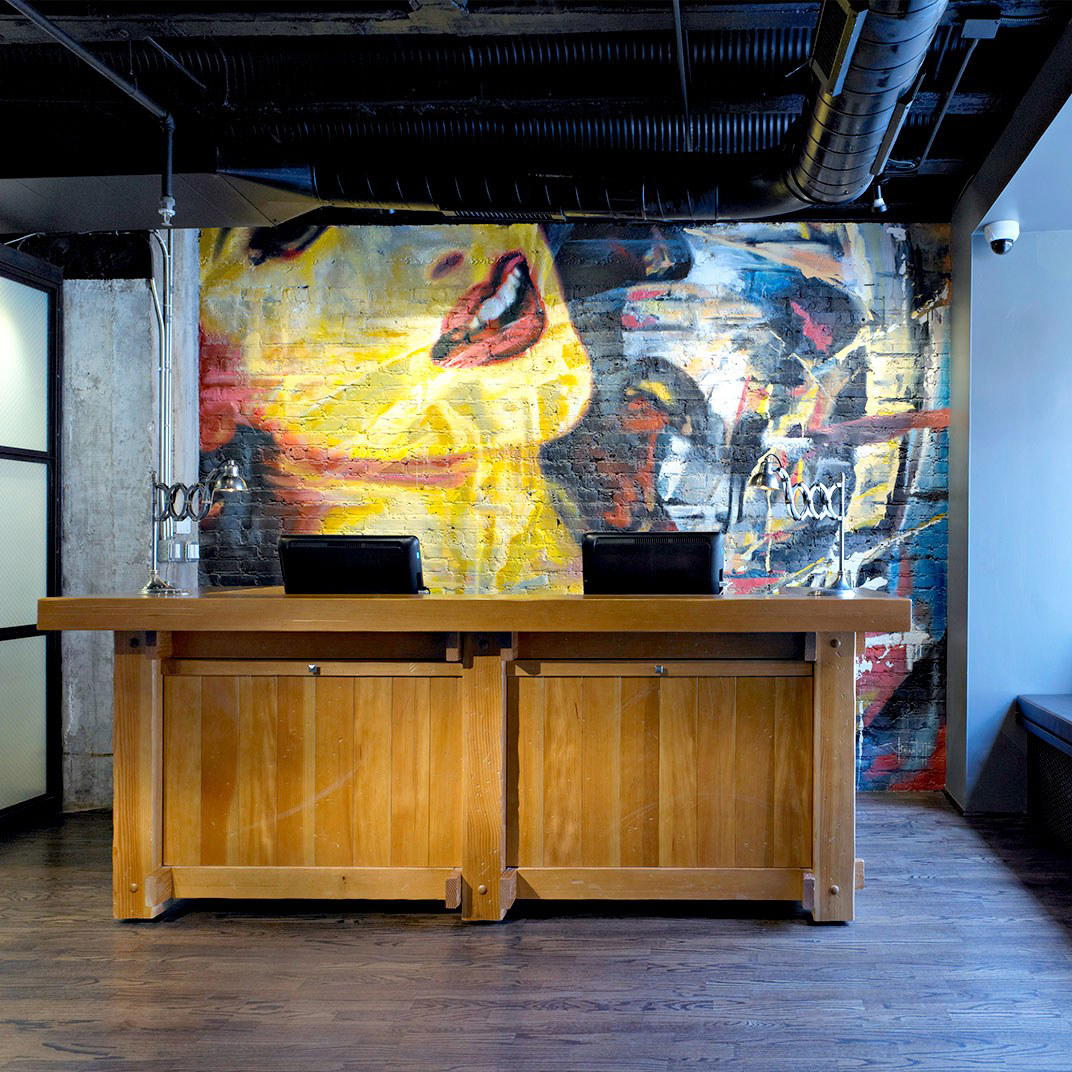
Warm, minimal, and focused space with gentle materials and simple decor that emphasizes the food; constantly packed with an energetic collective atmosphere where diners synchronize their eating at communal tables and kitchen counter seating.