
1 Michelin Star
Our verdict
A Michelin-starred French address in Ebisu built around a single, philosophically precise concept: bread and sauce as the full expression of a meal. The chef's background as a trained saucier shapes every plate, with a three-day consommé anchoring the menu across changing seasonal ingredients. At ¥¥¥, it occupies a deliberate niche among Tokyo's French dining tier.

Pearl is the En Primeur Club membership app, where members save venues, book tables and use the concierge.
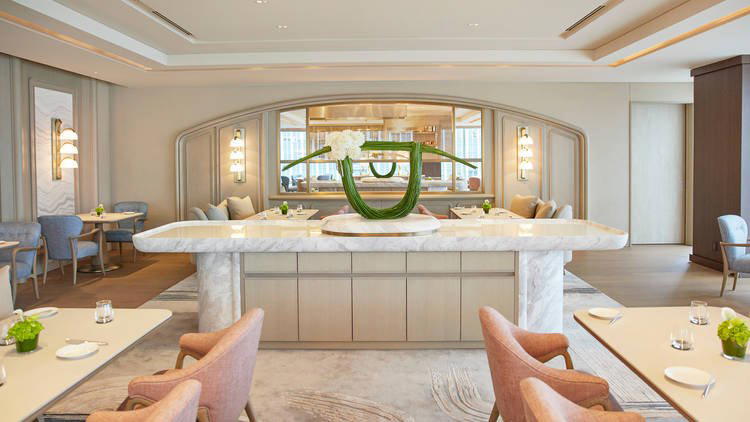
Sauce as Structure: Tokyo's Most Focused French Counter
French fine dining in Tokyo has always operated in tension between faithful classicism and localised reinvention. On one side sit the grand-format houses, Château Restaurant Joël Robuchon with its full Robuchon heritage and formal room in Yebisu Garden, and on the other, a quieter tier of single-focus restaurants built around one technique, one tradition, one obsession. Saucer, in the basement of a low-rise building in Ebisunishi, Shibuya, belongs firmly to the second category. It earned a Michelin star in 2024, and that recognition, while notable, is almost secondary to what the concept actually does: it reduces French cuisine to its most fundamental architectural element.
The Physical Space
The address, basement level, 2 Chome in Ebisunishi, frames the dining experience before a guest even sits down. Basement rooms in Tokyo's French tier tend toward one of two modes: deliberately theatrical, with low lighting engineered for occasion dining, or stripped-back and counter-focused, where the architecture defers entirely to what arrives at the table. Saucer's Ebisu location and its conceptual premise strongly suggest the latter. A restaurant built around bread and sauce as its complete statement of intent has little need for ornament. The space is the argument made physical: remove everything that is not the point, and the point becomes.
Counter-format French restaurants have grown as a distinct category across Tokyo over the past decade, shaped partly by the influence of Japanese minimalist design sensibility on chefs trained in European kitchens. Where ESqUISSE operates across multiple floors in Ginza with a broader menu architecture, and L'Effervescence in Nishi-Azabu uses its street-level room to signal neighbourhood accessibility, a basement address in Ebisu signals something different: a deliberate step back from visibility, a format built for guests who arrive knowing exactly what they are coming for.
The Concept: Bread, Sauce, and the Saucier Tradition
The menu format at Saucer is, by any measure, a provocation. Freshly baked bread arrives on one plate; a sauce arrives on the other. That is the standard, and central, expression. In classical French brigade structure, the saucier holds the most technically demanding station, responsible for all stocks, reductions, glazes, and mother sauces. Escoffier codified the role in the late nineteenth century, and the position has remained the most intellectually rigorous in the kitchen ever since. A chef who trained as saucier and then built an entire restaurant around that single skill set is making a very specific argument about what French cooking actually is.
The three-day consommé is the anchor ingredient, and it is worth understanding what that process involves. Consommé at this level is not a clarified stock produced quickly; it is a reduction and clarification drawn over an extended period, with layers of flavour built and then stripped back to transparency. The result is a liquid that concentrates technique itself. Using it as a foundational ingredient rather than a garnish or accent reverses the usual hierarchy of a French menu, where protein drives the plate and sauce supports it.
Seasonality enters through the sauce: morel mushrooms in spring, sweetfish in summer. Both are ingredients with deep resonance in Japanese cooking as well as in French classical tradition, morels are standard in spring menus across both cultures, and sweetfish (ayu) is a Japanese summer staple that translates into French preparation with its distinctive clean bitterness. The concept does not require a long menu to demonstrate seasonal range; it needs only one ingredient to shift and the entire dish changes character.
Where Saucer Sits in Tokyo's French Tier
Tokyo now hosts a French restaurant tier that would be competitive in Paris. Sézanne in the Four Seasons at Marunouchi operates at the highest price and recognition level, with multiple Michelin stars and a Ritz Paris-trained chef. Florilège in Minami-Aoyama has built a sustained reputation for vegetable-forward French cooking at a counter format that has influenced younger chefs across the city. These addresses price and position at ¥¥¥¥. Saucer operates at ¥¥¥, a meaningful tier below, which, given its Michelin recognition and conceptual clarity, places it as an entry point into starred French dining that does not require the full financial commitment of the leading bracket.
That positioning matters editorially. The one-star Michelin award in 2024 represents Michelin's assessment of cooking quality, but Saucer is not simply a more affordable version of a larger French house. It is doing something structurally different: using price and format to define a category of its own, rather than competing directly with multi-course tasting menus at higher price points. For comparison, Hotel de Ville Crissier in Switzerland and Les Amis in Singapore represent French fine dining that competes within its own regional tier; Saucer's interest lies in what happens when that tradition is reduced to its most concentrated form rather than expanded.
Ebisu as a Dining Address
Ebisu sits between Shibuya to the north and Daikanyama to the south, and its dining character is distinct from both. Shibuya's restaurant density skews toward volume and accessibility; Daikanyama trends toward design-focused neighbourhood cafes and boutique formats. Ebisu occupies a middle register: professional, quieter, with a concentration of French and European addresses that have sustained over years without requiring the visibility of a Ginza or Roppongi location. A basement room in Ebisunishi is, in that context, a logical choice for a concept that does not require foot traffic to justify its existence.
For readers building a Tokyo itinerary around French dining specifically, Our full Tokyo restaurants guide maps the full range of options across neighbourhoods and price points. Beyond French, Tokyo's broader dining scope extends to Our full Tokyo bars guide, Our full Tokyo hotels guide, and Our full Tokyo experiences guide. For wine-focused visits, Our full Tokyo wineries guide covers the domestic production landscape.
Outside Tokyo, the French-influenced fine dining conversation extends to HAJIME in Osaka, akordu in Nara, and Goh in Fukuoka, while Japanese fine dining traditions are represented at Gion Sasaki in Kyoto. Further afield, 1000 in Yokohama and 6 in Okinawa complete the picture of fine dining spread across Japan's regional cities.
Planning a Visit
| Venue | Cuisine | Price Tier | Michelin Recognition | Format |
|---|---|---|---|---|
| Saucer | French | ¥¥¥ | 1 Star (2024) | Concept-driven, basement |
| L'Effervescence | French | ¥¥¥¥ | Michelin-listed | Full tasting menu, street-level |
| Sézanne | French | ¥¥¥¥ | Multi-star | Hotel setting, Marunouchi |
| Florilège | French | ¥¥¥¥ | Michelin-listed | Counter, Minami-Aoyama |
Address: 2 Chome-7-10 Ebisunishi, Shibuya, Tokyo (basement level). Price tier: ¥¥¥. Given the concept's focused format and low likely seat count, advance reservation is strongly advisable.
Frequently asked questions
What is the dish to order at Saucer?
The concept removes the question of what to order in any conventional sense. The standard format is bread and sauce: freshly baked bread on one plate, a prepared sauce on the other, with the sauce varying by season. In spring, morel mushrooms define the preparation; in summer, sweetfish (ayu) provides the seasonal shift. The foundational ingredient across both is a consommé drawn over three days, which forms the technical core of the sauce work. The Michelin committee awarded a star in 2024, which confirms the cooking's technical standard within the French classical tradition, anchored in the chef's background as a trained saucier. That single-station expertise, recognised at apprentice level and now expressed as the entire restaurant's premise, is the most specific reason to visit.
Reputation Context
| Venue | Cuisine | Price | Awards | Notes |
|---|---|---|---|---|
| SaucerThis venue (the venue you are viewing) | Modern French Fine Dining | $300–500 | 1 Michelin Star | Not listed |
| Harutaka | Edo-Style Omakase Sushi | $200–300 | 3 Michelin Stars · World's 50 Best #76 | Sushi |
| RyuGin | Modern Kaiseki | $500+ | 3 Michelin Stars · World's 50 Best #41 | Kaiseki, Japanese |
| L'Effervescence | Modern French with Japanese Influences | $200–300 | 3 Michelin Stars · World's 50 Best #69 | French |
| HOMMAGE | Modern French with Japanese Influences | $150–200 | 2 Michelin Stars · World's 50 Best #78 | Innovtive French, French |
| MAZ | Innovative Peruvian-Japanese Fusion | $150–200 | 2 Michelin Stars · World's 50 Best #28 | Innovative |
Recognition history
Dated appearances from independent guides and award organizations, with the underlying list record or original source where available.
Michelin 1 Star
Michelin
Full recognition history (2 entries)
Michelin 1 Star
Michelin
Continue exploring
More in Tokyo
Restaurants in Tokyo
All restaurants in Tokyo →

Bars in Tokyo
All bars in Tokyo →




Details
- Intimate
- Elegant
- Cozy
- Date Night
- Special Occasion
- Open Kitchen
- Chefs Counter
- Extensive Wine List
- Tasting Menu
Current opening hours
- Monday
- 6–11 PM
- Tuesday
- 6–11 PM
- Wednesday
- 6–11 PM
- Thursday
- 6–11 PM
- Friday
- 6–11 PM
- Saturday
- 6–11 PM
- Sunday
- Closed
Hours can change for holidays and private events. Hours as of .
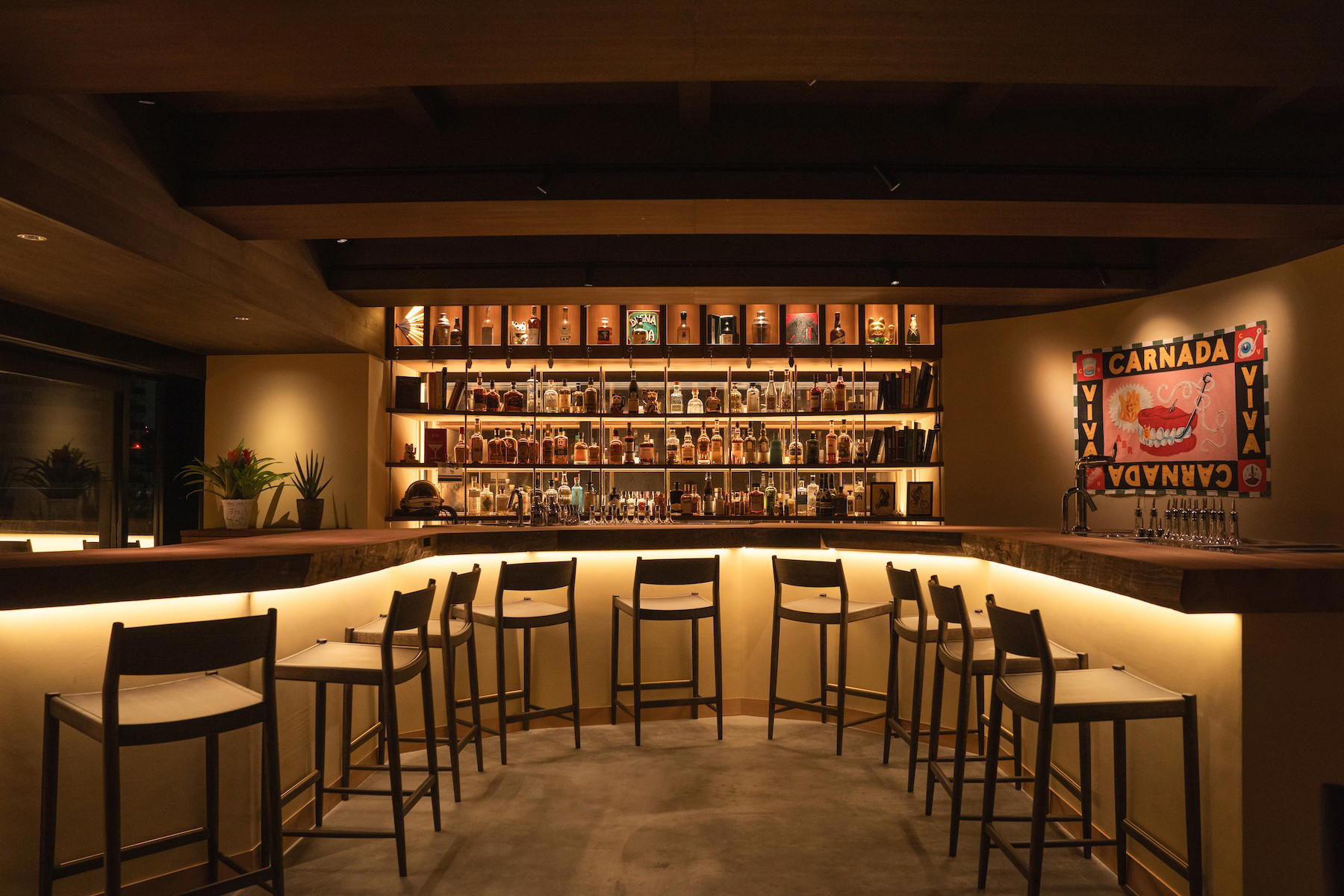
Cozy yet stylish with calm tones, warm lighting, and a relaxing hideaway atmosphere featuring contemporary art and an open kitchen.