

Tabelog Bronze #378
Our verdict
Sushi Saeki operates from the second floor of a Ginza building, serving Edomae-style omakase at dinner prices between JPY 50,000 and JPY 59,999. Tabelog Bronze recognition in 2021, 2022, 2025, and 2026, alongside consecutive inclusion in the Tabelog Sushi Tokyo 100, places it firmly inside Ginza's acknowledged upper tier. Reservations are available; the counter is closed on Sundays and public holidays.

Pearl is the En Primeur Club membership app, where members save venues, book tables and use the concierge.
Where Ginza's Edomae Tradition Meets a Restless Present
The second floor of a mid-block Ginza building is not where most diners expect to find a counter that has accumulated four Tabelog Bronze awards across five years, but Sushi Saeki occupies exactly that position. Ginza's premium sushi tier has always rewarded discipline over theatre, and the district now contains a cluster of counters that price themselves in a narrow band between JPY 40,000 and JPY 70,000 per dinner, each staking a position somewhere on the spectrum between orthodox Edomae and a more fluid contemporary approach. Saeki sits squarely in this conversation, with a Tabelog score of 4.09 and consistent inclusion in the Tabelog Sushi Tokyo 100 from 2021 through 2025.
That recognition is not incidental. The Tabelog Bronze tier represents a threshold above which the platform's review community, drawing on thousands of meal records, has reached something close to consensus. Consecutive Bronze awards in 2021, 2022, 2025, and 2026 indicate sustained performance rather than a single strong season, which in a category as technically demanding as Edomae nigiri carries meaningful weight. For context, Sushi Shikon in Hong Kong and Shoukouwa in Singapore represent how Edomae craft travels outside Japan; Saeki represents the form inside one of its most demanding domestic proving grounds.
The Edomae Question: Tradition as a Living Argument
Edomae sushi is not a fixed object. The term refers, loosely, to the style of nigiri developed in Edo-period Tokyo, where preservation techniques, aging, and vinegar-seasoned rice compensated for the absence of refrigeration. What those constraints produced was a cuisine of controlled transformation: fish cured, kombu-pressed, or marinated rather than simply sliced and placed. The orthodoxy that developed around those methods has been in productive tension with modernising impulses for at least two decades.
Ginza's leading counters currently divide, broadly, into two camps. The first maintains strict adherence to classical technique, where the repertoire of cured and aged preparations takes precedence and innovation is viewed with suspicion. The second treats Edomae as a living methodology, applying its logic of deliberate transformation to a wider ingredient palette and occasionally to presentations that classical masters would not recognise. The Tabelog description of Saeki references an evolving Edomae approach and a commitment to developing new sushi culture, which positions Chef Hiroshi Saeki in the second camp without abandoning the formal rigour that defines the first. This is a counter where the tension between inheritance and interrogation is the actual subject of the meal.
For comparison within Japan's broader fine dining circuit, the contrast is instructive. Kaiseki houses in Kyoto such as KASHIWAI and Kikunoi Sushi Ao operate within seasonal frameworks that are equally disciplined but differently structured; the kaiseki form organises time across a meal's arc, while nigiri omakase organises it through the sequence of individual pieces. Both forms reward the diner who understands what they are eating and why the order matters.
The Ginza Context
Ginza's sushi density is high enough that proximity to other counters functions as its own quality signal. The neighbourhood has accumulated more Tabelog 100-listed sushi restaurants per square kilometre than any other district in Tokyo, and the competition for that designation is severe. Being selected for the Tabelog Sushi Tokyo 100 in three consecutive cycles (2021, 2022, 2025) alongside the Bronze award record means Saeki has held its position through several rounds of re-evaluation, not just earned it once.
The address at La. La. Grande GINZA 2F places the counter approximately 258 metres from Ginza station, a walk that takes under five minutes from the Marunouchi or Hibiya line exits. The absence of private rooms is standard for counter-format omakase, where the chef's relationship with the dining room depends on open sightlines. The no-smoking policy is consistent across this tier. Credit cards are accepted; electronic money is not. QR code payment via d Barai is available for those who prefer it.
The dinner price range of JPY 50,000 to JPY 59,999 places Saeki in the middle segment of Ginza's upper tier. Counters at the very apex, particularly those with Michelin three-star designations, exceed JPY 70,000 per head. Saeki's positioning offers the technical depth and award recognition of the upper bracket without requiring the premium associated with the district's most decorated addresses. Comparable counters at this price point in Tokyo include Harutaka, which operates in the same neighbourhood and price register. For those building a broader Japan itinerary, HAJIME in Osaka, Goh in Fukuoka, and akordu in Nara sit in adjacent premium tiers with different culinary logics. 1000 in Yokohama and 6 in Okinawa extend the premium circuit further.
The Opinionated About Dining Signal
Beyond Tabelog, Saeki holds two positions in the Opinionated About Dining rankings for Japan: ranked 279th overall in the 2024 edition and listed as Highly Recommended in 2023. The OAD ranking aggregates opinions from a self-selected pool of experienced diners and food professionals; its methodology differs from Tabelog's crowd-sourced model and from Michelin's anonymous inspector system. Appearing across all three evaluation frameworks, even at different tiers within each, is a stronger signal of consistent quality than any single recognition in isolation.
Kyoto Cross-Reference
The venue data places Saeki's listing under a Kyoto address (Nakagyo Ward), though its Tabelog record and operational details confirm a Ginza location. For readers building a Kyoto itinerary specifically, the city's sushi scene operates on different terms: Kyoto-style sushi has its own tradition rooted in pressed and pickled preparations (oshizushi and narezushi) that predates the Edomae form and reflects the city's landlocked geography and preservation culture. Izuu and Izugen represent that local tradition, while Sushi Rakumi operates in a more contemporary register. Our full Kyoto restaurants guide maps both traditions across the city's neighbourhoods, and the Kyoto hotels guide, bars guide, wineries guide, and experiences guide complete the planning picture for visitors to the Kansai region.
Planning Your Visit
Address: La. La. Grande GINZA 2F, 6-3-18 Ginza, Chuo Ward, Tokyo (approximately 258 metres from Ginza station). Reservations: Available by phone at 03-3289-0818; advance booking is strongly advisable given the counter's consistent award recognition and the demand patterns typical of this Ginza tier. Hours: Dinner service from 18:00 onwards; closed Sundays and public holidays (verify directly before visiting, as hours may change). Budget: JPY 50,000 to JPY 59,999 per person at dinner; no lunch service listed. Payment: Credit cards accepted; electronic money not accepted; QR code payment (d Barai) available. Smoking: Non-smoking throughout. Private rooms: Not available; private venue hire is available.
Frequently asked questions
Which chef is Saeki associated with?
The chef associated with Saeki is Hiroshi Saeki.
What's the must-try dish at Saeki?
Saeki operates a strictly omakase format, so the counter decides the progression rather than the guest. The kitchen's described focus on an evolving Edomae style means aged and cured preparations are central to the sequence, but no individual dishes are documented in the public record. At JPY 50,000–59,999 per person, the full omakase is the only option on offer.
Where do I go for Saeki?
Saeki is located at 663 Izumicho, Nakagyo Ward, Kyoto, 604-0015, Japan, Kyoto.
What's Saeki known for in terms of accolades?
Saeki has received recognition including:
What's the best way to book Saeki?
Reservations are available by phone at 03-3289-0818. At this price point and with four consecutive Tabelog Bronze awards (2021, 2022, 2025, 2026) plus placement in the Tabelog Sushi Tokyo 100, lead time of several weeks is a reasonable expectation, confirm current availability directly when you call.
What has Saeki built its reputation on?
A consistent track record in Japan's most peer-reviewed sushi market: Tabelog Bronze in 2021, 2022, 2025, and 2026, plus inclusion in the Tabelog Sushi Tokyo 100 across all three of those cycles. Opinionated About Dining placed Saeki 279th overall in Japan in 2024 and listed it as Highly Recommended in 2023. The through-line across these citations is a technically grounded Edomae approach that the venue itself frames as a starting point rather than a fixed tradition.
Price and Recognition
Comparable venues nearby, for context on price, style, and recognition.
| Venue | Cuisine | Price | Awards | Notes |
|---|---|---|---|---|
| SaekiThis venue (the venue you are viewing) | Modern Edomae Omakase | Not listed | Tabelog Bronze #378 | Not listed |
| Matakichi | Refined Kyoto Omakase & Kaiseki | $100–150 | Michelin Plate | Higashiyama, Refined Kyoto Omakase & Kaiseki |
| Kappo Harada | Traditional Kyoto Kappo | Not listed | Michelin Plate | Nakagyō, Traditional Kyoto Kappo |
| Miyagawacho Tensho | Seasonal Tempura Kaiseki | $150–200 | Michelin Plate | Higashiyama, Seasonal Tempura Kaiseki |
| Miyagawacho Hotta | Modern Kaiseki Omakase | $200–300 | Michelin Plate | Higashiyama, Modern Kaiseki Omakase |
| Konno | Modern Japanese Omakase | $150–200 | Michelin Plate | Higashiyama, Modern Japanese Omakase |
Recognition history
Dated appearances from independent guides and award organizations, with the underlying list record or original source where available.
Tabelog Bronze #378
Tabelog
Opinionated About Dining Top Restaurants in Japan Ranked #279
Opinionated About Dining
Full recognition history (6 entries)
Tabelog Bronze
Tabelog
Tabelog 100 #27 · No. 27
Tabelog · Tabelog 100 - Sushi - TOKYO - 2025
Opinionated About Dining Top Restaurants in Japan Ranked #279
Opinionated About Dining
Opinionated About Dining Top Restaurants in Japan Highly Recommended
Opinionated About Dining
Continue exploring
More in Kyoto
Restaurants in Kyoto
All restaurants in Kyoto →
Bars in Kyoto
All bars in Kyoto →
Hotels in Kyoto
All hotels in Kyoto →
Wineries in Kyoto
Browse all →
Details
- Elegant
- Sophisticated
- Intimate
- Scenic
- Minimalist
- Date Night
- Special Occasion
- Chefs Counter
- Garden
- Sake Program
- Local Sourcing
- Garden
- Omakase
- Counter Dining
- Sake
- Champagne
Current opening hours
- Monday
- 12–2 PM, 6–8:45 PM
- Tuesday
- 12–2 PM, 6–8:45 PM
- Wednesday
- 12–2 PM, 6–8:45 PM
- Thursday
- 12–2 PM, 6–8:45 PM
- Friday
- 12–2 PM, 6–8:45 PM
- Saturday
- 12–2 PM, 6–8:45 PM
- Sunday
- 12–2 PM, 6–8:45 PM
Hours can change for holidays and private events. Hours as of .
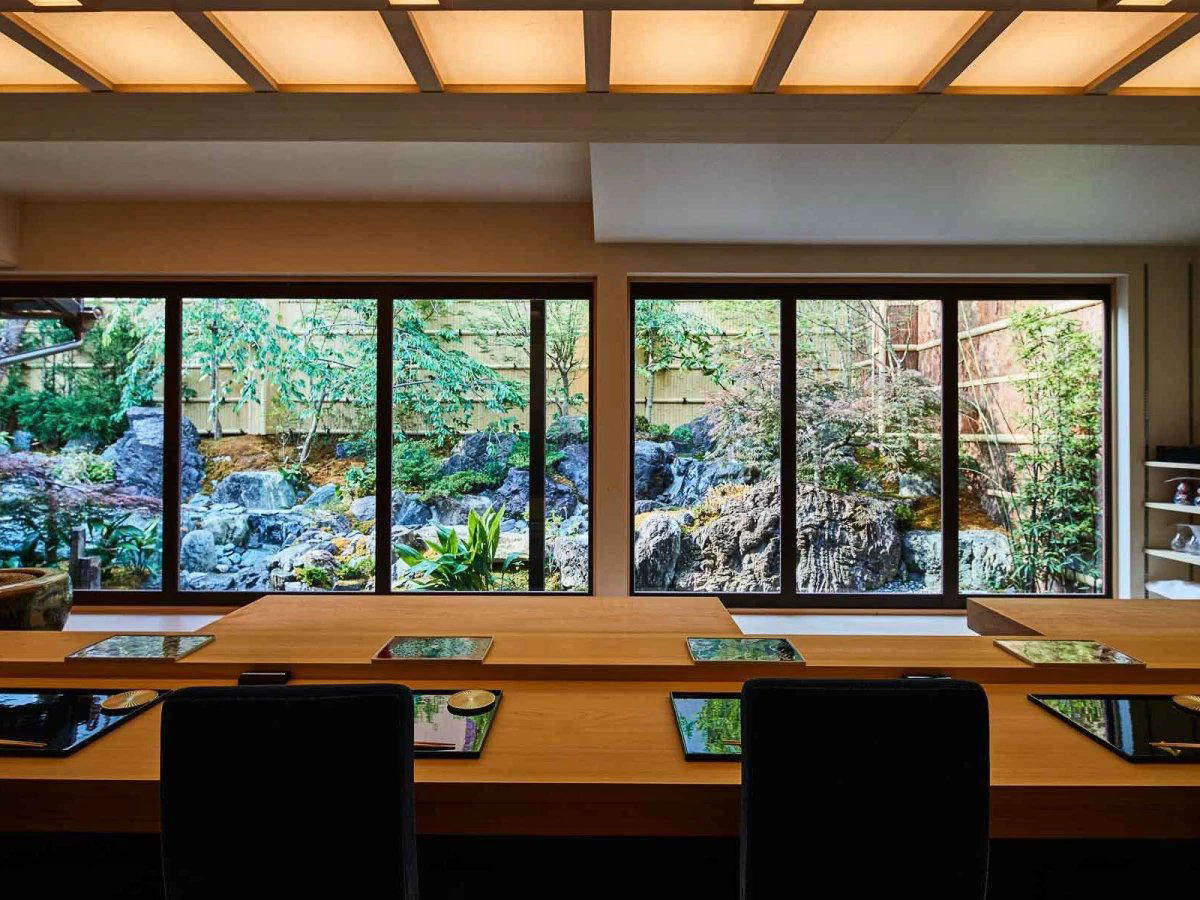
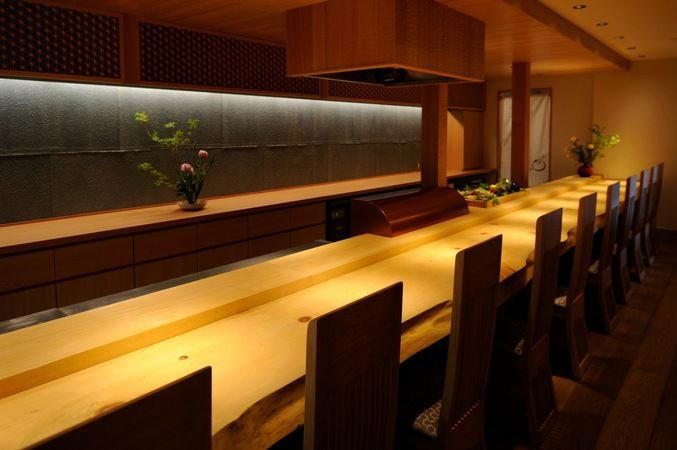
Serene and elegant with large windows showcasing a meticulously manicured Japanese garden, blonde wood counter, and soft lighting creating a relaxing, nature-infused atmosphere.