



Sumibi kappo Ifuki occupies a discreet address in Gion's Minamigawa, where Chef Norio Yamamoto has spent over a decade building a case for charcoal-grilled kappo as a serious alternative to classic kaiseki. Carrying two Michelin stars since at least 2024, a Tabelog score of 3.98, and consistent placement in the Opinionated About Dining Japan top 100, the 20-seat restaurant frames fire not as technique but as the structural logic of the meal.
 Discover on Pearl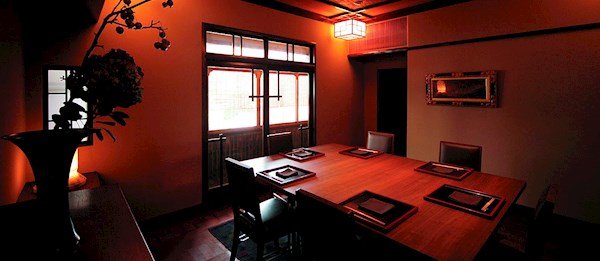
Gion's Charcoal Counter and the Logic of the Flame
Kyoto's most decorated dining district has long been defined by the restraint of classical kaiseki: the precise procession of seasonal courses, the dashi-led flavours, the absence of anything so blunt as open fire. Sumibi kappo Ifuki, open since April 2011 on Gionmachi Minamigawa, makes a deliberate argument against that orthodoxy. Here the robata grill is not a supplementary station but the organising principle of the kitchen, and the smoke that rises from it gives the meal its character from the first course to the last.
That is not a modest claim in a city where the competition at the leading of the Japanese cuisine bracket includes Gion Sasaki at three Michelin stars and Kyokaiseki Kichisen at two. Ifuki sits in the same two-star tier as those peers, and its Tabelog score of 3.98 places it inside the upper register of Kyoto's long list of serious Japanese restaurants. The Opinionated About Dining survey ranked it 86th in Japan in 2024 and 82nd in 2023, rising incrementally through a competitive national field. La Liste awarded it 81 points in 2025 and 78 in 2026, tracking a trajectory that positions it well within Japan's most scrutinised dining addresses. For a 20-seat counter-and-private-room operation that has held its Tabelog Bronze since 2021 and Silver before that, the award footprint is substantial.
The shortlist, unlocked.
Hard-to-book tables, cellar releases, and concierge-planned trips.
Get Exclusive Access →The Meal as a Study in Controlled Heat
Kappo, as a format, occupies a different register from kaiseki in Japanese dining culture. Where kaiseki codifies seasonal progression into a near-ceremonial sequence, kappo is more interactive, more responsive, closer in spirit to watching a craftsman at work across a counter. At Ifuki, the counter seats eight people who face the grill directly; the other twelve are distributed across two private rooms on the ground and first floors. The distinction matters: the counter is where the ritual of the meal is most visible, where the timing of the fire, the resting of proteins, and the transition between courses becomes part of what the diner experiences.
The kitchen's emphasis on charcoal grilling places the restaurant within a smaller subset of Gion's kappo tradition. The format foregrounds the Maillard reaction and smoke absorption as flavour-building tools that classical kaiseki deliberately avoids. Mountain ingredients and seafood are the primary materials, and the choice between grilled fish and beef as a centrepiece course gives the meal a degree of personalisation unusual in a format this tightly controlled. Game appears on the menu in winter, which is typical of the seasonal discipline common to serious Japanese restaurants but given a more direct, fire-forward expression here than at most Gion addresses.
The drink program reinforces the seriousness of the operation. The restaurant signals a particular focus on sake and wine, and a sommelier is available, which is less common at kappo counters than at Western-format fine dining and places Ifuki in the cohort of Kyoto restaurants treating the beverage pairing as a structurally important part of the meal rather than an afterthought. Shochu also features, giving guests options that align with different courses and preferences across a long evening.
Where Ifuki Sits in the Kyoto Dining Conversation
Gion neighbourhood concentrates some of Japan's most closely watched Japanese restaurants within a few blocks, and the competitive set at the ¥¥¥¥ tier is dense. Chihana, Gion Suetomo, Hassun, and Doujin all operate in overlapping price and formality registers; Ankyu represents the more intimate end of the same tradition. What distinguishes Ifuki within this field is the specificity of its technique. Most Gion kaiseki and kappo houses use grilling as one tool among many; at Ifuki, the charcoal is the organising grammar of the kitchen, and every course is read in relation to it.
That specificity has made the restaurant a reference point for a certain kind of Kyoto dinner: not the most ceremonially correct expression of kaiseki, but an argument that fire-based kappo can carry the same seasonal intelligence and ingredient rigour that the classical format demands. The Tabelog community, which tends to privilege technical discipline and consistency over novelty, has rated it above 4.0 in reviewer-generated scores, and its selection for the Tabelog Japanese Cuisine West Top 100 in 2021, 2023, and 2025 reflects sustained recognition rather than a single peak.
For guests arriving from elsewhere in Japan, the comparison is instructive. Kikunoi Tokyo and Hirosaku in Tokyo represent the classical kaiseki canon in another major city; HAJIME in Osaka operates at the opposite extreme of conceptual Japanese cuisine. Ifuki sits between those poles, committed to tradition in its seasonality and ingredient sourcing but differentiated by a technique that is more visceral, more present in the dining room. Harutaka in Tokyo, akordu in Nara, Goh in Fukuoka, 1000 in Yokohama, and 6 in Okinawa each represent the regional plurality of Japan's serious dining scene, but few apply charcoal grilling with the structural consistency that defines the Ifuki format.
Know Before You Go
| Address | 570-8 Gionmachi Minamigawa, Higashiyama Ward, Kyoto, 605-0074 |
|---|---|
| Getting There | Seven-minute walk from Gion-Shijo Station (Keihan Main Line); ten-minute walk from Kawaramachi Station (Hankyu Kyoto Line) |
| Hours | Monday, Wednesday to Sunday: 17:00–22:00. Last entry 20:00; last drinks order 21:00. Closed Tuesdays, Year-end and New Year holidays, and Obon holidays. |
| Price (Dinner) | JPY 20,000–29,999 per person (listed); reviewer averages suggest JPY 40,000–49,999 with drinks |
| Seat Charge | JPY 1,650 per person (tax included) |
| Capacity | 20 seats total: 8 counter seats; two private rooms (ground floor 2–4 people; first floor 2–8 people) |
| Reservations | Available by phone: +81-75-525-6665. Phone lines may be difficult to reach during service hours. Website: gion-ifuki.com |
| Payment | Credit cards accepted (Visa, Mastercard, JCB, Amex, Diners). Electronic money not accepted. |
| Children | Children under 13 are not permitted |
| Smoking | Designated smoking area available |
| Parking | Not available |
Awards and Recognition
- Michelin 2 Stars (2024, 2025)
- Tabelog Bronze Award: 2021–2026; Silver Award: 2017–2020; Score 3.98
- Tabelog Japanese Cuisine West Top 100: 2021, 2023, 2025
- Opinionated About Dining Leading Restaurants in Japan: ranked 82 (2023), 86 (2024), 100 (2025)
- La Liste Leading Restaurants: 81 pts (2025), 78 pts (2026)
570-8 Gionmachi Minamigawa, Higashiyama Ward, Kyoto, 605-0074, Japan
+81 75-525-6665
Awards and Standing
A quick snapshot of similar venues for side-by-side context.
| Venue | Awards | Cuisine | Notes |
|---|---|---|---|
| Ifuki | Michelin 2 Stars | Kaiseki | This venue |
| Gion Sasaki | Michelin 3 Star | Kaiseki, Japanese | Kaiseki, Japanese, ¥¥¥¥ |
| cenci | Michelin 1 Star | Italian | Italian, ¥¥¥ |
| Kyokaiseki Kichisen | Michelin 2 Star | Japanese | Japanese, ¥¥¥¥ |
| Kyo Seika | Michelin 1 Star | Chinese | Chinese, ¥¥¥ |
| SEN | Michelin 1 Star | French, Japanese | French, Japanese, ¥¥¥¥ |
Need a table?
Our members enjoy priority alerts and concierge-led booking support for the world's most difficult tables.
Get Exclusive AccessThe shortlist, unlocked.
Hard-to-book tables, cellar releases, and concierge-planned trips.
Get Exclusive Access →