Our verdict
Roku Roku occupies the sixth floor of the Grand Hyatt Tokyo in Roppongi, placing it within a tier of hotel Japanese restaurants that draw both international visitors and local regulars. The menu structure follows the conventions of multi-format Japanese dining, with teppanyaki and traditional courses sitting alongside each other in a format designed to read clearly across different guest intentions. Roppongi's dense concentration of hotel dining makes peer context essential when choosing where to book.

Pearl is the En Primeur Club membership app — saves, bookings, and concierge access live there. Same editors, same standards.
- Address
- Japan, 〒106-0032 Tokyo, Minato City, Roppongi, 6 Chome−10−3 グランド ハイアット 東京 6階
- Phone
- +81343338788
- Hours
- Mon–Fri 11:30 AM–2:30 PM, 6–9 PMSat–Sun 11:30 AM–3 PM, 6–9 PM
- Website
- tokyo.grand.hyatt.co.jp
- Directions
- Get directions
The menu
What to order
- Nigiri sushi selection
- Sashimi platter
- Grilled and simmered dishes
What the Menu Architecture Tells You About This Room
In Tokyo's hotel dining tier, the structure of a menu is rarely accidental. At Roku Roku, located on the sixth floor of the Grand Hyatt Tokyo in Roppongi, the format follows a logic familiar to Japanese restaurants that serve both the international hotel guest and the deliberate local diner: multiple disciplines presented under one roof, with teppanyaki, sushi, and traditional Japanese courses available as distinct paths through the meal rather than a single fixed sequence. That kind of optionality is a specific editorial statement. It tells you the kitchen is confident enough to maintain more than one format at a high-execution level, and it tells the diner that the room is not prescriptive about how the evening should unfold.
This approach contrasts with the omakase-only model that defines much of Tokyo's most talked-about Japanese dining. Places like Harutaka in Ginza operate on a single-track format where the chef controls the sequence entirely. That model concentrates authority and drives a very specific kind of experience. Roku Roku's broader menu architecture distributes that authority toward the guest, which suits a hotel dining context and also produces a different kind of pressure on the kitchen: every section of the menu must perform independently, because guests will arrive with genuinely different intentions.
Roppongi's Hotel Dining Tier and Where This Sits
Roppongi has long operated as one of Tokyo's most internationally oriented districts, and its concentration of five-star hotel restaurants reflects that. The Grand Hyatt property sits within a competitive set that includes other hotel Japanese restaurants aiming at a similar price point and international guest profile. What distinguishes this tier from mid-market hotel dining is the expectation that ingredient quality, service formality, and kitchen discipline will hold across the full menu width — not just on the teppanyaki grill where theatrics can compensate for other gaps.
The broader Tokyo fine dining scene has pushed further toward specialist formats in recent years. RyuGin in Roppongi itself represents the kaiseki tradition taken to its most refined urban expression, with three Michelin stars and a tasting menu that follows strict seasonal logic. L'Effervescence and Sézanne operate within Tokyo's French fine dining tier, both pushing toward single-menu formats. Crony sits at the innovative end of that French-inflected spectrum. Against this context, a multi-format Japanese hotel restaurant occupies its own distinct position: it is not trying to compete on the omakase axis, but on accessibility, range, and the reliability of execution across multiple cooking disciplines simultaneously.
Reading the Format: Teppanyaki, Sushi, Traditional Courses
The coexistence of teppanyaki and sushi within a single restaurant operation is more demanding than it appears. Teppanyaki requires a live-fire performance element, high heat control, and a front-of-house dynamic that is partly theatrical. Sushi demands cold precision, product sourcing at the premium level, and a fundamentally different rhythm of service. Offering both within a single menu implies either a large and specialized kitchen brigade or a deliberate tiering of ambition by section.
In hotel dining across Japan, this multi-discipline model is more common than in the standalone restaurant world, and the leading examples of it maintain clear quality floors across every section rather than letting one anchor discipline carry the rest. The comparable dynamic appears at other hotel Japanese properties in Osaka and Kyoto, where restaurants like those at the high end of the regional market, including the kaiseki tradition represented by Gion Sasaki in Kyoto and the innovative format of HAJIME in Osaka, have established that the format of a menu communicates something specific about a kitchen's priorities and self-understanding.
For diners approaching Roku Roku with no prior experience of the property, the practical implication is this: the menu gives you real choice, and that choice should be made deliberately. Arriving without a sense of which section you want to anchor the evening to is likely to produce a less focused experience than approaching with a clear intention, whether that is the grill, the raw counter, or a structured traditional course.
Situating Roku Roku Within Japan's Wider Dining Geography
Tokyo concentrates an extraordinary density of dining options at the high end, but Japan's premium restaurant culture extends well beyond the capital. Goh in Fukuoka, akordu in Nara, and regional specialists across the country represent a parallel dining tradition that is less hotel-dependent and more rooted in local ingredient culture. Understanding Roku Roku means placing it correctly: it belongs to the Tokyo hotel dining category, which has its own logic, its own strengths, and its own competitive pressures distinct from the standalone specialist world.
For travelers building a broader Japan itinerary, properties like restaurants in Nanao, Sapporo, Takashima, and Nishikawa Machi offer reference points that sit well outside the metropolitan hotel dining tier and illustrate how different the priorities are when ingredient sourcing and local tradition take precedence over multi-format range. Closer to the hotel dining model but in different markets, Birdland in Sakai and Bistro Ange in Toyohashi show how the Japanese regional dining scene handles its own version of range and specificity simultaneously. Internationally, the multi-format discipline challenge maps onto what Le Bernardin in New York City has done within French seafood, and what Atomix in New York City represents within the Korean fine dining tradition: distinct formats, clear ambitions, executed with discipline. Our full Tokyo restaurants guide maps the broader city context for anyone planning across multiple nights.
Planning Your Visit
Address: 6F Grand Hyatt Tokyo, 6-10-3 Roppongi, Minato-ku, Tokyo 106-0032. Reservations: Book through the Grand Hyatt Tokyo directly; hotel restaurant reservations in Roppongi at this tier are advisable at least two to three weeks in advance for weekend evenings, and further ahead during cherry blossom season (late March to early April) and autumn foliage periods (mid-November), when Tokyo hotel occupancy peaks and dining demand follows. Getting there: Roppongi Station on the Hibiya or Oedo lines places you within a short walk of the Grand Hyatt. Dress: Smart casual is standard for this tier of hotel Japanese dining in Tokyo; overtly casual dress reads against the room. Budget:
Frequently asked questions
What should I eat at Roku Roku?
Roku Roku's menu is structured around multiple Japanese dining formats, including teppanyaki and sushi, alongside traditional course options. The most focused approach is to choose one anchor discipline before arriving rather than sampling across sections without direction. For guests visiting Grand Hyatt Tokyo with limited Tokyo dining nights, the teppanyaki format offers a live-cooking element that is harder to replicate at standalone specialist counters elsewhere in the city.
How far ahead should I plan for Roku Roku?
If you are staying at the Grand Hyatt Tokyo, booking through the hotel at the time of your room reservation is the most reliable approach. For non-hotel guests, two to three weeks advance booking covers most standard periods. Tokyo's peak travel windows, specifically late March through early April and mid-November, compress availability across all Roppongi hotel dining, so plan further ahead during those windows. Comparable five-star hotel Japanese restaurants in the city operate on similar booking timelines.
What is Roku Roku leading at?
Within Tokyo's hotel Japanese dining tier, Roku Roku's distinguishing quality is its multi-format menu architecture, which gives guests genuine choice between teppanyaki, sushi, and traditional courses within a single booking. That breadth is its specific strength relative to omakase-only counters like Harutaka, which offer depth in a single discipline. The teppanyaki format, with its live-fire performance element, tends to be what distinguishes hotel Japanese restaurants with grill programs from purely sushi or kaiseki-focused peers.
Is Roku Roku suitable for guests who are not staying at the Grand Hyatt Tokyo?
Hotel restaurants at this tier in Tokyo are generally open to non-resident diners, and Roku Roku follows that convention. The room and service register as a hotel dining environment, which means the experience is calibrated for a mixed guest profile rather than a specialist dining crowd. Non-hotel guests should book directly through the Grand Hyatt Tokyo and confirm current availability, as in-house guests may have booking priority during high-occupancy periods.
Comparable Venues
Comparable venues nearby, for context on price, style, and recognition.
| Venue | Cuisine | Price | Awards | Notes |
|---|---|---|---|---|
| Roku RokuThis venue — the venue you are viewing | Edo-mae Sushi & Kaiseki | $50–100 | Not listed | Not listed |
| Mon cher ton ton (六本木 モンシェルトントン) | Kobe Beef Teppanyaki | Not listed | Tabelog 100 #69 | Roppongi |
| Rian | Kyoto-style Kappo | $150–200 | Michelin Plate | Minato |
| 割烹 隆 | Edomae Omakase | $200–300 | Not listed | Minato |
| Hatanaka | Traditional Tempura Omakase | $150–200 | Not listed | Minato |
| 懐石料亭 花がすみ | Traditional Japanese Kaiseki | $200–300 | Not listed | Shinjuku |












Details
- Elegant
- Modern
- Sophisticated
- Date Night
- Business Dinner
- Special Occasion
- Celebration
- Chefs Counter
- Open Kitchen
- Private Dining
- Hotel Restaurant
- Sake Program
- Sommelier Led
- Sustainable Seafood
- Local Sourcing
- Omakase
- Counter Dining
- Prix Fixe
- A La Carte
- Sake
- Japanese Sake
- Vegetarian Friendly
Current opening hours
- Monday
- 11:30 AM–2:30 PM, 6–9 PM
- Tuesday
- 11:30 AM–2:30 PM, 6–9 PM
- Wednesday
- 11:30 AM–2:30 PM, 6–9 PM
- Thursday
- 11:30 AM–2:30 PM, 6–9 PM
- Friday
- 11:30 AM–2:30 PM, 6–9 PM
- Saturday
- 11:30 AM–3 PM, 6–9 PM
- Sunday
- 11:30 AM–3 PM, 6–9 PM
Hours can change for holidays and private events. Last verified .
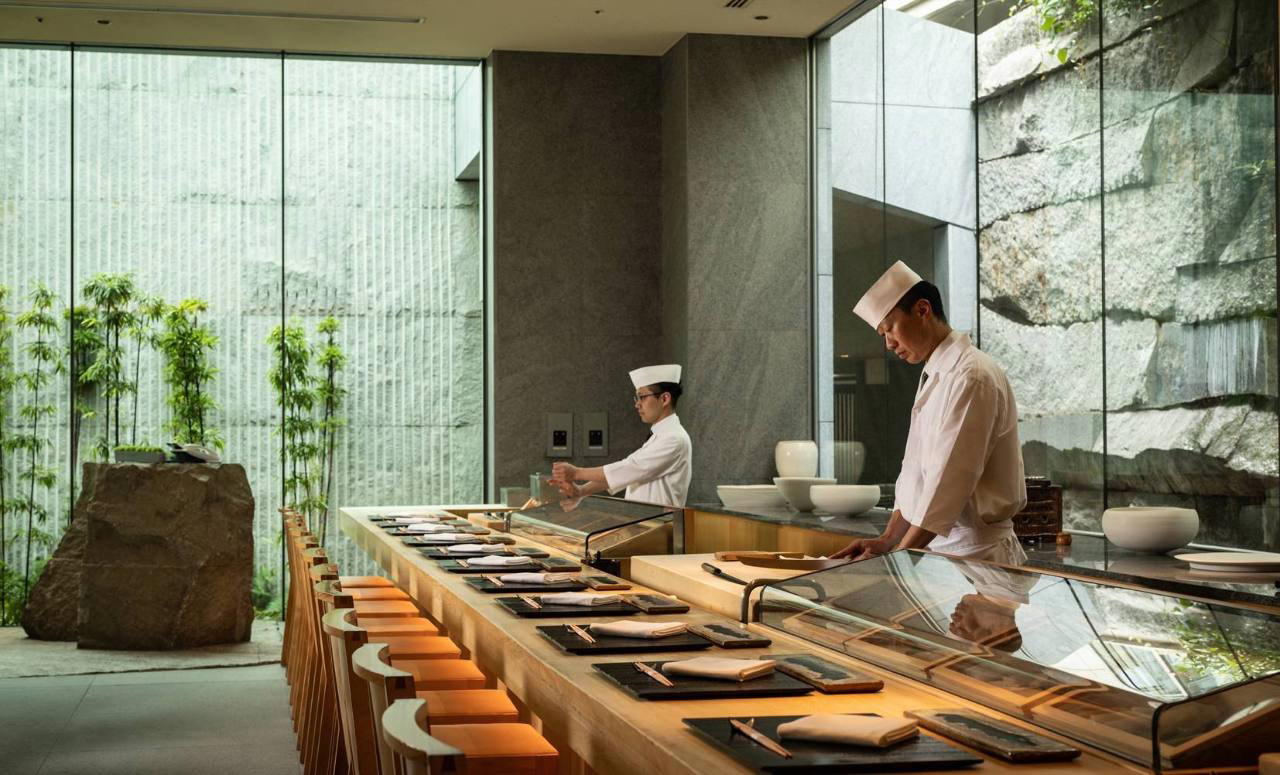
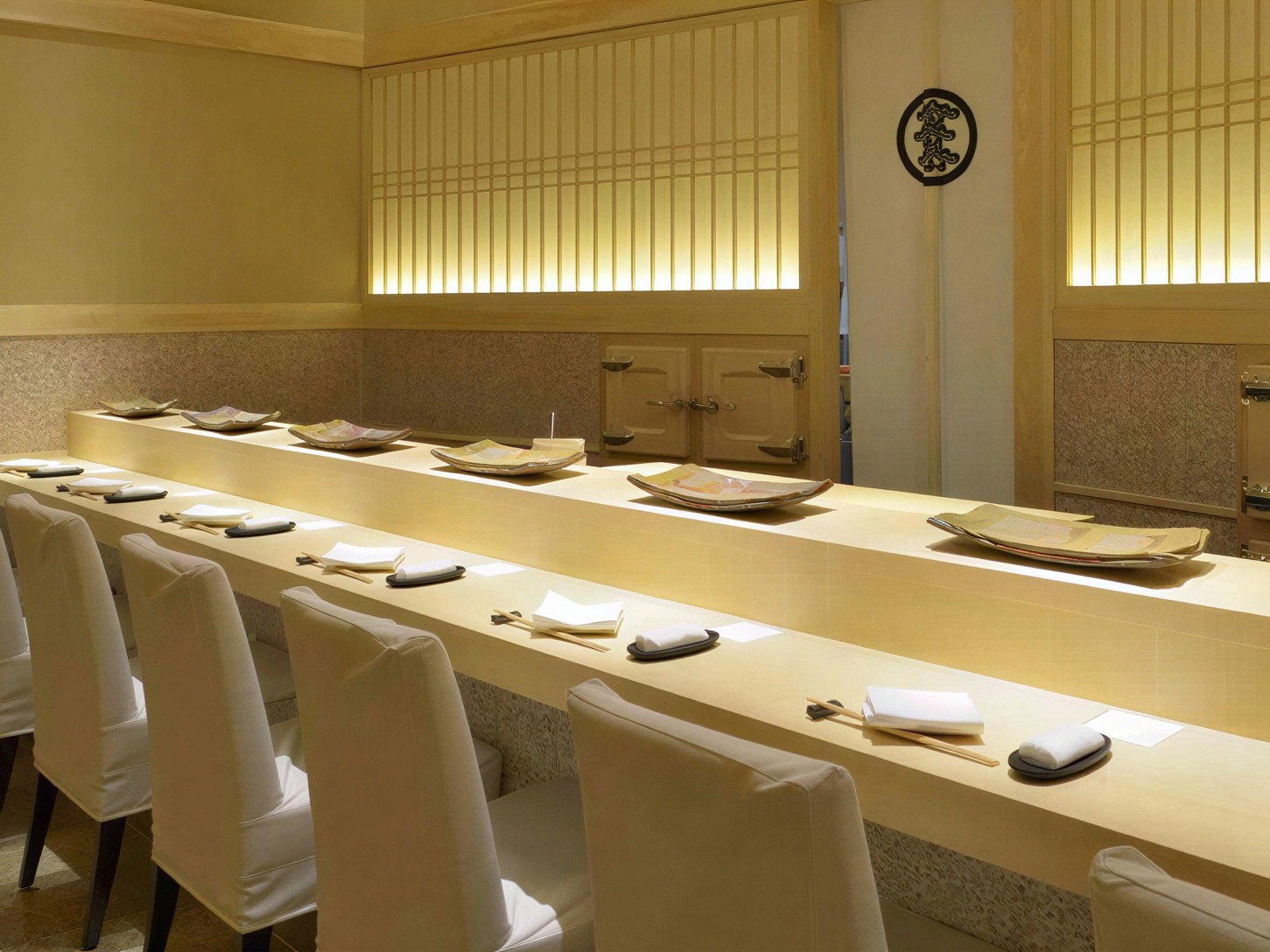
Open, light-filled contemporary dining room with Japanese aesthetic design, featuring a prominent sushi counter and refined modern atmosphere.