Our verdict
Hatanaka occupies a first-floor address in Azabujuban, one of Minato City's more quietly serious dining corridors. The restaurant sits in a Tokyo scene where menu architecture and format discipline increasingly define a venue's competitive position, placing it alongside the neighbourhood's committed specialist operators rather than its louder, higher-profile peers.

Pearl is the En Primeur Club membership app — saves, bookings, and concierge access live there. Same editors, same standards.
- Address
- Japan, 〒106-0045 Tokyo, Minato City, Azabujuban, 2 Chome−21−10 マンション麻布コート 1F
- Phone
- +81 3-3456-2406
- Hours
- Mon–Tue 6–10 PMWed ClosedThu–Sun 6–10 PM
- Website
- tempura-hatanaka.com
- Directions
- Get directions
The menu
What to order
- Aubergine tempura
- Prawn tempura
- Asparagus tempura
- Scallop tempura
Azabujuban and the Architecture of Restraint
Minato City's Azabujuban district has developed a distinct dining register over the past two decades. Where Roppongi, just to the north, tilts toward spectacle and international footfall, Azabujuban runs quieter and more committed. The neighbourhood's ground-floor and first-floor addresses house a significant proportion of Tokyo's more format-conscious restaurants: compact operations where the menu structure itself communicates the kitchen's priorities rather than the room's decoration or the chef's media profile. Hatanaka, located at 2 Chome-21-10 in the Azabujuban Mansion Azabu Court building, belongs to that corridor.
This is a district where the competitive set is defined less by headline awards and more by the deliberateness of how a meal is assembled. That framing matters when reading Hatanaka: the relevant question is not simply what the kitchen produces, but how the menu is organised, what sequence it implies, and what the structure reveals about the kitchen's underlying logic.
Menu Architecture as the Primary Signal
In Tokyo's higher-commitment dining tier, menu architecture functions as a kind of credentialling system. A tasting menu with a fixed number of courses and no printed alternatives signals one set of values; a format that allows meaningful choice at each stage signals another. The most technically refined counters in the city — Michelin three-star sushi operations like Harutaka, or kaiseki formats like RyuGin — tend to concentrate authority in the kitchen's sequencing decisions, leaving the guest's role as one of reception rather than navigation.
Hatanaka operates within this broader Tokyo pattern, where the structure of the meal is treated as a statement in itself. Azabujuban's smaller operators rarely advertise format flexibility as a selling point; the assumption is that a guest arriving at this address has already decided to trust the kitchen's architecture. That implicit contract between format and guest expectation is one of the more consistent features of Tokyo's specialist dining tier, from the French-inflected precision of L'Effervescence to the creative Japanese formats at Crony and the controlled formality of Sézanne.
The Azabujuban Dining Context
Understanding Hatanaka's position requires some grounding in how Azabujuban functions as a dining district. Unlike the denser restaurant clusters of Ginza or Shinjuku, Azabujuban operates at a neighbourhood scale: walkable, residential in character, with a mix of long-established local operators and more recent specialist arrivals. The area attracts a consistent local clientele alongside international visitors who have done enough research to find it, which creates a particular dining atmosphere, less transactional, more oriented toward repeat engagement.
First-floor addresses in low-rise buildings like the Mansion Azabu Court typify the neighbourhood's approach to restaurant space. These are not destination rooms designed to impress on arrival; they are working kitchens behind a front door, where the experience begins with the meal rather than with the room. This contrasts with the more architecturally theatrical formats increasingly common in Tokyo's premium tier, and it aligns Hatanaka with the neighbourhood's general preference for substance over staging.
For a broader sense of where Tokyo's restaurant scene sits in 2024 and 2025, our full Tokyo restaurants guide maps the relevant tiers and neighbourhoods in detail.
Placing Hatanaka in Tokyo's Specialist Tier
Tokyo's restaurant scene has bifurcated in a way that mirrors broader global patterns. On one side are the heavily credentialled flagships, Michelin-starred, 50 Best-listed, internationally profiled, that attract a significant proportion of foreign visitors alongside domestic high-frequency diners. On the other are the quieter specialist operators that function primarily within a local or regionally informed network of guests. Azabujuban's dining corridor, including Hatanaka, skews toward the latter.
This bifurcation has become more pronounced since 2020. The pandemic period accelerated a shift toward smaller-capacity, reservation-focused formats in Tokyo, reducing the viability of mid-scale casual operations and concentrating attention at the format-disciplined end of the market. Venues that had already committed to a fixed menu architecture or a defined counter format were structurally better positioned for that transition than those relying on walk-in volume. The neighbourhood's compact operators, Hatanaka among them, sit in a market segment that emerged from that period in reasonable shape.
For context on how similar discipline-led formats operate in other Japanese cities, Gion Sasaki in Kyoto and HAJIME in Osaka represent the Kansai end of the same general commitment to structured, format-conscious dining. akordu in Nara and Goh in Fukuoka extend that map further across the country.
Planning a Visit
Azabujuban is accessible directly via the Azabu-Juban station on the Namboku and Oedo lines, placing the neighbourhood within easy reach of central Tokyo. The Mansion Azabu Court address on 2 Chome-21-10 is a short walk from the station, consistent with the area's pedestrian-scale layout. As with most Azabujuban specialist operators, advance enquiry or reservation is strongly advisable; the neighbourhood's compact dining rooms do not absorb walk-in volume the way larger, more commercially oriented districts might.
Visitors constructing a longer Tokyo itinerary around food will find useful context in our Tokyo hotels guide, our Tokyo bars guide, and our Tokyo experiences guide. For those extending the trip beyond the capital, 1000 in Yokohama and 6 in Okinawa represent two distinct directions, while the international comparison set anchors usefully at Le Bernardin in New York City and Atomix, both of which operate with similar format discipline at their respective price points. Our Tokyo wineries guide is available for those interested in the wider drinks context across the city.
Frequently Asked Questions
Frequently asked questions
What part of town is Hatanaka in?
Hatanaka is located at Japan, 〒106-0045 Tokyo, Minato City, Azabujuban, 2 Chome−21−10 マンション麻布コート 1F, Tokyo.
Where exactly is Hatanaka located in Tokyo, and how do you get there?
Hatanaka is located at 2 Chome-21-10 Azabujuban, Minato City, Tokyo, on the first floor of the Mansion Azabu Court building. The nearest station is Azabu-Juban, served by both the Namboku and Oedo lines, placing the venue within straightforward reach of central Tokyo districts including Roppongi and Hiroo.
Is Hatanaka reservation-only?
Compact first-floor operations in Azabujuban, Minato City, operate almost exclusively on a reservation basis. Walk-in availability at this type of venue in Tokyo's structured dining tier is rare. Booking well in advance is the standard approach, particularly for international visitors unfamiliar with local lead times.
What's Hatanaka best at?
Hatanaka occupies the format-conscious end of the Azabujuban dining corridor, where the emphasis falls on structured progression over high-volume turnover. The address at 2 Chome-21-10 in Minato City places it within a district that rewards deliberate, committed dining rather than casual drop-ins. That orientation toward restraint and sequence is where the venue makes its case.
Is Hatanaka good value for money?
As a general reference point, structured dining in Azabujuban, Minato City, typically sits above the neighbourhood's casual tier but varies considerably depending on format length and beverage pairings. Confirming pricing directly before booking is the practical step.
A Pricing-First Comparison
Comparable venues nearby, for context on price, style, and recognition.
| Venue | Cuisine | Price | Awards | Notes |
|---|---|---|---|---|
| HatanakaThis venue — the venue you are viewing | Traditional Tempura Omakase | $150–200 | Not listed | Not listed |
| Ginza 1954 | Japanese Bar | Not listed | Not listed | Ginza, Japanese Bar |
| 鮨よしたけ | 3-Michelin-Star Omakase Sushi | $500+ | La Liste Top Restaurants · Tabelog Bronze #530 | Ginza, High-End Edomae Sushi Omakase |
| Mon cher ton ton (六本木 モンシェルトントン) | Kobe Beef Teppanyaki | Not listed | Tabelog 100 #69 | Roppongi, Teppanyaki with Kobe Beef |
| Motoyoshi (天ぷら 元吉) | Michelin-Starred Modern Tempura Omakase | $200–300 | Not listed | Ebisu, Michelin-Starred Modern Tempura Omakase |
| Inoue (井上) | Modern Yakiniku | $150–200 | Not listed | Ginza, Modern Yakiniku |











Details
- Quiet
- Intimate
- Elegant
- Sophisticated
- Date Night
- Special Occasion
- Solo
- Chefs Counter
- Open Kitchen
- Sake Program
- Omakase
- Counter Dining
Current opening hours
- Monday
- 6–10 PM
- Tuesday
- 6–10 PM
- Wednesday
- Closed
- Thursday
- 6–10 PM
- Friday
- 6–10 PM
- Saturday
- 6–10 PM
- Sunday
- 6–10 PM
Hours can change for holidays and private events. Last verified .
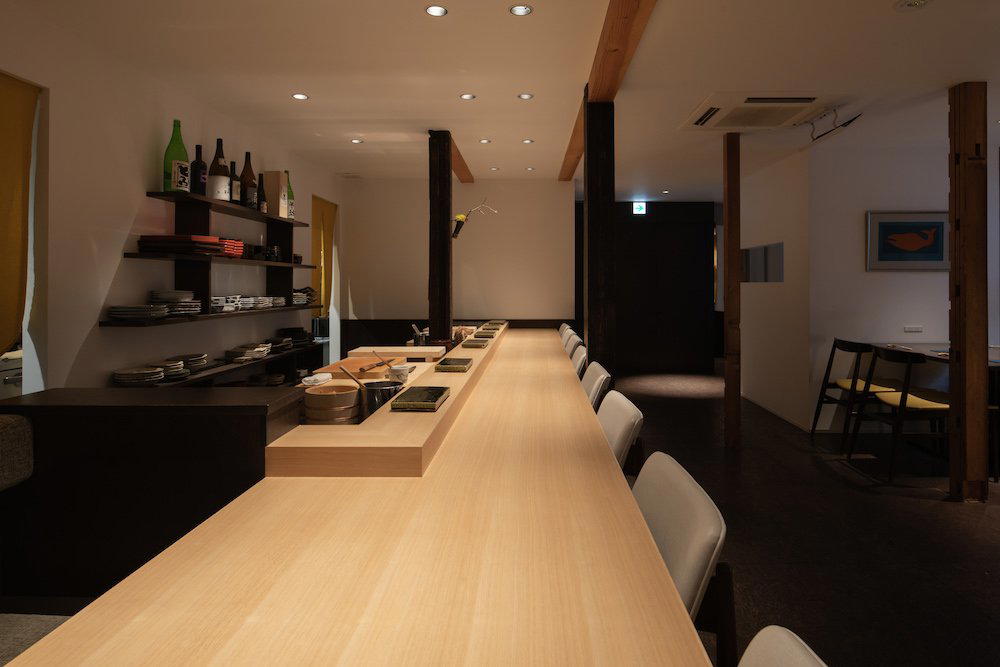
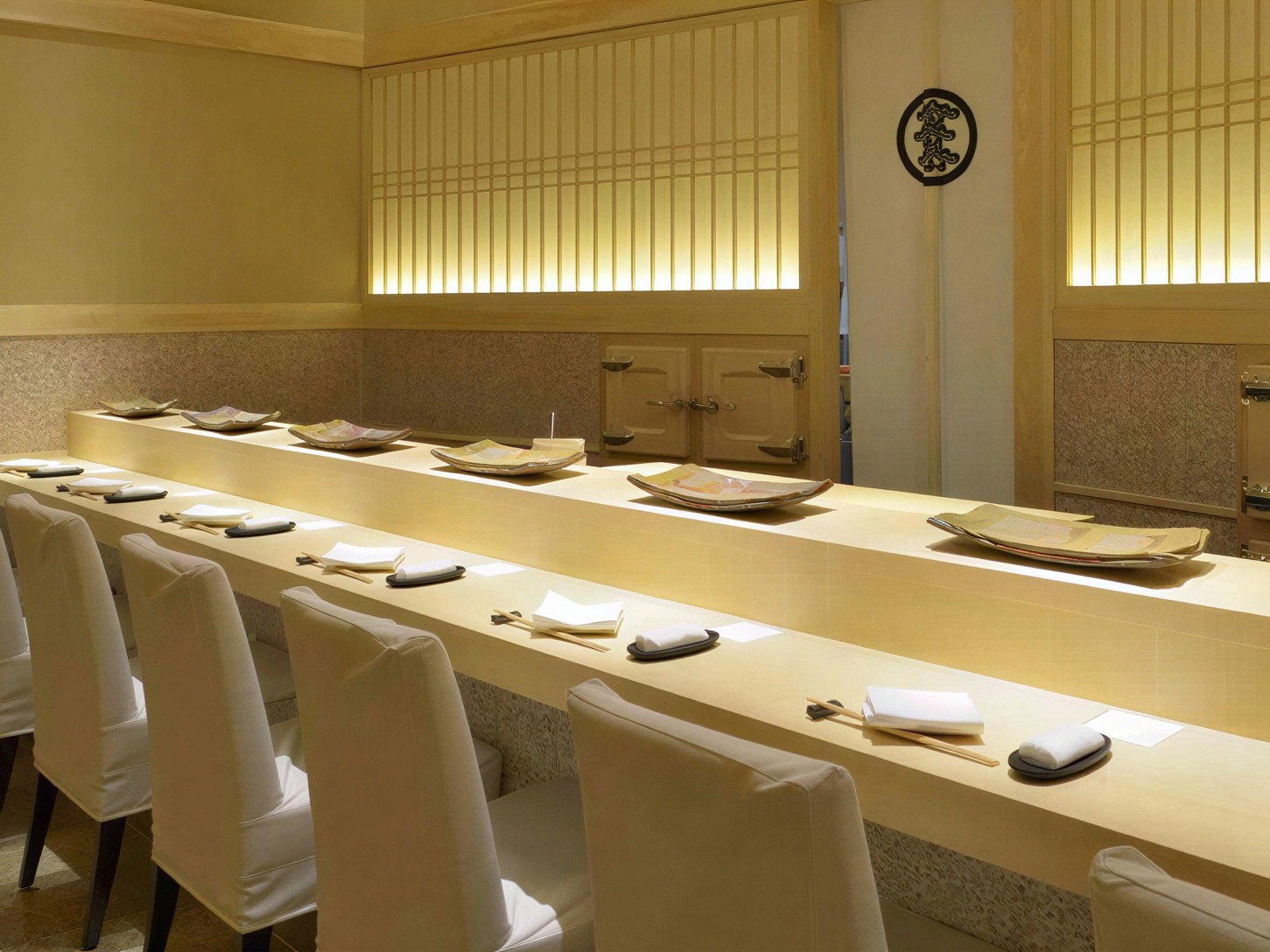
Intimate counter seating in a quiet setting with an imported Italian stone wall, creating a sophisticated and focused atmosphere for watching the chef.