

Tabelog Bronze #353
Our verdict
Ranmaru belongs to Tokyo’s compact counter-sushi tier outside Ginza, where ingredient handling and sourcing discipline matter more than theatre. In Shimomeguro near Fudo Mae, Kouki Tanabe’s nine-seat sushi counter has Tabelog Bronze recognition for 2026 and repeated Sushi TOKYO 100 selections, placing it in a serious local competitive set rather than a tourist-facing luxury circuit.

Pearl is the En Primeur Club membership app, where members save venues, book tables and use the concierge.
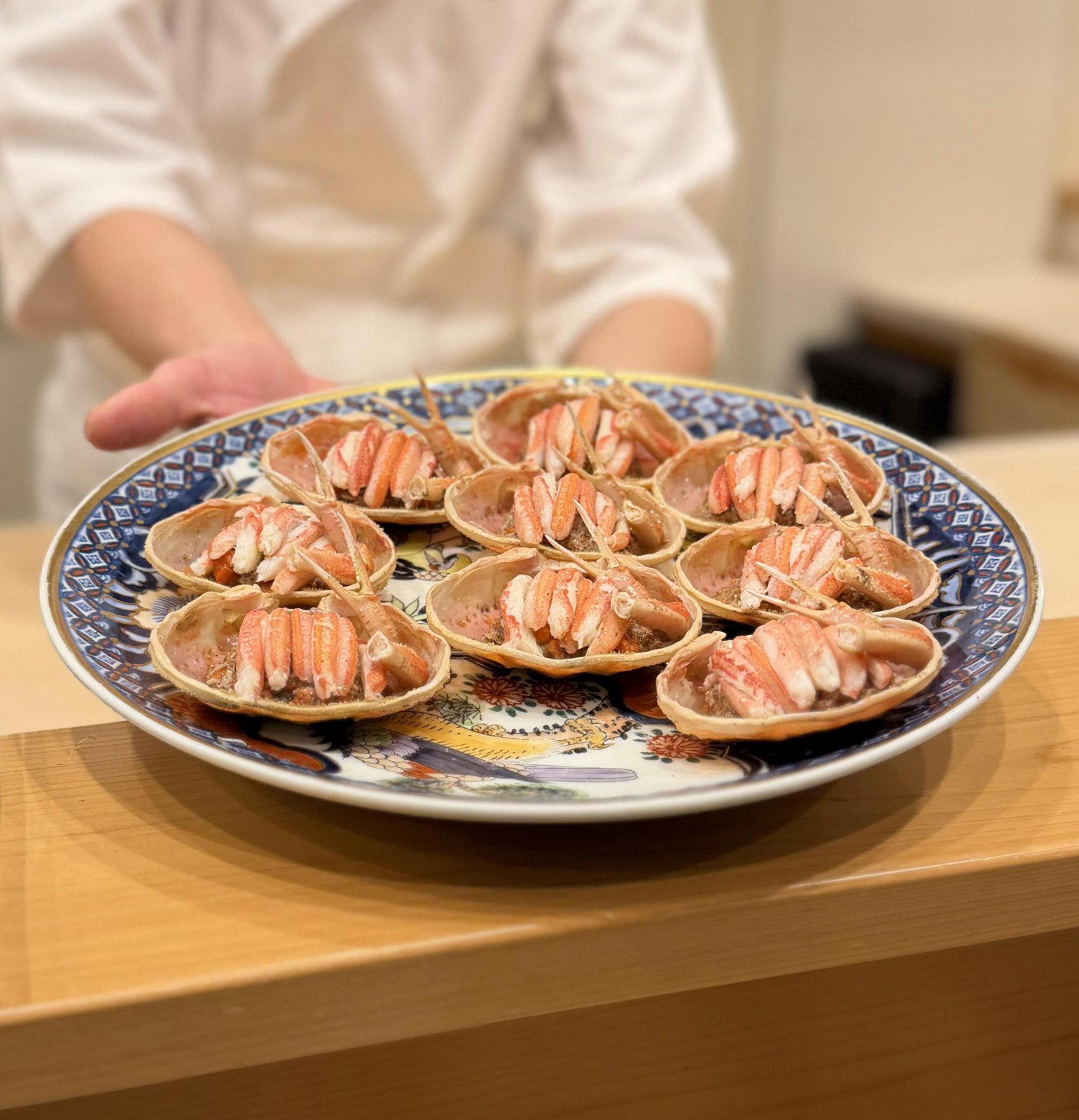
Shimomeguro changes the pitch of Tokyo sushi before the first piece: quieter than Ginza, less stage-managed than Roppongi, and more residential in rhythm. A small counter here earns attention through fish work, not address value. Ranmaru fits that school. The room is built around intimate counter seating, with emphasis on the raw materials that define serious Edomae sushi: fish selection, seasoning, rice temperature, and the chef’s judgment on when restraint beats display.
Tokyo’s sushi hierarchy is often framed by prestige neighbourhoods, but the sharper split is between counters selling ceremony and counters selling precision. The latter depends on sourcing fluency. Toyosu Market may be the city’s seafood logistics centre, yet access alone means little; craft lies in choosing what is ready, what needs time, and what should be left alone. At this level, tuna, shellfish, white fish, silver-skinned fish, sea urchin, and seasonal coastal catch are not trophies but a rotating vocabulary through which a counter shows its standards.
Shimomeguro sushi with a sourcing-first argument
Ranmaru’s strongest editorial case is its place in Tokyo’s ingredient-led sushi culture, not any attempt to mimic the city’s grander dining rooms. The listing identifies the kitchen as sushi with a particular focus on fish, which matters in a city where the difference between a good counter and a serious one is often invisible on paper. Fish-led sushi is not just buying expensive product. It means controlling moisture, timing, acidity, knife work, and rice balance so seasonal variation reads as confidence rather than inconsistency.
The counter’s recognition gives that argument weight. Ranmaru holds a Tabelog Award 2026 Bronze distinction and was named to Tabelog Sushi TOKYO 100 in 2025, with earlier selections in 2022 and 2021. Those signals place it among Tokyo sushi rooms judged by a demanding, price-aware local dining culture less swayed by hotel polish than many international lists. Opinionated About Dining also ranked it among Japan restaurants in 2025, after prior recognition in 2024 and 2023. None of this makes the meal self-explanatory; it places the counter in a group where expectations should be calibrated carefully.
Chef Kouki Tanabe is the relevant credential, but not the whole story. Tokyo sushi writing too often turns chef biography into myth. The more useful reading is practical: a small counter led by a named chef leaves little margin for inconsistency. In a nine-seat room, rice, pacing, and fish condition are not abstract house standards; they are felt seat by seat, course by course, with little room for a brigade to dilute responsibility.
Where it sits among Tokyo's compact counters
Tokyo’s sushi scene no longer divides neatly into famous Ginza counters and everything else. Strong counters now occupy Ebisu, Meguro, Akasaka, Nihonbashi, and other pockets where serious regulars travel for a chef’s handling of ingredients. Ranmaru’s Shimomeguro location puts it on that second Tokyo dining map, followed by diners who care less about a postcard neighbourhood than whether the counter has a point of view.
Within the provided Tokyo comparison set, Ebisu Endo and 3110 frame the decision. Ebisu and Meguro-area sushi counters tend to feel less ceremonial than the Ginza archetype while still competing on product and technique. Ranmaru sits closer to that urban pattern than to a hotel-dining model: compact, chef-facing, and dependent on each purchase and preparation choice. For readers comparing Tokyo sushi across neighbourhoods, Edomae Sushi Hanabusa is another useful reference for the city’s counter tradition.
The drinks side also signals a Japanese dining room aimed at pairing rather than spectacle. Sake, shochu, and wine are listed, with particular attention to sake and shochu. That combination is increasingly common at serious sushi counters, where the old binary of beer or sake has widened without turning the meal into a sommelier-led performance. For fish-forward sushi, the better question is not list size, but whether it can handle fat, iodine, vinegar, and smoke across the meal.
The right expectations for a nine-seat Tokyo sushi room
This is not the Tokyo sushi choice for diners wanting a sprawling room, private dining, or a flexible à la carte evening. The counter scale is the point. Nine seats create pressure: conversation is quieter, timing tighter, and the meal depends on diners accepting the room’s rhythm. That is a strength for guests who enjoy close attention to product, and a limitation for anyone seeking a looser night out.
The pricing band belongs to Tokyo’s serious sushi category rather than casual neighbourhood dining, and the service charge means it should be treated as a planned dinner. The restaurant is non-smoking, accepts major credit cards, and does not offer parking, so the practical shape is urban and compact. Private rooms are not part of the format. Private use is listed for groups up to 20, a different proposition from dropping in for a conventional group meal.
For a broader Tokyo itinerary, Ranmaru pairs naturally with the city’s quieter west-side dining map rather than the hotel-heavy east side. Readers building a food-led stay can cross-reference Our full Tokyo restaurants guide, then widen the trip through Our full Tokyo hotels guide, Our full Tokyo bars guide, Our full Tokyo wineries guide, and Our full Tokyo experiences guide. Nearby and adjacent Tokyo dining references include Bistrot Dia and Daikanyama Ogawaken, useful contrasts for how western Tokyo handles smaller, regular-driven rooms outside obvious luxury corridors.
Across Japan, the comparison becomes less about sushi alone and more about how tightly a venue defines its category. AKA to SHIRO, Sushi in Osaka shows how another city frames sushi through a different local dining culture, while [ki:] in Kyoto, -Grilled beef Sukiyaki- KAMAKURA TANUKIAN 鎌倉 たぬき庵 in Kamakura.cafe in Osaka.know in Kumamoto, (Shoku) Vietnam in Kawasaki, and [Curry Senmon Ten] Maruyama Kyoju. in Sapporo underline the same point across formats: Japan’s better small restaurants usually win by narrowing their field. Even outside Japan, Akikos, Sushi in San Francisco reminds us that sushi abroad often translates luxury differently; Tokyo’s compact counters remain more concerned with discipline than decoration.
Frequently asked questions
What should I expect cuisine-wise at Ranmaru?
Ranmaru serves Sushi cuisine.
When can I go to Ranmaru?
Hours at Ranmaru: Hours: Monday Closed Tuesday 5:30–8 pm, 8:30–11 pm Wednesday 5:30–8 pm, 8:30–11 pm Thursday 5:30–8 pm, 8:30–11 pm Friday 5:30–8 pm, 8:30–11 pm Saturday 5:30–8 pm, 8:30–11 pm Sunday Closed.
What's Ranmaru's location?
Ranmaru is located in Tokyo.
Who is the chef or culinary lead at Ranmaru?
The chef associated with Ranmaru is Kouki Tanabe.
What's Ranmaru best at?
Ranmaru is strongest as a small-counter sushi room in Shimomeguro, with 9 seats, counter seating, and a Tabelog Bronze Award in 2026. The focus is sushi, with an emphasis on fish, and the dinner range sits at JPY 30,000–39,999.
Would Ranmaru be comfortable with kids?
The room is a 9-seat counter in Tokyo, so it suits diners who can handle a formal sushi setting rather than a loose family meal. With reservations available and no private rooms listed, it is better matched to older children who can sit through the service.
A Tight Comparison
Nearby venues at a similar price tier for orientation.
| Venue | Cuisine | Price | Awards | Notes |
|---|---|---|---|---|
| RanmaruThis venue (the venue you are viewing) | Modern Sushi Omakase | $200–300 | Tabelog Bronze #353 | Not listed |
| Sushi Rinda | Omakase Sushi | $100–150 | Michelin Plate | Sushi |
| Sushi Satoru | Modern Omakase Sushi | $100–150 | Michelin Plate | Sushi |
| Ebisu Endo | Modern Edomae Omakase | $300–500 | Tabelog Bronze | Sushi |
| Sushi Imamura | Edomae Sushi Omakase | $100–150 | Tabelog 100 #40 | Sushi |
| 3110 | Sushi | Not listed | Not listed | Not listed |
Recognition history
Dated appearances from independent guides and award organizations, with the underlying list record or original source where available.
Tabelog Bronze #353
Tabelog
Opinionated About Dining Top Restaurants in Japan Ranked #444
Opinionated About Dining
Full recognition history (6 entries)
Tabelog 100 #97 · No. 97
Tabelog · Tabelog 100 - Sushi - TOKYO - 2025
Tabelog Bronze
Tabelog
Opinionated About Dining Top Restaurants in Japan Ranked #398
Opinionated About Dining
Opinionated About Dining Top Restaurants in Japan Recommended
Opinionated About Dining
Continue exploring
More in Tokyo
Restaurants in Tokyo
All restaurants in Tokyo →

Bars in Tokyo
All bars in Tokyo →



Details
- Lively
- Trendy
- Modern
- Date Night
- Business Dinner
- Special Occasion
- Chefs Counter
- Open Kitchen
- Sake Program
- Omakase
- Counter Dining
- Sake
- Shochu
Current opening hours
- Monday
- Closed
- Tuesday
- 5:30–8 PM, 8:30–11 PM
- Wednesday
- 5:30–8 PM, 8:30–11 PM
- Thursday
- 5:30–8 PM, 8:30–11 PM
- Friday
- 5:30–8 PM, 8:30–11 PM
- Saturday
- 5:30–8 PM, 8:30–11 PM
- Sunday
- Closed
Hours can change for holidays and private events. Hours as of .
Relaxed and fun counter seating with lively young chef interaction and a hideout feel.