麺尊RAGE occupies a basement counter in Azabudai Hills, one of Tokyo's most deliberate new urban developments, where the ramen format has been taken seriously enough to warrant a destination address. The bowl here is a reference point for how far the category has moved from casual comfort food toward sourcing discipline and technical precision.
Pearl is the En Primeur Club membership app — saves, bookings, and concierge access live there. Same editors, same standards.
- Address
- 虎ノ門5-10-7 (麻布台ヒルズガーデンプラザD B1F), 港区, 東京都, 105-0001
- Directions
- Get directions
 Saves & bookings on Pearl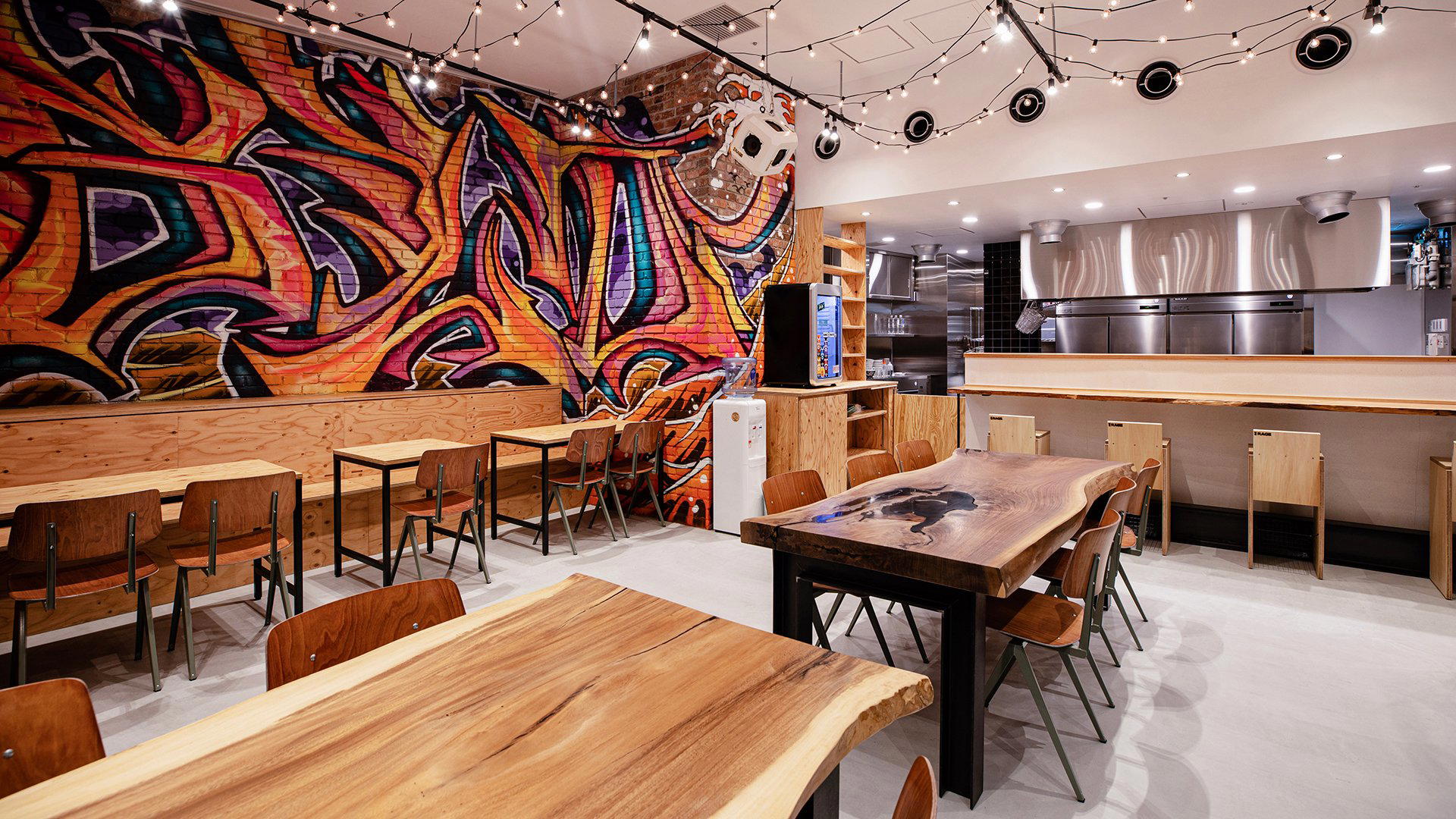
Ramen at Street Level, in a Building That Is Anything But
Azabudai Hills arrived in late 2023 as one of Tokyo's most scrutinised new urban projects: a mixed-use development in Minato-ku that drew comparisons to Roppongi Hills for sheer ambition of scope. That a ramen counter would plant itself in the basement of Garden Plaza D, alongside galleries and high-end retail, says something about where the category sits in Tokyo's dining conversation. Ramen is no longer confined to station corridors and plastic-curtained shopfronts. At the sharper end of the market, it occupies deliberate, designed spaces and invites the same sourcing questions that fine-dining operators have been answering for years. 麺尊RAGE sits inside that shift.
The Bowl as a Supply-Chain Statement
The sustainability angle in Tokyo ramen is worth taking seriously, because the dish's construction — broth, noodle, fat, topping — touches an unusually wide range of producers. Broth volume means ingredient consumption at scale: bones, kombu, dried fish, aromatic vegetables. How those inputs are sourced, and what happens to the byproducts, separates operations that treat the category as craft from those that treat it as throughput. Tokyo's most discussed ramen counters in recent years have increasingly framed their identity around the provenance of a key ingredient: a specific region's dried sardines, a single-farm pork, a small-batch soy. That framing is partly marketing, but it also reflects a genuine shift in what the city's serious ramen eaters ask when they arrive at a counter. 麺尊RAGE, positioned inside one of the city's most high-profile new addresses, operates in that register.
Azabudai Hills was designed with environmental performance targets built into its infrastructure, and tenants within the development carry a degree of that positioning by association. For a ramen operator, that context creates a particular kind of expectation. The broth tradition in Japanese noodle culture already has a built-in relationship with the concept of using the whole animal and reducing waste, the long-simmered stock is, at its origin, a method for extracting value from parts that would otherwise be discarded. A counter that leans into that lineage rather than treating it as inconvenient history places itself in a coherent position.
The Minato-ku Address and What It Signals
Ramen counters in Tokyo's wealthier wards, Minato-ku, Shibuya, Shinjuku, operate in a different commercial register than their counterparts in Adachi or Nerima. Rent pressure is higher, foot traffic is more international, and the neighbouring competition often runs at four-digit-per-head prices. Harutaka, RyuGin, and L'Effervescence represent the tier that defines the culinary gravity of central Tokyo, counters where Michelin recognition and multi-month booking queues set the frame. 麺尊RAGE does not compete in that tier by format or price point, but it operates in proximity to that expectation, which shapes how it is read by visitors arriving through Azabudai Hills for another purpose.
That adjacency also matters for what the venue is not: it is not a casual office-worker lunch stop. The development itself skews toward an international resident and high-net-worth visitor profile. A ramen counter in that context becomes a considered stop, not a default one. It sits closer in spirit to the category of destination noodle shops, the kind that appear on curated Tokyo itineraries alongside kaiseki references and third-wave coffee stops, than to the unremarkable grid of lunch options surrounding most Tokyo train stations.
Tokyo's Ramen Category in Context
Japan's ramen scene has developed a credentialling infrastructure of its own: the Ramen Database (Ramendb), coverage in specialist publications like Ramen Walker, and a cluster of social media accounts that function as real-time critical guides. Within that ecosystem, counters accumulate reputations through a combination of queue behaviour, repeat visitor loyalty, and the language serious eaters use to describe them. A location like Azabudai Hills generates immediate visibility, but visibility without substance produces a short arc. The counters that build sustained reputations in Tokyo's ramen discourse tend to do so through consistency of bowl and broth across hundreds of services per week, not through address alone.
For broader context on Tokyo's dining range across categories and price tiers, the EP Club full Tokyo restaurants guide maps the city's key operators from street-level bowls to multi-course kaiseki. Comparable sourcing-forward thinking appears at the fine-dining end in venues like Crony and Sézanne, where ingredient provenance is built into the editorial identity of the menu. The ramen category is arriving at a similar conversation by a different route.
Across Japan's secondary cities, the sourcing-forward approach has also taken hold. HAJIME in Osaka and Gion Sasaki in Kyoto represent the fine-dining expression of that regional commitment to producer relationships. Beyond the major urban centres, venues like akordu in Nara and Goh in Fukuoka demonstrate that ingredient seriousness scales across formats and geographies. Further afield, 一本杉川嶋 in Nanao, 夕仙山乃 in Sapporo, 湖畔荘 in Takashima, and 庄羽屋 in Nishikawa Machi each map a distinct regional approach to the same underlying commitment. Internationally, the discipline of sourcing-led cooking at Le Bernardin in New York City and the Korean-rooted precision at Atomix show that the conversation is genuinely global. Closer in category spirit, Birdland in Sakai and Bistro Ange in Toyohashi represent the kind of regional seriousness that mirrors what 麺尊RAGE brings to its format in Tokyo.
Planning Your Visit
麺尊RAGE is located at 虎ノ門5-10-7, in the basement level of Azabudai Hills Garden Plaza D, Minato-ku, Tokyo (postal code 105-0001). The development is accessible from Roppongi-Itchome Station on the Namboku Line and Tameike-Sanno Station on the Ginza and Namboku lines, with the Azabudai Hills complex itself well signposted from street level. Given the venue's position inside a high-profile development with consistent foot traffic, arriving at off-peak times, mid-afternoon where the format allows, or early in the service window, is the more reliable approach than banking on a short queue at peak lunch or dinner hours.
What It’s Closest To
Comparable venues nearby, for context on price, style, and recognition.
| Venue | Cuisine | Price | Notes |
|---|---|---|---|
| 麺尊RAGEThis venue — the venue you are viewing | Modern Shamo Shoyu Ramen | $$$ | Not listed |
| はなぶさ 麻布十番店 | Kansai-Style Charcoal-Grilled Unagi | $$$ | Azabu-Juban |
| Esaki | Modern Kaiseki | $$$ | Shinjuku |
| 寿司 健 | Michelin Three-Star Omakase Sushi | $$$ | Chūō |
| サーモンアンドトラウト | Modern Japanese Punk Cuisine | $$$ | Setagaya |
| Yakiniku Rokkoen | Traditional Kobe-style Yakiniku (Japanese BBQ) | $$$ | Setagaya |









At a Glance
- Trendy
- Modern
- Energetic
- Industrial
- Solo
- Casual Hangout
- Open Kitchen
- Sake Program
Street vibe with hip-hop music, AKIRA comics on shelves, and graphic wall art creating an individualistic, trendy atmosphere.
Know Before You Go
- Getting there
- 虎ノ門5-10-7 (麻布台ヒルズガーデンプラザD B1F), 港区, 東京都, 105-0001