Esaki occupies a quiet address in Kagurazaka, Shinjuku City, a neighbourhood where Tokyo's French-influenced dining history and traditional ryotei culture have coexisted for decades. The restaurant operates at the upper register of Tokyo's kaiseki and Japanese fine dining tier, drawing a reservation-led clientele in a district where intimate, counter-focused formats have long defined the standard. For visitors navigating Tokyo's most serious dining options, Esaki sits in the same conversation as the city's Michelin-recognised houses.
Pearl is the En Primeur Club membership app — saves, bookings, and concierge access live there. Same editors, same standards.
- Address
- 3 Chome-6 Kagurazaka, Shinjuku City, Tokyo 162-0825, Japan
- Phone
- +81 3-5228-2971
- Website
- ge3d500.gorp.jp
- Directions
- Get directions
 Saves & bookings on Pearl
The Room Before the Meal: Kagurazaka's Quiet Upper Register
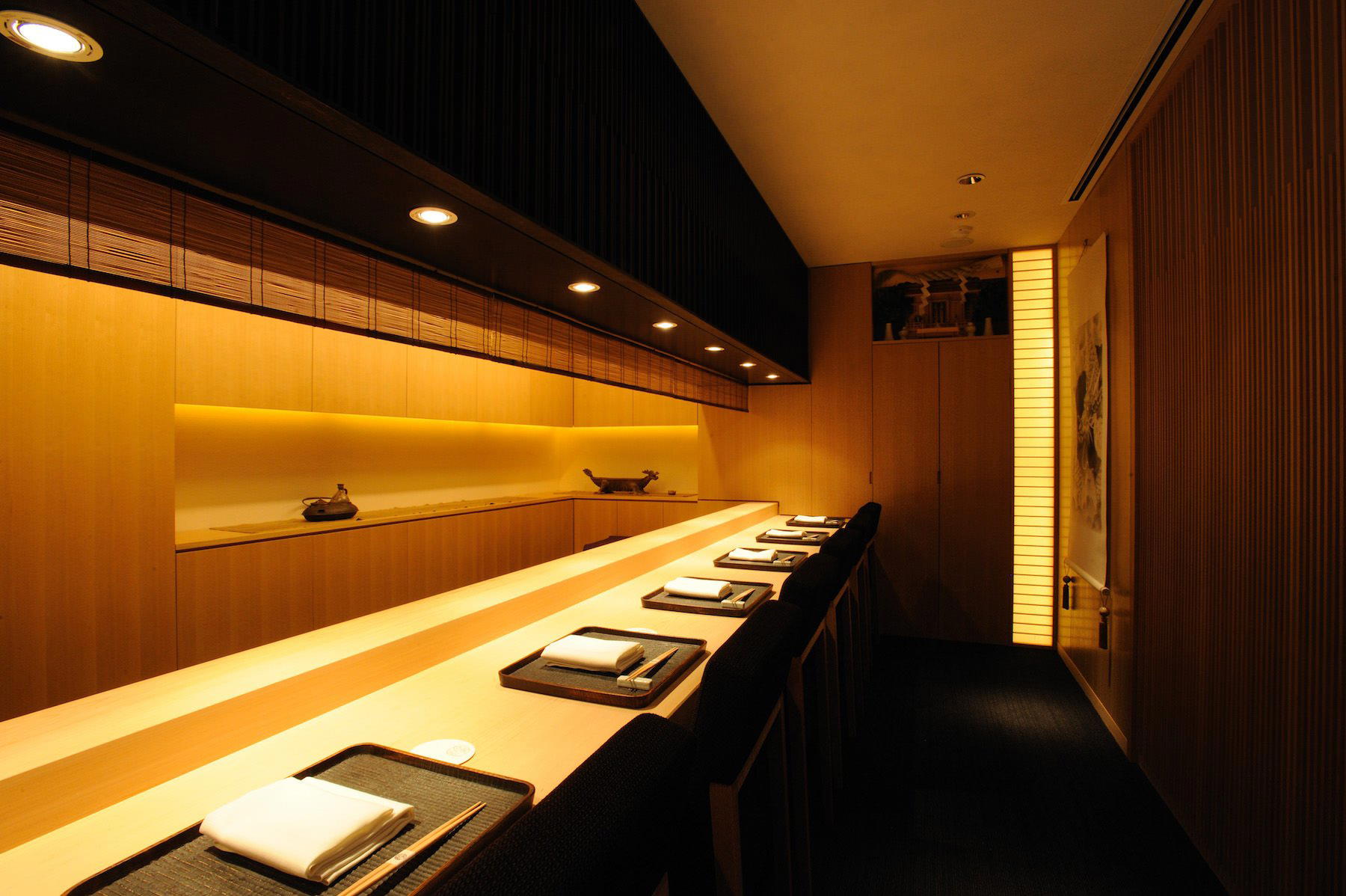
There is a particular kind of calm that arrives when a Tokyo restaurant has been designed to slow things down. Kagurazaka, the neighbourhood that climbs from Iidabashi toward Shinjuku's western edge, has cultivated that quality over generations. This is not the concentrated spectacle of Ginza's high-floor dining rooms or the institutional grandeur of a Roppongi tower. Kagurazaka is a neighbourhood of narrow lanes, machiya-style facades, and a dining culture that prizes discretion over visibility. Esaki sits inside that character, at a Chome-6 address that requires intention to find and rewards that intention with a setting pitched firmly at the concentrated, intimate end of Tokyo's fine dining range.
The physical logic of this kind of space carries real weight in Japan's top-tier dining market. Counter-led and small-room formats in Tokyo communicate something specific to frequent visitors: that the focus is on sequence, craft, and the direct relationship between kitchen and guest rather than on atmosphere as production. The room here is the frame, not the spectacle, and in Kagurazaka, that framing lands in a neighbourhood that has historically attracted some of Tokyo's most considered restaurant projects. The broader context includes RyuGin, whose kaiseki program helped define what precision-forward Japanese dining could look like at the international level, and L'Effervescence, which brought a French intelligence to seasonal Japanese ingredients and now holds three Michelin stars. Esaki operates with a different neighbourhood address but within the same city-wide tier.
Where Esaki Sits in Tokyo's Fine Dining Architecture
Tokyo's top-end restaurant scene has become one of the most stratified in the world. The city's Michelin Guide awards more stars than Paris, and the practical consequence is a market where the distance between a two-star and a three-star operation is measured in booking lead times, price increments, and the density of international visitors competing for seats. Within that structure, a restaurant in Kagurazaka occupies a particular position: close enough to the main visitor circuit to attract serious diners, far enough from Ginza's concentration of starred counters to draw a clientele that has already done the research.
The comparison set for a serious Japanese fine dining address in this district runs from the kaiseki tradition represented by houses like Gion Sasaki in Kyoto, which holds three Michelin stars and anchors its program in Kyoto's seasonal produce logic, to Tokyo's own innovation-led formats. Crony, currently at two Michelin stars, shows how French-inflected innovation can find a sustained following in Tokyo's competitive market. Harutaka, at three Michelin stars, defines the upper limit of Tokyo's sushi counter format. Esaki exists somewhere in that field, at a Kagurazaka address that situates it away from the most trafficked starred corridor but not outside the conversation that corridor generates.
The Neighbourhood as Context
Kagurazaka has a specific dining history that frames any serious restaurant operating here. The neighbourhood's French connection, which dates to a period when a significant French expatriate community settled in the area, left a culinary imprint that still shows up in the concentration of French bistros and boulangeries on the main drag. But the neighbourhood's older identity is as a former geisha district, with the stone-paved Hyogo Yokocho alley and the preserved kappabori architecture creating a physical environment that does what Tokyo's most over-designed dining rooms attempt to manufacture: a sense of time and place that does not need to announce itself.
For visitors using Kagurazaka as a dining destination rather than a transit stop, the neighbourhood rewards an approach that treats dinner as the reason to be in the area rather than a supplement to sightseeing. The nearest comparable dining neighbourhood in terms of density and register is probably the Azabu-Juban corridor in Minato, but Kagurazaka's lower international profile means booking conditions at addresses here have historically been less punishing than at the Ginza or Roppongi tier. That dynamic shifts as international dining media continues to map Tokyo's neighbourhoods in granular detail, so the window for finding serious restaurants here at relatively accessible booking conditions is not permanent.
Peer Restaurants Across Japan
The question of where to position Esaki within Japan's broader fine dining circuit is worth addressing for visitors planning multi-city itineraries. Japan's top-tier restaurant culture is not limited to Tokyo. HAJIME in Osaka holds three Michelin stars and operates at the boundary of kaiseki and contemporary French influence. akordu in Nara offers a wine-centric counter format that addresses Japan's terroir in a different register entirely. Goh in Fukuoka brings Kyushu's seafood culture into a high-technique frame. 1000 in Yokohama and 6 in Okinawa extend the range further geographically. For international visitors whose benchmark for this tier is set by restaurants like Le Bernardin in New York City or Atomix in New York City, the Tokyo and broader Japan field offers a comparable concentration of serious, technique-driven programs at a range of price points.
Within Tokyo specifically, the competitive set also includes Sézanne, Daniel Calvert's French-led program at Four Seasons Tokyo Marunouchi, which holds three Michelin stars and draws an international audience willing to pay at the very best of the Tokyo dining price range. Esaki's Kagurazaka address positions it as a more neighbourhood-embedded alternative to the hotel dining room model that Sézanne represents.
Planning Your Visit
For broader coverage of where to eat, drink, stay, and explore in the city, see our full Tokyo restaurants guide, our full Tokyo hotels guide, our full Tokyo bars guide, our full Tokyo wineries guide, and our full Tokyo experiences guide.
Address: 3 Chome-6 Kagurazaka, Shinjuku City, Tokyo 162-0825, Japan. Reservations: Advance booking is strongly advised for any serious dining address in this district; walk-in availability at this tier is not reliably available, particularly for dinner service. Getting there: Iidabashi Station (served by the JR Sobu Line and multiple subway lines) is the closest access point for Kagurazaka addresses. Timing: Kagurazaka's dining character is at its most concentrated in the autumn months, when the neighbourhood's stone-paved lanes and zelkova trees create the kind of setting that serious restaurants in the area frame their seasonal programming around.
How Esaki Tokyo compares with similar nearby venues.








At a Glance
- Quiet
- Intimate
- Sophisticated
- Special Occasion
- Date Night
- Business Dinner
- Standalone
- Sake Program
- Organic
- Local Sourcing
Current opening hours
- Monday
- 5:30–10 PM
- Tuesday
- 5:30–10 PM
- Wednesday
- 5:30–10 PM
- Thursday
- 5:30–10 PM
- Friday
- 5:30–10 PM
- Saturday
- 5:30–10 PM
- Sunday
- Closed
Hours can change for holidays and private events. Last verified .
Quiet and understated, formerly hidden in a basement location on residential Jingu-mae streets with a relaxed, comfortable fine-dining feel.
Know Before You Go
- Getting there
- 3 Chome-6 Kagurazaka, Shinjuku City, Tokyo 162-0825, Japan