Our verdict
サーモンアンドトラウト sits in Daizawa, Setagaya, one of Tokyo's quieter residential quarters, well removed from the Michelin circuit's central-ward concentration. The restaurant's name signals an alignment with European fish cookery traditions, positioning it at an interesting distance from both the city's dominant sushi omakase tier and its French fine-dining establishment. For a milestone meal away from the standard celebratory circuit, it merits serious attention.

Pearl is the En Primeur Club membership app, where members save venues, book tables and use the concierge.
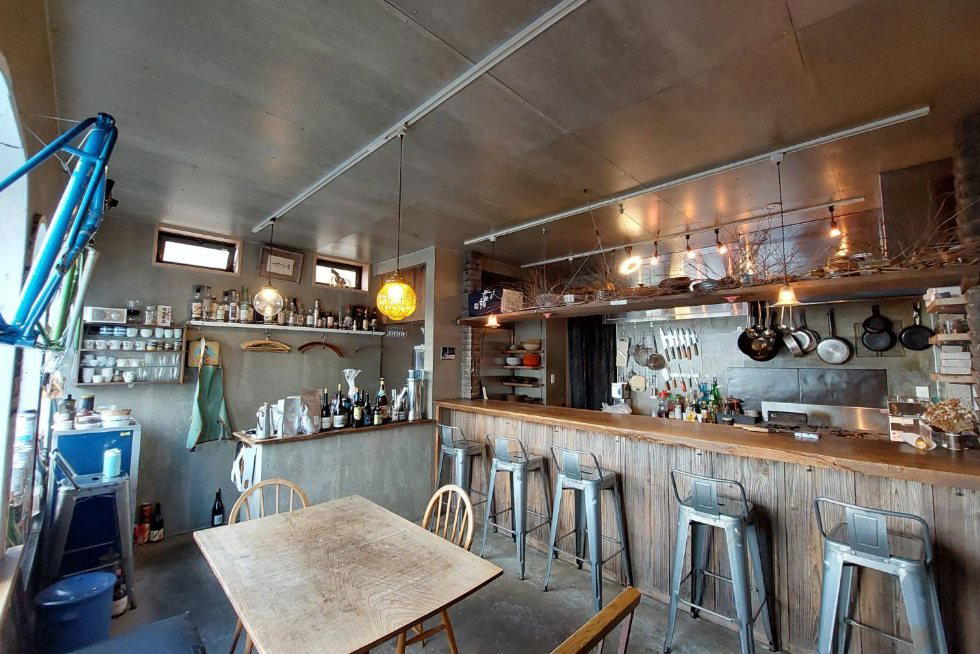
A Different Axis for Tokyo Occasion Dining
Tokyo's celebration-meal circuit runs predictably through a handful of central wards. Ginza supplies the high-omakase counters, Minami-Aoyama holds much of the French repertoire, and Azabu-Juban anchors the kaiseki tier. Venues like Harutaka in Ginza, L'Effervescence in Nishi-Azabu, and RyuGin in Roppongi represent the kind of addresses that have become near-automatic choices for anniversaries and milestone dinners. Against that geography, Setagaya reads as a deliberate departure. It is a residential ward, long associated with the city's creative and independent-minded restaurant operators, and dining there for a special occasion carries a different register, quieter, less performative, more focused on the meal itself rather than the postcode.
サーモンアンドトラウト (Salmon and Trout) occupies an address in Daizawa, a sub-district within Setagaya that sits close to Shimokitazawa, a neighbourhood with a well-documented track record of supporting independent operators who trade on technique and ingredient conviction rather than on setting or ceremony. The restaurant's name points directly at a European, specifically northern European, frame of reference for fish cookery: the salmon and the trout as primary subjects, not as supporting cast to meat or seasonal vegetable courses. That framing alone separates it from the majority of Tokyo's fish-focused destinations, which operate within either the Japanese raw tradition or the French butter-and-sauce model.
The Occasion Case for Setagaya
There is a well-established pattern in Tokyo's higher-end dining: milestone occasions tend to cluster at addresses with the most visible institutional recognition. The logic is direct, a Michelin star or a place on a major annual list provides a shared shorthand that works as social proof for a celebration. But that same logic has produced a small counter-movement among Tokyo diners who specifically seek out restaurants without the institutional weight, precisely because the meal can exist on its own terms rather than partly as a status transaction.
Setagaya's dining room culture fits that counter-movement well. A dinner at サーモンアンドトラウト in Daizawa reads as a choice made from actual food knowledge rather than from deference to a list. That distinction matters more than it might sound: for a birthday or an anniversary where the point is the conversation and the table, rather than the bragging rights, a restaurant in this part of the city tends to deliver a different atmosphere than a central-ward address at a comparable level. Compare this to how Crony in Shibuya has carved a similar niche at the innovative French tier, technically serious, atmospherically less rigid than the flagship addresses.
Northern European Fish Cookery in a Tokyo Context
The phrase "salmon and trout" carries specific culinary implications that are worth spelling out. Northern European fish cookery, Scandinavian and Nordic traditions in particular, treats cold-water fish with a set of techniques that diverge significantly from both Japanese and French approaches. Curing, smoking, fermenting, and cold-preparation methods produce flavour profiles that are simultaneously more intense and more austere than the butter-enriched sauces of classical French fish cookery, and entirely different in texture and temperature from Japanese sashimi or nigiri. A restaurant built around these two species as its conceptual anchors is making a deliberate argument about restraint, about the fish as primary subject, and about the cold-water flavour register as something worth sustained attention.
That argument has precedent in Tokyo. The city has absorbed Nordic and northern European technique steadily over the past decade, and the willingness of Tokyo diners, and Tokyo cooks, to engage seriously with non-Japanese and non-French European traditions has produced a small but serious tier of restaurants working in this space. Internationally, the trajectory of fish-focused fine dining is well documented: Le Bernardin in New York made the case for fish as the equal of meat in formal dining settings decades ago, and that argument has only strengthened as Japanese ingredient sourcing and European technique have increasingly cross-pollinated.
Planning a Meal Here: What the Geography Tells You
Daizawa sits roughly between Ikejiri-Ohashi on the Den-en-toshi line and Shimokitazawa on the Odakyu and Keio Inokashira lines. Neither stop is a major interchange, which means arriving at サーモンアンドトラウト requires a small degree of intentionality, it is not on the path between any two obvious destinations. For an occasion dinner, that insularity is part of the point. The area around Daizawa has a neighbourhood pace that is difficult to find in central Tokyo, and arriving there in the evening carries a sense of having deliberately removed yourself from the city's main circuits.
For comparison: other fish-forward or European-influenced restaurants in Japan's broader fine-dining circuit, HAJIME in Osaka, akordu in Nara, Goh in Fukuoka, all operate with advance booking windows of four to eight weeks minimum at their standard tiers. Setagaya independents with a loyal local following often run on similar timelines despite having lower national profiles than those addresses.
For a wider view of Tokyo's dining landscape and how addresses like this fit into the city's broader restaurant geography, see our full Tokyo restaurants guide. Comparison with Sézanne at the leading French tier, or with regionally distinctive addresses like Gion Sasaki in Kyoto, 一本杉川嶋 in Nanao, or 湖畔荘 in Takashima, illustrates how Japan's most interesting dining increasingly operates at a distance from its most visible institutional markers. Further afield, 北の大地乃 in Sapporo, 羽根屋 in Nishikawa Machi, Birdland in Sakai, Bistro Ange in Toyohashi, and Atomix in New York City all demonstrate the same pattern: serious cooking with a clear point of view tends to find its audience regardless of neighbourhood or postcode.
Know Before You Go
- Address: 4 Chome-42-7 Daizawa, Setagaya City, Tokyo 155-0032, Japan
- Nearest stations: Ikejiri-Ohashi (Den-en-toshi Line) or Shimokitazawa (Odakyu / Keio Inokashira Lines)
- Booking: No direct online booking confirmed; try Tableall or Omakase reservation platforms, or visit in person
- Lead time: Allow several weeks for occasion dining; precise window unconfirmed
- Price range:; budget in line with comparable Setagaya independents at the serious end of the mid-to-upper tier
- Hours:; verify before travelling
Frequently asked questions
Where do I go for サーモンアンドトラウト?
サーモンアンドトラウト is located at 4 Chome-42-7 Daizawa, Setagaya City, Tokyo 155-0032, Japan, Tokyo.
Is サーモンアンドトラウト suitable for a special occasion dinner in Tokyo outside the city centre?
The Daizawa location in Setagaya City places サーモンアンドトラウト firmly off Tokyo's conventional celebration-meal axis, which runs through Ginza, Roppongi, and Minami-Aoyama. That distance is a feature for diners seeking something with a more residential, considered atmosphere rather than the institutional weight of a Michelin-circuit address. The Northern European fish cookery focus gives the meal a clear identity that holds up as an occasion choice in its own right.
What should I order at サーモンアンドトラウト?
The restaurant's name signals its focus directly: salmon and trout prepared through a Northern European lens, drawing on Scandinavian and Nordic fish cookery traditions. Given the Daizawa address and the cooking philosophy, expect preparations that prioritise curing, smoking, or other preservation-based techniques common to that culinary tradition. Specific menu items and current dishes are best confirmed when booking, as the offering is subject to change.
How far ahead should I plan for サーモンアンドトラウト?
Setagaya restaurants with a distinctive culinary angle and a loyal neighbourhood following typically require at least two to four weeks' notice for weekend tables. サーモンアンドトラウト sits in Daizawa, a low-profile residential pocket between Ikejiri-Ohashi and Shimokitazawa, which means walk-in chances are lower than at higher-traffic central wards. Contacting the restaurant directly for current availability is the most reliable approach.
What's サーモンアンドトラウト best at?
The clearest case for this restaurant is its disciplined focus: Northern European fish cookery applied with Tokyo-level precision in a setting outside the predictable Ginza and Minami-Aoyama occasion-dining corridor. That specificity, salmon and trout as the organising principle rather than a broad menu, is relatively uncommon in Tokyo and positions the kitchen within a narrow peer group. It suits diners who already know what Scandinavian-influenced fish preparation involves and want to see it executed seriously.
A Quick Peer Check
Comparable venues nearby, for context on price, style, and recognition.
| Venue | Cuisine | Price | Awards | Notes |
|---|---|---|---|---|
| サーモンアンドトラウトThis venue (the venue you are viewing) | Modern Japanese Punk Cuisine | $100–150 | Not listed | Not listed |
| Kuriya Kashi Kurogi | Artisanal Japanese Wagashi & Kakigori | Not listed | Not listed | Hongo, Bunkyo-ku |
| Sake Hidejiro | Japanese Sake Omakase Izakaya | $50–100 | Tabelog 100 #80 | Shibuya |
| 焼肉トラジ新宿西口店 | Premium Yakiniku (Japanese Grilled Beef) | $50–100 | Not listed | Shinjuku |
| Hiroo Taishu Yakiniku Bouin Boushoku | Taishu yakiniku (Japanese BBQ) | $50–100 | Tabelog 100 #26 | Shibuya |
| Iwasawa | Edo-style Omakase Sushi | $200–300 | Tabelog 100 #14 | Shinagawa |