Pizzeria O
Pizzeria O occupies a quiet address on Dongsung-gil in Seoul's Jongno District, bringing Neapolitan pizza logic into a neighbourhood better known for theatre students and late-night pojangmacha. The kitchen works from sourcing principles that align it with Seoul's broader movement toward ingredient-led cooking, making it a reference point for anyone tracing how Italian craft has taken root in Korea's capital.
Pearl is the En Primeur Club membership app — saves, bookings, and concierge access live there. Same editors, same standards.
- Address
- 86 Dongsung-gil, Jongno District, Seoul, South Korea
- Phone
- +82236735005
- Website
- pizzeriao.com
- Directions
- Get directions
 Saves & bookings on Pearl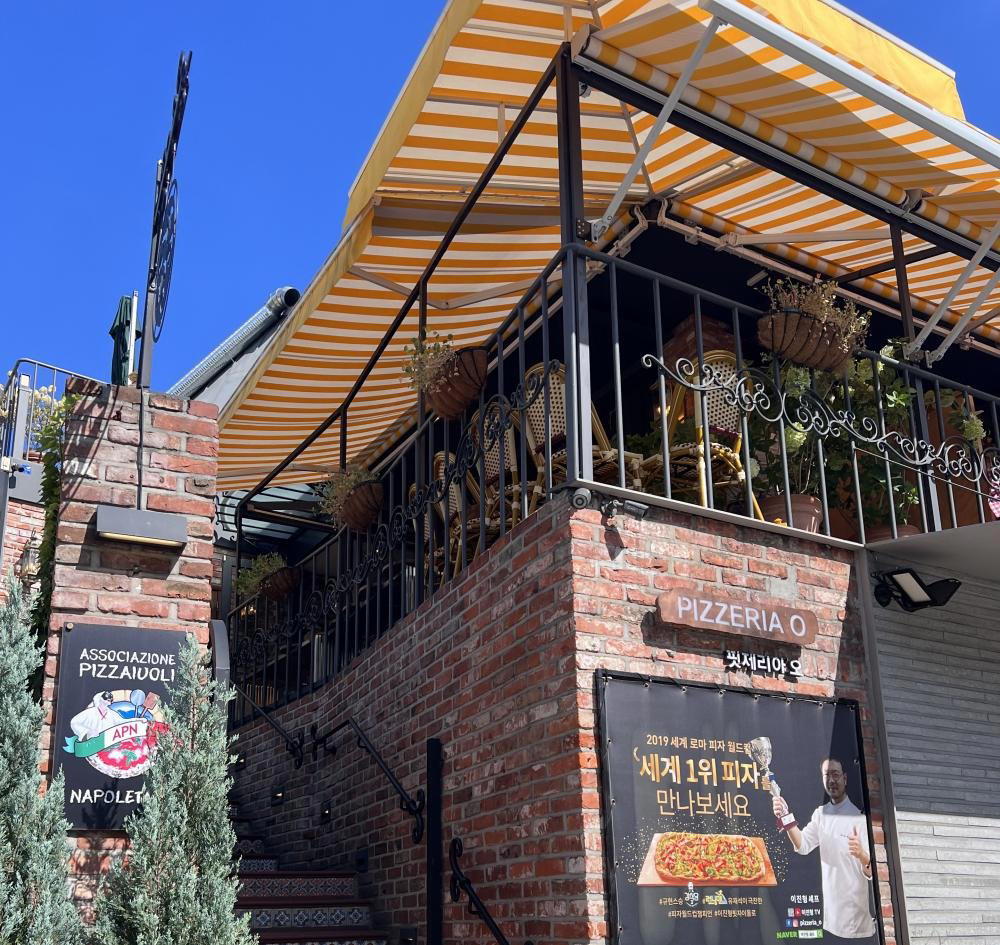
Dongsung-gil and the Question of Where Pizza Belongs
Jongno's Dongsung-gil is the kind of street that accumulates meaning slowly. Drama schools, independent bookshops, and small performance venues have shaped its character over decades, drawing a crowd that tends toward the curious rather than the trend-conscious. Into this setting, Pizzeria O at 86 Dongsung-gil inserts a format that Seoul has absorbed and reinterpreted with considerable seriousness over the past decade: the wood-fired Neapolitan pizza counter.
Pizza in Seoul is no longer a novelty category. The city now contains a range of serious operators, from Vera in Mapo to smaller neighbourhood shops that import 00-grade flour and log their fermentation times with near-scientific attention. What distinguishes the upper tier of this scene is not the oven or the flour alone, it is sourcing discipline, the kind of attention to where ingredients come from that has come to define Seoul's most considered kitchens across every cuisine type. Pizzeria O sits within that current.
Sourcing as the Argument
Ingredient sourcing has become a meaningful dividing line in Seoul's dining scene. At the higher end of the spectrum, restaurants like Mingles, Jungsik, and Soigné, ingredient provenance is treated as a primary editorial statement, not an afterthought. That ethos has filtered down into more casual formats, and Neapolitan pizza, with its tight ingredient vocabulary, is a particularly revealing test case. When a pizza's construction is this simple, dough, tomato, mozzarella, fire, the origin of each component is directly audible in the result.
The Neapolitan tradition places a premium on San Marzano tomatoes grown in the volcanic soil around Vesuvius, fior di latte or buffalo mozzarella from Campania's certified dairies, and dough hydration and fermentation protocols that resist shortcutting. Seoul's better pizza makers have engaged seriously with this sourcing map, some importing key ingredients, others working with Korean producers to find domestic equivalents that carry comparable mineral or acid profiles. This is the conversation Pizzeria O enters, and the address in Jongno, away from the flashier restaurant corridors of Gangnam or Itaewon, suggests a kitchen more interested in the work than the scene.
Korea's own agricultural breadth gives Seoul's ingredient-conscious kitchens real material to engage with. Jeju Island produces pork and seafood that have found their way into menus far beyond the island itself, see 88돼지 in Jeju City and Black Pork BBQ in Seogwipo for how seriously local producers are taken in their home context. Regional sourcing intelligence of that kind informs how thoughtful Seoul operators across all formats think about what goes on the plate.
The Jongno Setting
Location shapes expectation before a meal begins, and Dongsung-gil sets a particular register. The neighbourhood does not function as a dining destination in the way that Garosu-gil or the streets around Gyeongbokgung palace have come to, which means the restaurant draws on foot traffic from a more local and less tourist-dependent audience. That is, in most cases, a reasonable proxy for a kitchen that does not need to perform for visitors, it needs to hold regulars.
Seoul's dining geography has produced distinct neighbourhood characters. Jongno tilts toward institutions and craft operations with relatively long roots; it is not the area you go to chase what opened last month. For pizza specifically, that means the format has had time to settle into something less about novelty and more about repetition and refinement, the rhythm by which any dough-based tradition earns credibility. Compare this with the more cosmopolitan dining corridors elsewhere in the city, the Korean-centric innovation at Kwonsooksoo, or the boundary-testing menus at alla prima, and the restaurant's quieter placement reads as deliberate.
Seoul's Imported Traditions and Where They Land
Seoul has become one of the more attentive adopters of foreign culinary formats in East Asia. The city's engagement with French technique has been well-documented through restaurants that have earned international recognition; its engagement with Italian craft, pasta, natural wine, pizza, has followed a different, more compressed trajectory. Within roughly fifteen years, the city moved from novelty imports to technically serious operations that can hold comparison with European peers.
That acceleration has parallels elsewhere in the region. Mori in Busan demonstrates how a city outside Seoul has also absorbed international fine-dining logic with its own regional inflection. And Korean kitchens operating abroad, Atomix in New York and the seafood seriousness that defines operations like Le Bernardin, show how Korean culinary intelligence travels in both directions. The restaurant operates at a less rarefied point on that spectrum, but it belongs to the same broader moment of Seoul kitchens taking sourcing and craft seriously regardless of cuisine category.
The innovative dining options in Seoul such as Soigné and the wider scene documented in our full Seoul restaurants guide provide useful context for how the restaurant fits within the city's current range. Additional regional reference points across Korea, from Gobojeong Galbi in Suwon to Hwangnam Bread in Gyeongju and Badang Lounge in Jeju, illustrate that ingredient-led eating is not a Seoul-exclusive phenomenon but a national pattern with local expressions. Further examples include the refined cooking at Dining Room (다이닝룸) in Busan, the hearty tradition at Doosoogobang in Suwon, and the localised seriousness of Gyeongju Wonjo Kongguk and Hinode in Seogwipo.
Planning a Visit
The restaurant is located at 86 Dongsung-gil in Jongno District, and reservations are recommended. Seoul's pizza scene is active enough that the surrounding blocks offer alternatives if the kitchen is at capacity, but the restaurant's Jongno positioning means it draws a different crowd than the Gangnam or Itaewon equivalents.
Accolades, Compared
Comparable venues nearby, for context on price, style, and recognition.
| Venue | Cuisine | Price | Notes |
|---|---|---|---|
| Pizzeria OThis venue — the venue you are viewing | Authentic Neapolitan Pizza | $$ | Not listed |
| Spacca Napoli | Authentic Neapolitan Pizza | $$$ | Seongsan-dong |
| Trattoria Romagna | Emilia-Romagna Trattoria | $$ | 반포본동 |
| 박가네빈대떡 | 전통 녹두빈대떡 전문점 | $$ | 광장시장 |
| Ciuri Ciuri | Authentic Sicilian Italian | $$ | 연남동 |
| Gubock Dumplings (구복만두) | Traditional Chinese Dumplings | $$ | Yongsan-gu |
Continue exploring
More in Seoul
Restaurants in Seoul
Browse all →


At a Glance
- Lively
- Cozy
- Trendy
- Casual Hangout
- Date Night
- Late Night
- Open Kitchen
Current opening hours
- Monday
- 11:30 AM–9 PM
- Tuesday
- 11:30 AM–9 PM
- Wednesday
- 11:30 AM–9 PM
- Thursday
- 11:30 AM–9 PM
- Friday
- 11:30 AM–9 PM
- Saturday
- 11:30 AM–9 PM
- Sunday
- 11:30 AM–9 PM
Hours can change for holidays and private events. Last verified .
Warm and inviting with a lively university district energy.