Black Pork BBQ
In Seogwipo, Jeju's black pork BBQ tradition runs deeper than anywhere else on the island, and Black Pork BBQ on Taepyeong-ro sits squarely within that lineage. The format is elemental: charcoal, heritage-breed pork, and a table where the cooking is the event. For visitors looking to understand what makes Jeju's signature ingredient worth the trip, this is a direct route to that answer.
Pearl is the En Primeur Club membership app — saves, bookings, and concierge access live there. Same editors, same standards.
- Address
- 7 Taepyeong-ro 353beon-gil, í¹ë³ìì¹ë Seogwipo-si, ì 주 South Korea
- Phone
- +82647621277
- Website
- catchtable.net
- Directions
- Get directions
 Saves & bookings on Pearl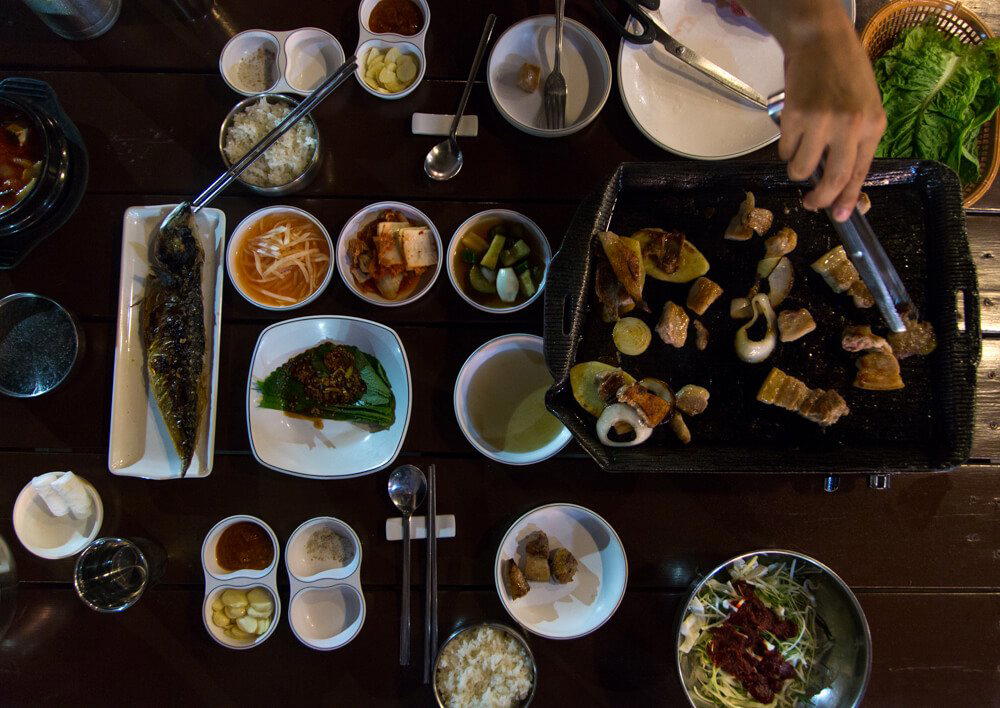
Where Jeju's Black Pork Tradition Is Most Legible
Jeju Island's culinary identity rests on a small number of genuinely distinctive ingredients, and the Jeju black pig, heukdwaeji, sits at the centre of that list. This is not a marketing designation. The breed has been raised on the island for centuries, developing a flavour profile that reflects the volcanic soil, the island's foraging ecosystem, and a slower growth cycle than industrially bred pork. The fat renders differently, the texture holds more resistance, and the taste carries a depth that becomes immediately apparent when placed next to commodity pork on the same grill. Black Pork BBQ, located on Taepyeong-ro in the southern city of Seogwipo, operates inside this tradition rather than alongside it.
The Ingredient Is the Argument
Across South Korea, pork BBQ restaurants are common enough to constitute a genre unto themselves, but Jeju's version operates on different terms. The heukdwaeji is a protected regional product, and its supply chain is tightly local. Restaurants working with authentic Jeju black pork are sourcing from farms that exist within a geographically constrained supply network on the island itself. That constraint is not incidental, it is the point. The breed's characteristics are inseparable from the island environment, and any deviation in sourcing would produce a meaningfully different product.
This matters for visitors making choices across Seogwipo's BBQ corridor, where the density of charcoal-grill restaurants along major streets can make differentiation feel difficult. The operative question is not atmosphere or format, most venues run on broadly similar models, but whether the kitchen is working with genuine heukdwaeji or substituting a crossbreed. For context on how this compares across the local scene, Gudumi Pork BBQ and Jeju Korea black pork BBQ Nammaene at Seogwipo Maeil Olle Market are both part of the same competitive tier and worth considering as reference points.
The Format and What It Asks of You
Korean charcoal BBQ at this level of specificity is not a passive dining format. The table-leading grill, the cuts arriving raw, the rotating accompaniments, banchan, perilla leaves, fermented paste, all of it requires engagement. In Jeju's black pork houses, that engagement is rewarded in proportion to the quality of the base ingredient. The fat cap on heukdwaeji, when cooked correctly over live charcoal rather than gas, produces a crisped exterior that the breed's slower fat development makes possible. This is not a subtlety that registers in description, it is a textural and flavour distinction that only the grill reveals.
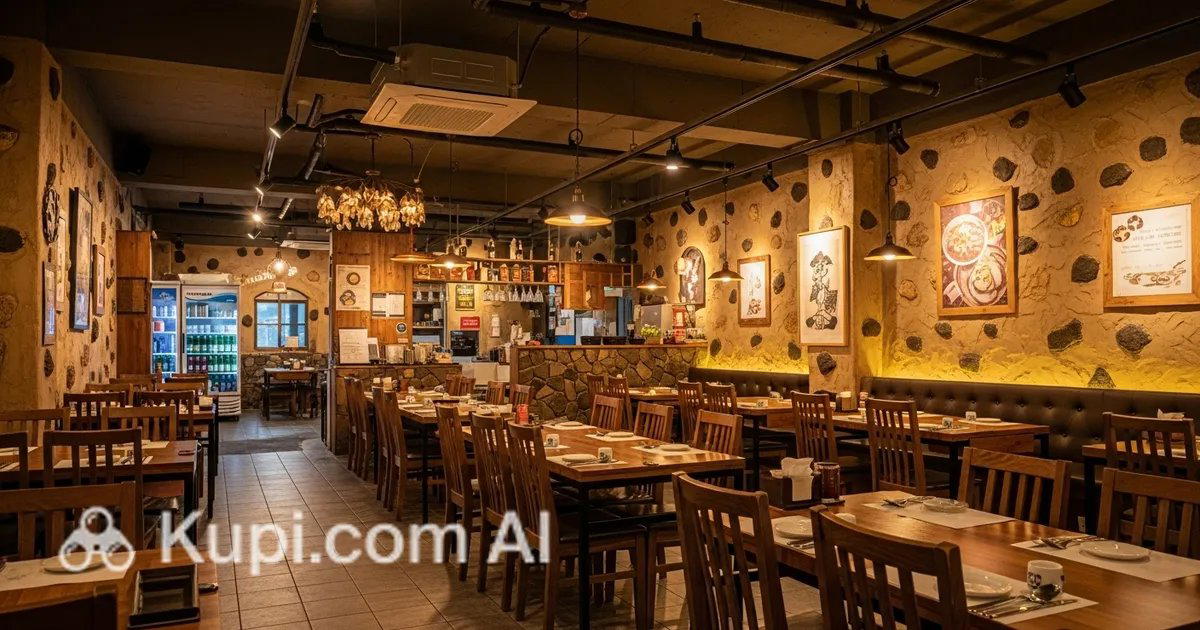
The atmosphere in Seogwipo's BBQ restaurants tends toward the functional rather than the designed. Smoke extraction systems, tiled surfaces, and low-fuss seating are the norm. This is a format where the absence of ornament is itself a signal, the kitchen is not compensating for anything. For dining that operates in a completely different register while staying on the island, Jeju Island Grill and Pasta Studio Jeju represent alternative directions for evenings when the BBQ format is not what the table wants.
Seogwipo in the Broader South Korean Dining Picture
Seogwipo is not Seoul. The dining scene here is shaped by tourism, local agriculture, and a fishing economy, not by the same competitive pressure that drives constant reinvention in Gangnam or Itaewon. That is not a criticism, it is a structural observation that helps calibrate expectations. Restaurants at the level of Mingles in Seoul or Kwon Sook Soo in Gangnam-gu operate within a different economy of ambition and output. What Seogwipo offers instead is ingredient provenance that Seoul's restaurants are often paying a premium to import.
For visitors building a broader picture of South Korea's regional dining, comparison with other coastal and rural specialists is instructive. Mori in Busan and Double T Dining in Gangneung are both operating in regional contexts where local sourcing does the heavy lifting that culinary technique provides elsewhere. Black pork BBQ in Seogwipo belongs to that same category: the geography is the cooking philosophy.
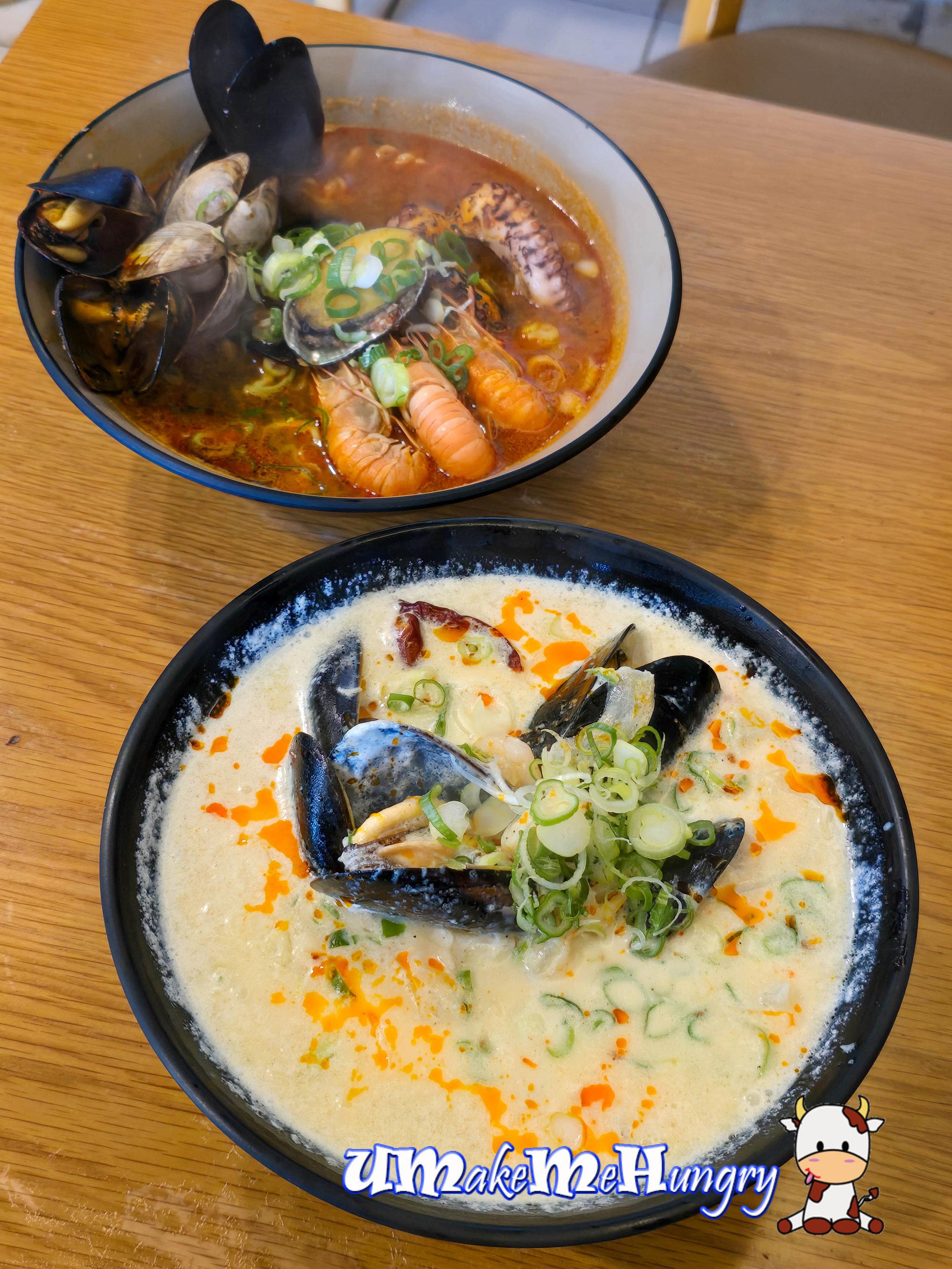
For a wider look at where Seogwipo's restaurants sit across cuisine types and price tiers, the full Seogwipo restaurants guide covers the range, including Jejugot Seogwipo Haemul Ramyeon for those interested in the island's seafood-based noodle traditions as a counterpoint to the BBQ circuit.
Planning Your Visit
The restaurant sits on Taepyeong-ro in Seogwipo, which places it within the city's main dining and commercial corridor, reachable on foot from the waterfront area and accessible by bus from central Jeju City, a journey of roughly one hour by intercity express. Seogwipo's BBQ restaurants operate across lunch and dinner services, with the dinner hours drawing the highest footfall. Walk-in is the norm for this category across the island, though peak summer season (July and August) and the autumn foliage period (late October) see significantly higher visitor volumes that can affect wait times at popular addresses. No booking platform or phone contact is confirmed for this location, arriving early in the dinner window is one reliable approach. For a broader range of evening options if the wait is prohibitive, Gudumi Pork BBQ operates nearby within the same BBQ tier.
How It Stacks Up
Comparable venues nearby, for context on price, style, and recognition.
| Venue | Cuisine | Price | Notes |
|---|---|---|---|
| Black Pork BBQThis venue — the venue you are viewing | Jeju Black Pork BBQ | $$ | Not listed |
| 국수바다 | 제주 고기국수 전문 | $ | 중문 |
| Jeju Island Grill | Korean BBQ Grill | $$ | Taepyeong-ro |
| 오는정김밥 | Traditional Korean Kimbap | $ | 동문동 (Dongmun-dong) |
| 삼보식당 | 제주 해산물 전문 | $$ | 서귀동 |
| Jeju Korea black pork BBQ Nammaene Seogwipo Maeil Olle Market | Jeju Black Pork BBQ | $$ | Seogwipo |
At a Glance
- Rustic
- Cozy
- Group Dining
- Casual Hangout
- Open Kitchen
- Local Sourcing
Current opening hours
- Monday
- 4:30–11 PM
- Tuesday
- 4:30–11 PM
- Wednesday
- 4:30–11 PM
- Thursday
- 4:30–11 PM
- Friday
- 4:30–11 PM
- Saturday
- 4:30–11 PM
- Sunday
- 4:30–11 PM
Hours can change for holidays and private events. Last verified .
Simple, homey setting with charcoal grills at tables and self-serve sides.