Trattoria Romagna


Michelin Plate · Gambero Rosso 1 Forchetta
Our verdict
Trattoria Romagna sits in Seoul's Seocho District, bringing an Italian regional framework to a city that has built one of Asia's most sophisticated dining circuits. The address places it on a quieter Sapyeong-daero side street, away from the Gangnam corridor's heavier foot traffic. Details on pricing and booking are best confirmed directly with the restaurant.

Pearl is the En Primeur Club membership app, where members save venues, book tables and use the concierge.
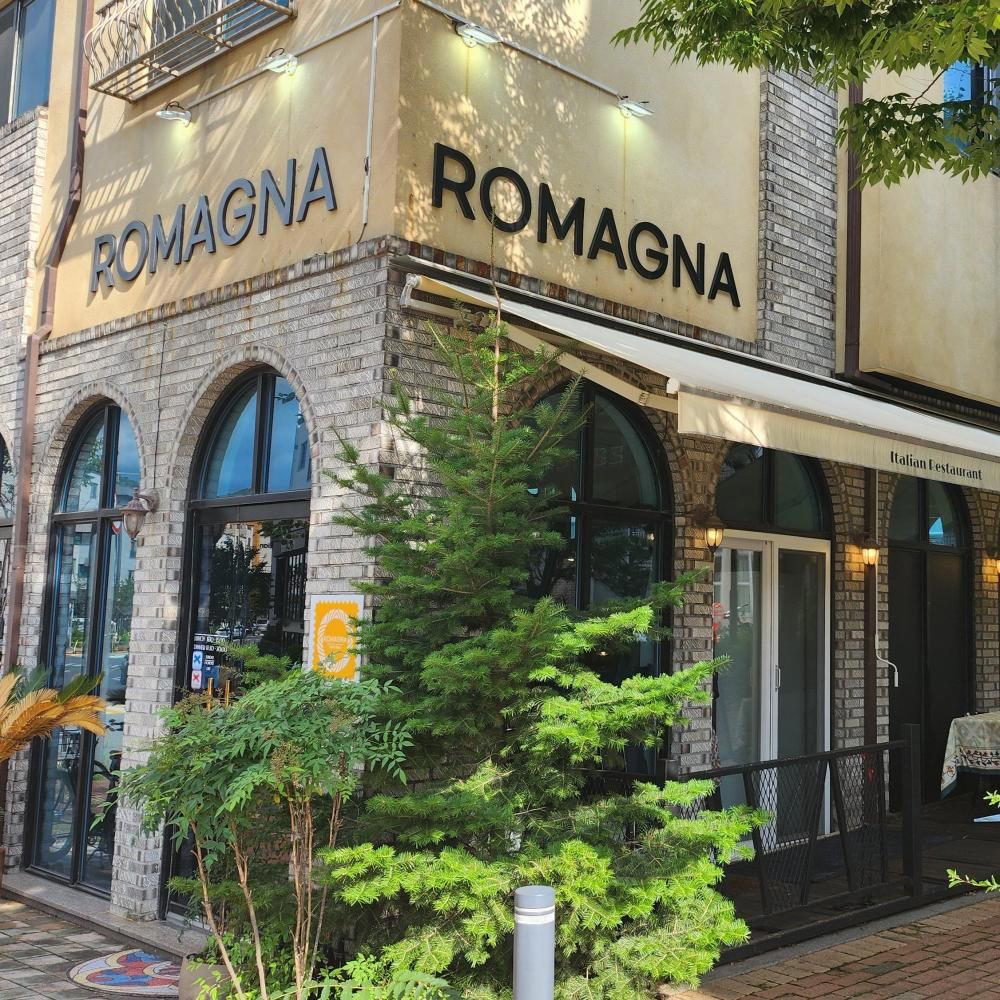
Italian Regionalism in a City That Rewards Specificity
Seoul's Seocho District has developed a quieter, more residential dining register than the Gangnam blocks immediately to its east. The streets off Sapyeong-daero carry a different rhythm: lower signage, fewer tourist clusters, and a dining clientele that tends to be local and returning rather than exploratory. It is in this context that Trattoria Romagna positions itself, drawing on the Romagna tradition of Italian regional cooking at a time when Seoul's appetite for European cuisines has become considerably more exacting.
Italian food in Seoul has followed a recognisable arc. A first wave of trattorias in the 2000s prioritised accessibility and familiarity: pizza, pasta, and antipasto formats that read as approachable to a broad audience. The second wave, which accelerated through the 2010s, moved toward chef-driven tasting menus and imported ingredients, sometimes losing the everyday grain of Italian regional cooking in the process. What the current moment in Seoul rewards is the middle register: places where a specific Italian tradition is applied with discipline, where the menu structure carries the logic of a region rather than the ambitions of a single chef's CV.
Romagna, the eastern half of the Emilia-Romagna region, is a specific culinary territory. It is not Bologna's butter-rich corridor of tortellini and mortadella, nor is it the Adriatic fish markets of the Marche further south. Romagnola cooking tends toward piadina, passatelli, strozzapreti, and braised meats, with a directness that comes from a farming and coastal economy that never particularly valued flourish for its own sake. A restaurant named after that tradition makes a claim about specificity before a diner has even seen the menu.
What the Menu Structure Signals
The editorial angle that matters most at a place like Trattoria Romagna is not any single dish but the architecture of the menu itself. Italian regional cooking, when it is being taken seriously, organises itself around the sequence of antipasto, primo, secondo, and dolce not as a formality but as a nutritional and textural logic built over centuries. Primo courses in Romagna are almost always pasta or grain-based, carrying weight and starch before the protein arrives at secondo. That sequence, when followed honestly, produces a different eating rhythm than the tasting-menu format that dominates Seoul's upper tier.
Seoul's fine dining circuit at the ₩₩₩₩ level, represented by venues like Mingles, Jungsik, and Soigné, operates largely on a fixed-course or omakase-adjacent logic, where the kitchen controls sequence and pace entirely. The trattoria format inverts that: the diner assembles the meal, and the kitchen's job is to execute each component cleanly. That distinction is not a lesser ambition. It is a different one, and in a city where the tasting-menu format has become the default signal of seriousness, a restaurant that builds its credibility through à la carte consistency is making a harder argument.
Innovative venues in Seoul such as alla prima and Soigné have built their reputations on tightly authored menus where every element is choreographed. The trattoria model asks something different of the kitchen: depth across a wider range of dishes, executed to order, without the safety net of a single rehearsed sequence. Whether Trattoria Romagna meets that standard consistently is a question leading answered on repeat visits, but the premise itself is credible for a Seocho neighbourhood that already sustains a loyal local dining culture.
Seoul's Italian Dining Tier and Where This Address Fits
Italian restaurants in Seoul range from the fast-casual to the fine-dining hybrid. The mid-range bracket, which sits roughly between accessible neighbourhood spots and the tasting-menu circuit, has seen the most movement in recent years. French cooking in Seoul has a clearer institutional framework, with venues like L'Amitié anchoring the ₩₩₩ French tier and providing a reference point for where European fine dining sits in price and format. Italian cooking occupies a less codified space, which gives a place like Trattoria Romagna more room to define its own terms.
For comparison across broader Korean dining, the regional specificity argument plays out in different ways. Venues like Kwonsooksoo make a similar bet on Korean regional tradition as a point of distinction within Seoul's contemporary dining circuit. The logic transfers: in a city where the default mode for serious cooking has become either tasting-menu abstraction or global-fusion ambition, a restaurant that commits to a specific regional tradition, executes it without irony, and lets the menu structure carry the argument is occupying a position that the market has not fully saturated.
Beyond Seoul, regional specificity as a restaurant strategy shows up across South Korea's dining geography. Mori in Busan and Dining Room in Busan represent the kind of city-specific fine dining that has developed outside the capital, while destinations like Jeju sustain their own regional food culture through spots such as Badang Lounge and Black Pork BBQ in Seogwipo. The national picture is one of increasing regional confidence, which makes the argument for specificity, whether Italian or Korean, more legible to a dining public that has learned to read those distinctions.
Internationally, the reference points for how Italian regional cooking translates within a broader fine dining context include venues like Le Bernardin in New York City, which demonstrated that European culinary tradition could be applied with rigour in a non-European city, and Atomix in New York City, which showed that Korean culinary vocabulary could carry the same weight in an international fine dining context. Both cases reinforce the same point: provenance and regional specificity, applied with discipline, are a legible signal of seriousness to a globally literate dining audience.
For a fuller picture of where Trattoria Romagna sits within Seoul's broader restaurant offer, see our full Seoul restaurants guide.
Know Before You Go
- Address: Sapyeong-daero 14-gil 11, 2F, Seocho District, Seoul, South Korea
- District: Seocho, south of the Han River, accessible via the Subway Line 3 or 9 corridors
- Reservations:alla prima approach their menu structure.
- Do I need a reservation for Trattoria Romagna?
- Mingles, require bookings weeks or months ahead, but trattoria-format venues generally operate on shorter lead times.
- What's Trattoria Romagna leading at?
- Based on its positioning, the restaurant's strongest claim is regional specificity within a Seoul Italian dining scene that has often defaulted to either casual pizza formats or chef-driven tasting menus. The Romagna framing suggests a commitment to a particular Italian culinary tradition, one that is less visible in Seoul than the broader Emilia or Neapolitan registers. For context on what Seoul's top-tier Korean and contemporary venues are doing, Jungsik and Kwonsooksoo provide useful reference points on how regional specificity gets applied at the upper end of the market.
- Is Trattoria Romagna suitable for a full Italian-format meal, from antipasto through to dessert?
- The restaurant's name and regional framing suggest a full trattoria sequence rather than a single-course or snack format, which in Romagna tradition means the meal is structured across antipasto, primo, secondo, and dolce. That architecture distinguishes it from Seoul's tasting-menu venues and from casual pasta spots.
Frequently asked questions
What part of town is Trattoria Romagna in?
Trattoria Romagna is located at South Korea, Seoul, Seocho District, Sapyeong-daero 14-gil, 11 2층, Seoul.
Is Trattoria Romagna in Seoul suited for a business dinner or is it more of a casual neighbourhood spot?
The Seocho District address on Sapyeong-daero 14-gil places it firmly in residential trattoria territory rather than the formal dining corridor further east in Gangnam. The trattoria format, historically an Italian category defined by counter-style informality and regional cooking, reads as a neighbourhood dinner option rather than a corporate entertaining venue. That distinction matters when Seoul offers purpose-built fine-dining alternatives within a short distance.
What's the must-try dish at Trattoria Romagna?
The venue's editorial identity centres on Romagna regional cooking, which historically foregrounds pasta formats like tagliatelle and piadina rather than Roman or Neapolitan staples. Without a published menu on file, the safest approach is to ask staff which pasta is made in-house that day, at a trattoria operating under a regional banner in Seoul's Seocho District, that question will tell you more than any fixed recommendation.
Do I need a reservation for Trattoria Romagna?
No phone number or booking platform is publicly documented for this address at Sapyeong-daero 14-gil, so walk-in is likely the primary option or contact may need to go through the building directly. Seocho's residential dining strip tends toward smaller room sizes, which makes midweek evenings a safer bet if you're arriving without advance notice.
What's Trattoria Romagna best at?
The venue's positioning within Seoul's Italian mid-range tier is built around regional specificity rather than a broad pan-Italian menu, a deliberate editorial choice that separates it from the fast-casual end of Seoul's Italian scene. Seocho District's dining culture rewards this kind of focused approach, drawing a local crowd that values consistency over novelty.
Cost and Credentials
Comparable venues nearby, for context on price, style, and recognition.
| Venue | Cuisine | Price | Awards | Notes |
|---|---|---|---|---|
| Trattoria RomagnaThis venue (the venue you are viewing) | Emilia-Romagna Trattoria | Not listed | Michelin Plate · Gambero Rosso 1 Forchetta | Not listed |
| Rosso1924 | Authentic Neapolitan Pizza | $20–30 | Not listed | 연남동, Authentic Neapolitan Pizza |
| Baekje Samgyetang (백제삼계탕) | Korean Samgyetang | $10–20 | Not listed | Myeongdong, Traditional Korean Ginseng Chicken Soup |
| Gubock Dumplings (구복만두) | Traditional Chinese Dumplings | $1–10 | Michelin Plate | Yongsan-gu, Traditional Chinese Dumplings |
| Panello | Authentic Neapolitan Pizza | $20–30 | Gambero Rosso 2 Spicchi | Seongsan-dong, Authentic Neapolitan Pizza |
| Seoseo Myeongdong Galbi | Standing Korean Galbi BBQ | $10–20 | Not listed | Myeongdong, Standing Korean Galbi BBQ |
Recognition history
Dated appearances from independent guides and award organizations, with the underlying list record or original source where available.
Michelin Plate
Michelin
Gambero Rosso 1 Forchetta
Gambero Rosso
Continue exploring
More in Seoul
Restaurants in Seoul
All restaurants in Seoul →
Bars in Seoul
All bars in Seoul →
Details
- Classic
- Rustic
- Date Night
- Special Occasion
- A La Carte
Current opening hours
- Monday
- 12 AM–10 PM
- Tuesday
- 12 AM–10 PM
- Wednesday
- 12 AM–10 PM
- Thursday
- 12 AM–10 PM
- Friday
- 12 AM–10 PM
- Saturday
- 12 AM–10 PM
- Sunday
- Closed
Hours can change for holidays and private events. Hours as of .