Ciuri Ciuri

Gambero Rosso 2 Forchette
Our verdict
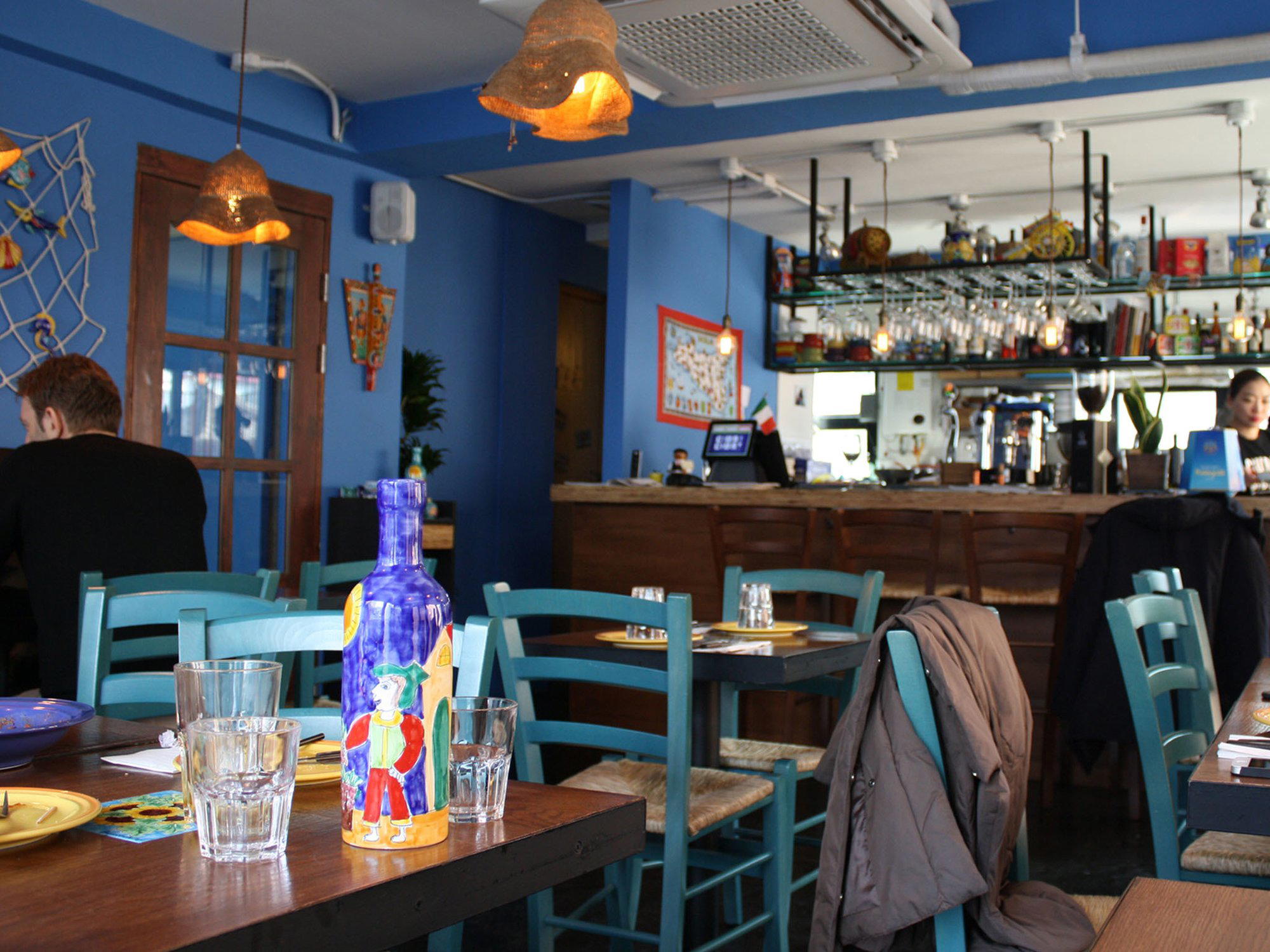
Ciuri Ciuri sits in Seoul's Mapo-gu district, where a quieter residential register meets the city's appetite for serious cooking. The name, borrowed from a Sicilian folk song, signals a kitchen that positions itself somewhere between European reference points and the Korean dining scene's growing confidence in cross-cultural form. For those tracking Seoul's mid-to-upper dining tier, it merits attention.

Pearl is the En Primeur Club membership app, where members save venues, book tables and use the concierge.
Mapo-gu and the Geography of Seoul's Evolving Dining Scene
Seoul's restaurant map has never been purely a story of Gangnam prestige. Over the past decade, districts north and west of the Han River have accumulated enough serious cooking to challenge the conventional wisdom that fine dining belongs exclusively to Cheongdam or Apgujeong. Mapo-gu, where Ciuri Ciuri occupies a low-key address on Dongmak-ro 15-gil, sits inside that broader redistribution. The street-level approach here is residential rather than retail-facing, the kind of setting that filters out casual foot traffic and rewards those who come with intention.
That geography matters because it shapes expectations. Venues in Mapo operate in a different register from the high-visibility corridors around Mingles or Jungsik. The neighbourhood does not offer the ambient prestige of Cheongdam, so the cooking has to carry more weight on its own terms. That dynamic has historically produced some of Seoul's more focused, less performance-driven rooms.
What the Name Signals: Italian Reference in a Korean Context
Ciuri Ciuri is the title of a traditional Sicilian folk song, and that borrowing is not incidental. Across Seoul's upper-mid dining tier, the question of how to frame European influence has become one of the defining editorial problems of the last several years. Some kitchens absorb French technique and present it as Korean fine dining, as Kwonsooksoo and Soigné do in their respective registers. Others foreground the European tradition more openly, positioning Korean locality as an accent rather than the primary language.
A name drawn from Sicilian folk culture suggests the latter posture. It implies a kitchen that is comfortable citing its European references directly rather than sublimating them into a broader Korean-contemporary framing. In that sense, Ciuri Ciuri aligns with a strand of Seoul dining that treats Italian and Mediterranean cooking as legitimate primary frameworks rather than borrowed techniques to be domesticated. How that plays out in practice, in terms of sourcing, menu structure, and seasonal rhythm, is what distinguishes venues in this bracket from one another.
The Cultural Weight of Italian Cooking in an Asian Capital
Italian food's presence in Seoul is not a recent import. The city has maintained serious Italian restaurants for two decades, and the conversation has matured well past red-sauce familiarity into territory where regional Italian dialects, natural wine, and ingredient provenance are standard reference points for engaged diners. The Sicilian tradition specifically carries its own distinctives: a cuisine shaped by Arab, Norman, and Greek influence, defined by assertive seasoning, abundant seafood, and vegetables treated with as much seriousness as protein.
That culinary inheritance travels differently in Seoul than it does in, say, Tokyo or Hong Kong, where large Italian expatriate communities and decades of chef exchange have created denser institutional knowledge. In Seoul, the Sicilian reference lands more as a statement of specificity, a signal that the kitchen has chosen a particular regional tradition rather than Italian cooking in the aggregate. For the diner, it functions as a compass: expect a tighter, more geographically committed menu frame than the broad Italian-European category would otherwise imply.
For wider context on how European culinary traditions are absorbed and reframed across Korea's fine dining scene, the EP Club Seoul restaurant guide maps the full range. Comparable moves in the innovative space are visible at alla prima, while the Korean-French fusion register is addressed at length by venues like Soigné.
Peer Context: Where Ciuri Ciuri Sits in Seoul's Dining Tier
The address in Mapo-gu, combined with the specificity of the culinary reference, positions Ciuri Ciuri outside the mass-market Italian bracket without necessarily competing against Michelin-holding rooms at the top of the Seoul market. That middle band of Seoul dining, serious but not ceremonial, is where the city's most interesting cooking often happens away from the awards circuit.
Korean regional cooking handles a similar relationship between specificity and prestige at venues like Doosoogobang in Suwon and Mori in Busan, where the commitment to a particular culinary tradition, rather than the performance of international fine dining codes, is the primary editorial proposition.
Planning Your Visit
Ciuri Ciuri's address, 3, 13 Dongmak-ro 15-gil in Mapo-gu, places it within reasonable reach of Hapjeong or Mapo stations on Seoul Metro Line 6, making access from central Seoul or from the Hongdae area direct. Given the residential setting, arriving without a reservation at a venue of this type in Seoul is rarely advisable. The city's better Italian rooms, particularly those with compact seating and focused menus, fill their books through advance booking rather than walk-in volume. Contacting the venue directly to confirm current hours, reservation policy, and any seasonal menu changes before visiting is the practical baseline. Dress expectations at this address are likely to run smart-casual rather than formally coded, though that inference is based on the neighbourhood register rather than confirmed venue policy.
Visitors building a broader Seoul itinerary around serious cooking might also consider Kwon Sook Soo in Gangnam-gu for Korean fine dining, or look outside the capital at Double T Dining in Gangneung and Injegol in Inje County for a sense of how the broader Korean culinary conversation is unfolding beyond Seoul. For international comparison points on how a kitchen's cultural reference frame shapes its identity, Le Bernardin in New York and Lazy Bear in San Francisco offer instructive contrasts in how European traditions are absorbed into non-European dining cultures. Those interested in Jeju and other Korean destinations can find further context through Cheon Jee and The Flying Hog in Seogwipo. Temple dining culture in Korea is addressed by Baegyangsa Temple in Jangseong-gun, while Market Café in Incheon and 에버리움펜션 in Cheoin round out the broader regional picture.
Frequently asked questions
Where is Ciuri Ciuri in Seoul?
Ciuri Ciuri is located at 3, 13 Dongmak-ro 15-gil, Mapo-gu, Seoul, South Korea, Seoul.
How does Ciuri Ciuri fit into Seoul's Italian restaurant scene compared to Gangnam options?
Seoul's Italian restaurant conversation has historically centred on Gangnam, but Mapo-gu has accumulated a credible alternative dining cluster over the past ten years. Ciuri Ciuri's position in this district, with a name drawn from Sicilian folk tradition, places it alongside independently minded restaurants rather than hotel-affiliated or corporate Italian groups. For diners willing to cross to the western bank of the Han River, the neighbourhood offers a different register of dining than the prestige addresses in the south.
What's the best thing to order at Ciuri Ciuri?
The restaurant's name references a Sicilian folk tradition, which suggests the kitchen draws on southern Italian culinary reference points. Ask what is freshest or seasonally led on the day you visit.
How far ahead should I plan for Ciuri Ciuri?
Arriving at the Dongmak-ro 15-gil address without a reservation on a Friday or Saturday is a risk. Check via a current reservation platform or check the venue's official channels before visiting.
What makes Ciuri Ciuri worth seeking out?
Ciuri Ciuri sits in Mapo-gu, a district that has drawn serious independent restaurants away from Gangnam over the past decade, making the address itself a signal of intent. The name's Sicilian reference points to a kitchen with a specific regional focus rather than a generalist Italian menu. That kind of specificity, in a neighbourhood with genuine dining momentum, is what brings repeat visitors back.
Is Ciuri Ciuri allergy-friendly?
No allergy or dietary accommodation policy is publicly documented for Ciuri Ciuri. Italian kitchens in Seoul's upper-mid tier typically handle requests on a case-by-case basis, but gluten, dairy, and shellfish are common ingredients in southern Italian cooking. Contact the restaurant ahead of your visit to confirm what substitutions are possible.
Is Ciuri Ciuri worth it?
If Italian cooking with a defined regional perspective is what you are after in Seoul, the address on Dongmak-ro 15-gil is worth investigating before your trip.
Comparison Snapshot
Comparable venues nearby, for context on price, style, and recognition.
| Venue | Cuisine | Price | Awards | Notes |
|---|---|---|---|---|
| Ciuri CiuriThis venue (the venue you are viewing) | Authentic Sicilian Italian | $20–30 | Gambero Rosso 2 Forchette | Not listed |
| C Through Cafe | Artistic Cream Art Cafe | Not listed | Not listed | Itaewon |
| 제주몬트락 | Jeju Black Pork BBQ | $20–30 | Not listed | Gangnam |
| Hongdae Restaurant GIT TTEUL | Korean Pork BBQ | $30–50 | Not listed | 연남동 |
| ê´í문êµë°¥ | Korean Pork Soup (Dwaeji Gukbap) | $10–20 | Michelin Plate | Sajik-dong |
| Boccalino | Modern Italian with Local Korean Influences | $100–150 | Not listed | Sajik-dong |
Recognition history
Dated appearances from independent guides and award organizations, with the underlying list record or original source where available.
Gambero Rosso 2 Forchette
Gambero Rosso