
Tabelog 100 #62
Our verdict
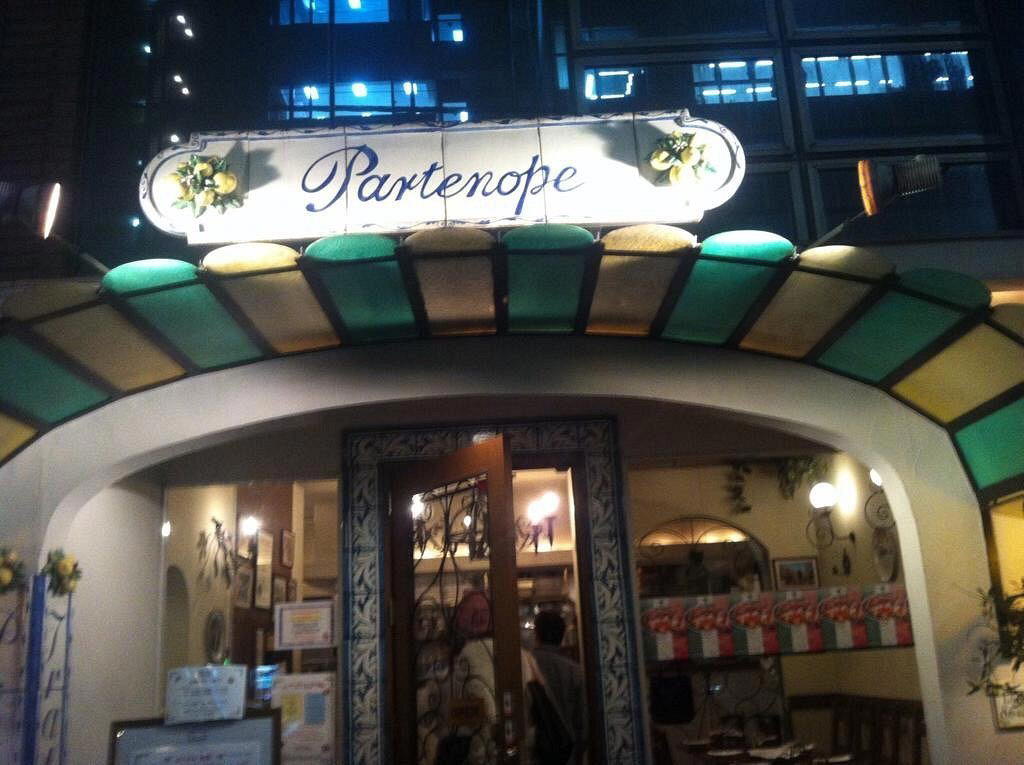
Partenope Ebisu brings southern Italian cooking to one of Tokyo's most considered dining neighbourhoods, where the sourcing logic matters as much as the technique. Set against Ebisu's quieter, residential-leaning character, it sits in a city where imported European traditions are tested against exacting local standards. For visitors already moving through Tokyo's serious restaurant tier, it belongs in the same conversation.

Pearl is the En Primeur Club membership app, where members save venues, book tables and use the concierge.
The menu
What to order
- Margherita pizza
- Four cheese pizza
Ebisu and the Italian Question
Tokyo's relationship with Italian cuisine is not a footnote. The city has more Italian restaurants per capita than most Italian regional capitals, and a significant portion of them operate at a level of technical seriousness that would read as ambitious anywhere in Europe. The neighbourhood of Ebisu sits within that broader context as a quieter counterpoint to Shibuya's density and Daikanyama's self-conscious cool. Its restaurant scene skews toward the considered and the residential: places where the room doesn't perform for the street, and where the cooking tends to do the convincing. Partenope Ebisu occupies that register, drawing its identity from the Neapolitan tradition, a culinary lineage with its own fierce internal logic about what ingredients belong, where they come from, and what happens when you apply Japanese sourcing discipline to southern Italian forms.
The Sourcing Argument Behind Neapolitan Cooking in Japan
Neapolitan cuisine makes sourcing demands that are, in their own way, as strict as any kaiseki framework. San Marzano tomatoes from the volcanic soils of Campania, buffalo mozzarella from the Caserta province, specific grades of Caputo flour for the dough, the canon is specific, and its defenders are not mild about substitution. When a Neapolitan restaurant operates in Tokyo, the sourcing question becomes structurally interesting: does it import the canonical ingredients, source Japanese equivalents, or find a position somewhere between the two?
The most thoughtful operators in this space tend to take a hybrid approach, importing the ingredients that are genuinely irreplaceable by category, particular aged cheeses, specific cured meats, DOP-certified products where the designation carries actual flavour meaning, while leaning into Japanese produce where the local equivalent holds or exceeds the imported version. Japan's domestic tomato cultivation, for instance, produces fruit with sugar concentrations that rival the leading European summer harvests. Its seafood supply chain, built around the Tsukiji and Toyosu wholesale markets, delivers ingredients to restaurant kitchens with a freshness cadence that has no European equivalent. A Neapolitan kitchen in Tokyo that understands this has access to a raw material argument that its Naples counterparts cannot replicate.
This framing matters because it shifts how you read the menu at a place like Partenope Ebisu. The dishes are not simply Italian transplants. They are the result of a negotiation between two sourcing traditions, one defined by protected designation and volcanic terroir, the other by market proximity and seasonal discipline. In cities where European fine dining has taken serious root, that negotiation is where the most interesting cooking happens. Tokyo's Italian restaurant scene has been running that experiment longer and at greater depth than almost anywhere outside Italy itself, which is why the results here consistently surprise visitors who arrive expecting a competent copy.
Where Partenope Sits in the Tokyo Italian Tier
Tokyo's premium restaurant market organises itself into recognisable tiers, and Italian cuisine occupies a specific position within the upper bracket. The city's leading French addresses, L'Effervescence, Sézanne, and Crony, tend to attract the most critical attention and the highest per-cover spend. Japanese fine dining at places like RyuGin and Harutaka commands its own dedicated following. Italian sits between those two poles, often drawing diners who want the rigour of a serious tasting format without the ceremony-heaviness of formal French or kaiseki service.
Partenope Ebisu operates within that space. The Neapolitan focus gives it a more specific identity than the broader Italian restaurants that populate the mid-tier, and the Ebisu location places it in a neighbourhood where the clientele tends to arrive with genuine eating intent rather than occasion-driven impulse. That combination, distinct culinary lineage, considered location, sourcing-led kitchen logic, positions it closer to the specialist end of the Italian tier than the accessible crowd-pleaser end. For comparison, the same dynamic plays out in other Japanese cities: HAJIME in Osaka and akordu in Nara both demonstrate how European culinary traditions, applied through Japanese sourcing and precision, produce something that doesn't map cleanly onto either origin point.
The Room and What It Signals
Ebisu as a dining destination rewards visitors who have already moved past the reflex toward Ginza or Roppongi. The neighbourhood's restaurant density is lower, which means the places that persist there do so on repeat custom and genuine quality rather than foot traffic. Partenope Ebisu fits that pattern. The physical environment, the approach through quieter streets, the room's scale relative to the neighbourhood, reads as a deliberate choice to prioritise the table experience over visibility. In Tokyo's Italian sector, that restraint tends to correlate with kitchens that are focused on cooking rather than positioning. It is a useful signal, even before the food arrives.
For planning purposes, Ebisu is direct to reach: the eponymous station on the Yamanote Line connects directly to Shibuya, Harajuku, and Shinjuku, making the neighbourhood accessible from most central Tokyo hotels without requiring significant logistics. The area rewards arriving early enough to walk the surrounding blocks before a reservation, particularly toward the refined walkway connecting Ebisu to Daikanyama, which gives a useful sense of the neighbourhood's residential-commercial character. For the wider Tokyo dining context, our full Tokyo restaurants guide maps the city's serious eating across all major neighbourhoods and cuisine categories.
Italian in Japan, Beyond Tokyo
The logic that makes Neapolitan cooking interesting in Ebisu applies across Japan's restaurant geography. Italian cuisine has taken root in regional cities with the same seriousness it has in the capital, sometimes with even less international noise and more direct local-produce integration. Goh in Fukuoka and Gion Sasaki in Kyoto represent how Japanese culinary rigour applies across different traditions and geographies. Further afield, Bistro Ange in Toyohashi and Birdland in Sakai show how European-rooted cooking spreads into mid-sized cities with its own local inflection. For those tracking how European cooking traditions evolve when transplanted into rigorous sourcing environments, Japan as a whole, not just Tokyo, is the most instructive case study currently running. The parallel in the United States would be Le Bernardin in New York City or Atomix, where a non-native culinary tradition, applied with absolute technical commitment, eventually transcends the question of authenticity entirely.
Planning Your Visit
Partenope Ebisu draws a clientele that is notably local rather than tourist-heavy, which is consistent with the neighbourhood's character and worth factoring into expectations. Reservations during weekend dinner service are advisable in advance; Ebisu's restaurant density means that walk-in options in the Italian tier are limited on busy evenings. The Yamanote Line access makes logistics simple from anywhere on Tokyo's central loop. Those building a broader Japan itinerary around serious eating should cross-reference with 湖畔荘 in Takashima, 羽根屋 in Nishikawa Machi, Blue Ocean Steak in Nakagami District, and bodai in 那智勝浦町 for regional coverage outside the capital.
Frequently asked questions
Would Partenope Ebisu be comfortable with kids?
Ebisu's dining scene skews toward adult customers, and Neapolitan-focused restaurants in Tokyo's upper-middle tier tend to operate at a quieter register than casual family pizzerias. Younger children may find the pace and atmosphere a poor fit. Older children comfortable with a sit-down, food-focused meal are a different matter, though the room is not designed around family dining.
What is the atmosphere like at Partenope Ebisu?
The atmosphere follows Ebisu's broader dining character: measured and food-focused rather than loud or celebratory. The neighbourhood draws a clientele that tends to be local and regular rather than tourist-heavy, which keeps the room grounded. Think considered rather than animated.
Is Partenope Ebisu part of Tokyo's certified Neapolitan pizza scene?
Tokyo has developed one of the most technically rigorous Neapolitan pizza scenes outside Italy, with several establishments holding credentials from the Associazione Verace Pizza Napoletana. Partenope Ebisu positions itself within that tradition through its sourcing approach, including Neapolitan flour and volcanic-soil San Marzano tomatoes.
What do people recommend at Partenope Ebisu?
The Neapolitan pizza is the natural reference point, given the restaurant's sourcing logic around flour, tomato, and fermentation. That is where the kitchen's credibility sits, and it is what repeat visitors return for. Tokyo's Italian scene is technically serious enough that a Neapolitan-focused kitchen lives or dies by its dough and its San Marzano supply.
How hard is it to get a table at Partenope Ebisu?
Ebisu's tighter restaurant density means well-regarded addresses in the neighbourhood fill on weekends with moderate advance notice required. Partenope draws a local rather than tourist-driven crowd, which means demand is steadier and less seasonal than at comparable spots in Ginza or Roppongi. Booking a few days ahead for weekday visits and a week or more ahead for weekends is a reasonable baseline.
In Context: Similar Options
Comparable venues nearby, for context on price, style, and recognition.
| Venue | Cuisine | Price | Awards | Notes |
|---|---|---|---|---|
| Partenope EbisuThis venue (the venue you are viewing) | Authentic Neapolitan Pizza | Not listed | Tabelog 100 #62 | Not listed |
| Mercer Brunch Ginza Terrace | NY-style Italian brunch & bistro | $30–50 | Tabelog 100 #18 | Chūō |
| Sicilia Ya | Traditional Sicilian restaurant | $50–100 | Tabelog 100 #31 | Bunkyō |
| Ristorantino Rubero | Modern Italian in a Meguro vintage house | $50–100 | Tabelog 100 #37 | Shinagawa |
| ARMONICO | Modern Italian with Japanese Ingredients | $100–150 | Tabelog 100 #22 | Shibuya |
| エリオ・ロカンダ・イタリアーナ | Authentic Southern Italian Trattoria | $50–100 | Tabelog 100 #86 | Chiyoda |
Recognition history
Dated appearances from independent guides and award organizations, with the underlying list record or original source where available.
Tabelog 100 #62 · No. 62
Tabelog · Tabelog 100 - Italian - TOKYO - 2025
Continue exploring
More in Tokyo
Restaurants in Tokyo
All restaurants in Tokyo →



Bars in Tokyo
All bars in Tokyo →





Details
- Cozy
- Trendy
- Intimate
- Date Night
- Casual Hangout
- Open Kitchen
- Sake Program
- A La Carte
- Vegetarian Friendly
Current opening hours
- Monday
- Closed
- Tuesday
- 11:30 AM–2:30 PM, 5:30–10 PM
- Wednesday
- 11:30 AM–2:30 PM, 5:30–10 PM
- Thursday
- 11:30 AM–2:30 PM, 5:30–10 PM
- Friday
- 11:30 AM–2:30 PM, 5:30–11 PM
- Saturday
- 11:30 AM–2:30 PM, 5:30–11 PM
- Sunday
- 11:30 AM–2:30 PM, 5:30–10 PM
Hours can change for holidays and private events. Hours as of .
Charming and welcoming with a warm, home-like Italian atmosphere featuring friendly staff.