
Tabelog 100 #86
Our verdict
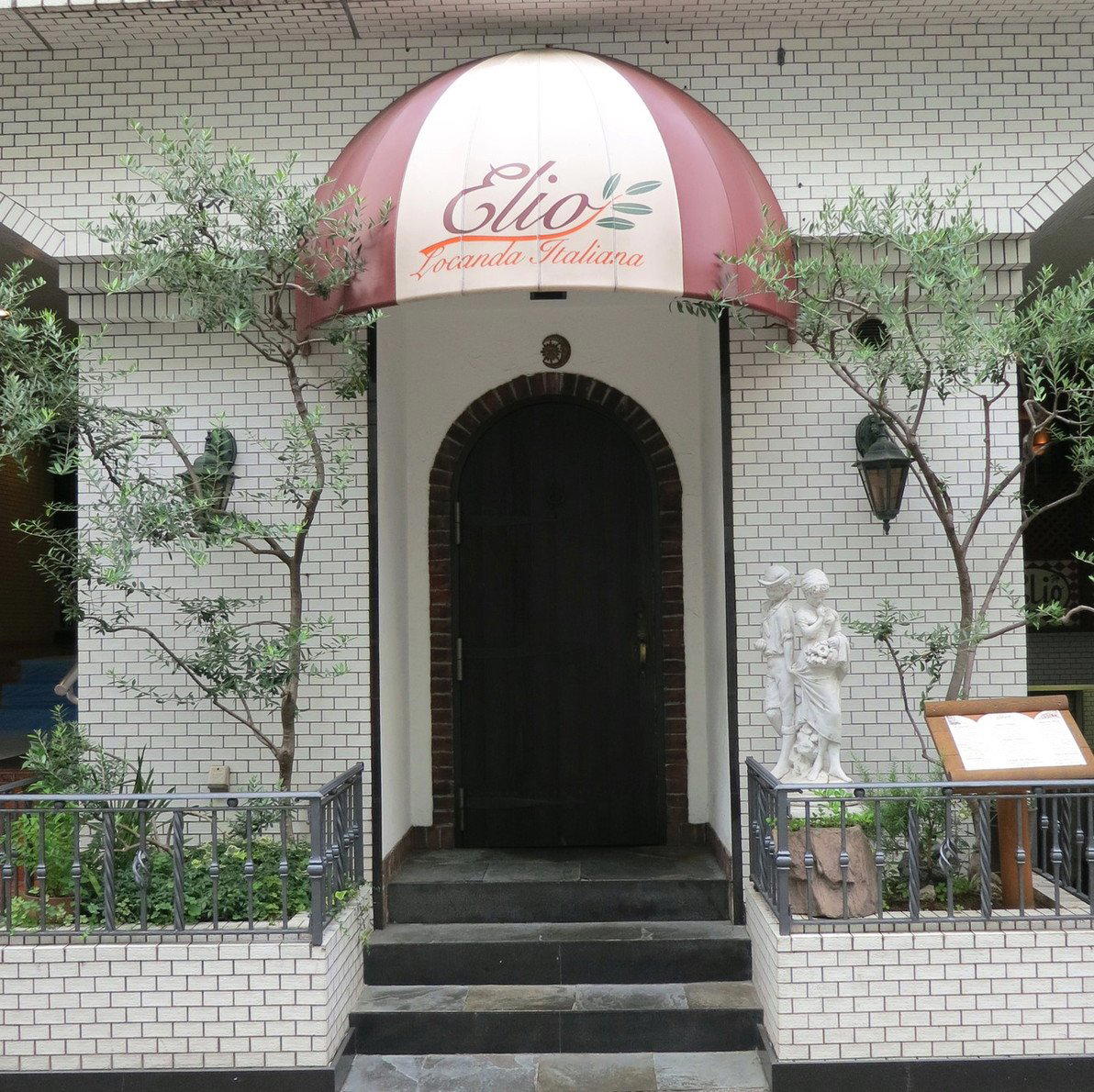
エリオ・ロカンダ・イタリアーナ occupies the ground floor of Hanzo-mon House in Kojimachi, Chiyoda, placing it among Tokyo's established Italian addresses in a neighbourhood better known for government offices than restaurant culture. The room draws a loyal following for its Italian kitchen in a city where European dining has grown into a serious, highly competitive category.

Pearl is the En Primeur Club membership app, where members save venues, book tables and use the concierge.
The menu
What to order
- Tagliatelle with Sicilian olives and squid
- Cacio e pepe
- Homemade pasta
- Pork main course
Italian Dining in Tokyo: A Category With Its Own Rules
Tokyo's Italian restaurant scene has evolved into something that would surprise most visitors expecting simple transplants. Over the past two decades, the city has developed a cohort of Italian kitchens that apply Japanese sourcing discipline and service precision to European culinary frameworks, producing a category that sits apart from its counterparts in Milan or Rome, and also apart from Tokyo's French fine-dining tier, represented by addresses like L'Effervescence and Sézanne. Italian specifically occupies a middle register in this city: warmer in service tone than kaiseki, less rigidly ceremonial than French omakase, but no less serious in execution when the kitchen and front-of-house are working in alignment.
エリオ・ロカンダ・イタリアーナ sits within that established Italian cohort, operating from the ground floor of Hanzo-mon House on Kojimachi 2-chome in Chiyoda. The address places it a short walk from Hanzomon Station, in a district where the dining infrastructure is less dense than Ginza or Minami-Aoyama. That geography is not incidental. Restaurants that build lasting reputations in lower-traffic Tokyo neighbourhoods tend to rely on repeat custom rather than tourist footfall, which shapes both the service culture and the pacing of the room.
The Logic of Locanda: Format as Editorial Statement
The word locanda carries specific weight in Italian dining. It signals an inn-style hospitality register: less formal than a ristorante, more substantive than a trattoria, with an implied emphasis on hospitality as an integrated act rather than a sequence of service steps. In Tokyo's context, that framing matters because it positions the room against the more theatrical end of the city's European dining spectrum. Where counters like Harutaka or RyuGin operate within tightly choreographed formats, a locanda model asks different things of its team: the ability to read a table, pace a meal organically, and allow the front-of-house to exercise genuine judgment rather than follow a fixed script.
This is where team dynamic becomes the defining variable. In Italian dining at this level, the collaboration between kitchen, floor, and wine service determines whether the locanda format delivers on its promise or collapses into something merely casual. Tokyo's stronger Italian addresses have learned to treat the sommelier role as a structural element rather than an add-on, pairing Italian regional wine knowledge with the kind of attentive service tempo that Japanese hospitality culture reinforces. The interaction between those two traditions, Italian warmth and Japanese attentiveness, is what the leading rooms in this category have figured out how to sustain across a full evening.
For comparison, Crony in Tokyo has approached a similar integration challenge from a French-innovative angle, while HAJIME in Osaka and Gion Sasaki in Kyoto demonstrate how European-inflected fine dining finds different local expressions across Japan's major cities. The question for any Tokyo Italian address is how deliberately it has engineered the collaboration between its component parts.
Kojimachi and the Neighbourhood Effect
Chiyoda's Kojimachi district does not generate the restaurant-media attention that Ginza or Omotesando attract, but it supports a set of committed local dining addresses that have built durable businesses outside the guide-driven spotlight. This is a pattern visible elsewhere in Japan's restaurant culture: akordu in Nara and Goh in Fukuoka both demonstrate that high-quality European-influenced dining can sustain itself in locations that don't depend on high tourist volume. The trade-off is that word-of-mouth and repeat reservation patterns carry more weight than in higher-profile districts.
For a diner approaching エリオ・ロカンダ・イタリアーナ without a prior visit, the Kojimachi address suggests a room oriented toward regulars and neighbourhood relationships. The ground-floor position in Hanzo-mon House keeps the entry accessible, and the residential-commercial character of the surrounding streets sets an expectation for a quieter, more conversational dining environment than you would encounter at high-volume Ginza Italian rooms. This is consistent with how the locanda format tends to operate across Tokyo when it's working at its finest.
Tokyo Italian in a Wider Japanese Context
Japan's relationship with Italian cuisine is longer and more technically engaged than most international observers assume. The country sends chefs to train in Italy in significant numbers, imports Italian ingredients with a level of ingredient-sourcing rigour that has earned recognition from Italian producers themselves, and sustains a wine import market that gives sommeliers genuine access to regional Italian producers beyond the standard export portfolio. At addresses across the country, from Bistro Ange in Toyohashi to dedicated regional rooms in Nanao, the infrastructure for European-style dining has spread well beyond Tokyo. The capital, however, remains where the density of serious Italian rooms is highest, and where the competitive pressure to maintain team coherence is most acute.
That competitive pressure has produced a generation of Tokyo Italian kitchens where the floor team is as carefully considered as the menu. The sommelier in a strong Tokyo Italian room is expected to hold Italian regional wine knowledge at a level comparable to specialist wine bars in Florence or Milan, while also delivering service in a register calibrated to Japanese expectations around attentiveness and discretion. Rooms that achieve this balance, where kitchen ambition, floor judgment, and wine service operate as a single coherent act, are the ones that accumulate the reservation depth and loyal regulars that sustain a long-running address. For a broader picture of where エリオ・ロカンダ・イタリアーナ sits within Tokyo's full dining picture, see our full Tokyo restaurants guide.
Internationally, the comparison point for this kind of integrated team approach is not hard to locate. Le Bernardin in New York and Atomix in the same city demonstrate how service-as-craft operates at the highest levels of the Euro-American fine dining tier, and the standard they set has influenced how Tokyo's most serious European rooms think about front-of-house as a discipline in its own right.
How does エリオ・ロカンダ・イタリアーナ fit into Tokyo's Italian dining tradition?
Tokyo has sustained serious Italian kitchens since the 1980s, and addresses that have remained in continuous operation in the city tend to accumulate a depth of regular clientele that newer openings take years to replicate. A Kojimachi address with a locanda identity places エリオ・ロカンダ・イタリアーナ in a cohort of Italian rooms that prioritise longevity and neighbourhood belonging over guide-cycle positioning. For diners researching Tokyo's Italian tier alongside French and Japanese fine dining comparisons, this is a room worth understanding on its own terms rather than measured against the Michelin-chasing segment of the market.
Frequently asked questions
Would エリオ・ロカンダ・イタリアーナ be comfortable with kids?
The Kojimachi address in Chiyoda puts this in a quieter, more residential-adjacent pocket of central Tokyo rather than a high-traffic tourist corridor, but the locanda format, which leans toward relaxed adult conversation over counter theatre, makes it a better fit for older children or dining adults than for young families. Call ahead to confirm seating and atmosphere before arriving with children.
What is the atmosphere like at エリオ・ロカンダ・イタリアーナ?
The locanda designation signals something specific: not the high-ceremony formality of Tokyo's French rooms, and not the counter-driven intensity of the omakase circuit. Kojimachi supports a set of committed local addresses precisely because the neighbourhood rewards regulars over tourist traffic, so expect a room geared toward returning guests rather than one-off occasion dining.
How does a locanda format differ from other Italian restaurants in Tokyo?
Tokyo's Italian scene runs from quick casual trattorias to white-tablecloth ristoranti with extensive tasting menus, but locanda sits deliberately between those poles, closer in spirit to the Italian inn tradition, where hospitality and a shorter, more personal menu take precedence over ceremony. At an address like エリオ・ロカンダ・イタリアーナ in Chiyoda, that format tends to attract a neighbourhood-loyal clientele rather than the destination-dining crowd that gravitates toward Ginza or Omotesando.
What do regulars order at エリオ・ロカンダ・イタリアーナ?
In Tokyo Italian rooms operating at this register, the pasta course tends to be the editorial focus, Japanese kitchens in this tradition often apply considerable technical precision to handmade pasta and sauce balance. Ask the room directly what is made in-house on the day you visit.
How do I find エリオ・ロカンダ・イタリアーナ?
エリオ・ロカンダ・イタリアーナ is located at Japan, 〒102-0083 Tokyo, Chiyoda City, Kojimachi, 2 Chome−5−2 半蔵門ハウス 1F, Tokyo.
Cost Snapshot
Comparable venues nearby, for context on price, style, and recognition.
| Venue | Cuisine | Price | Awards | Notes |
|---|---|---|---|---|
| エリオ・ロカンダ・イタリアーナThis venue (the venue you are viewing) | Authentic Southern Italian Trattoria | $50–100 | Tabelog 100 #86 | Not listed |
| TEST KITCHEN H | Modern Italian | Not listed | Tabelog 100 #8 | Minato, Modern Italian |
| LA BISBOCCIA | Authentic High-End Italian Trattoria | $100–150 | Tabelog 100 #73 | Shibuya, Authentic High-End Italian Trattoria |
| AURELIO | Modern Italian Handmade Pasta & Wine Bar | $50–100 | Gambero Rosso 1 Forchetta | Shibuya, Modern Italian Handmade Pasta & Wine Bar |
| Partenope (パルテノペ) | Authentic Neapolitan Pizza | Not listed | Tabelog 100 #62 | Ebisu, Authentic Neapolitan Pizza |
| PST Higashi Azabu | Neapolitan-Style Pizza | $20–30 | Tabelog 100 #78 | Minato, Modern Neapolitan Pizza |
Recognition history
Dated appearances from independent guides and award organizations, with the underlying list record or original source where available.
Tabelog 100 #86 · No. 86
Tabelog · Tabelog 100 - Italian - TOKYO - 2025
Continue exploring
More in Tokyo
Restaurants in Tokyo
All restaurants in Tokyo →


Bars in Tokyo
All bars in Tokyo →


Details
- Lively
- Energetic
- Classic
- Well Known
- Rustic
- Business Dinner
- Group Dining
- Celebration
- Casual Hangout
- Date Night
- Open Kitchen
- Private Dining
- Standalone
- Extensive Wine List
- Craft Cocktails
- Local Sourcing
- Organic
- A La Carte
- Set Menu
- Prix Fixe
- Wine
- Cocktails
- Vegetarian Friendly
Current opening hours
- Monday
- 11:45 AM–2:15 PM, 5:45–10:15 PM
- Tuesday
- 11:45 AM–2:15 PM, 5:45–10:15 PM
- Wednesday
- 11:45 AM–2:15 PM, 5:45–10:15 PM
- Thursday
- 11:45 AM–2:15 PM, 5:45–10:15 PM
- Friday
- 11:45 AM–2:15 PM, 5:45–10:15 PM
- Saturday
- 11:45 AM–2:15 PM, 5:45–10:15 PM
- Sunday
- Closed
Hours can change for holidays and private events. Hours as of .
Warm, lively, and authentically Italian with energetic staff and the sound of joyful laughter throughout the dining room; intimate yet bustling with activity and genuine Italian hospitality.