Michelin Plate
Our verdict
A Michelin Plate-recognised Cantonese counter in Nishiazabu, NISHIAZABU SHANGU makes the case for serious Chinese fine dining in one of Tokyo's most competitive premium dining corridors. The open kitchen frames wok work as theatre, while the menu anchors itself in the dried and live seafood repertoire that defines high-register Cantonese cooking. Priced at ¥¥¥¥, it draws a returning crowd who know what they are coming back for.

Pearl is the En Primeur Club membership app, where members save venues, book tables and use the concierge.
Cantonese Fine Dining in Tokyo: A Category That Rewards Patience
Tokyo's Chinese restaurant scene has long operated on two tracks that rarely converge. The first is the neighbourhood Cantonese that dots Shinjuku and Yokohama's Chinatown, generous and unpretentious. The second is a smaller, more demanding tier that applies Japanese sourcing discipline and omakase-style counter logic to a Cantonese framework built around premium dried goods, live seafood, and wok technique that has been refined over decades. NISHIAZABU SHANGU occupies the second track, and that positioning shapes everything about how regulars approach it.
Nishiazabu as a dining address has drifted steadily upmarket over the past decade. The neighbourhood sits between Roppongi's volume and Hiroo's residential quietness, drawing a clientele that skews international, finance-adjacent, and sufficiently well-travelled to hold Cantonese cooking to a comparative standard. For that audience, a restaurant anchored in spiny lobster, abalone, dried scallop abductor, and dried mushrooms is not a novelty. It is a test of execution against reference points that might include Hong Kong, Guangzhou, or London's leading Cantonese rooms. NISHIAZABU SHANGU's 2025 Michelin Plate recognition signals that the guide considers the kitchen worth tracking, even if it sits below the star threshold claimed by a handful of Tokyo's most decorated addresses.
What the Open Counter Tells You About the Philosophy
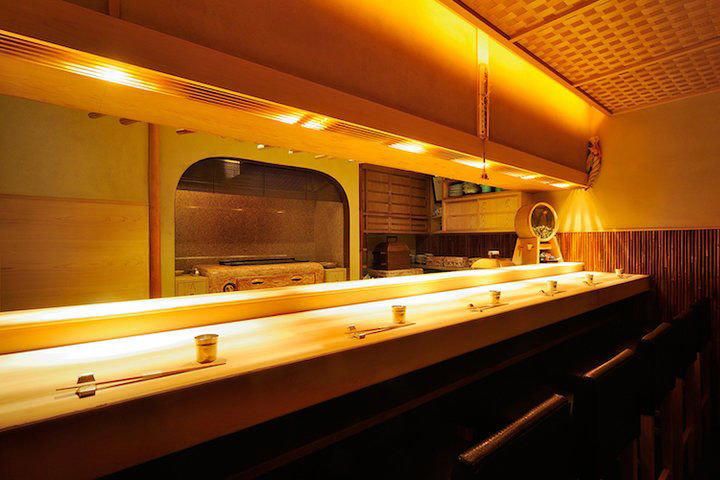
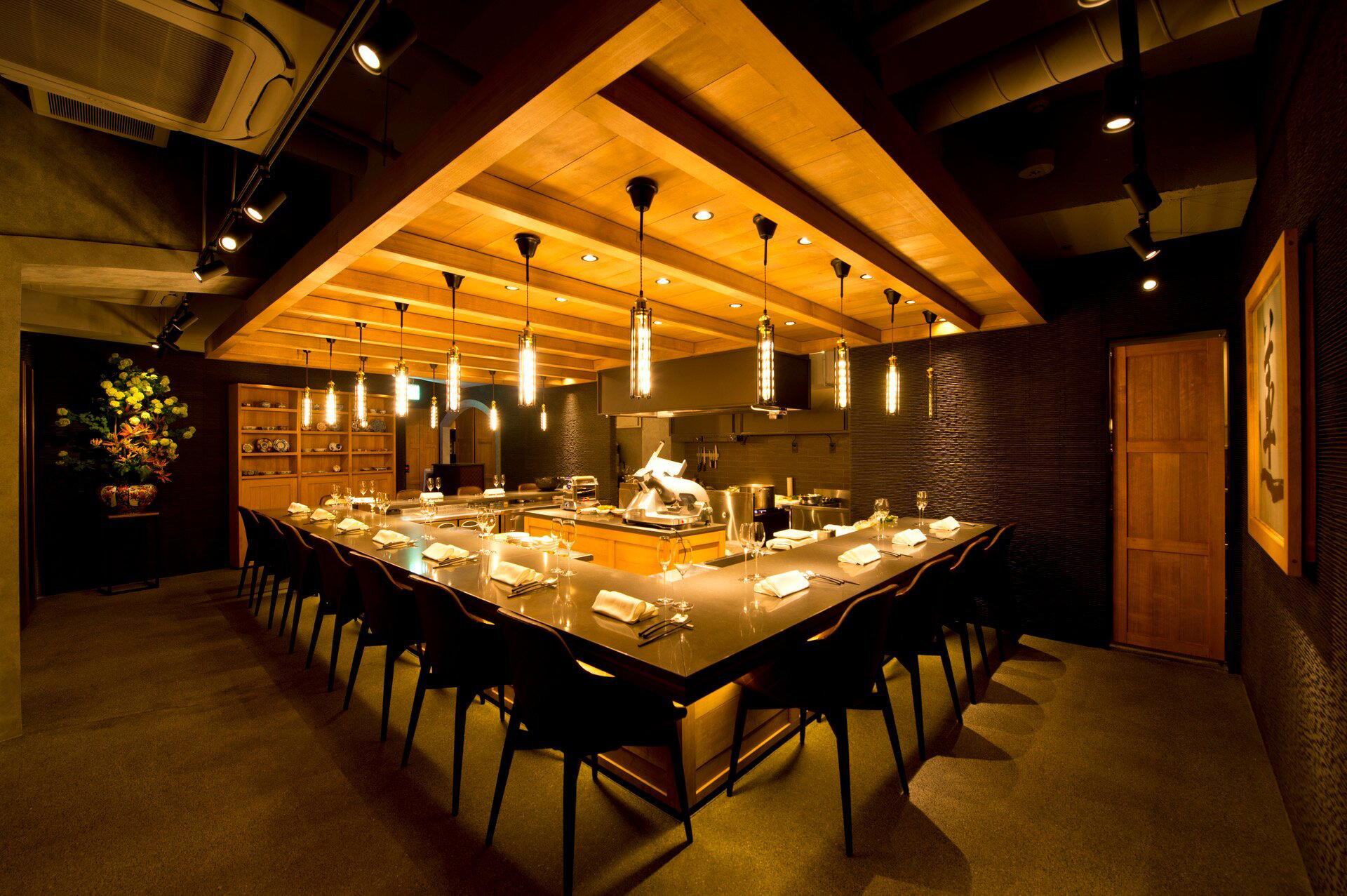
Counter seating with a view into an open kitchen has become a default format for premium Japanese dining, but at NISHIAZABU SHANGU the arrangement carries specific meaning. Cantonese cooking at this register lives or dies on wok hei, the combustion-driven char and breath that separates a technically proficient kitchen from a memorable one. Placing the wok in full view of the dining room is a confidence statement: the kitchen is not hiding its method behind closed doors or finishing work on the pass. Guests watch the chef direct the brigade and manage heat in real time, which gives counter seating a quality closer to performance than observation.
That theatricality is not incidental. It is part of what keeps regulars returning. The experience of watching skilled wok work executed at temperature, at pace, with the kitchen's hierarchy visible, adds a layer of engagement that a conventional table arrangement cannot replicate. For those who book counter seats specifically, the dinner becomes as much about the cooking process as the plates that result from it.
The Ingredient Logic Behind the Menu
Cantonese cuisine's claim to seriousness has always rested on its relationship with premium dried and live seafood. Dried scallop abductor, abalone, and dried mushrooms are not garnishes or luxury signals in this tradition. They are the core architecture of Cantonese banquet cooking, ingredients that require long preparation, specific hydration and braising techniques, and a kitchen that understands how to balance their intense umami weight against fresher elements. The inclusion of spiny lobster alongside dried goods at NISHIAZABU SHANGU positions the menu within the classical high-register Cantonese canon rather than the modernist Chinese cooking that has emerged in cities like London and New York.
This places NISHIAZABU SHANGU in a different competitive conversation from restaurants like Restaurant Tim Raue in Berlin or Mister Jiu's in San Francisco, both of which engage with Chinese culinary heritage through a more interpretive lens. Within Tokyo, the Cantonese fine dining tier remains small. Peers such as Chugoku Hanten Fureika and Chugoku Hanten Kohakukyu (Amber Palace) represent the more established end of that tier, carrying longer track records and higher Michelin recognition. NISHIAZABU SHANGU enters the conversation as a newer reference point, one that regulars are already treating as a fixture.
After Dinner: The Lounge and the Close
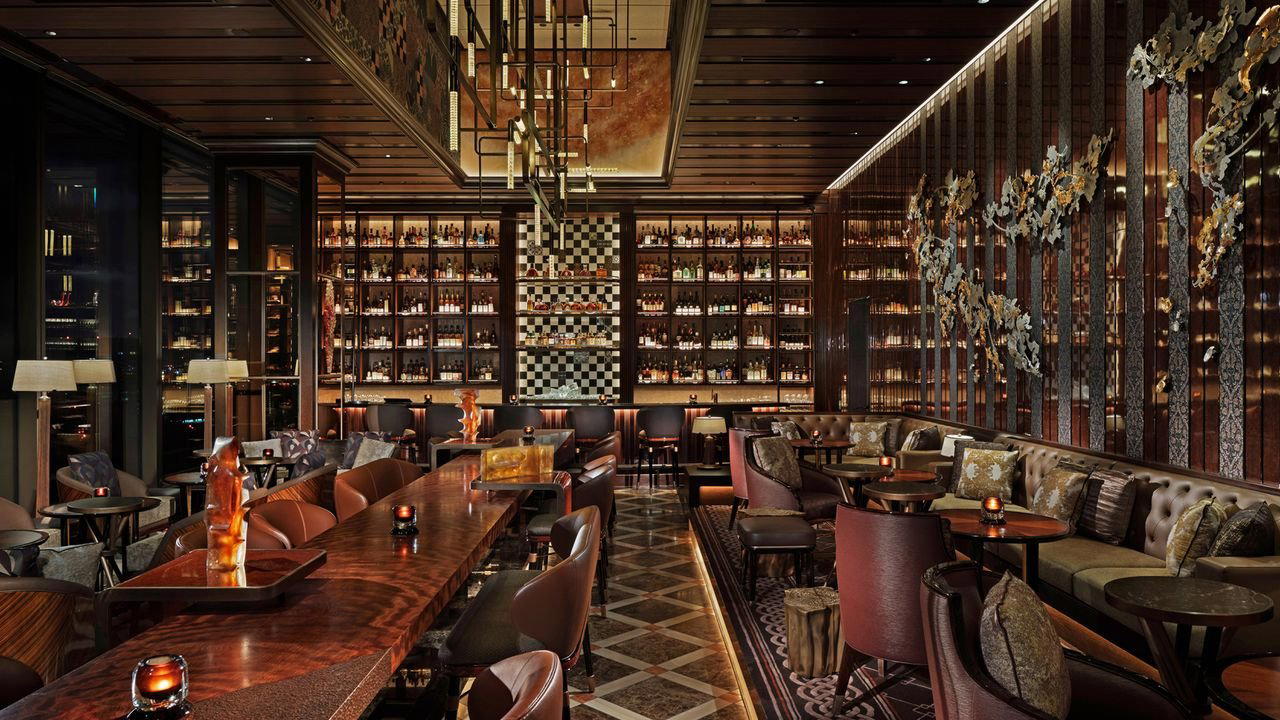
One detail that separates the experience at NISHIAZABU SHANGU from a standard tasting menu format is the option to move to a lounge after dinner. Post-dinner relocation is common in Japanese kaiseki culture but less standard in Chinese fine dining rooms, where the meal tends to conclude at the table. Here the shift allows guests to decompress from the intensity of the counter, and the dessert course follows them into a different atmosphere. The desserts themselves bridge Chinese and Western patisserie, a pairing that reflects the hybrid audience the restaurant draws: guests who know their way around Cantonese sweet soups and egg tarts alongside those arriving from French-influenced fine dining habits.
The Regulars' Calculus
At ¥¥¥¥, NISHIAZABU SHANGU prices in the same bracket as Tokyo's premium sushi counters and kaiseki rooms. At that tier, the decision to return is not casual. Regulars at this price point tend to be people who have assessed the room against its competition, who have eaten at Ippei Hanten and Koshikiryori Koki and perhaps at itsuka, and who have concluded that the specific texture of this experience, the wok theatre, the classical ingredient logic, the lounge close, warrants a repeat booking.
For context within the wider Japanese dining circuit, NISHIAZABU SHANGU operates at a comparable price tier to restaurants like HAJIME in Osaka, Gion Sasaki in Kyoto, akordu in Nara, Goh in Fukuoka, 1000 in Yokohama, and 6 in Okinawa, all of which draw a similarly deliberate, return-oriented clientele. Chinese fine dining at this level in Tokyo is rare enough that when a room gets it right, the regulars tend to lock in early and stay.
Know Before You Go
- Address: SYLA NISHIAZABU-V 2F, 3-13-10 Nishiazabu, Minato-ku, Tokyo 106-0031
- Cuisine: Cantonese (Chinese fine dining)
- Price range: ¥¥¥¥
- Recognition: Michelin Plate 2025
- Booking: Contact details not publicly listed; check the venue directly or via hotel concierge
- Format: Counter seating with open kitchen; lounge available post-dinner
- Note: Counter seats offer direct views of wok work and are worth requesting specifically
Explore More of Tokyo
For broader context on where NISHIAZABU SHANGU sits within Tokyo's dining scene, see our full Tokyo restaurants guide. Planning a longer stay? We also cover Tokyo hotels, bars, wineries, and experiences.
Frequently asked questions
Does NISHIAZABU SHANGU have a Michelin star or similar recognition?
NISHIAZABU SHANGU has received recognition including: The kitchen can be seen from the counter seating, making dining a theatrical experience. The chef commands his team while working his wok with consummate skill. Testifying that the appeal of Cantonese cuisine lies in seafood and dried items….
Is NISHIAZABU SHANGU focused on a specific cuisine style?
What should I order at NISHIAZABU SHANGU?
The menu is built around Cantonese premium ingredients: spiny lobster, abalone, dried scallop abductor, and dried mushrooms. These are not garnishes or accents, they are the structural logic of the kitchen. Dessert closes with a mix of Chinese and Western patisserie, served in the lounge after the main counter sequence.
What's the price range at NISHIAZABU SHANGU?
Pricing at NISHIAZABU SHANGU is listed as ¥¥¥¥.
Where do I go for NISHIAZABU SHANGU?
NISHIAZABU SHANGU is located at Japan, 〒106-0031 Tokyo, シーラ 2F 港区西麻布3丁目13−10 SYLA NISHIAZABU-V, Tokyo.
How hard is it to get a table at NISHIAZABU SHANGU?
NISHIAZABU SHANGU holds a Michelin Plate for 2025, which places it on the radar of Tokyo's serious dining circuit without the multi-month waitlists of the city's starred counters. Counter seating by format means capacity is limited, so booking ahead is advisable, particularly for weekend sittings.
What's the defining dish or idea at NISHIAZABU SHANGU?
The defining idea is classical Cantonese ingredient logic, dried and live premium seafood as the backbone of the menu, executed at an open counter where the chef works the wok in full view. It is a format more associated with Japanese omakase than Chinese dining in Tokyo, and that tension is precisely the point.
Price and Recognition
A compact comparison to help you place this venue among nearby peers.
| Venue | Cuisine | Price | Awards | Notes |
|---|---|---|---|---|
| NISHIAZABU SHANGUThis venue (the venue you are viewing) | Modern Cantonese Fine Dining | $200–300 | Michelin Plate | Not listed |
| Harutaka | Edo-Style Omakase Sushi | $200–300 | 3 Michelin Stars · World's 50 Best #76 | Sushi |
| RyuGin | Modern Kaiseki | $500+ | 3 Michelin Stars · World's 50 Best #41 | Kaiseki, Japanese |
| L'Effervescence | Modern French with Japanese Influences | $200–300 | 3 Michelin Stars · World's 50 Best #69 | French |
| HOMMAGE | Modern French with Japanese Influences | $150–200 | 2 Michelin Stars · World's 50 Best #78 | Innovtive French, French |
| MAZ | Innovative Peruvian-Japanese Fusion | $150–200 | 2 Michelin Stars · World's 50 Best #28 | Innovative |
Recognition history
Dated appearances from independent guides and award organizations, with the underlying list record or original source where available.
Michelin Plate
Michelin
Full recognition history (2 entries)
Michelin Plate
Michelin