Michelin Plate · Tabelog 100 #13
Our verdict
Noyashichi in Shinjuku's Arakicho district holds a Michelin Plate for its original approach to Chinese cooking, threading Japanese ingredients, kombu, dried bonito, clay-pot rice, through Sichuan and Cantonese frameworks. At the ¥¥¥ price tier, it sits in a smaller niche of Tokyo restaurants that treat cross-cultural technique as the organizing principle rather than the novelty. The result is a kitchen that earns its recognition without the pricing of its ¥¥¥¥ peers.

Pearl is the En Primeur Club membership app, where members save venues, book tables and use the concierge.
Where Two Culinary Traditions Meet in Shinjuku
Tokyo has long maintained a more sophisticated relationship with Chinese cooking than most Western cities allow. The city's Chinese restaurant tier runs from Yokohama-style Cantonese institutions through to Sichuan specialists and, increasingly, a smaller set of kitchens that treat the boundary between Chinese and Japanese cooking as a creative territory rather than a category problem. Noyashichi, operating out of Arakicho in Shinjuku, belongs to that third group. It holds a Michelin Plate for 2024 and 2025, placing it in the recognized tier of Tokyo's Chinese dining scene without scaling to the ¥¥¥¥ pricing of the city's most decorated cross-cultural restaurants.
Arakicho itself is a useful signal. The neighbourhood, a short walk from Yotsuya-Sanchome station, carries a quiet residential character unusual for central Shinjuku. It has drawn a cluster of serious small restaurants precisely because of that low-profile atmosphere, and Noyashichi fits the pattern: a kitchen doing considered work without the street-level visibility of Kabukicho or the tourist throughput of Shinjuku's main dining corridors.
The Organizing Principle: Japanese Ingredients Inside Chinese Frameworks
The structure of Noyashichi's cooking deserves more careful description than the phrase 'fusion' allows. The kitchen, under chef Shinya Yamamoto, applies Chinese techniques to Japanese ingredients, or inverts familiar Chinese preparations using Japanese logic. These are distinct moves with distinct results.
The steamed chicken with spicy sauce, a standard in the Sichuan repertoire, typically built around chilli oil and numbing pepper, is applied here to fish sashimi. The technique transfers, but the protein shifts, and the chilli oil works against Japanese fish rather than against Chinese poultry. That isn't decoration; it changes the dish's register. Similarly, the clay-pot rice that anchors many southern Chinese menus appears here topped with Sichuan-style bean curd or stir-fried beef, a format that keeps the Chinese cooking vessel but loads it with flavours that sit in both traditions simultaneously. Clear soup prepared with kombu kelp signals something else again: a deliberately Japanese preparation method inserted into a Chinese soup context, where the dashi logic of long, cold extraction replaces the Chinese preference for hot-boiled stock.
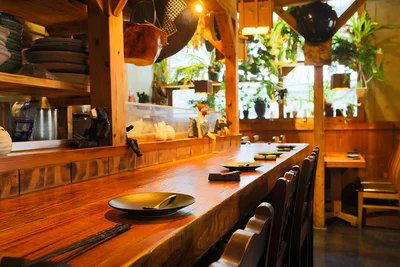
Presentation reinforces the concept. Dishes are served on Japanese ceramics, a choice that reads as deliberate positioning rather than aesthetic preference. The visual language of Japanese tableware, restrained glazes, irregular forms, considered negative space, frames food that might otherwise read as Chinese, directing the diner's attention toward the dual identity of each dish.
For readers familiar with the broader Tokyo Chinese dining scene, a few reference points help locate Noyashichi in its peer group. Chugoku Hanten Fureika and Chugoku Hanten Kohakukyu (Amber Palace) represent the more formal end of Chinese cooking in Tokyo, with long institutional histories. Ippei Hanten occupies a different register again. Noyashichi's Michelin Plate positions it as recognized but not at the starred tier, which connects directly to its pricing and what the ¥¥¥ bracket delivers here.
Value Proposition: What ¥¥¥ Buys at This Level
The editorial angle worth pressing on is what the Michelin Plate at ¥¥¥ pricing actually represents for a diner making decisions. Tokyo's most decorated Chinese and cross-cultural restaurants sit at ¥¥¥¥, and the gap between those two price tiers is not trivial in this city. Starred kaiseki restaurants like Koshikiryori Koki and French-influenced tables like those in the ¥¥¥¥ comparison set, including kaiseki stalwart RyuGin and L'Effervescence, operate at price points that require deliberate commitment from visiting diners.
Noyashichi offers recognized-quality cooking, with two consecutive Michelin Plates as the verifiable signal of that quality, at a price tier where the financial stakes are lower. The ¥¥¥ bracket in Tokyo is not cheap, but it occupies a meaningful middle ground between the accessible and the high-ceremony. A diner who wants to eat seriously without committing to the full tasting-menu pricing of the starred tier has a limited set of options at this quality level, and Noyashichi is one of them.
The cross-cultural premise adds a further dimension to the value question. Creative restaurants in Tokyo that work at the intersection of Japanese and another cuisine, French-Japanese, Italian-Japanese, or in this case Chinese-Japanese, tend to cluster at the higher price tiers, where the ambition of the concept supports premium pricing. Noyashichi applies that same level of conceptual seriousness at a lower price point. That gap is where its proposition sits.
For context on what creative cross-cultural Chinese cooking looks like when it scales to higher price points in other cities, Restaurant Tim Raue in Berlin and Mister Jiu's in San Francisco offer useful reference points, both treating Chinese culinary frameworks as a foundation for original cooking rather than as a category to replicate.
Planning Your Visit
Arakicho sits within Shinjuku City, accessible from Yotsuya-Sanchome on the Marunouchi Line or from Shinjuku-Gyoenmae. The neighbourhood's residential character means the area is quieter on weekends than central Shinjuku's restaurant clusters, and foot traffic to the restaurant will generally require purposeful navigation rather than chance discovery.
Readers building a wider Tokyo dining itinerary can use itsuka as another Shinjuku-area reference point. For the broader picture across the city, our full Tokyo restaurants guide maps the scene across neighbourhoods and price tiers. Supplementary guides cover hotels, bars, wineries, and experiences across the city.
For readers extending beyond Tokyo, the cross-cultural creative cooking that Noyashichi represents at the ¥¥¥ level has parallels across Japan: HAJIME in Osaka, Gion Sasaki in Kyoto, akordu in Nara, Goh in Fukuoka, 1000 in Yokohama, and 6 in Okinawa each occupy their own city's equivalent of this creative, technically rigorous middle tier.
Frequently asked questions
What cuisine category does Noyashichi fall under?
What's the pricing like at Noyashichi?
Pricing at Noyashichi is listed as ¥¥¥.
Is Noyashichi Michelin-listed?
Noyashichi has received recognition including: Chinese cuisine overlaid with Japanese ingredients and techniques, such as kombu kelp and dried bonito flakes, is the theme here, with Shinya Yamamoto treading an original path that blends the two. The technique of steamed chicken with spic….
What dish is Noyashichi famous for?
Noyashichi's Michelin Plate recognition (2024 and 2025) rests on its method rather than a single signature: Chinese frameworks applied to Japanese ingredients. Standout preparations include steamed chicken technique redirected to fish sashimi with chilli oil, and clay pot rice topped with Sichuan-style bean curd or stir-fried beef. The clear soup with kombu kelp reads as a direct nod to Japanese dashi tradition, served on Japanese tableware throughout.
How do I find Noyashichi?
Noyashichi is located at 2-9 Arakicho, Shinjuku City, Tokyo 160-0007, Japan, Tokyo.
Is Noyashichi chef-led?
The chef associated with Noyashichi is Guilhem Blanc-Brude.
Can I walk in to Noyashichi?
Arakicho is a quiet residential pocket of Shinjuku City that draws a deliberate dining crowd, not passing foot traffic, so the restaurant has no natural walk-in culture. Given the ¥¥¥ price point and Michelin Plate status across two consecutive years, reservations are the practical approach. Contact details are not currently listed publicly, so booking through a hotel concierge or local reservation service is the most reliable route.
The Short List
A quick peer check to anchor this venue’s price and recognition.
| Venue | Cuisine | Price | Awards | Notes |
|---|---|---|---|---|
| NoyashichiThis venue (the venue you are viewing) | Chinese-Japanese Fusion Omakase | $200–300 | Michelin Plate · Tabelog 100 #13 | Not listed |
| Harutaka | Edo-Style Omakase Sushi | $200–300 | 3 Michelin Stars · World's 50 Best #76 | Sushi |
| RyuGin | Modern Kaiseki | $500+ | 3 Michelin Stars · World's 50 Best #41 | Kaiseki, Japanese |
| L'Effervescence | Modern French with Japanese Influences | $200–300 | 3 Michelin Stars · World's 50 Best #69 | French |
| HOMMAGE | Modern French with Japanese Influences | $150–200 | 2 Michelin Stars · World's 50 Best #78 | Innovtive French, French |
| MAZ | Innovative Peruvian-Japanese Fusion | $150–200 | 2 Michelin Stars · World's 50 Best #28 | Innovative |
Recognition history
Dated appearances from independent guides and award organizations, with the underlying list record or original source where available.
Michelin Plate
Michelin
Tabelog 100 #13 · No. 13
Tabelog · Tabelog 100 - Chinese cuisine - TOKYO - 2026
Full recognition history (4 entries)
Michelin Plate
Michelin
Michelin Plate
Michelin