
Michelin Plate
Our verdict
Mitsui occupies a fifth-floor counter in Azabu-Juban, where a wabi-inflected tearoom aesthetic and a charcoal brazier visible from the dining room frame a traditional nigiri progression anchored by Nagano-grown rice. The 2025 Michelin Plate signals critical recognition at the entry tier, while. Three consecutive tuna pieces — salt-seasoned, soy-marinated, and rich fatty underbelly — define the kitchen's clearest editorial statement.

Pearl is the En Primeur Club membership app — saves, bookings, and concierge access live there. Same editors, same standards.
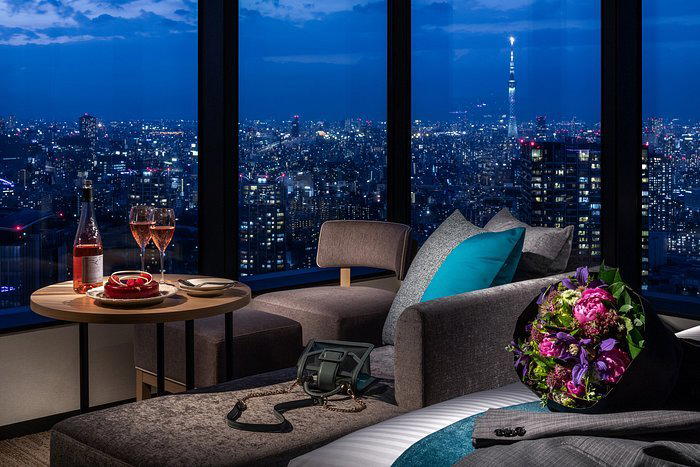
Azabu-Juban's Wabi Counter and the Tradition It Draws From
Tokyo's premium sushi scene has always sorted itself into legible tiers. At the leading sit the allocation-only omakase counters — Harutaka, Sukiyabashi Jiro Roppongiten, and Sushi Kanesaka — where three-star status and multi-month waitlists have become the baseline expectation. Below that, a more interesting stratum has emerged: smaller, carefully composed counters that carry Michelin recognition without the institutional weight, operating in quieter neighbourhoods and attracting guests who prize the format over the fame. Mitsui, on the fifth floor of a mixed-use building in Azabu-Juban, occupies that second register. Its 2025 Michelin Plate places it within the critical conversation while leaving it free of the booking machinery that governs the city's most-covered addresses.
Azabu-Juban itself has long supported this kind of mid-pressure fine dining. The neighbourhood sits between Roppongi's restaurant density and the quieter residential streets of Minato ward, drawing regulars who prefer proximity and atmosphere over spectacle. The address, third chome on the main Azabu-Juban strip, fifth floor, is the kind of location that filters out casual traffic in the most efficient way possible: you need to know it's there.
The Michelin Plate in Context
Since Michelin introduced the Plate designation to its Japan guide, it has functioned as a credentialing signal for counters that satisfy inspectors on quality without meeting the full criteria for star classification. In Tokyo's sushi segment, that matters more than it might in other cities. The sheer volume of technically accomplished nigiri counters means the Plate is not granted automatically, it reflects consistent execution, an identifiable point of view, and a kitchen that takes the format seriously. For Mitsui, receiving the Plate in 2025 positions it alongside a cohort of counters that Edomae Sushi Hanabusa and Hiroo Ishizaka occupy in different ways: venues where the rice, the knife work, and the sourcing have all been assessed and found to meet a standard.
Counters at this tier tend to accumulate reviews slowly, the format discourages large-party dining and the clientele skews toward guests who treat their dining log as private. A near-perfect score on a small base suggests early adopters reporting a consistent experience, not a broad average smoothed by volume. That profile is typical of a counter in its building phase, before the Michelin citation begins pulling in a wider audience.
Atmosphere Built Around Restraint
The physical environment at Mitsui draws from wabi principles, the Japanese aesthetic tradition of finding coherence in simplicity and material honesty. That framing is not incidental at a sushi counter. Edomae tradition has always aligned itself with restraint: the presentation is the fish, the rice, and the hand. Decorative excess works against the format.
Kitchen's most arresting feature for guests is the traditional cook stove and charcoal brazier positioned so diners can observe it directly. The brazier serves the snack courses; the broad-rimmed pot above it cooks the rice. The scent of charcoal and warming snacks fills the room before any fish has been served, establishing the meal's register before the first piece arrives. This kind of sensory sequencing, where the room's ambient cues prime the guest before the formal progression begins, is a discipline that the leading traditional counters in Tokyo have practised for decades. The open kitchen format, common across the counter style, turns production into performance without requiring theatrical gestures.
The Nigiri Progression and the Rice Beneath It
Mitsui's nigiri follows the classical Edomae structure: white-fleshed fish opens the sequence, building toward richer proteins as the meal advances. Gizzard shad, tuna, shrimp, sea urchin, and conger eel form the core line-up, the same cast that has defined Edomae counters since the style crystallised in Edo-period Tokyo and was later codified through the twentieth century's great sushi masters.
The tuna sequence is the kitchen's clearest assertion of craft. Three consecutive pieces arrive in escalating richness: medium-fatty tuna seasoned with salt, soy-sauce-marinated tuna, and the rich fatty underbelly. Sequencing tuna this way is a deliberate pacing decision, it asks the guest to track gradation rather than simply consume. Counters that do this well are demonstrating an understanding of how flavour perception shifts across a meal, not just executing three technically distinct preparations. The salt-seasoned piece at the opening of the sequence is the most exposed: without soy or fat to carry the flavour, the quality of the fish and the precision of the seasoning are immediately legible.
The rice is sourced from Nagano, the chef's home prefecture. This detail is worth pausing on. In Tokyo sushi at this price tier, rice provenance is treated as seriously as fish sourcing. The grain's starch content, the way it responds to vinegar, and the warmth at which it is presented all affect how it binds with the fish, and by extension, how the piece holds its shape and releases in the mouth. Cooking that rice over a traditional wood-burning stove rather than a modern electric cooker introduces variables that reward attention: heat distribution, moisture retention, and the slight smokiness absorbed from the cooking environment.
Price Tier and Practical Planning
Mitsui is priced at ¥¥¥¥, the highest bracket in Tokyo's dining cost structure. At that tier across the city's sushi segment, guests are typically paying for a full omakase sequence with premium sourced fish, a curated sake or wine pairing available on request, and a counter environment maintained to a standard consistent with Michelin-recognised quality. Booking details and specific session pricing are not published at the time of writing; contacting the venue directly, or approaching through a concierge service familiar with Azabu-Juban's dining rooms, is the most reliable route to securing a seat. The fifth-floor location means walk-in access is effectively non-existent, and the format, like most serious counters in this part of Tokyo, is built around reserved, timed sittings.
For guests building an itinerary across Japan's premium dining circuit, the counter fits into a broader pattern. Gion Sasaki in Kyoto and HAJIME in Osaka represent comparable commitment to craft in different formats and cities, while akordu in Nara and Goh in Fukuoka extend the conversation further across the archipelago. For those travelling between Tokyo and Yokohama, 1000 in Yokohama offers a reference point in the adjacent city. Beyond Japan, the Edomae format has taken root in other Asian capitals: Sushi Shikon in Hong Kong and Shoukouwa in Singapore are the most-discussed exports of the style.
For the full scope of what Tokyo offers across formats and price points, EP Club's guides cover the city in depth: our full Tokyo restaurants guide, our full Tokyo hotels guide, our full Tokyo bars guide, our full Tokyo wineries guide, and our full Tokyo experiences guide map the city from multiple angles. For guests interested in how Mitsui's approach reads against regional alternatives in the Kanto area, 6 in Okinawa offers a useful counterpoint in terms of format and geography.
What Dish Is Mitsui Famous For?
Mitsui's most discussed preparation is its three-piece tuna sequence: salt-seasoned medium-fatty tuna, soy-marinated tuna, and rich fatty underbelly tuna served in succession. The sequencing itself, rather than any single piece in isolation, is the kitchen's signature move, inviting comparison across a single ingredient as it shifts with seasoning and fat content. The rice, sourced from Nagano and cooked over a charcoal brazier, is the constant beneath every piece and the element that most directly reflects the kitchen's technical position within the Edomae tradition.
Comparison Snapshot
| Venue | Cuisine | Price | Awards | Notes |
|---|---|---|---|---|
| MitsuiThis venue — the venue you are viewing | Seasonal Japanese Omakase | $50–100 | Michelin Plate | Not listed |
| Harutaka | Edo-Style Omakase Sushi | $200–300 | 3 Michelin Stars · World's 50 Best #76 | Sushi |
| RyuGin | Modern Kaiseki | $500+ | 3 Michelin Stars · World's 50 Best #41 | Kaiseki, Japanese |
| L'Effervescence | Modern French with Japanese Influences | $200–300 | 3 Michelin Stars · World's 50 Best #69 | French |
| HOMMAGE | Modern French with Japanese Influences | $150–200 | 2 Michelin Stars · World's 50 Best #78 | Innovtive French, French |
| MAZ | Innovative Peruvian-Japanese Fusion | $150–200 | 2 Michelin Stars · World's 50 Best #28 | Innovative |
Recognition history
Dated appearances from independent guides and award organizations, with the underlying list record or original source where available.
Michelin Plate
Michelin
Full recognition history (2 entries)
Michelin Plate
Michelin
Continue exploring
More in Tokyo
Restaurants in Tokyo
All restaurants in Tokyo →


Bars in Tokyo
All bars in Tokyo →





Mitsui
The wine
- Wine program
- Curated wine list
- Sake program
- Craft cocktails
Details
- Elegant
- Intimate
- Modern
- Sophisticated
- Date Night
- Special Occasion
- After Work
- Celebration
- Chefs Counter
- Open Kitchen
- Standalone
- Sake Program
- Craft Cocktails
- Local Sourcing
- Sustainable Seafood
- Omakase
- Counter Dining
- Set Menu
- Sake
- Shochu
- Cocktails
Current opening hours
- Monday
- 5–11 PM
- Tuesday
- 5–11 PM
- Wednesday
- 5–11 PM
- Thursday
- 5–11 PM
- Friday
- 5–11 PM
- Saturday
- 5–11 PM
- Sunday
- Closed
Hours can change for holidays and private events. Last verified .
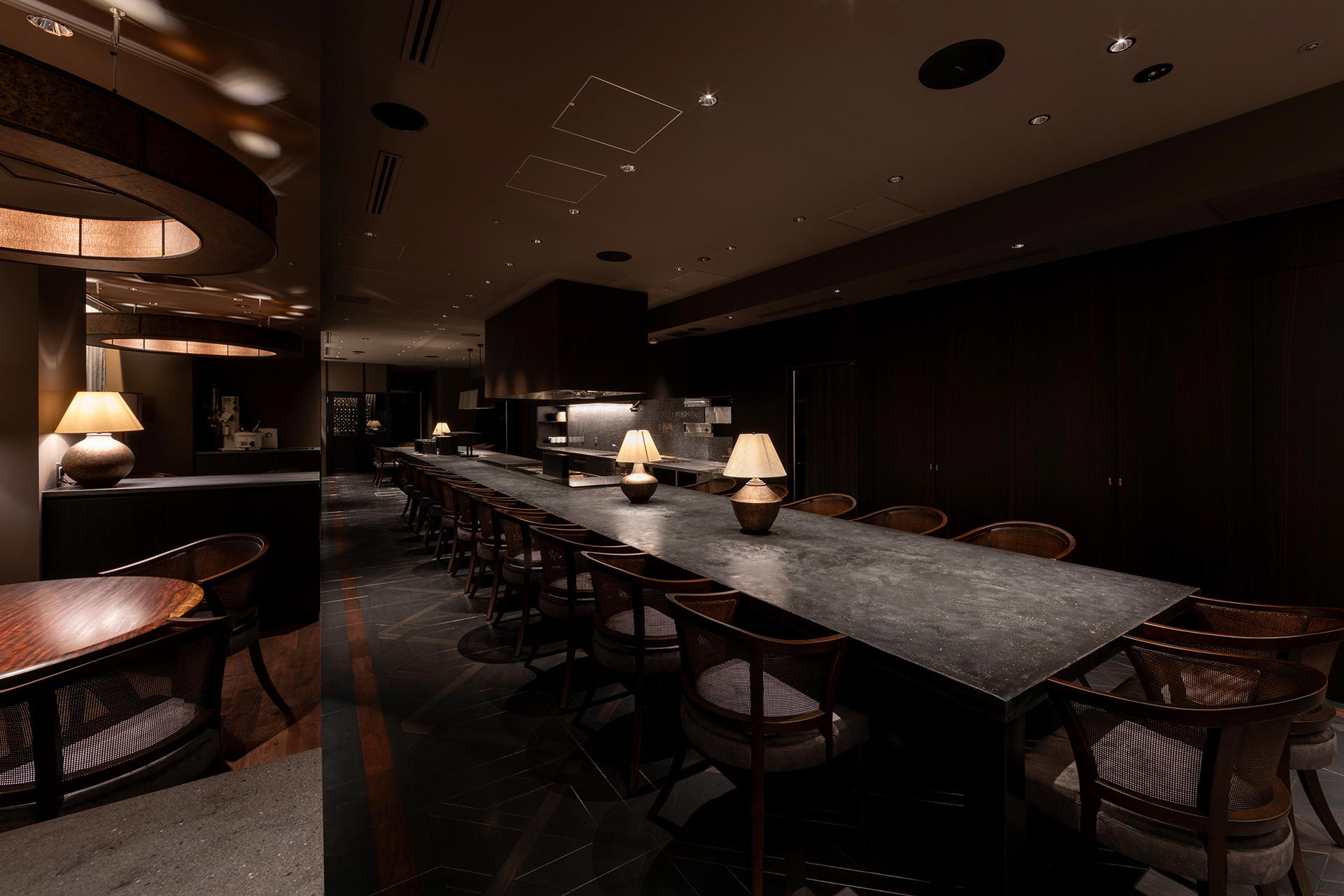
Modern Japanese space unified in black with deep counter seating in a basement location, creating an intimate adult-oriented atmosphere with stylish, relaxing design.