Michelin Plate
Our verdict
On the fifth floor of a Ginza building, Chiso Koryu holds two consecutive Michelin Plates (2024, 2025) for creative Japanese cooking that moves freely between tradition and invention. Chef Kazuki Takagi draws ingredients from across the country, producing a menu where puffer fish spring rolls sit alongside ochazuke finished with Japanese tea. A mid-price counter for serious cooking in one of Tokyo's most competitive dining districts.

Pearl is the En Primeur Club membership app, where members save venues, book tables and use the concierge.
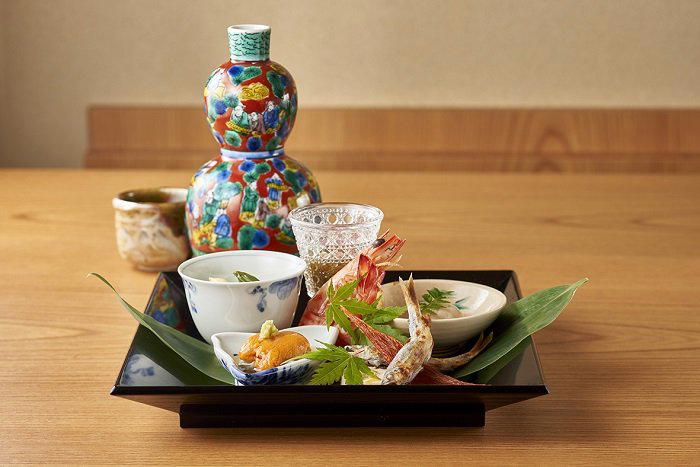
The menu
What to order
- Pot-cooked rice with crispy layer
- Grilled sesame tofu
- Conger eel dishes
Where Ginza's Grid Meets a Fifth-Floor Counter
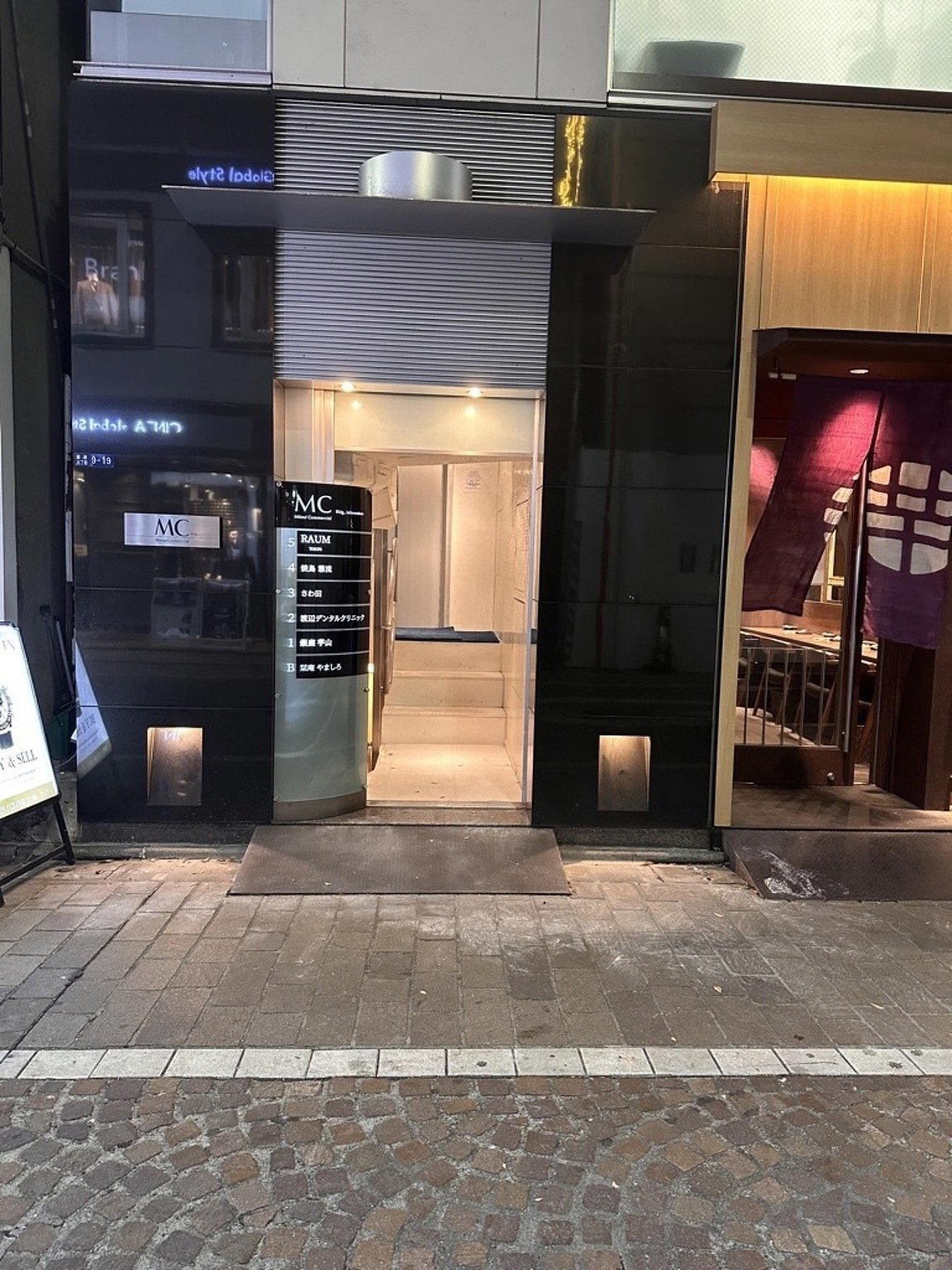
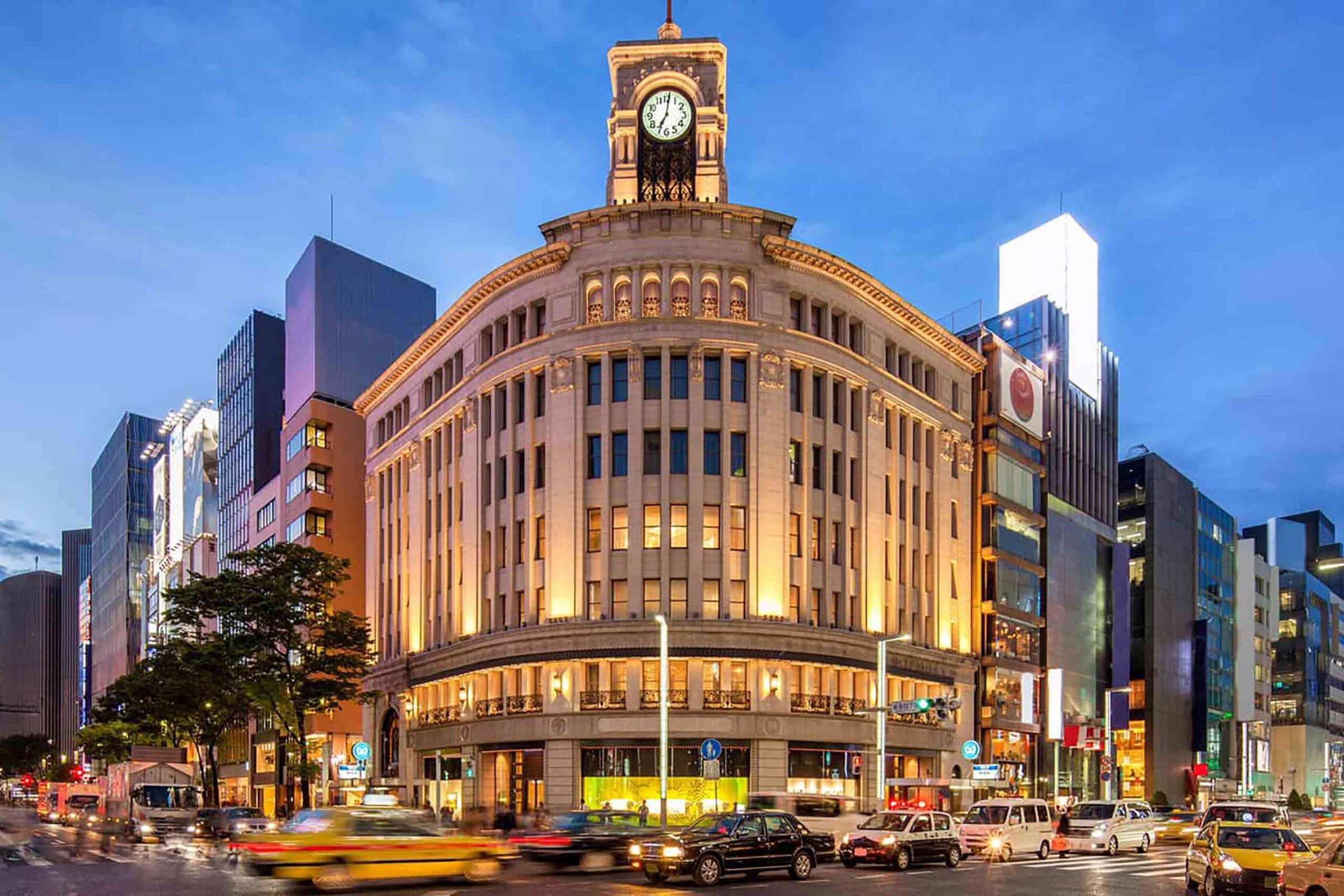
Ginza's restaurant addresses tend to announce themselves: ground-floor frontage, a discreet entrance on a named boulevard, a lobby that functions as a statement. Chiso Koryu does none of that. It occupies the fifth floor of a building on Chome 5-14-14, in a block where the grid tightens and the street-level spectacle fades. The climb up, whether by elevator or stair, marks a small but deliberate shift away from the district's more performative dining rooms. By the time you arrive at the door, the framing is already different.
That positioning is not accidental. Ginza has stratified into distinct tiers over the past decade. At the apex sit the three-star omakase counters, pricing themselves against international peer sets and booking months in advance. Below that band, a second tier of Michelin Plate and one-star restaurants does the more interesting editorial work: cooking with genuine ambition at a price point that does not require a spreadsheet to justify. Chiso Koryu belongs to that second tier, holding consecutive Michelin Plates in 2024 and 2025, and operating at the ¥¥¥ price range, in Ginza, a meaningful signal that the room is choosing depth over theatre.
The Kanto Kitchen and Its Relationship to the Regions
To understand what Chiso Koryu is doing, it helps to situate the cooking within the broader geography of Japanese cuisine. Tokyo's culinary identity is Kanto in technique and sensibility: stronger seasoning, assertive soy, a tradition of quick heat applied to precise cuts. Kansai, Kyoto's kaiseki lineage, Osaka's ingredient-forward merchant cooking, pulls in a different direction, favouring lighter dashi, restrained seasoning, and a greater deference to the ingredient's own character. Many of the city's more interesting Japanese kitchens now work in the tension between those poles rather than committing entirely to one.
Chiso Koryu's approach, as documented by Michelin's own commentary, is something other than regional orthodoxy. Chef Kazuki Takagi draws ingredients from across the country, not from a single prefecture or a single tradition, and applies what the Michelin record describes as imagination to their transformation. The result sits outside easy classification. This is not Kyoto kaiseki transplanted to Ginza, nor is it the stripped-down Kanto precision of a sushi counter or a high-end yakitori room. It reads instead as a kitchen that uses the full map of Japanese produce and technique as a working vocabulary.
That regional breadth puts it in an interesting position relative to peers. Restaurants like Den in the innovative Japanese tier have made a point of reinterpreting rural and regional references through a contemporary Tokyo lens. Further afield, kitchens like HAJIME in Osaka and Gion Sasaki in Kyoto demonstrate how regional specificity can anchor ambitious cooking. Chiso Koryu's position in Ginza, with a national sourcing approach, suggests a different relationship to geography: not rooted in one place, but fluent across many.
What the Michelin Record Actually Tells You
Michelin's Plate designation, awarded in 2024 and again in 2025, signals consistent quality cooking without the structural formality of a starred restaurant. The Plate category covers restaurants where the inspectors found good cooking but did not rank the full experience at the level required for star consideration. In Ginza, where the density of starred and Plate-awarded restaurants is among the highest of any district in the world, retaining a Plate for two consecutive years is a marker of reliability rather than aspiration. The kitchen is not failing to reach a higher tier, it is delivering at its intended register, consistently.
The Michelin commentary attached to Chiso Koryu's record is specific enough to be useful: puffer fish spring rolls, monaka wafer cake filled with monkfish liver and smoked daikon pickles, sesame tofu, sea bream on rice with Japanese tea poured over it. The range of that list is instructive. Puffer fish (fugu) in spring roll form is a departure from the clinical preparation the ingredient usually demands. Monaka, a traditional sweet wafer, repurposed as a vessel for monkfish liver is a move that borrows the form of one tradition to carry the flavour of another. Ochazuke, the tea-over-rice format, is one of the most accessible and traditional of Japanese dishes, appearing here in a menu that includes considerably more technical preparations. The cooking is not chasing novelty for its own sake; it is using contrast deliberately.
For comparison within the Tokyo innovative Japanese category, Myojaku and Azabu Kadowaki represent different points on the ambition and price spectrum. Kagurazaka Ishikawa and Ginza Fukuju offer further reference points for traditional Japanese cooking at the Ginza and Kagurazaka level.
In Ginza, where tourist footfall and local regulars mix in roughly equal measure, a sustained 4.3 across that sample suggests the cooking lands reliably for audiences with different reference points.
Reading the Room: Who Eats Here and Why
The ¥¥¥ positioning in Ginza places Chiso Koryu below the ¥¥¥¥ tier occupied by the district's three-star counters and starred kaiseki rooms. That is not a consolation tier. It is, in many respects, the more interesting one: restaurants operating at this level have to earn their clientele through cooking rather than through scarcity and reputation alone.
Readers building a broader Japan itinerary around serious Japanese cooking will find useful regional comparisons in akordu in Nara, Goh in Fukuoka, Isshisoden Nakamura in Kyoto, and Kashiwaya Osaka Senriyama. For Tokyo itself, the full picture is in our Tokyo restaurants guide, alongside our Tokyo hotels guide, bars guide, wineries guide, and experiences guide. Further regional reference is available through 1000 in Yokohama and 6 in Okinawa.
Know Before You Go
- Address: 5F, 5 Chome-14-14 Ginza, Chuo City, Tokyo 104-0061
- Price range: ¥¥¥ (mid-range for Ginza)
- Cuisine: Creative Japanese
- Recognition: Michelin Plate 2024, Michelin Plate 2025
- Reservations: Advance booking recommended for a Michelin-recognised room in Ginza
- Hours / phone / website: Not publicly listed, check third-party reservation platforms for current availability
Frequently asked questions
What's the pricing like at Chiso Koryu?
Pricing at Chiso Koryu is listed as ¥¥¥.
What type of food is Chiso Koryu known for?
What kind of recognition has Chiso Koryu received?
Chiso Koryu has received recognition including: The restaurant’s name declares that its food is created, not merely prepared, and indeed the cuisine here is infused with imagination. Kazuki Takagi spares no effort to furnish a delightfully creative bill of fare, casting his magic on ingr….
What's the must-try dish at Chiso Koryu?
Michelin's own documentation of the kitchen singles out the monaka wafer cake filled with monkfish liver and smoked daikon pickles as a signature of chef Kazuki Takagi's approach. The puffer fish spring rolls are equally representative: a technique drawn from Chinese-influenced cooking applied to one of Japan's most regulated ingredients. For contrast, the sea bream on rice finished with poured Japanese tea pulls the menu back toward classical Kanto tradition.
Where do I go for Chiso Koryu?
Chiso Koryu is located at Japan, 〒104-0061 Tokyo, Chuo City, Ginza, 5 Chome−14−14 5F, Tokyo.
Do I need a reservation for Chiso Koryu?
Yes. At the ¥¥¥ tier in Ginza, walk-in availability is rare even on weekdays, and the consecutive Michelin Plate awards in 2024 and 2025 have increased demand for the fifth-floor space at 5 Chome-14-14. Booking ahead, ideally several weeks out, is the standard approach for this part of the district.
Reputation Context
A small set of peers for context, based on recorded venue fields.
| Venue | Cuisine | Price | Awards | Notes |
|---|---|---|---|---|
| Chiso KoryuThis venue (the venue you are viewing) | Seasonal Japanese Kaiseki | $150–200 | Michelin Plate | Not listed |
| Harutaka | Edo-Style Omakase Sushi | $200–300 | 3 Michelin Stars · World's 50 Best #76 | Sushi |
| RyuGin | Modern Kaiseki | $500+ | 3 Michelin Stars · World's 50 Best #41 | Kaiseki, Japanese |
| L'Effervescence | Modern French with Japanese Influences | $200–300 | 3 Michelin Stars · World's 50 Best #69 | French |
| HOMMAGE | Modern French with Japanese Influences | $150–200 | 2 Michelin Stars · World's 50 Best #78 | Innovtive French, French |
| MAZ | Innovative Peruvian-Japanese Fusion | $150–200 | 2 Michelin Stars · World's 50 Best #28 | Innovative |
Recognition history
Dated appearances from independent guides and award organizations, with the underlying list record or original source where available.
Michelin Plate
Michelin
Full recognition history (3 entries)
Michelin Plate
Michelin
Michelin Plate
Michelin