Michelin Plate · Tabelog 100 #72
Our verdict
Open since the early years of Tokyo's Italian dining scene, La Brianza in Roppongi applies the Lombard principle of restraint to a kitchen that works with Japanese seasonal ingredients. Kelp-cured fish carpaccio and yuzu pepper focaccia sit alongside risotto made with Japanese rice. The restaurant holds a Michelin Plate (2025) and has been ranked among Opinionated About Dining's top restaurants in Japan for three consecutive years.

Pearl is the En Primeur Club membership app, where members save venues, book tables and use the concierge.
The menu
What to order
- Truffle and Egg Gratin Piedmont Style
- Fish Carpaccio with Kelp
- Focaccia with Yuzu Pepper Sauce
- Aged Miyazaki Wagyu
Where Italian Restraint Meets Japanese Seasonal Logic
Tokyo's Italian dining scene has, over several decades, sorted itself into distinct tiers. At the upper end, venues like Aroma Fresca and Gucci Osteria da Massimo Bottura Tokyo pursue Italian cooking as a form of fine-dining spectacle, layering technique and ceremony onto the plate. A smaller group of restaurants has taken a different route: fewer ingredients, less intervention, and a conviction that the leading Italian cooking is defined by what a chef leaves out as much as what goes in. La Brianza, operating from Roppongi's Minato ward since the restaurant's early years in Tokyo's Italian scene, belongs to that second category.
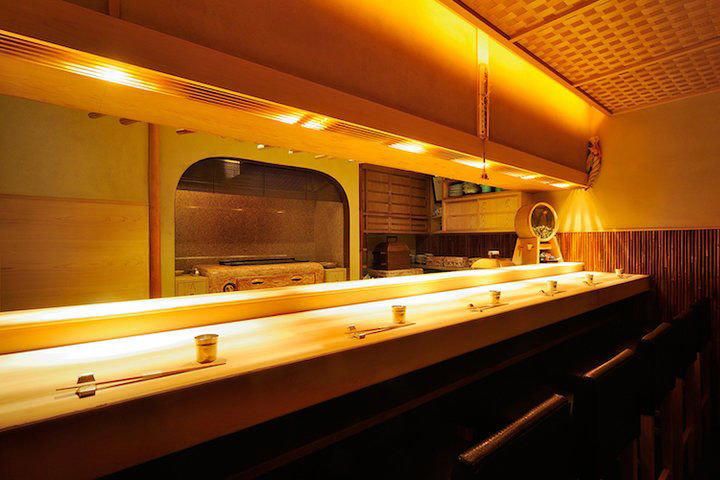
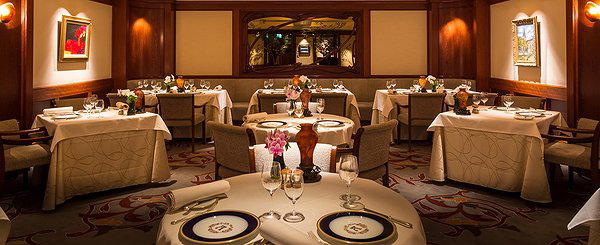
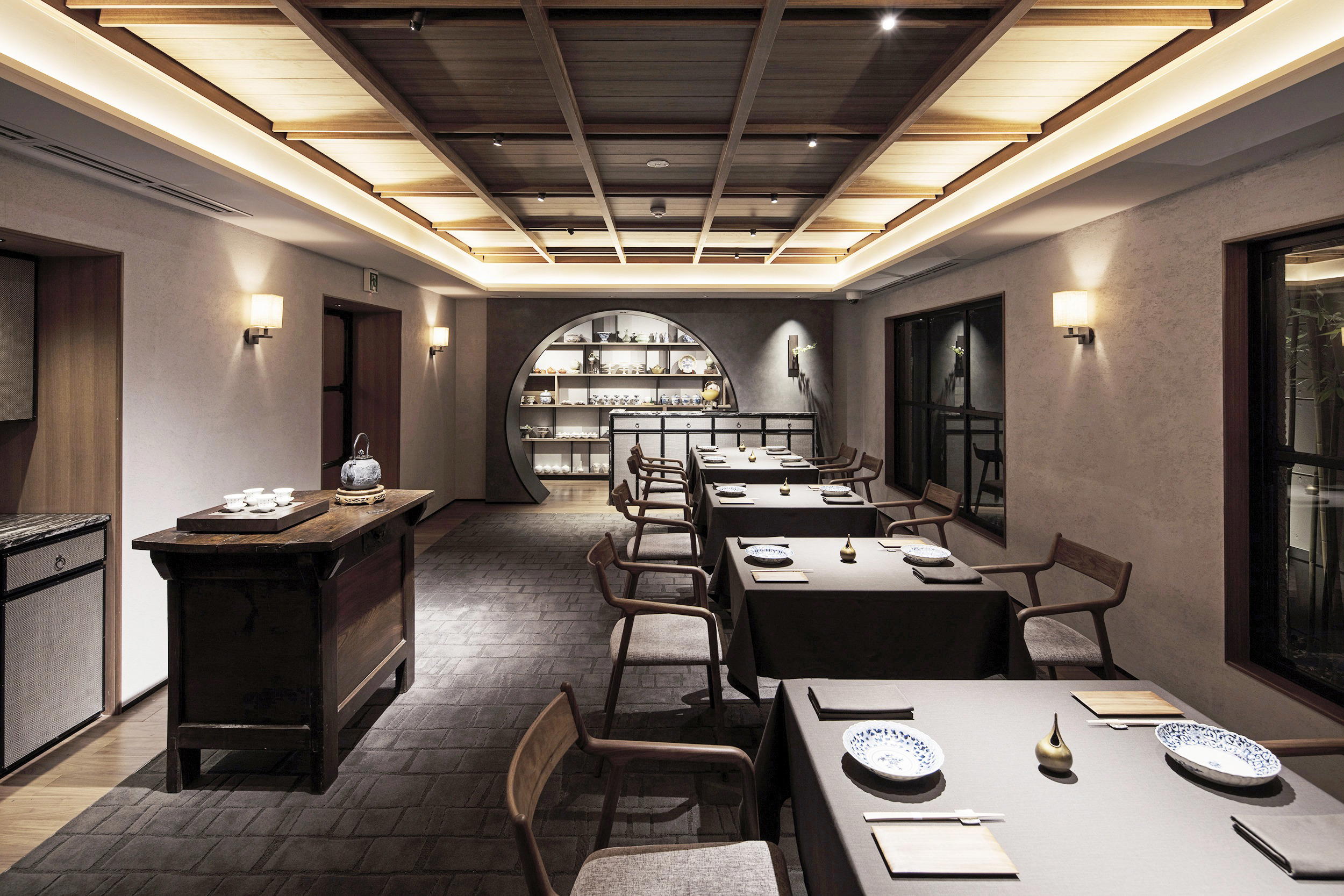
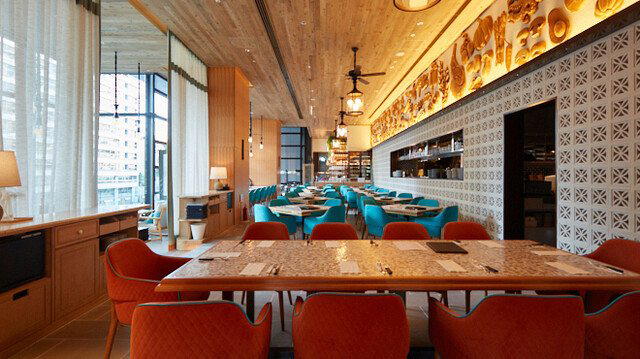
The address, a third-floor space in a residential building on Roppongi's quieter eastern fringe, sets the tone before the food arrives. This is not the kind of Italian restaurant that announces itself from the street. The Lombard cooking tradition that gives the restaurant its name, drawing on northern Italy's preference for dairy, risotto, and restrained seasoning, has always favoured substance over display. In Tokyo, that philosophy has found a logical counterpart in Japanese ingredient culture, where the quality of a single product, whether dashi kelp, a seasonal fish, or locally grown rice, is treated as the argument in itself.
The Seasonal Alignment Between Italian and Japanese Kitchens
There is a structural reason why Italian and Japanese cuisines have proved compatible in Tokyo's leading hybrid restaurants. Both traditions are organised around the calendar. Northern Italian cooking shifts with the seasons in ways that parallel Japan's own four-season ingredient logic: light crudi and vegetable-forward preparations in spring and summer give way to richer, dairy-heavy dishes in the colder months. Japanese ingredient culture imposes the same seasonal discipline through entirely different means, using the availability of fish runs, mountain vegetables, and harvest grains to determine what belongs on a plate.
At La Brianza, this alignment is handled through specific product choices rather than headline fusion gestures. The fish carpaccio is cured with kelp, a technique that draws on Japanese umami extraction while keeping the Italian carpaccio format intact. The focaccia arrives with yuzu pepper sauce, a pairing that substitutes a Japanese citrus condiment for the olive oil or sea salt a Ligurian baker would use. The risotto is made with Japanese rice, a practical and philosophically significant choice: Japanese short-grain rice absorbs stock differently than Arborio or Carnaroli, producing a texture that reflects where the dish is being made rather than mimicking a Milanese original. These are not novelty moves. They are the kind of adjustments that result from a kitchen working with the logic of both traditions rather than grafting one onto the other.
Chef Yoshiyuki Okuno, who heads the kitchen, provides the technical lineage that grounds this approach. Japanese chefs trained in Italian kitchens have become one of the defining forces in Tokyo's Italian restaurant tier, bringing the precision and material discipline of Japanese culinary culture to a European tradition that, at its northern Italian core, shares many of the same instincts.
Recognition and Where La Brianza Sits Among Tokyo's Italian Restaurants
La Brianza holds a Michelin Plate (2025), a designation that sits below the starred tier but signals consistent quality and technique. On the Opinionated About Dining list for Japan, the restaurant has moved from Highly Recommended in 2023 to a ranked position of #303 in 2024, rising to #384 in 2025 across an expanded field of ranked restaurants. That three-year run of OAD recognition from a platform that aggregates experienced diner opinion rather than professional critic visits is a meaningful signal about sustained consistency.
Within Tokyo's Italian tier, the competitive set is worth mapping. PRISMA and Principio sit in the same conversation about Italian cooking adapted for the Tokyo market, while AlCeppo represents a longer-established Italian presence in the city. La Brianza's ¥¥ price range places it in a more accessible bracket than the starred Italian formats, making it one of the more practical entry points into serious Italian-Japanese ingredient cooking in the city.
For Italian cooking in Japan more broadly, cenci in Kyoto operates a comparable seasonal approach with a stronger kaiseki influence, while 8½ Otto e Mezzo Bombana in Hong Kong represents the haute Italian format in East Asia for comparison. La Brianza's position is closer to the ingredient-led, lower-intervention end of that spectrum.
Format, Hours, and Planning Your Visit
The restaurant runs a set menu format as its primary structure, which is the natural vehicle for seasonal Italian cooking: a fixed progression of courses allows the kitchen to build a coherent seasonal argument rather than offering a menu of disconnected options. In the evening, à la carte dishes are available alongside the set format, giving returning visitors or those with specific preferences more flexibility. It is worth noting that this dual format at dinner makes La Brianza more accessible for a range of visit types than a strictly omakase-style operation would be.
La Brianza is open seven days a week, running a lunch service from 11:30am to 3:30pm and a dinner service from 5:30pm to 11pm daily. The Roppongi address, specifically in the Hills Residence building at 6 Chome-12-3, is a short distance from Roppongi Station on the Tokyo Metro Hibiya and Toei Oedo lines. At the ¥¥ price range, lunch set menus represent the most efficient way to assess the kitchen's seasonal direction, particularly in the transitional months of spring and autumn when both Italian and Japanese seasonal ingredients are at their most varied.
For a fuller picture of dining options in the city, see our full Tokyo restaurants guide. Those planning a broader trip can also consult our Tokyo hotels guide, our Tokyo bars guide, our Tokyo wineries guide, and our Tokyo experiences guide.
Elsewhere in Japan, HAJIME in Osaka, Gion Sasaki in Kyoto, akordu in Nara, Goh in Fukuoka, 1000 in Yokohama, and 6 in Okinawa cover the range of high-end dining across the country's key cities.
Frequently asked questions
Who's behind the kitchen at La Brianza?
The chef associated with La Brianza is Yoshiyuki Okuno.
Where is La Brianza in Tokyo?
La Brianza is located at Japan, 〒106-0032 Tokyo, Minato City, Roppongi, 6 Chome−12−3 ヒルズレジデンスC棟 3階, Tokyo.
What's the best thing to order at La Brianza?
The set menu is the core of what La Brianza does, and it is the format that best expresses chef Yoshiyuki Okuno's approach to aligning Italian structure with Japanese seasonal ingredients. Dishes like kelp-accented fish carpaccio and yuzu pepper focaccia illustrate how Japanese produce is integrated into Italian frameworks rather than used as garnish. In the evening, à la carte options are available alongside the set menu, which gives returning diners a way to focus on specific courses. The risotto, made with Japanese rice, is a useful reference point for understanding how far the kitchen pushes ingredient substitution while keeping Italian logic intact.
What's the cuisine at La Brianza?
What price level is La Brianza?
Pricing at La Brianza is listed as ¥¥.
What time does La Brianza open and close?
Hours at La Brianza: Hours: Monday 11:30 am–3:30 pm, 5:30–11 pm Tuesday 11:30 am–3:30 pm, 5:30–11 pm Wednesday 11:30 am–3:30 pm, 5:30–11 pm Thursday 11:30 am–3:30 pm, 5:30–11 pm Friday 11:30 am–3:30 pm, 5:30–11 pm Saturday 11:30 am–3:30 pm, 5:30–11 pm Sunday 11:30 am–3:30 pm, 5:30–11 pm.
Peers Worth Knowing
A quick peer list to put this venue’s basics in context.
| Venue | Cuisine | Price | Awards | Notes |
|---|---|---|---|---|
| La BrianzaThis venue (the venue you are viewing) | Modern Italian with Japanese Seasonal Ingredients | $50–100 | Michelin Plate · Tabelog 100 #72 | Not listed |
| Harutaka | Edo-Style Omakase Sushi | $200–300 | 3 Michelin Stars · World's 50 Best #76 | Sushi |
| RyuGin | Modern Kaiseki | $500+ | 3 Michelin Stars · World's 50 Best #41 | Kaiseki, Japanese |
| L'Effervescence | Modern French with Japanese Influences | $200–300 | 3 Michelin Stars · World's 50 Best #69 | French |
| HOMMAGE | Modern French with Japanese Influences | $150–200 | 2 Michelin Stars · World's 50 Best #78 | Innovtive French, French |
| MAZ | Innovative Peruvian-Japanese Fusion | $150–200 | 2 Michelin Stars · World's 50 Best #28 | Innovative |
Recognition history
Dated appearances from independent guides and award organizations, with the underlying list record or original source where available.
Michelin Plate
Michelin
Opinionated About Dining Top Restaurants in Japan Recommended
Opinionated About Dining
Tabelog 100 #72 · No. 72
Tabelog · Tabelog 100 - Italian - TOKYO - 2025
Full recognition history (8 entries)
Michelin Plate
Michelin
Opinionated About Dining Top Restaurants in Japan Ranked #384
Opinionated About Dining
Michelin Plate
Michelin
Opinionated About Dining Top Restaurants in Japan Ranked #303
Opinionated About Dining
Opinionated About Dining Top Restaurants in Japan Highly Recommended
Opinionated About Dining