Our verdict
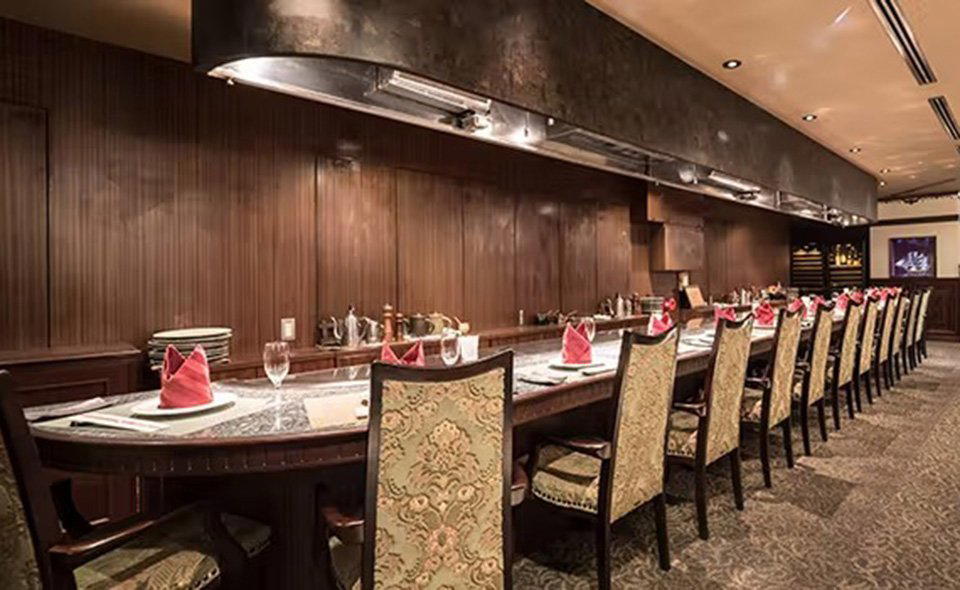
Royal Mouriya sits at the upper tier of Kobe's teppanyaki circuit, where the beef itself sets the editorial agenda. Located in Chuo Ward on Kitanagasadori, the restaurant draws visitors specifically for Kobe beef prepared on iron at close range — a format the city has refined over decades into something closer to ceremony than dinner service.

Pearl is the En Primeur Club membership app — saves, bookings, and concierge access live there. Same editors, same standards.
- Address
- Japan, 〒650-0012 Hyogo, Kobe, Chuo Ward, Kitanagasadori, 1 Chome−9−9 第1岸ビル 2F
- Phone
- +81783211328
- Hours
- Daily 11 AM–9 PM
- Website
- mouriya.co.jp
- Directions
- Get directions
The menu
What to order
- Kobe beef rib eye steak
- Kobe beef sirloin
- Kobe beef garlic fried rice
The Room Before the Beef
Kobe's teppanyaki dining tradition is built on proximity. The iron griddle sits low, the chef works within arm's reach, and the sequence of a meal is dictated almost entirely by the animal on the plate — its grade, its marbling index, its resting time between cut and heat. Kobe Beef Steak Restaurant Royal Mouriya, located on the second floor of a building along Kitanagasadori in Chuo Ward, operates within this framework. The address places it in the northern stretch of central Kobe, a ward that contains the city's densest concentration of serious beef restaurants and where the teppanyaki counter has long been the dominant format for premium dining.
This matters for first-time visitors calibrating expectations. Kobe's beef dining scene is not homogeneous. It splits between high-ceremony counters that price at the ceiling of the domestic market, mid-tier restaurants that serve certified Kobe beef with fewer constraints on portion or format, and the tourist-facing operations that use the name without always meeting the certification standards. Royal Mouriya positions itself in the first serious tier of that hierarchy, with a focus on the ingredient rather than on theatrical presentation for its own sake.
What the Teppanyaki Format Does to Wagyu
To understand what Royal Mouriya is offering, it helps to understand what the teppanyaki format specifically does to Kobe beef at this grade. Wagyu at the top of the marbling scale — the BMS grades that characterise true Tajima-gyu certified as Kobe beef, does not behave on the griddle the way leaner cuts do. The intramuscular fat renders quickly and at relatively low temperatures. Overcooked, it loses the very quality that defines it. The teppanyaki counter exists partly as a control mechanism: the chef can modulate heat zone by zone across the iron surface, reading the cut in real time and adjusting accordingly.
The meal at a serious Kobe beef counter rarely begins with beef. Appetisers, soup courses, and lighter preparations establish a baseline before the main protein sequence arrives. This progression is deliberate. The palate needs calibration before encountering fat content at the level that certified Kobe beef carries. The mid-course work, often vegetables, occasionally seafood, functions as punctuation. When the beef does arrive, it comes in portions sized to concentrate rather than overwhelm: a few slices, precisely finished, eaten at pace determined by the chef rather than the diner.
Royal Mouriya's placement in Chuo Ward, within walking distance of Kitanagasadori's broader dining cluster, puts it alongside comparison venues that include Fushin and Ash Restaurant, both of which address the Kobe dining scene from different vantage points. For beef specifically, the most relevant peer is Aragawa, which has been serving Tajima beef since 1967 and whose charcoal-grill approach represents an alternative tradition to the teppanyaki format. The two restaurants illustrate a genuine split in Kobe's premium beef philosophy: open flame versus iron surface, each with its own partisans.
The Progression of a Meal Here
The editorial angle on Royal Mouriya is most useful when framed through what a meal actually moves through, rather than what any individual dish achieves in isolation. Teppanyaki dining at this level is sequential in a way that resembles kaiseki in its underlying logic, even though the format and ingredient focus are entirely different. There is an opening register, lighter, often delicate, that gives way to a middle section of building intensity, culminating in the beef sequence itself before a closing movement of rice, pickles, and miso that functions as a deliberate return to simplicity.
That closing simplicity is not incidental. It reflects a broader principle in serious Japanese dining: the meal should complete rather than escalate. The beef is the point, but the point is not to finish at maximum intensity. This structural instinct separates the more considered Kobe teppanyaki counters from those that build toward beef and then simply stop. For visitors accustomed to Western steakhouse logic, where the steak is the climax and dessert is an afterthought, the rhythm here requires a recalibration of expectations.
Kobe's broader dining scene rewards visitors who understand this kind of recalibration. The city has produced a concentration of serious restaurants across multiple formats. Ca Sento operates in the Spanish register, while fuxing covers a different point on the culinary map. Beyond Kobe, the Kansai and broader Japan circuit that a serious food traveller constructs often includes HAJIME in Osaka, Gion Sasaki in Kyoto, and akordu in Nara. For sushi reference points, Harutaka in Tokyo and Goh in Fukuoka complete a picture of how Japan's top-tier dining distributes across the archipelago. Our full Kobe restaurants guide maps the city's options across format and price tier.
For international comparison, the commitment to ingredient sourcing at this level of Japanese beef dining has parallels in how kitchens like Le Bernardin in New York City approach premium seafood, or how Atomix in New York City structures the progression of a tasting menu around a cultural argument rather than a chef's ego. The shared logic is that the ingredient or the tradition leads, and the chef's role is articulation rather than transformation.
Planning the Visit
Chuo Ward is accessible from Sannomiya Station, Kobe's main rail hub, which connects directly to Osaka via the Hankyu and JR lines, a journey of roughly 20 to 30 minutes depending on the service. This proximity to Osaka makes day-trip dining from that city common, though evening visits allow more time with the meal rather than compressing it against a train schedule. For restaurants at this tier in Kobe, reservations in advance are the reliable approach; Kobe beef counters at the serious end of the market do not accommodate walk-in volume in the way that casual beef restaurants might. Reaching out ahead of travel, rather than on arrival in Japan, is the practical discipline that avoids disappointment. Other regional venues worth benchmarking for visit planning include 一本杉 川嶋製 in Nanao, 古代山乃 in Sapporo, 湖畔荘 in Takashima, 庄羽屋 in Nishikawa Machi, and Birdland in Sakai.
Frequently asked questions
How do I find Kobe Beef Steak Restaurant Royal Mouriya?
Kobe Beef Steak Restaurant Royal Mouriya is located at Japan, 〒650-0012 Hyogo, Kobe, Chuo Ward, Kitanagasadori, 1 Chome−9−9 第1岸ビル 2F, Kobe.
Is Royal Mouriya in Kobe a good option for first-time Kobe beef diners?
Royal Mouriya's teppanyaki format is particularly well-suited to first-time Kobe beef diners because the open griddle service makes the cooking process legible — you see marbling, fat management, and doneness decisions in real time rather than receiving an opaque plate. The restaurant sits in Chuo Ward, roughly walking distance from Sannomiya Station, making it straightforward to reach from Osaka or central Kobe. The format also means portion sequencing is guided by the chef rather than left to the diner to construct.
What's the best thing to order at Kobe Beef Steak Restaurant Royal Mouriya?
The core draw is certified Kobe beef, prepared teppanyaki-style on an iron griddle at close range. The format places the cut and the cook in direct view, so the beef itself — rather than any supporting dish — is the point of the meal. Ordering around the Kobe beef course, rather than supplementary items, reflects how the menu is structured.
How far ahead should I plan for Kobe Beef Steak Restaurant Royal Mouriya?
Royal Mouriya operates in Chuo Ward, a central Kobe neighbourhood with strong tourist and business traffic, which keeps demand for certified Kobe beef teppanyaki seats consistent. Reserving at least two to four weeks ahead is a sensible baseline, particularly for weekend evenings or larger groups. The restaurant is on the second floor at 1-9-9 Kitanagasadori, and the dining room's teppanyaki counter format limits capacity.
What's the standout thing about Kobe Beef Steak Restaurant Royal Mouriya?
The teppanyaki format is the structural choice that defines the experience: the chef works on the griddle within arm's reach of the table, and the cooking of certified Kobe beef happens in front of the guest rather than behind a kitchen pass. That proximity — fat rendering, searing temperature, resting time — is visible throughout the meal. For a beef this specific in its provenance requirements, watching the preparation is part of understanding what you're eating.
Is Kobe Beef Steak Restaurant Royal Mouriya allergy-friendly?
Given that the menu is built around a single primary ingredient — certified Kobe beef — the menu structure is relatively narrow compared with multi-cuisine restaurants, but communicating specific dietary requirements directly before booking is advisable. The restaurant is located in Chuo Ward, Kobe, and inquiries are best handled at the point of reservation.
Recognition, Side-by-Side
Comparable venues nearby, for context on price, style, and recognition.
| Venue | Cuisine | Price | Awards | Notes |
|---|---|---|---|---|
| Kobe Beef Steak Restaurant Royal MouriyaThis venue — the venue you are viewing | Teppanyaki Kobe Beef | $150–200 | Not listed | Not listed |
| Kobe beef Daichi | Teppanyaki Kobe Beef Steakhouse | $100–150 | Not listed | Chūō |
| Teppanyaki Sogo | Teppanyaki Steakhouse | Not listed | Tabelog 100 #3 | Chūō |
| Kobe beef Hana-Houbi | Teppanyaki Kobe Beef Steakhouse | $100–150 | Not listed | Chūō |
| Sumiyaki Niku Ishidaya. Hanare | Kobe beef charcoal-grilled yakiniku | $50–100 | Tabelog 100 #7 | Chūō |
| Tonkatsu to Wine Nichigetsu | Tonkatsu and Wine | $50–100 | Tabelog 100 #9 | Chūō |
Continue exploring
More in Kobe
Restaurants in Kobe
Browse all →
Bars in Kobe
Browse all →
Hotels in Kobe
Browse all →


Details
- Elegant
- Sophisticated
- Ornate
- Business Dinner
- Special Occasion
- Celebration
- Open Kitchen
- Private Dining
- Sake Program
- A La Carte
- Counter Dining
- Sake Program
- Gluten Free Options
Current opening hours
- Monday
- 11 AM–9 PM
- Tuesday
- 11 AM–9 PM
- Wednesday
- 11 AM–9 PM
- Thursday
- 11 AM–9 PM
- Friday
- 11 AM–9 PM
- Saturday
- 11 AM–9 PM
- Sunday
- 11 AM–9 PM
Hours can change for holidays and private events. Last verified .
Lavish and refined atmosphere with elegant private dining rooms and teppanyaki counters, highlighted by skilled chef performances.