



La Baie sits on the fifth floor of the Ritz-Carlton Osaka in Umeda, delivering Japanese-French cuisine under chef Christophe Gibert, a Brittany native whose classical sauce work and affinity for seaweed have earned the restaurant consecutive Tabelog Bronze awards since 2017, a Michelin star, and repeated selection in the Tabelog French West 100. Dinner runs ¥30,000–¥39,999; lunch offers the same kitchen at roughly half the price.
Pearl is the En Primeur Club membership app — saves, bookings, and concierge access live there. Same editors, same standards.
- Address
- Japan, 〒530-0001 Osaka, Kita Ward, Umeda, 2 Chome−5−25 ザ・リッツ・カールトン大阪 5階
- Phone
- +81 6-6343-7020
- Website
- labaie.ritzcarltonosaka.com
- Directions
- Get directions
 Saves & bookings on Pearl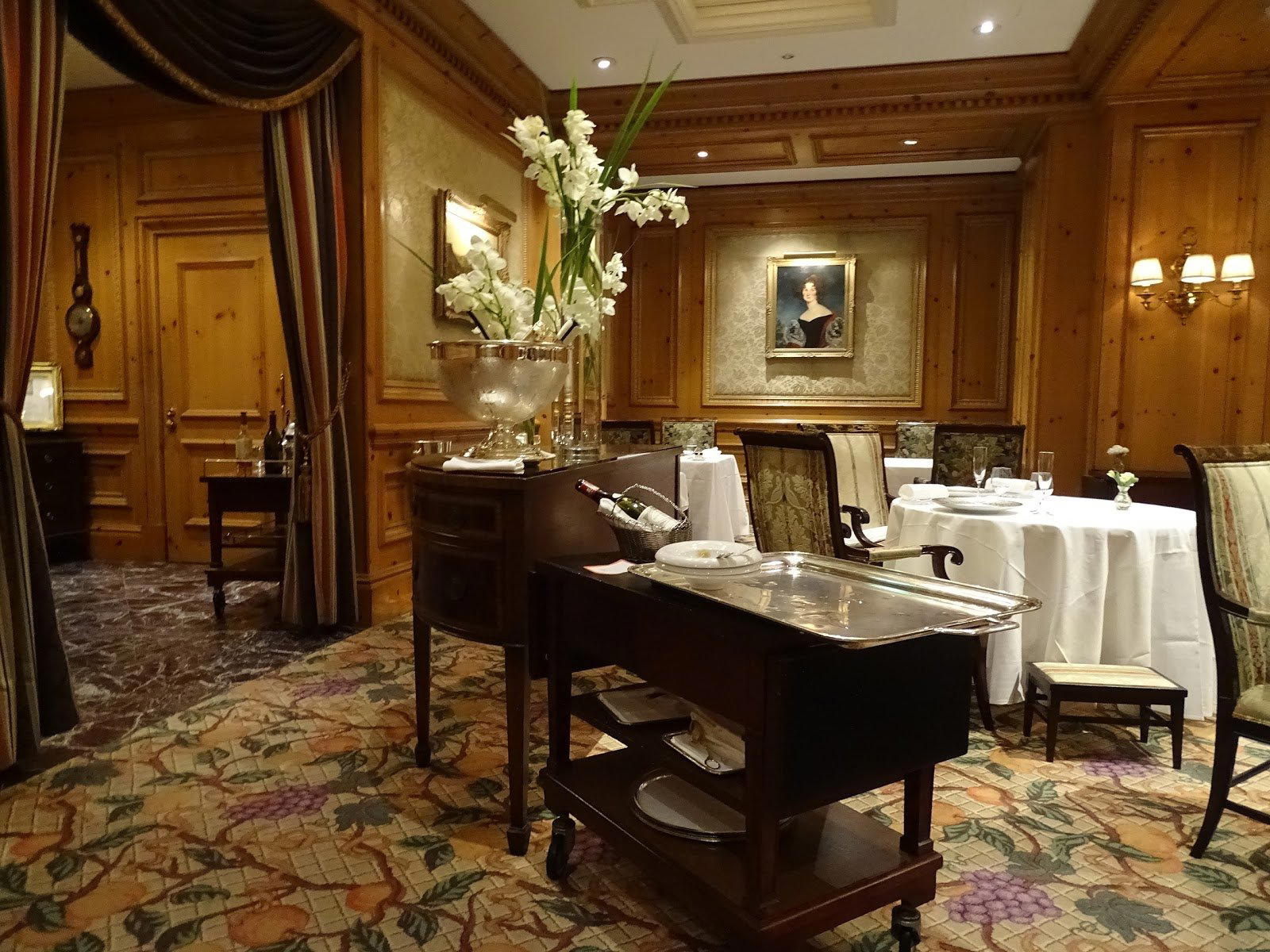
French Classicism on the Fifth Floor of Umeda
Hotel dining in Japan operates on a different logic than it does in most cities. In Paris or New York, a hotel restaurant often trades on brand association rather than culinary depth. In Osaka, the premium hotel tier has consistently produced kitchens that hold their own against the city's freestanding fine-dining establishments, and La Baie, occupying the fifth floor of the Ritz-Carlton Osaka in Umeda, is among the clearest evidence of that. The room reads as European formality translated for a Japanese context: symmetrical décor, sofa seating, spacious layouts, and the kind of unhurried service pace that signals a kitchen willing to take its time. La Liste describes the space as fitting a noble mansion, with décor of striking symmetry and graceful staff work.
That sense of structure extends to the kitchen. Chef Christophe Gibert comes from Brittany, a region defined by Atlantic seafood, coastal seaweed harvesting, and a culinary culture that treats the sea as a primary rather than secondary ingredient. That background runs through La Baie's approach: the restaurant has been noted for its extensive use of seaweed and its emphasis on classical French sauce technique, an area where Gibert's cooking is explicitly identified as its anchor. In Osaka, where local diners are already attuned to the subtlety of dashi and kombu-derived umami, a French kitchen that treats seaweed as a central ingredient rather than a garnish lands on familiar ground.
Where La Baie Sits in Osaka's French Dining Tier
Osaka's French dining scene divides fairly cleanly into two clusters. At the summit of the price and recognition brackets sit HAJIME, at ¥¥¥¥ and three Michelin stars, and La Cime, two stars at ¥¥¥¥, alongside Fujiya 1935 at the same price tier. La Baie sits in a distinct second cluster: one Michelin star, ¥¥¥ pricing, and a hotel context that shapes both its formality and its accessibility. Dinner averages ¥30,000–¥39,999 per person; lunch runs ¥15,000–¥19,999. That lunch figure places it within range of a considered weekday meal rather than a purely celebratory booking, which affects who uses it and how often.
Its recognition record tells a consistency story that matters as much as the peak accolades. Tabelog Bronze recognition runs from 2017 through 2026 with only 2019 and 2024 absent, and the restaurant has appeared in the Tabelog French West 100 in 2021, 2023, and 2025. For Kansai's French West category specifically, repeated selection in the Tabelog 100 is a meaningful signal of sustained local standing rather than a single strong year.
For visitors comparing the Osaka French scene to Gion Sasaki in Kyoto or Harutaka in Tokyo, the category differences are significant: the restaurant operates in French-first territory rather than the Franco-Japanese crossover space that defines many of Kansai's most-discussed tables. akordu in Nara and Goh in Fukuoka offer useful comparison points for understanding how Western kitchens read differently in cities outside Tokyo, there is generally more space, more breathing room in the booking calendar, and a clientele that prizes depth of craft over social cachet.
The Kansai Lens: Why Osaka Suits This Kitchen
The contrast between Kansai and Kanto dining sensibilities runs deeper than geography. Osaka's food culture is built on directness: strong flavors, generous portions, and a premium on value that persists even at the luxury tier. Classical French cuisine, with its emphasis on reduction sauces, fat-forward technique, and structured progression, initially seems like an odd fit. But the intersection point is the ingredient: Kansai has always been a seafood market, and the Osaka-Kobe coastline gives chefs access to the same Pacific and Seto Inland Sea produce that defines Kyoto's kaiseki tradition, just through a different technical vocabulary.
A Breton chef at the center of that supply chain has a structural advantage. Brittany is to French cuisine what Osaka is to Japanese: a province that takes its coastal produce seriously enough to resist the gravity of the capital's fashions. Gibert's noted use of seaweed connects two traditions that treat the sea's plant life as flavoring agent rather than garnish. The Kansai palate, trained on kombu-dashi and wakame, reads that register immediately. It is one reason why the restaurant's Tabelog recognition has proven durable across eight years: the kitchen is not performing exoticism for a Japanese audience, it is working from an ingredient logic that the local diner already understands.
Osaka's kaiseki side, represented at ¥¥¥ by Kashiwaya Osaka Senriyama and Taian, both three Michelin stars, operates from a similar reverence for seasonal seafood and precise sauce work expressed in dashi rather than fond. The comparison is not competitive so much as contextual: Osaka diners who move between kaiseki and French fine dining are already calibrated for the technical register that restaurant operates in. The crossover between French sauce discipline and Japanese dashi sensitivity is also visible at レストラン パッション - Pachon in Tokyo and internationally at Le Bernardin in New York City, both of which approach fish with a similar commitment to cooking technique over raw showmanship.
The Room, the Service, the Format
The 46-seat dining room includes a private room accommodating 6 to 12 guests, and the restaurant can be hired for exclusive private use. A 15 percent service charge applies, which is notable in Japan where service charges are less common than in European fine dining; it signals a service model aligned with international hotel dining norms rather than the omotenashi-as-standard approach of freestanding Japanese restaurants. A sommelier is on staff, and the wine program is specifically flagged as a focus. Credit cards are accepted across major networks; electronic payments and QR code methods are not.
Dress code is enforced differently at lunch and dinner. Lunch requires smart casual, with restrictions on sportswear for male guests. Dinner requires what the restaurant describes as elegant, collared shirt or jacket for men, with polo shirts excluded. Hats are not permitted inside the restaurant at either service. Children aged six and older are welcome at both lunch and dinner in the main room; younger children can be accommodated in the private room at any time of day.
Service runs lunch from 11:30 to 15:00 and dinner from 17:30 to 21:00, seven days a week. Reservations are accepted and advised given the restaurant's consistent award recognition. Parking is available, and the space is wheelchair accessible.
Know Before You Go
- Address: Ritz-Carlton Osaka, 5F, 2-5-25 Umeda, Kita Ward, Osaka 530-0001
- Phone: +81-6-6343-7020
- Website: labaie.ritzcarltonosaka.com
- Hours: Lunch 11:30 to 15:00 (L.O. 13:30) / Dinner 17:30 to 21:00 (L.O. 19:30), daily with irregular closures, confirm by phone
- Price (Dinner): ¥30,000–¥39,999 per person
- Price (Lunch): ¥15,000–¥19,999 per person
- Service Charge: 15%
- Payment: Credit card only (VISA, Mastercard, JCB, AMEX, Diners). No electronic money or QR code payments.
- Dress Code: Smart casual at lunch; elegant (collared shirt or jacket) at dinner. No hats.
- Reservations: Available and recommended
- Seating: 46 total; private room for 6 to 12 guests
- Access: ~5 min walk from Hanshin Osaka Umeda (West Exit) or Osaka Metro Nishi Umeda (North Gate); ~7 min from JR Osaka Station (Sakurabashi Exit)
- Parking: Available
- Children: Ages 6+ in main room; any age in private room
Category Peers
Comparable venues nearby, for context on price, style, and recognition.
| Venue | Cuisine | Price | Awards | Notes |
|---|---|---|---|---|
| La BaieThis venue — the venue you are viewing | Michelin-Starred French Seafood | $$$$ | Michelin 1 Star | Not listed |
| LE PONT DE CIEL | Modern French Fine Dining | $$$$ | Michelin 1 Star | Chūō |
| ad hoc | Modern French with Japanese Sensibilities | $$$$ | Michelin 1 Star | Fukushima |
| Sushi Yuden | Michelin-Starred Omakase Sushi | $$$$ | Michelin 1 Star | Tennōji |
| Sushiroku | Edomae-Style Omakase Sushi | $$$$ | Michelin 1 Star | Kita |
| Ono | Awaji Island Kaiseki | $$$$ | Michelin 1 Star | Kita |
Recognition history
Dated appearances from independent guides and award organizations, with the underlying list record or original source where available.
La Liste Top Restaurants
La Liste
Michelin 1 Star
Michelin
Tabelog Bronze #227
Tabelog
La Liste Top Restaurants
La Liste
Opinionated About Dining Top Restaurants in Japan Ranked #618
Opinionated About Dining
Tabelog 100 #18 · No. 18
Tabelog · Tabelog 100 - French - WEST - 2025
Michelin 1 Star
Michelin
Continue exploring
More in Osaka
Restaurants in Osaka
Browse all →




Bars in Osaka
Browse all →




Hotels in Osaka
Browse all →




Wineries in Osaka
Browse all →
At a Glance
- Elegant
- Sophisticated
- Romantic
- Classic
- Date Night
- Special Occasion
- Celebration
- Business Dinner
- Hotel Restaurant
- Open Kitchen
- Extensive Wine List
- Sommelier Led
- Local Sourcing
Current opening hours
- Monday
- 11:30 AM–3 PM, 5:30–9 PM
- Tuesday
- 11:30 AM–3 PM, 5:30–9 PM
- Wednesday
- 11:30 AM–3 PM, 5:30–9 PM
- Thursday
- 11:30 AM–3 PM, 5:30–9 PM
- Friday
- 11:30 AM–3 PM, 5:30–9 PM
- Saturday
- 11:30 AM–3 PM, 5:30–9 PM
- Sunday
- 11:30 AM–3 PM, 5:30–9 PM
Hours can change for holidays and private events. Last verified .
Regal opulence with dark wood paneling and muted tones evoking imperial France; hushed, refined atmosphere with polished table linens and attentive service.