Michelin Plate
Our verdict
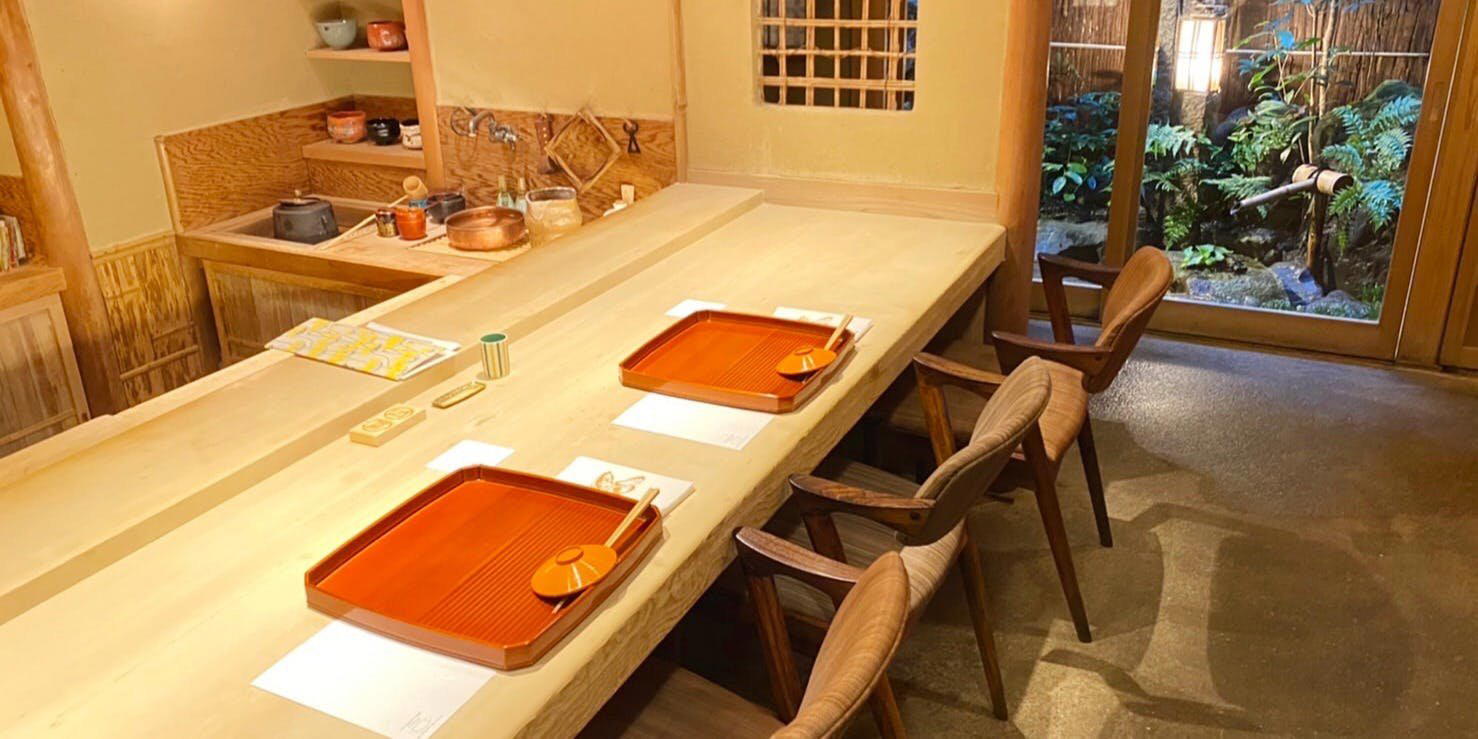
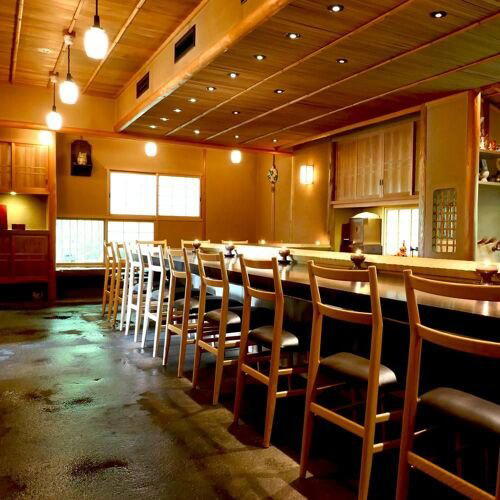
Kappo Takohachi on Kyoto's Takoyakushi Street holds the atmosphere of mid-20th-century Japan alongside its Michelin Plate recognition. The menu lists ingredients rather than dishes, sea bream, squid, octopus, and the owner couple work in practiced synchrony across a counter where guests sit shoulder to shoulder. For Kyoto's ¥¥ tier, it sets the standard for honest, ingredient-led cooking.

Pearl is the En Primeur Club membership app, where members save venues, book tables and use the concierge.
The menu
What to order
- Shimesaba sushi
- Salt-grilled guji
- Hamo
Takoyakushi Street and the Art of Cooking Without a Script
Kyoto's dining scene tends to get discussed in terms of kaiseki, the multi-course tradition that places like Isshisoden Nakamura and Kikunoi Roan carry with ceremony and precision. But running parallel to that formal current is something older and less photographed: the neighbourhood kappo counter, where the distance between the cook and the customer collapses to an arm's length and the menu is whatever arrived at the market that morning. Kappo Takohachi, on Takoyakushi Street in Nakagyo Ward, is that second tradition, alive, unhurried, and operating much as it did in the mid-20th century.
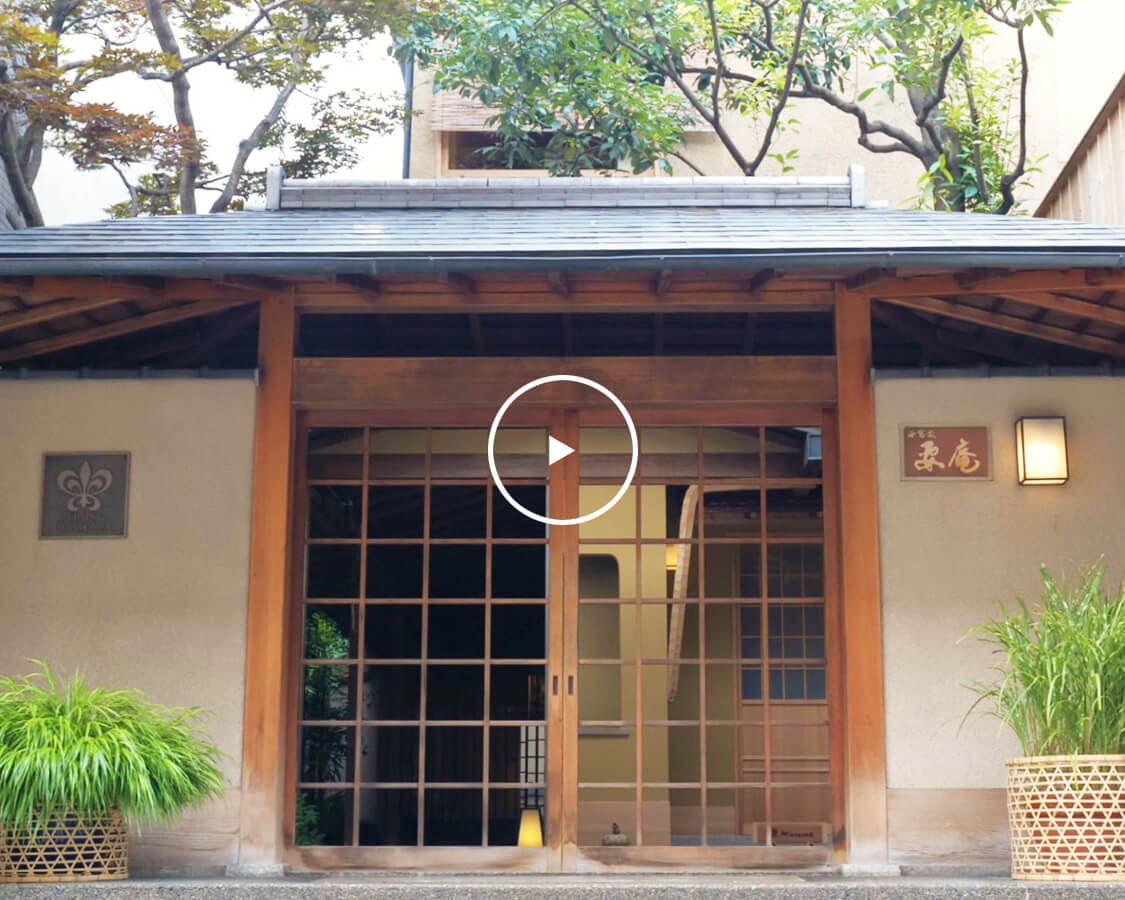
Takoyakushi Street takes its name from the Takoyakushi-do temple a short walk west, and the stretch around address 498 Higashigawacho retains a neighbourhood texture that central Kyoto's more trafficked corridors have largely shed. The approach is understated. There is no theatre of arrival, no architectural statement. What you find inside is a small room, close seating, and two people working in visible coordination, the kind of synchrony that only develops over years of shared repetition.
Simplicity as Method, Not Restraint
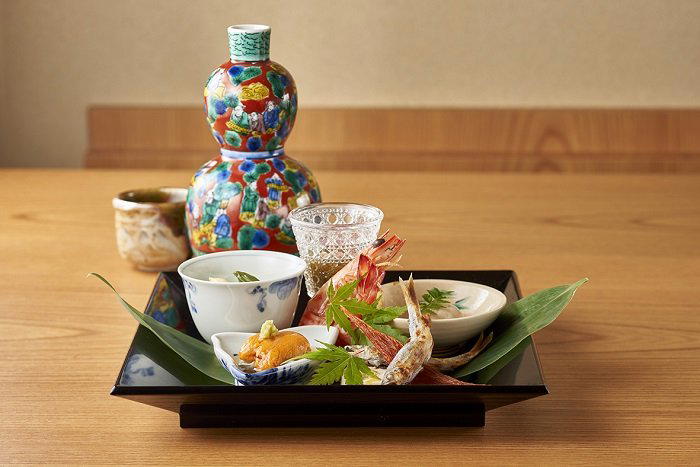
The menu at Kappo Takohachi is built around a structural choice that demands more of the cook than most multi-page menus do: only ingredients are listed. Sea bream. Squid. Octopus. No preparation method, no garnish description, no curated narrative around each line. This is the kappo format at its most direct, the cook determines how something is treated based on its condition that day, and the diner trusts that judgment.
Across Japan, this ingredient-only format is rare enough to carry meaning. At higher price points, places like Harutaka in Tokyo use silence and restraint as a signal of absolute confidence in produce. At Kappo Takohachi's ¥¥ tier, the same restraint operates differently, it is a legacy posture, carried over from the chef's father, who cooked from this same counter. The nostalgia is not performed. It is structural.
The recommendation from Michelin's inspectors is to ask the chef for that day's suggestion. This is practical advice, not romantic framing. Without dish descriptions, the ordering process is a conversation, and that conversation is part of what the counter is designed to produce. The intimate space shortens the distance between people, as Michelin's own notes put it, and for a dining format built around daily variation and cook-to-diner trust, that shortened distance is the core mechanism, not an incidental feature.
Where Kappo Takohachi Sits in Kyoto's ¥¥ Tier
At ¥¥ pricing, Kappo Takohachi operates in a different register than Kyoto's more prominent kaiseki destinations. Venues like Gion Matayoshi, Kenninji Gion Maruyama, and Kodaiji Jugyuan occupy a more formal tier, multi-course structures, dedicated tableware programs, the whole apparatus of Kyoto hospitality at its most considered. Kappo Takohachi is not competing with that.
Within that smaller peer group, the Michelin Plate in both 2024 and 2025 signals that inspectors found something worth returning to, not at the level of a star recommendation, but as a marker of honest, well-executed cooking.
For comparison, Kyoto's starred landscape is weighted toward ¥¥¥¥ kaiseki. Gion Sasaki holds three Michelin stars; Ifuki and Kyokaiseki Kichisen both hold two. The gap between that tier and Kappo Takohachi's ¥¥ positioning is not just financial, it is a difference in what the dining format is trying to do. One set is executing a refined, multi-act performance. The other is cooking fish the way it should be cooked on a given Tuesday in Nakagyo Ward.
The Counter as Community Infrastructure
Counter dining across Japan has evolved differently in different cities. In Tokyo, the high-end omakase counter has become an increasingly premium format, with eight-seat rooms at Azabu Kadowaki and comparable venues booking months ahead and pricing accordingly. In Kyoto, the counter tradition carries a different weight, less about exclusivity, more about proximity to the daily rhythm of a kitchen that has been in operation for generations.
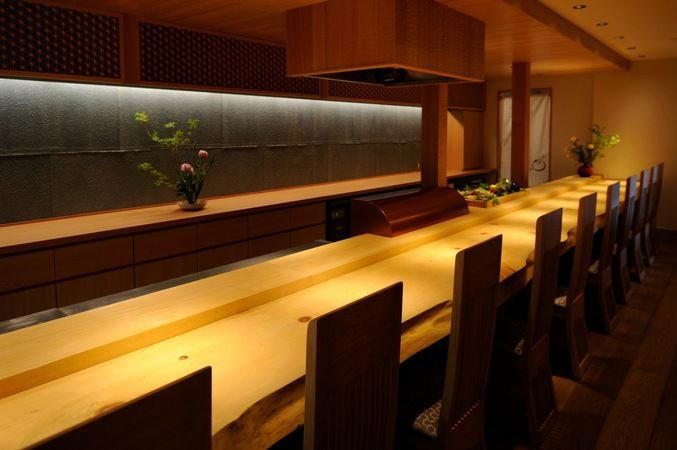
Kappo Takohachi's counter, where customers sit shoulder to shoulder while the owner couple work in front of them, is a piece of social infrastructure as much as a dining room. The format produces a particular atmosphere: strangers drawn into a shared present by the same smells, the same small plates, the same slightly too-close seating. Michelin's inspectors described this as the space enfolding all present in a harmonious mood, language that reads less like marketing copy and more like an accurate report from a counter at full capacity.
This kind of inherited neighbourhood institution is becoming rarer across Japan's mid-sized cities as generational handovers fail or rents shift. The fact that the cooking here carries forward from the chef's father without apparent rupture, same street, same format, same menu philosophy, places it in a narrowing category of places that have absorbed time rather than fought it.
For readers who have engaged with Japan's broader counter dining culture through venues like Myojaku in Tokyo, Goh in Fukuoka, or akordu in Nara, Kappo Takohachi offers a register those venues do not cover: the inherited working kappo counter, unchanged in posture, priced for the neighbourhood it serves.
Planning Your Visit
Know Before You Go
- Address: 498 Higashigawacho, Takoyakushi-dori, Nakagyo Ward, Kyoto 604-8046
- Price range: ¥¥
- Awards: Michelin Plate 2024, Michelin Plate 2025
- Format: Counter seating; kappo style
- Menu approach: Ingredients listed only, ask the chef for the day's recommendation
- Booking: Contact details not publicly listed; direct approach on arrival or via local concierge advisable
- Hours: Not confirmed, verify locally before visiting
For a fuller picture of where Kappo Takohachi sits within Kyoto's dining, drinking, and hospitality options, see our full Kyoto restaurants guide, our full Kyoto hotels guide, our full Kyoto bars guide, our full Kyoto wineries guide, and our full Kyoto experiences guide. For Japan's wider high-end counter dining circuit, HAJIME in Osaka and 1000 in Yokohama represent contrasting points on the same country's spectrum, while 6 in Okinawa shows how the counter format adapts across Japan's very different regional contexts.
What Do People Recommend at Kappo Takohachi?
The menu lists ingredients rather than composed dishes, so the most consistent advice from visitors and Michelin inspectors alike is to ask the chef directly for that day's recommendation. The day's catch determines what matters, octopus, squid, and sea bream appear regularly, reflecting the venue's proximity to Kyoto's fish supply networks, but what arrives and how it is cooked shifts with the market. Treating the order as a conversation with the counter rather than a selection from a fixed list is not just the spirit of the place; it is the method the format is built around.
Frequently asked questions
What's Kappo Takohachi known for in terms of accolades?
Kappo Takohachi has received recognition including: The ambience of mid-20th-century Japan remains along Takoyakushi Street. The cooking is as nostalgic as the shop, both a legacy from the chef’s father. Customers sit shoulder to shoulder while the owner couple work in perfect sync. The inti….
Is Kappo Takohachi more mid-range or high-end?
Pricing at Kappo Takohachi is listed as ¥¥.
What do people recommend at Kappo Takohachi?
Because the menu lists only raw ingredients, sea bream, squid, octopus, rather than named dishes, the consistent advice from visitors and Michelin inspectors is to ask the chef directly for that day's recommendation. The preparation changes based on what's available, so the counter conversation is part of the format. Michelin awarded the venue a Plate in both 2024 and 2025, a signal that the cooking rewards that kind of open-ended ordering.
What should I expect cuisine-wise at Kappo Takohachi?
Just the Basics
Comparable options at a glance, pulled from our tracked venues.
| Venue | Cuisine | Price | Awards | Notes |
|---|---|---|---|---|
| Kappo TakohachiThis venue (the venue you are viewing) | Traditional Kappo | $50–100 | Michelin Plate | Not listed |
| Gion Sasaki | Modern Kaiseki | $300–500 | 3 Michelin Stars · La Liste Top Restaurants | Kaiseki, Japanese |
| cenci | Innovative Italian-Japanese Fusion | $100–150 | 1 Michelin Star · World's 50 Best #76 | Italian |
| Ifuki | Sumibi Kappo Kaiseki | $200–300 | 2 Michelin Stars · La Liste Top Restaurants | Kaiseki |
| Kyokaiseki Kichisen | Kyoto Kaiseki | $200–300 | 2 Michelin Stars · La Liste Top Restaurants | Japanese |
| Kyo Seika | Modern Chinese Fine Dining | $150–200 | 1 Michelin Star · Tabelog Bronze #216 | Chinese |
Recognition history
Dated appearances from independent guides and award organizations, with the underlying list record or original source where available.
Michelin Plate
Michelin
Full recognition history (3 entries)
Michelin Plate
Michelin
Michelin Plate
Michelin