

A three-table yoshoku spot in Higashiyama Ward where a mother and her two daughters serve French-inflected Western classics in white smocks, the portions generous and the prices mid-range. Hamburger steak, fried shrimp, escargot, and lamb appear on a menu that reads like a love letter to postwar Japanese comfort food. Michelin Bib Gourmand recognition in both 2024 and 2025 has made reservations harder to secure than the modest setting might suggest.
Pearl is the En Primeur Club membership app — saves, bookings, and concierge access live there. Same editors, same standards.
- Address
- 101 Rokurocho, Higashiyama Ward, Kyoto, 605-0813, Japan
- Phone
- +81 75-561-9281
- Directions
- Get directions
 Saves & bookings on Pearl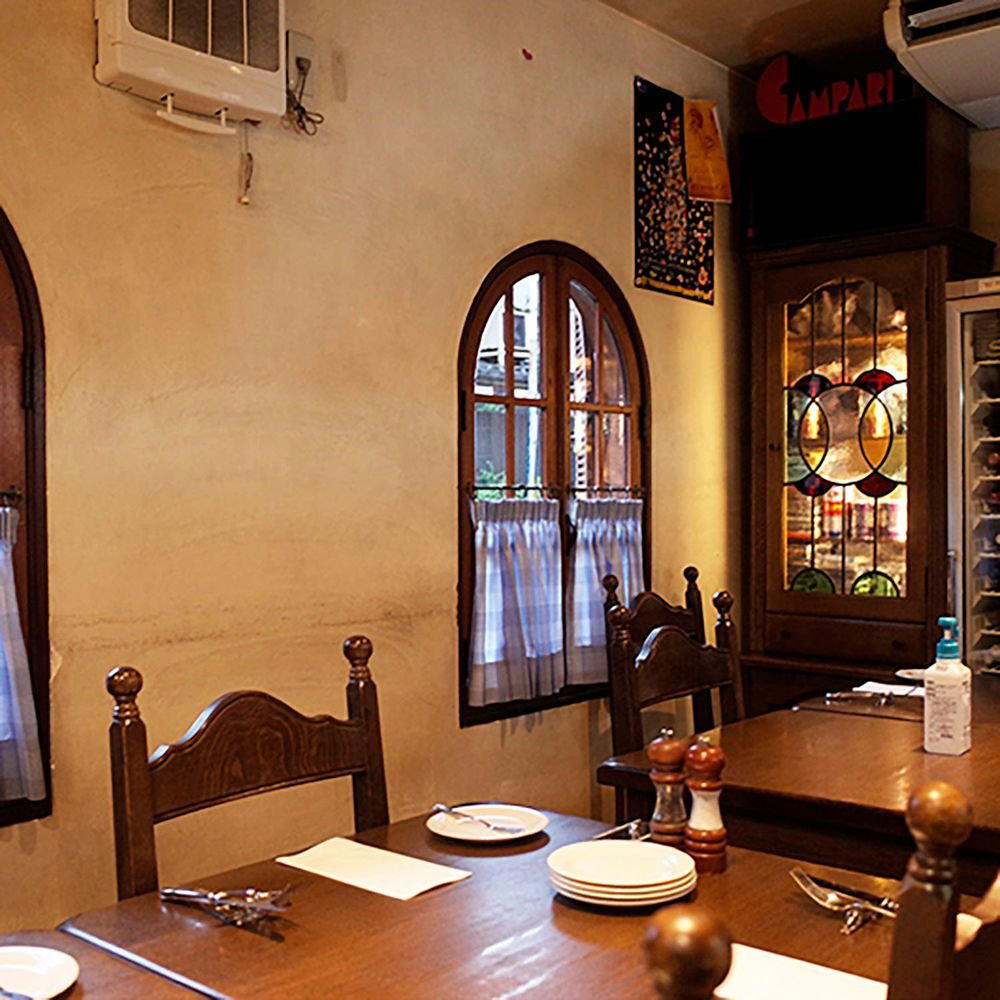
Three Tables in Higashiyama
Higashiyama Ward earns most of its reputation from kaiseki counters and the temple-adjacent machiya restaurants that have defined Kyoto's premium dining identity for generations. Along those same stone-paved streets, a quieter culinary tradition persists: the yoshoku restaurant, where French and broader Western techniques were absorbed into Japanese domestic cooking over a century of cultural exchange and reshaped into something distinctly local. KORISU operates inside that tradition, occupying a small space at 101 Rokurocho with just three tables.
The physical container here is the point. Three tables is not a stylistic gesture or a calculated scarcity signal, it is the actual scale of the operation. The room accommodates a number of guests that a single household can genuinely look after, which shapes the entire experience. Yoshoku restaurants at this scale function less like restaurants in the Western service sense and more like an extension of a family dining room that happens to take occasional strangers. The architecture of the experience is domestic: you are in someone's space, at one of three tables, being fed by people who have cooked this food their entire lives.
The Yoshoku Tradition and Where KORISU Sits Within It
Yoshoku emerged in Meiji-era Japan as Western dishes were translated through Japanese kitchens, simplified, and adapted to local tastes and ingredients. Over time, the category developed its own canon: hamburger steak (hambāgu), omurice, fried shrimp, demi-glace sauces, and, at the more ambitious end, dishes like escargot and lamb that retained their French reference points more explicitly. The category now spans everything from fast-casual chains to quietly serious neighbourhood institutions, and the distinction between those tiers is rarely about price.
KORISU occupies the mid-range tier (¥¥) and is recognized with Michelin Bib Gourmand status for 2024 and 2025. That combination places KORISU in a small comparable set: Western-influenced cooking in Kyoto, recognised at the Michelin level, but priced accessibly. For context, the kaiseki restaurants that define Kyoto's Michelin presence, Gion Sasaki, Hyotei, Kikunoi Honten, Mizai, and Isshisoden Nakamura, operate at ¥¥¥¥ and above, with kaiseki menus priced to reflect that. KORISU competes in a different register entirely.
Across Japan, the yoshoku category has seen renewed critical attention as food writers reconsider the postwar comfort-food canon. In Tokyo, grill GRAND and Mejiro Shunkotei represent the Tokyo end of that conversation. KORISU brings it to Kyoto, embedded in a neighbourhood more commonly associated with lacquered kaiseki boxes than demi-glace.
The Room as the Experience
Editorial angle on space matters here more than in most Kyoto restaurants, because KORISU's physical configuration is inseparable from what makes it function the way it does. Three tables is a seating count that demands a particular kind of attention. There is no section division, no expeditor coordinating multiple stations, no ambient buffer between you and the people preparing your food. The white smocks worn by the family who run the restaurant serve a practical function in a kitchen-forward space.
The intimacy that comes with three tables in a single room means the pace is set by the household, not by a floor manager tracking table turns. Yoshoku at this level is not rushed food, the fried shrimp and hamburger steak that anchor the menu are preparations that reward patience in execution, and the small format allows that.
For travellers accustomed to Kyoto's kaiseki culture, where the sequence of courses and the visual choreography of service are as considered as the food itself, KORISU's domestic spatial logic is a deliberate contrast. The room does not attempt to aestheticise scarcity in the way that some omakase formats do. It is simply a small room with three tables, and that honesty is its own kind of design statement.
The Menu and Its Logic
The yoshoku canon at KORISU covers both the nostalgic and the slightly more formal ends of the category. Hamburger steak and fried shrimp represent the core of postwar Japanese home cooking as it was shaped by Western influence, dishes that generations of Japanese diners associate with family restaurants and Sunday lunches. Escargot and lamb read as the more explicitly French-derived end of the menu, suited to wine pairing and a different pace of eating.
The portion logic is worth noting: the Michelin description specifically references generous portions as part of the restaurant's character. In a city where kaiseki precision often means small, considered amounts of each element, KORISU's approach is a deliberate inversion. You leave full.
Chef Iván Abril leads the kitchen at this family-run yoshoku restaurant in Higashiyama. What the record makes clear is that the kitchen operates within the yoshoku tradition, not outside it.
Getting a Table
The reservation logistics at KORISU call for planning ahead, given the three-table format and recommended reservations. That combination of small capacity and irregular phone availability means planning ahead is essential, though the method for doing so requires persistence rather than a simple online system.
This pattern is not unusual among Kyoto's smaller family-run restaurants. The operational model prioritises the cooking over the administrative infrastructure. For visitors, the practical implication is clear: attempt contact early, be prepared to try multiple times, and treat a confirmed reservation as a meaningful outcome.
| Venue | Cuisine | Price | Covers / Format | Michelin |
|---|---|---|---|---|
| KORISU | Yoshoku (French-Western) | ¥¥ | 3 tables, family-run | Bib Gourmand 2024, 2025 |
| Gion Sasaki | Kaiseki | ¥¥¥¥ | Counter, formal | 3 Stars |
| grill GRAND (Tokyo) | Yoshoku | N/A | Tokyo peer comparison | Recognised |
| akordu (Nara) | Western-influenced | N/A | Regional peer, Nara | Recognised |
For Western-influenced cooking at the higher end of Japan's restaurant spectrum, HAJIME in Osaka and Harutaka in Tokyo represent a different tier of the same broader conversation about Western technique in Japanese kitchens. Goh in Fukuoka, 1000 in Yokohama, and 6 in Okinawa extend the regional picture further.
Cuisine-First Comparison
Comparable venues nearby, for context on price, style, and recognition.
| Venue | Cuisine | Price | Awards | Notes |
|---|---|---|---|---|
| KORISUThis venue — the venue you are viewing | Yoshoku (Japanese-style Western) | $$ | Bib Gourmand | Not listed |
| Izugen | Traditional Kyoto Sushi | $$ | Bib Gourmand | Shimogyō |
| NOODLE SHOP RENNOSUKE | Refined Kyoto Ramen | $$ | Bib Gourmand | Kita |
| Ichihana | Traditional Kyoto Kappo | $$ | Bib Gourmand | Nakagyō |
| KASHIWAI | Traditional Kyoto Sushi | $$ | Bib Gourmand | Kita |
| Eitaroya | Traditional Japanese Izakaya | $$$ | Bib Gourmand | Nakagyō |
Recognition history
Dated appearances from independent guides and award organizations, with the underlying list record or original source where available.
Michelin Bib Gourmand
Michelin
Michelin Bib Gourmand
Michelin
Tabelog 100 #93 · No. 93
Tabelog · Tabelog 100 - Yoshoku - WEST - 2025
Michelin Bib Gourmand
Michelin
Continue exploring
More in Kyoto
Restaurants in Kyoto
Browse all →
Bars in Kyoto
Browse all →
Hotels in Kyoto
Browse all →
Wineries in Kyoto
Browse all →
At a Glance
- Cozy
- Intimate
- Date Night
- Solo
- Sake Program
Current opening hours
- Monday
- 11:30 AM–9 PM
- Tuesday
- Closed
- Wednesday
- 11:30 AM–9 PM
- Thursday
- 11:30 AM–9 PM
- Friday
- 11:30 AM–9 PM
- Saturday
- 11:30 AM–9 PM
- Sunday
- 11:30 AM–9 PM
Hours can change for holidays and private events. Last verified .
Cozy and intimate family atmosphere with warm hospitality, clean lines, and a hushed, contemplative setting.