


A Michelin Bib Gourmand holder for consecutive years, Sumiyakisosaitoriya Hitomi brings serious yakitori credentials to Kyoto's Sakyo Ward at accessible prices. The menu spans spring chicken, locally raised birds, and brand-name cuts across an extensive range of preparations, with salt-forward seasoning as the house signature. The owner-chef's warmth and the lively evening atmosphere make it a natural choice for a celebratory dinner without the formality of kaiseki.
Pearl is the En Primeur Club membership app — saves, bookings, and concierge access live there. Same editors, same standards.
- Address
- 96 Okikucho, Sakyo Ward, Kyoto, 606-8376, Japan
- Phone
- +81 75-771-7818
- Directions
- Get directions
 Saves & bookings on Pearl
The Smoke and the Setting
Walk into any Kyoto yakitori counter on a weekday evening and you'll notice something that high-end kaiseki rooms don't offer: the sound of a room in full use. Charcoal hissing, skewers turning, conversations overlapping. It operates squarely inside that tradition, a busy, smoke-warmed counter where the evening begins with the smell of bincho charcoal before any menu arrives. For a city that can tilt toward ceremonial dining, this kind of grounded, high-craft eating represents its own form of occasion.
Where Yakitori Sits in Kyoto's Dining Tier
Kyoto's dining reputation is built largely on kaiseki, the multi-course seasonal format that reaches its apex at restaurants like Gion Sasaki, priced at ¥¥¥¥ and structured around formal ritual. Yakitori occupies a different register entirely: lower price point, informal seating, direct engagement with fire and protein. Yet within that category, the spread between a casual chicken skewer bar and a Bib Gourmand-recognised counter is considerable. Hitomi sits at the upper end of the accessible tier, recognised by Michelin in both 2024 and 2025 not with a star but with its Bib Gourmand designation, which specifically signals quality that outpaces price. That distinction matters when you're choosing where to mark an occasion without committing to a four-hour kaiseki progression.
The comparable set within Kyoto's yakitori scene includes Torisaki, Hiiragitei, Torisho Sai, and Yakitori Kyoto Tachibana. What separates Hitomi from the broader category is a combination of sourcing breadth, salt-led technique, and an atmosphere generated by the owner-chef himself, a figure the Michelin inspectors described as having an effervescent quality that makes guests feel like part of the family. That kind of atmosphere is hard to manufacture and even harder to sustain across a full book of covers every evening.
The Chicken, the Cuts, and the Seasoning Logic
Yakitori's most important variable is sourcing, and Hitomi's menu makes this explicit. Spring chicken, locally raised birds, and brand-name chicken all appear, giving the menu a range of flavour profiles before a single skewer is seasoned. This is not common at the accessible price tier. Most budget yakitori counters work with a single undifferentiated bird; the decision to offer sourcing tiers signals a kitchen that takes ingredient provenance seriously as a structural commitment rather than a marketing point.
The cut range is described as extensive, which in yakitori terms means the kitchen is working the whole bird: neck, thigh, breast, cartilage, liver, heart, skin, and whatever the house chooses to feature. Each cut behaves differently over charcoal, requires different timing, and delivers a different texture. An extensive cut list is, in practical terms, a form of education, it asks the diner to move across the bird and develop preferences rather than simply reorder the same piece twice.
Salt seasoning dominates the approach, used to draw out individual flavours rather than layer tare sauce over everything. This is a deliberate choice in a format where tare (the sweet soy-based glaze) is the default at many counters. Salt-forward yakitori tends to reward sourcing quality more directly; there is less to hide behind. If the chicken is good, salt shows it. The Michelin inspectors' note on this point frames the seasoning philosophy as central to the house character, not incidental to it.
An Evening Worth Marking
Yakitori is rarely the format people choose for a significant occasion in Kyoto. That defaults to kaiseki, with its choreography and ceremony. But there's an argument for the opposite choice: a lively counter, an engaged chef, skewers arriving in sequence, and sake or shochu moving around the table. Hitomi's consistent evening occupancy, described in Michelin's own notes as busy every evening, points to a room that generates genuine energy rather than the kind of hushed reverence that can make a celebration feel more like a performance.
The owner-chef's presence is a meaningful part of this. He runs his part-time student staff with what Michelin's inspectors characterised as parental kindness, and the service disposition that results reads as genuinely warm rather than professionally calculated. For a birthday dinner, a quiet anniversary, or any occasion that benefits from human warmth over architectural formality, that disposition changes the room's character considerably. The Bib Gourmand designation, held for consecutive years, adds the kind of external validation that lets guests arrive without having to take a position on whether the evening will deliver, it will.
Yakitori Beyond Kyoto: The Wider Context
For visitors moving through the Kansai region and beyond, Kyoto's yakitori scene sits within a broader geography of the format. Ichimatsu and Torisho Ishii represent the Osaka parallel, a city where the format is equally serious but inflected differently by local palate. Across Japan's other dining cities, the yakitori counter remains among the more reliable formats for high-quality, informal eating: see the EP Club guides to Harutaka in Tokyo, HAJIME in Osaka, akordu in Nara, Goh in Fukuoka, 1000 in Yokohama, and 6 in Okinawa for the full picture of how this format varies by region.
Planning Your Visit
Address: 96 Okikucho, Sakyo Ward, Kyoto, 606-8376, Japan. Budget: ¥ (accessible; Bib Gourmand designation specifically reflects quality above its price point). Reservations: essential. Dress: casual. Hours: Mon: 6–11 PM; Tue: 6–11 PM; Wed: Closed; Thu: 6–11 PM; Fri: 6–11 PM; Sat: 6–11 PM; Sun: 6–11 PM.
Cuisine Lens
Comparable venues nearby, for context on price, style, and recognition.
| Venue | Cuisine | Price | Awards | Notes |
|---|---|---|---|---|
| Sumiyakisosaitoriya HitomiThis venue — the venue you are viewing | Traditional Yakitori | $$ | Bib Gourmand | Not listed |
| NOODLE SHOP RENNOSUKE | Refined Kyoto Ramen | $$ | Bib Gourmand | Kita |
| Kushi Tanaka | Traditional Japanese Kushi-age | $$ | Bib Gourmand | Nakagyō |
| KASHIWAI | Traditional Kyoto Sushi | $$ | Bib Gourmand | Kita |
| Soba Rojina | Artisanal 100% Buckwheat Soba | $$ | Bib Gourmand | Nakagyō |
| sonoba | Handmade Buckwheat Soba | $$ | Bib Gourmand | Shimogyō |
Recognition history
Dated appearances from independent guides and award organizations, with the underlying list record or original source where available.
Michelin Bib Gourmand
Michelin
Opinionated About Dining Top Restaurants in Japan Recommended
Opinionated About Dining
Michelin Bib Gourmand
Michelin
Tabelog 100 #2 · No. 2
Tabelog · Tabelog 100 - Yakitori - WEST - 2025
Michelin Bib Gourmand
Michelin
Continue exploring
More in Kyoto
Restaurants in Kyoto
Browse all →
Bars in Kyoto
Browse all →
Hotels in Kyoto
Browse all →

Wineries in Kyoto
Browse all →
At a Glance
- Cozy
- Intimate
- Classic
- Solo
- Date Night
- Casual Hangout
- Chefs Counter
- Open Kitchen
- Sake Program
- Local Sourcing
Current opening hours
- Monday
- 6–11 PM
- Tuesday
- 6–11 PM
- Wednesday
- Closed
- Thursday
- 6–11 PM
- Friday
- 6–11 PM
- Saturday
- 6–11 PM
- Sunday
- 6–11 PM
Hours can change for holidays and private events. Last verified .
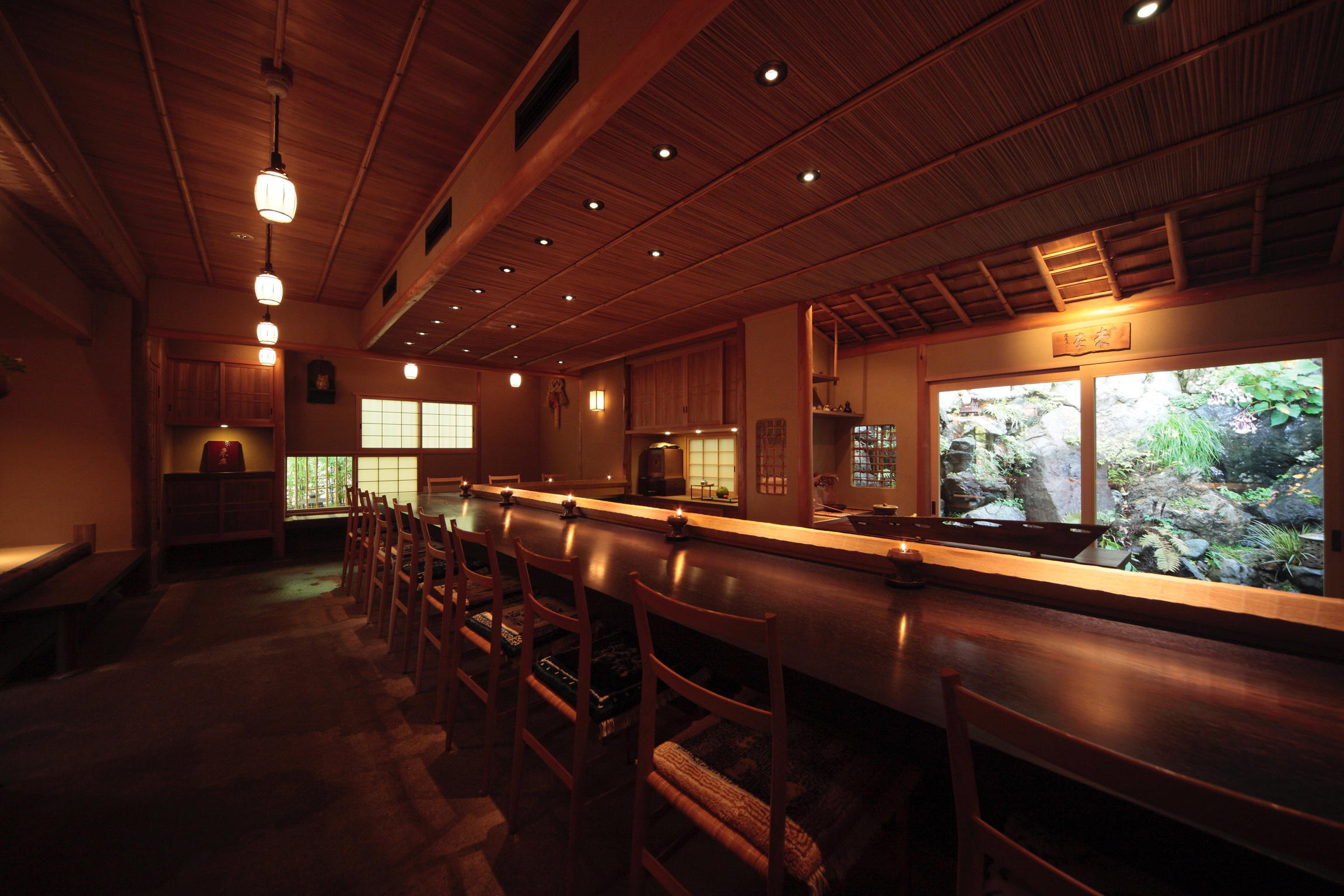
Compact space with natural wood finishes, soft focused lighting, and the constant clean scent of charcoal from the open grill pit, creating a simple, engaging atmosphere centered on the cooking.