

Tabelog 100 #20
Our verdict
Kaoru HIROO occupies a quiet address in Minamiazabu, one of Tokyo's more considered dining neighbourhoods, where proximity to Hiroo and Azabu-Juban's established restaurant corridor shapes expectations before you enter. The wine program here operates as a primary point of differentiation in a city where cellar curation increasingly separates serious destination restaurants from their peers. For visitors working through Tokyo's upper dining tier, this is a worthwhile stop alongside the Minato ward circuit.

Pearl is the En Primeur Club membership app, where members save venues, book tables and use the concierge.
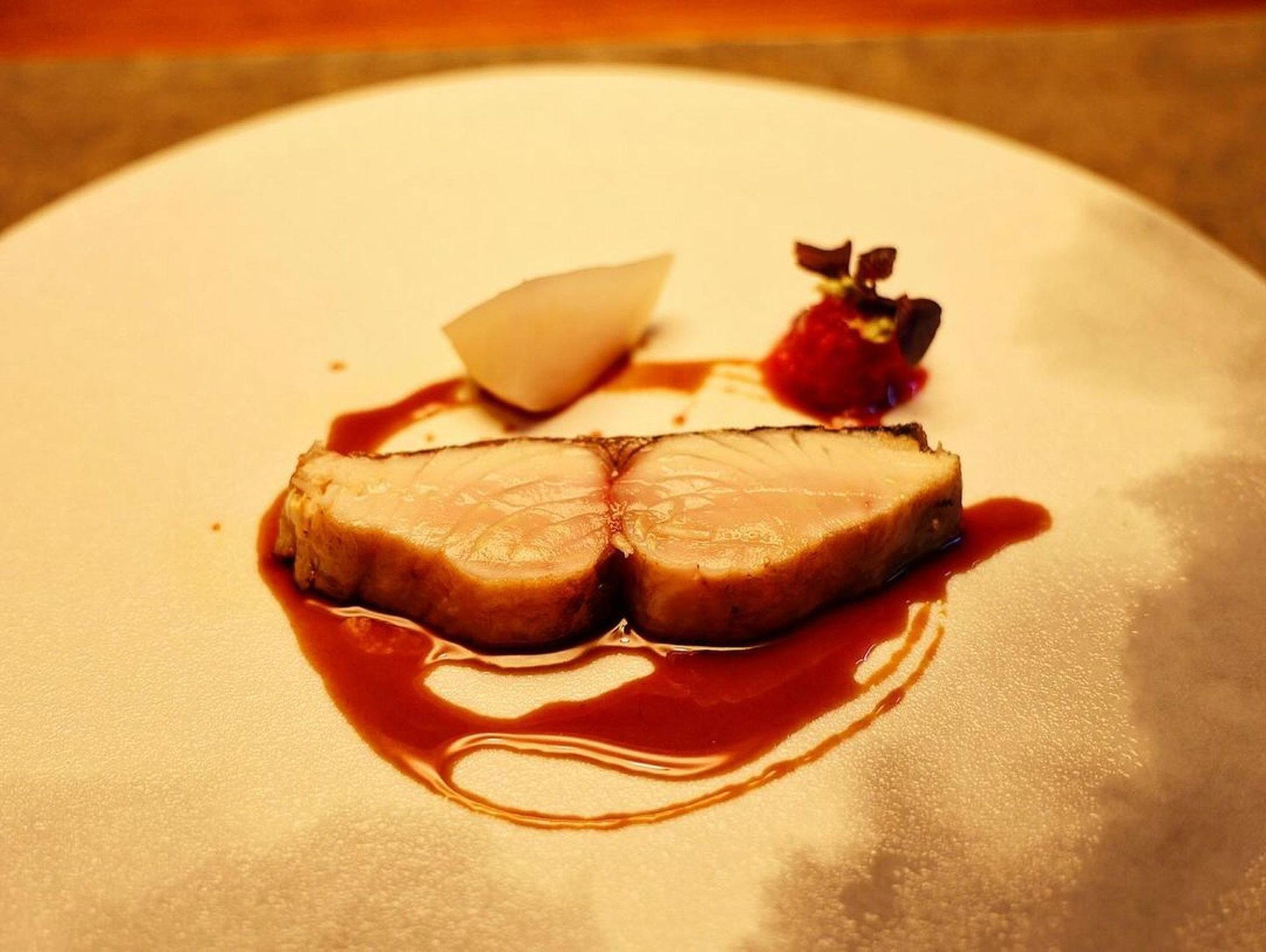
The menu
What to order
- Straw-Grilled Yellowtail
- Ezo Deer Cutlet
- Shirogane Pork Hamburger Steak
- Eel Risotto
- Grilled Yonezawa Beef
Minamiazabu and the Restaurants That Take Wine Seriously
Tokyo's restaurant geography rewards attention. The area around Hiroo and Minamiazabu, stretching south from the embassies toward Azabu-Juban, has developed a particular character over the past decade: it draws restaurants where the room is quiet, the service is considered, and the supplementary programs, especially wine, carry as much weight as the cooking itself. Kaoru HIROO, at 4 Chome-5-66 Minamiazabu in Minato City, sits inside that neighbourhood logic. The address places it in a residential corridor rather than a high-traffic dining strip, which filters the clientele toward guests who have sought it out rather than stumbled upon it.
In Tokyo's wider fine dining picture, the most interesting shift of the past several years has not been in the kitchens, Japanese technique has remained among the most disciplined in the world, but in how restaurants have approached the glass. The city's top-tier establishments now operate alongside some of the deepest and most curatorially ambitious wine programs outside of Paris and New York. That development has been particularly pronounced in the ¥¥¥¥ tier, where venues like L'Effervescence and Sézanne have set a high reference point for what cellar depth and sommelier engagement look like at a serious level.
The Wine Program as Architecture
In restaurants where cooking quality converges across the top tier, wine programs increasingly function as the variable that defines a meal's character. A kitchen operating at a high level can produce a technically sound menu; what separates a forgettable evening from one that rewards discussion afterward is usually what happens in the glass, how the sommelier reads the table, and whether the cellar reflects genuine curation or merely signals prestige through recognisable labels.
The most compelling wine programs in Tokyo's ¥¥¥¥ bracket share a few recognisable traits: they tend to favour smaller producers over appellation marquee names, they maintain depth in both Burgundy and the wines of lesser-visited French regions, and they are staffed by sommeliers who treat pairings as an interpretive act rather than a formulaic sequence. This is the tradition Kaoru HIROO works within. Minamiazabu's restaurant cluster, adjacent to the diplomatic belt, has historically served an international clientele comfortable with European wine culture at a high level, and the area's restaurants have responded accordingly.
Across Tokyo's wider wine-forward scene, the comparisons worth making are instructive. Crony, in its innovative French register, has built a following partly on the strength of its natural and low-intervention list. RyuGin, operating in kaiseki, demonstrates how a Japanese kitchen can sustain a cellar program at a European standard of depth. What these examples share is the conviction that wine is not supplementary to the meal but structural to it. That is the competitive set Kaoru HIROO operates within.
Situating the Room
The physical approach to a restaurant in a residential Tokyo pocket like Minamiazabu involves a specific kind of quieting. The streets narrow, the commercial noise drops, and the building reveals itself gradually, as a townhouse or a converted ground-floor space rather than a flagged venue. That physical register sets a particular tone before any food or wine arrives: the meal will be deliberate, the pace unhurried, and the attention distributed between what is on the plate and what is in the glass.
This format, the intimate room in a residential Minato address, is one that Tokyo's most serious independent restaurants have gravitated toward as a way to manage both the guest experience and the economics of running a cellar-heavy program. Larger rooms require more covers; more covers compromise the service model that makes wine-forward dining work. The neighbourhood and the scale are, in this sense, editorial choices as much as practical ones.
Where Kaoru HIROO Sits in Tokyo's Dining Progression
For visitors building a Tokyo itinerary across several nights, the Minato ward circuit, which includes Hiroo, Azabu, and Roppongi, offers a meaningful range within the upper dining tier. Harutaka anchors the premium sushi end of that geography. L'Effervescence and Sézanne represent the French fine dining benchmark. Kaoru HIROO occupies a more localised position, one where the neighbourhood itself, rather than a single category or cuisine flag, shapes the experience.
Across Japan, the equivalent exercise of finding restaurants where the wine program elevates the meal structurally is worth pursuing beyond Tokyo. HAJIME in Osaka and Gion Sasaki in Kyoto each demonstrate how Japan's regional dining culture has absorbed European cellar thinking at a serious level. akordu in Nara takes a different approach, pairing Japanese ingredients with a wine philosophy rooted in the Iberian peninsula. Goh in Fukuoka rounds out a national picture of how wine seriousness has dispersed beyond the capital. For context in a broader regional sense, restaurants like 一本木 名川製 in Nanao and 琵琶湖畔 in Takashima illustrate how this approach reaches into smaller cities.
For international comparisons, the tradition Kaoru HIROO works within has strong parallels at Le Bernardin in New York City, where the wine program operates as a co-equal to the kitchen, and at Atomix, which has built its New York reputation partly on the quality of its pairing sequences. The convergence of Japanese precision in the kitchen with European depth in the cellar is not uniquely a Tokyo phenomenon, but Tokyo remains the city where that combination is most consistently available across multiple venues and price points.
Our full Tokyo restaurants guide maps the wider picture across neighbourhoods and categories.
Planning Your Visit
| Venue | Neighbourhood | Cuisine | Price Tier | Booking Lead Time |
|---|---|---|---|---|
| Kaoru HIROO | Minamiazabu, Minato | Not confirmed | Not confirmed | Verify directly |
| L'Effervescence | Nishiazabu | French | ¥¥¥¥ | Several weeks minimum |
| Sézanne | Marunouchi | French | ¥¥¥¥ | 1-2 months ahead |
| Harutaka | Ginza | Sushi | ¥¥¥¥ | 2-3 months ahead |
| Crony | Azabujuban | Innovative French | ¥¥¥¥ | Several weeks |
Kaoru HIROO's address at 4 Chome-5-66 Minamiazabu is accessible from Hiroo Station on the Hibiya Line, the closest subway stop for most visitors arriving from central Tokyo. The residential setting means the venue does not carry signage typical of a commercial dining strip; confirm the exact entrance before travelling. Further regional discoveries worth the detour include 古代山乃 in Sapporo, 庭羽屋 in Nishikawa Machi, Birdland in Sakai, and Bistro Ange in Toyohashi.
Frequently asked questions
Where is Kaoru HIROO in Tokyo?
Kaoru HIROO is located at î4 Chome-5-66 Minamiazabu, Minato City, Tokyo 106-0047, Japan, Tokyo.
Is Kaoru HIROO a good choice for a wine-focused dinner in Tokyo's Minato ward?
Minamiazabu has developed a distinct identity among Tokyo's dining geographies as a neighbourhood where wine programs carry genuine structural weight alongside the kitchen, not as an afterthought. Kaoru HIROO sits within that cluster at 4 Chome-5-66 Minamiazabu, Minato City, placing it among peers where pairing sequences are built into the meal's logic rather than offered as an optional add-on. Confirming the current format directly with the restaurant will clarify whether a wine-led visit aligns with how they currently structure the evening.
How far ahead should I plan for Kaoru HIROO?
Tokyo's upper dining tier in Minato ward, which covers Hiroo, Azabu, and Roppongi, tends to book between three weeks and three months out depending on seat count and day of week. Smaller rooms in residential pockets like Minamiazabu often fill faster than their profile suggests, because word-of-mouth drives demand without the buffer of broad tourist visibility. Reaching out directly as early as possible is the practical approach here.
What do critics highlight about Kaoru HIROO?
Published critical assessments specific to Kaoru HIROO are not in current circulation at the level that would make citation reliable. The Minamiazabu pocket it occupies, 4 Chome, Minato City, has drawn serious editorial attention as a cluster, with reviewers noting that restaurants here tend to prioritise craft over footfall. That context shapes expectations even before the room-specific record fills in.
Quick Comparison
Comparable venues nearby, for context on price, style, and recognition.
| Venue | Cuisine | Price | Awards | Notes |
|---|---|---|---|---|
| Kaoru HIROOThis venue (the venue you are viewing) | Modern Japanese Omakase | $300–500 | Tabelog 100 #20 | Not listed |
| Watanabe | Seasonal Japanese Omakase Counter | $200–300 | Tabelog 100 #31 | Minato |
| たでの葉 | Wild Game Robatayaki | $100–150 | Not listed | Minato |
| すし匠 | Sushi Sho-style Edomae Omakase | $300–500 | Tabelog 100 #49 | Shinjuku |
| 森ふじ | Traditional Japanese Conger Eel | $50–100 | Tabelog Bronze #290 | Shinjuku |
| 3110NZ By LDH Kitchen | Modern Omakase Sushi with Art Gallery | $300–500 | Not listed | Naka-Meguro |
Recognition history
Dated appearances from independent guides and award organizations, with the underlying list record or original source where available.
Opinionated About Dining Top Restaurants in Japan Recommended
Opinionated About Dining
Tabelog 100 #20 · No. 20
Tabelog · Tabelog 100 - Innovative / Creative cuisine - 2025
Continue exploring
More in Tokyo
Restaurants in Tokyo
All restaurants in Tokyo →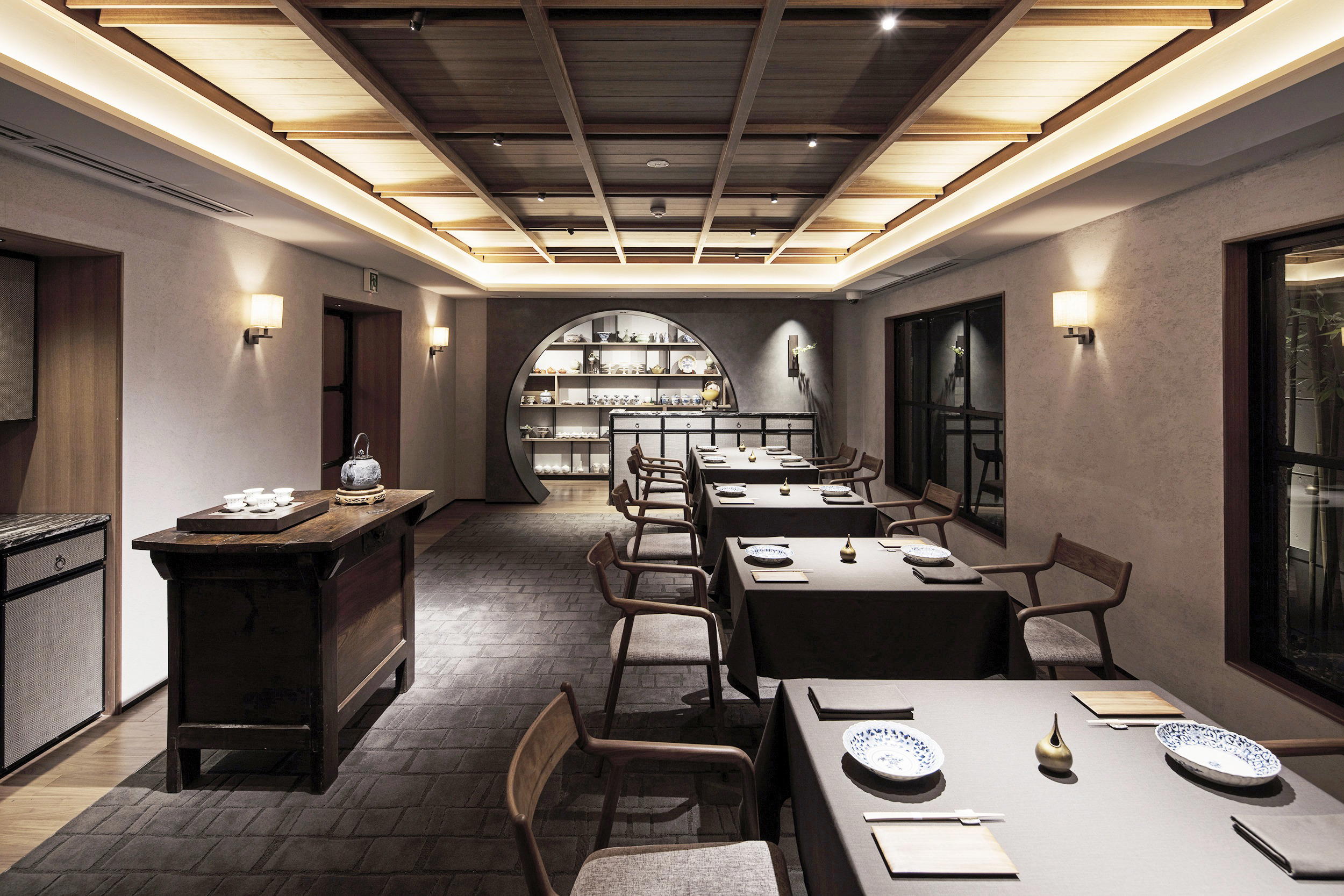


Bars in Tokyo
All bars in Tokyo →






Details
- Intimate
- Elegant
- Modern
- Sophisticated
- Special Occasion
- Date Night
- Chefs Counter
- Open Kitchen
- Sake Program
- Local Sourcing
- Omakase
- Counter Dining
- Tasting Menu
- Sake
- Wine
- Allergy Accommodating
Current opening hours
- Monday
- Closed
- Tuesday
- 5:30–7:30 PM, 8:30–10:30 PM
- Wednesday
- 12–2 PM, 5:30–7:30 PM, 8:30–10:30 PM
- Thursday
- 12–2 PM, 5:30–7:30 PM, 8:30–10:30 PM
- Friday
- 12–2 PM, 5:30–7:30 PM, 8:30–10:30 PM
- Saturday
- 12–2 PM, 5:30–7:30 PM, 8:30–10:30 PM
- Sunday
- Closed
Hours can change for holidays and private events. Hours as of .
Softly lit dining room with smooth hinoki wood, hand-thrown ceramics, and a calm, refined atmosphere that emphasizes ingredient-forward storytelling.