

Michelin Plate · Tabelog 100 #34
Our verdict
A solo-chef operation in Meguro holding a 2025 Michelin Plate, Hatsune runs a tight two-act format: noodle-led lunches anchored by dandan and hot-and-sour ramen, and evening service with à la carte and set menus. The appetiser platter, spring rolls, and the striking Yellow Mapo Tofu with Seafood define the kitchen's range.

Pearl is the En Primeur Club membership app, where members save venues, book tables and use the concierge.
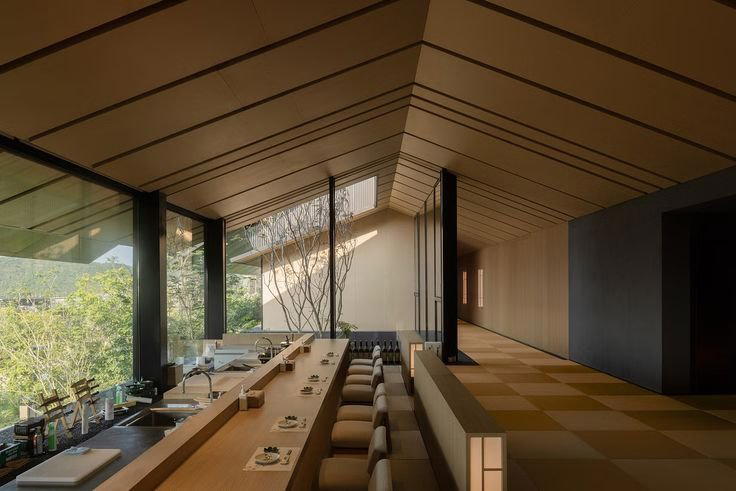
A Single Kitchen, Two Acts
Tokyo's Chinese restaurant scene spans a wider range than most visitors expect. At one end sit the multi-storey banquet houses of Shinjuku and Yokohama's Chinatown; at the other, a scattering of small, chef-operated rooms where the food bears closer resemblance to specialist regional cooking than to any generalised idea of Chinese cuisine. Hatsune, on the second floor of a building in Meguro's residential grid, belongs to the latter category. The setting is compact, the operation is minimal, and the person cooking your food is also the person who sourced the ingredients, prepared the mise en place, and will wash the dishes after you leave.
That kind of singular operation carries its own logic. Without a brigade, the menu must stay disciplined. At Hatsune, discipline takes the form of a clean day-night split: lunch belongs to noodles, evening service opens into a broader à la carte and set menu format. The two halves work independently, but together they sketch a kitchen that knows exactly what it is.
Lunch: Noodles as the Primary Statement
In China's regional noodle traditions, dandan mian and hot-and-sour soups represent two distinct schools of flavour-building. Dandan relies on the slow accumulation of sesame paste, chilli oil, and ground meat against the neutral resilience of the noodle; hot-and-sour soups balance vinegar acidity against white pepper heat in a broth-forward structure. That both appear on Hatsune's lunch menu says something about the kitchen's ambitions. These are not approximations of the dishes; the effort required to make either properly, sourcing the right paste, calibrating the spice level, achieving the correct texture on the noodle, is substantial for a single operator.
The editorial angle usually applied to Chinese food in Tokyo defaults to dim sum craft: bamboo steamers, trolley service, the accumulated ritual of a yum cha morning. Hatsune operates outside that frame entirely. There are no trolleys, no communal steamer baskets passing between tables. What exists instead is a focused, cooked-to-order format where the noodle is the medium through which the kitchen's technique is most legibly expressed. For Tokyo diners who encounter Chinese food primarily through larger dim sum houses like Chugoku Hanten Fureika or Chugoku Hanten Kohakukyu (Amber Palace), Hatsune represents a different register altogether.
Evening: Range Revealed in the Details
Appetiser platter is the item most frequently cited. In a solo kitchen, an appetiser platter is a test of organisation and range: each element requires separate preparation, and the platter must hold together as a coherent whole rather than a loose collection of items. The density of preparation apparent in the platter at Hatsune, multiple components, each requiring distinct technique, is the kind of signal that earns a Michelin Plate recognition, which the restaurant received in the 2025 guide.
Spring rolls occupy an interesting position in Chinese restaurant hierarchies. At the banquet-hall level, they are often perfunctory. In smaller specialist kitchens, they become a vehicle for technique: the wrapper's thickness, the filling's moisture content, the oil temperature during frying. At Hatsune, they are listed as a finger food recommendation, which suggests the kitchen treats them as a composed dish rather than an incidental starter.
The Yellow Mapo Tofu with Seafood is the menu's most discussed outlier. Standard mapo tofu is built on a Sichuan framework: fermented black beans, doubanjiang, ground pork, silken tofu, and the characteristic reddish oil. The yellow variant substitutes seafood for pork and reworks the colour profile, presumably through a different spice or aromatics base, producing something that sits adjacent to the canonical version without replicating it. It is the kind of dish that reflects a kitchen willing to operate in the space between tradition and adaptation, which is itself a characteristically Japanese approach to received culinary forms.
Meguro and the Solo-Chef Format
Meguro, the neighbourhood in which Hatsune operates, is not primarily known as a restaurant district. It sits south of Shibuya without the density of dining destinations that defines Ginza or Roppongi, and its residential character means that most of its better rooms operate for a local clientele rather than on tourist circuits. This is the environment in which solo-chef operations tend to survive: low footfall from passing trade, high repeat-visit rates from a local base who value consistency over novelty.
The solo-chef format has antecedents across Tokyo's dining culture. In the sushi world, eight- and ten-seat counters with a single itamae are the norm at the premium end of the market. In ramen, it is common for the chef to run the entire kitchen alone or with a single assistant. Chinese cooking at this scale is less common, which is part of what positions Hatsune as an outlier within the category. Comparable solo-operator Chinese rooms are a distinct minority in a city where Chinese dining tends toward either large-format banquet operations or fast, affordable noodle counters. For a broader picture of the city's dining options, see our full Tokyo restaurants guide.
For comparison, Tokyo's Michelin-recognised Chinese tables include Ippei Hanten and Koshikiryori Koki, both operating at different scales and price points. Internationally, chefs who have reframed Chinese cooking within a fine-dining context include Brandon Jew at Mister Jiu's in San Francisco and Tim Raue at Restaurant Tim Raue in Berlin, two reference points for how Chinese culinary frameworks translate under rigorous single-kitchen conditions.
Elsewhere in Japan, the full range of recognised dining runs from HAJIME in Osaka and Gion Sasaki in Kyoto to akordu in Nara, Goh in Fukuoka, 1000 in Yokohama, and 6 in Okinawa. For Tokyo-specific planning, our Tokyo hotels guide, bars guide, wineries guide, and experiences guide cover the broader picture. For an adjacent experience in a different register, itsuka offers another small-format Tokyo room worth considering.
Planning Your Visit
Reservations: Booking method not confirmed; contact the restaurant directly to check availability, particularly for evening set menu service. Budget: Priced at ¥¥, placing it well below Tokyo's top-tier tasting menu counters. When to go: Lunch for noodles; evening for the full range including the appetiser platter and à la carte dishes. Address: 3 Chome-11-6 Meguro, Meguro City, Tokyo (2F). Recognition:
Frequently asked questions
What awards or recognition does hatsune have?
hatsune has received recognition including: The chef works alone in this tiny restaurant. At lunchtime the predominant theme is noodle dishes, such as dandan noodles and hot-and-sour ramen. In the evening, both à la carte and set menu dining are available. Be sure to order the appeti….
What should I order at hatsune?
The appetiser platter is the most consistently referenced dish across reviewers and shows the preparation depth a solo kitchen demands. The spring rolls and the Yellow Mapo Tofu with Seafood, which carries an unusual yellow colour from its seasoning base, are also cited by Michelin's 2025 Plate inspectors. At lunch, dandan noodles and hot-and-sour ramen are the primary focus.
What's the pricing like at hatsune?
Pricing at hatsune is listed as ¥¥.
Where exactly is hatsune?
hatsune is located at Japan, 〒153-0063 Tokyo, Meguro City, Meguro, 3 Chome−11−6 目黒ネスト 2F, Tokyo.
Do I need a reservation for hatsune?
Hatsune operates with a single chef in a small second-floor space in Meguro, so capacity is structurally limited. Evening set menu service in particular is likely to fill quickly given the solo-operator format. The booking method has not been publicly confirmed, so check the venue's official channels to check availability before visiting.
What is hatsune known for?
Hatsune is a solo-chef Chinese restaurant in Meguro holding a 2025 Michelin Plate. It runs a deliberate two-act format: noodle-led lunches built around dandan mian and hot-and-sour ramen, and broader evening service with both à la carte and set menu options. The price range sits at ¥¥, positioning it as an accessible but recognised address in Tokyo's Chinese dining scene.
Reputation Context
A quick peer reference to anchor this venue in its category.
| Venue | Cuisine | Price | Awards | Notes |
|---|---|---|---|---|
| hatsuneThis venue (the venue you are viewing) | Modern Omakase Sushi | $300–500 | Michelin Plate · Tabelog 100 #34 | Not listed |
| Harutaka | Edo-Style Omakase Sushi | $200–300 | 3 Michelin Stars · World's 50 Best #76 | Sushi |
| RyuGin | Modern Kaiseki | $500+ | 3 Michelin Stars · World's 50 Best #41 | Kaiseki, Japanese |
| L'Effervescence | Modern French with Japanese Influences | $200–300 | 3 Michelin Stars · World's 50 Best #69 | French |
| HOMMAGE | Modern French with Japanese Influences | $150–200 | 2 Michelin Stars · World's 50 Best #78 | Innovtive French, French |
| MAZ | Innovative Peruvian-Japanese Fusion | $150–200 | 2 Michelin Stars · World's 50 Best #28 | Innovative |
Recognition history
Dated appearances from independent guides and award organizations, with the underlying list record or original source where available.
Michelin Plate
Michelin
Tabelog 100 #34 · No. 34
Tabelog · Tabelog 100 - Ramen - TOKYO - 2025
Full recognition history (5 entries)
Michelin Plate
Michelin
Michelin Plate
Michelin
Tabelog 100 #51 · No. 51
Tabelog · Tabelog 100 - Japanese traditional sweets / Japanese sweets cafe - TOKYO - 2023
Continue exploring
More in Tokyo
Restaurants in Tokyo
All restaurants in Tokyo →


Bars in Tokyo
All bars in Tokyo →




Details
- Intimate
- Elegant
- Cozy
- Sophisticated
- Date Night
- Special Occasion
- Solo
- Chefs Counter
- Sake Program
- Omakase
- Counter Dining
- Sake
Current opening hours
- Monday
- 12–1:30 PM, 6–11 PM
- Tuesday
- Closed
- Wednesday
- 12–1:30 PM, 6–11 PM
- Thursday
- 12–1:30 PM, 6–11 PM
- Friday
- 12–1:30 PM, 6–11 PM
- Saturday
- 12–1:30 PM, 6–11 PM
- Sunday
- 12–1:30 PM, 6–11 PM
Hours can change for holidays and private events. Hours as of .
Clean, minimalistic, and warm home-like atmosphere at a tiny counter seating max 8, with tatami entrance and no shoes allowed.