Gonpachi Shibuya occupies the 14th floor of E-Space Tower in Maruyamacho, placing it within one of Tokyo's most concentrated pockets of izakaya-style dining. The address sits a short walk from Shibuya's main scramble, which means the planning conversation starts before you arrive: Shibuya's higher-floor venues move quickly, and this one is no exception for evening slots.
Pearl is the En Primeur Club membership app — saves, bookings, and concierge access live there. Same editors, same standards.
- Address
- Japan, 〒150-0044 Tokyo, Shibuya, Maruyamacho, 3−6 E-Space Tower, 14F フロアA
- Phone
- +81 50 5443 0489
- Website
- gonpachi.jp
- Directions
- Get directions
 Saves & bookings on Pearl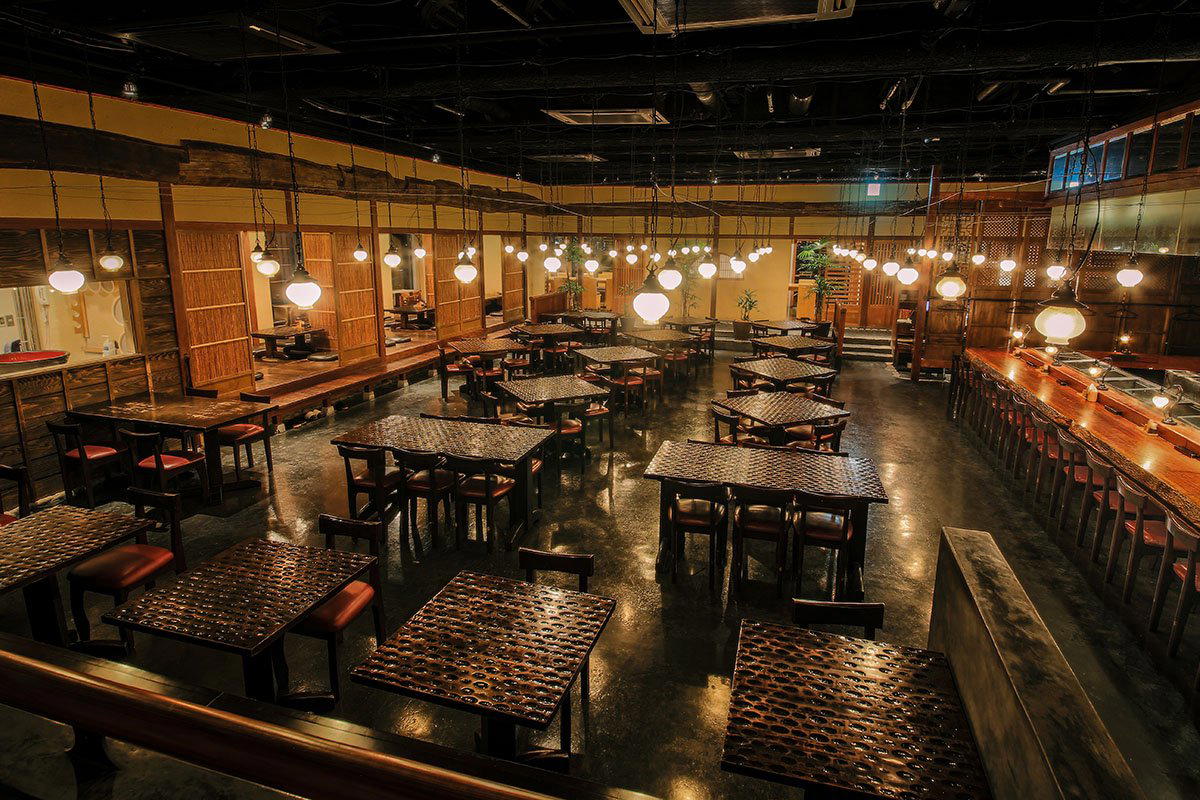
Arriving at the 14th Floor: What the Address Tells You Before You Sit Down
Shibuya's dining scene divides sharply between street-level izakayas packed into Dogenzaka and Udagawacho, and a smaller cluster of refined venues that use verticality as both an architectural and a positioning statement. Gonpachi Shibuya belongs to that second category. The restaurant occupies Floor 14A of E-Space Tower in Maruyamacho, a few minutes on foot from the scramble crossing, and the ascent through the building's lobby functions as a kind of tonal shift, from the compression of the streets below to something more considered above them. In Tokyo, address and floor number are rarely arbitrary signals. Here they do real editorial work.
The Gonpachi name carries specific cultural weight in Tokyo, though not always the kind that concerns serious diners. The brand's association with the Uma Thurman film sequence, reportedly filmed partly with reference to the Nishi-Azabu flagship, has followed it internationally, which means the Shibuya location draws a globally mixed crowd rather than the local regulars-only composition you find at smaller Shibuya izakayas. That is worth knowing before you book, because it shapes the room's energy and the pacing of the evening.
The Booking Question: When to Plan, and Why It Matters
Tokyo's mid-tier to upper-mid-tier restaurant sector has moved decisively toward advance booking over the past several years, and Shibuya venues with any visibility are no exception. For Gonpachi Shibuya, the practical advice is to book at least several days ahead for weekday evenings and further out for Friday and Saturday. Dinner on a weekend without a reservation puts you in competition with both the Shibuya nightlife crowd and visitors working through standard Tokyo itineraries, two pools of demand that converge on this part of the ward every evening.
The venue sits within a broader Shibuya dining tier that is more accessible than the tightly allocated counters you encounter elsewhere in the city. Compare this with the planning required for a seat at Harutaka or the months-ahead coordination that RyuGin demands, and Gonpachi Shibuya sits in a markedly different category, one where planning weeks rather than months is generally sufficient, though not optional. Tokyo's hospitality culture rewards preparation at nearly every price point, and this is not an exception.
For visitors building a broader Japan itinerary, the booking rhythm here differs from destinations like Gion Sasaki in Kyoto or HAJIME in Osaka, where chef-driven prestige formats require significantly more lead time and often a local intermediary. Gonpachi Shibuya operates at a scale where direct booking is realistic for international visitors, which is itself a practical distinction worth understanding.
What the Kitchen Represents in This Part of Shibuya
Gonpachi's broader format is grounded in Japanese robatayaki and izakaya traditions: charcoal-grilled skewers, shared plates, and the kind of menu architecture that rewards groups ordering across the full range rather than individuals working through a fixed sequence. This format positions the venue clearly within a category that contrasts with the omakase-dominant conversation that surrounds Tokyo dining internationally. Where counters like Harutaka compress the experience into a single choreographed progression, the izakaya format is expansive and lateral, more decisions, more variety, and a pace set partly by the table rather than the kitchen.
That structure suits Shibuya specifically. The ward's dining character leans toward energy and variety rather than the contemplative formats that define Minato or Chiyoda at the higher end. Visitors who have spent time at refined counters in other parts of the city, or at equivalents in other Japanese cities like Goh in Fukuoka or akordu in Nara, will recognize the restaurant as operating in a distinct register, one that trades narrow focus for range and accessibility.
For visitors mapping Tokyo against other international dining cities, the robatayaki format here has approximate equivalents in the sharing-plate models at venues like Lazy Bear in San Francisco, though the cultural logic is entirely different: where Lazy Bear's communal format is a deliberate subversion of fine dining convention, Gonpachi's is a continuation of a deep Japanese social eating tradition.
Placing Gonpachi Shibuya Inside Tokyo's Dining Range
Tokyo's restaurant scene spans a wider price and format range than almost any city outside Paris, and understanding where a given venue sits in that range is more useful than evaluating it against an abstract standard. The restaurant occupies the accessible-to-mid tier in Shibuya terms, sitting at a different point on the spectrum from the ¥¥¥¥ destinations that anchor EP Club's Tokyo coverage. Those include L'Effervescence, Sézanne, and Crony, all of which require a different planning posture and deliver a different kind of evening.
For readers building a multi-night Tokyo itinerary, the decision about where the restaurant fits is partly logistical: it works well as an early-week dinner before the weekend competition increases, or as a group evening when the shared format is a practical advantage. Its 14th-floor position in Maruyamacho also makes it a reasonable reference point for the Shibuya neighborhood more broadly, within reach of Daikanyama to the west and the entertainment blocks of Udagawacho to the north.
Readers extending their Japan coverage beyond Tokyo will find relevant reference points throughout our Japan section: aki nagao in Sapporo, affetto akita in Akita, Aji Arai in Oita, Ajidocoro in Yubari District, and Akakichi in Imabari, each representing a distinct regional dining tradition. For coverage of venues at the upper end of the Tokyo range, see our full Tokyo restaurants guide. And for reference points outside Japan, Le Bernardin in New York City illustrates how a different culinary tradition handles the institutional prestige question that Tokyo handles through Michelin density and chef lineage. Abon in Ashiya provides a closer regional comparison for readers triangulating between Tokyo and the Kansai corridor.
Practical Planning
The restaurant is located at 3-6 Maruyamacho, E-Space Tower 14F, Shibuya, Tokyo. The building is accessible from Shibuya Station within a short walk, with multiple exits serving the Maruyamacho direction. Evening reservations for Friday and Saturday should be secured at least a week in advance; midweek slots are more available but should not be left to the day of. The group format is well-suited to tables of four or more, where the breadth of the menu can be properly explored across multiple orders.
Fast Comparison
Comparable venues nearby, for context on price, style, and recognition.
| Venue | Cuisine | Price | Notes |
|---|---|---|---|
| Gonpachi ShibuyaThis venue — the venue you are viewing | Japanese Izakaya with Yakitori & Handmade Soba | $$$ | Not listed |
| Unitora (うに虎) | Sea Urchin Specialty Sushi | $$$ | Tsukiji |
| tonkatsu.jp Omotesando | Modern Tonkatsu & Rare Japanese Pork | $$$ | Minato |
| Niku Gatou Roppongi hiruzu ten | Modern Wagyu Yakiniku | $$$ | Minato |
| りゅうの介 | Japanese Seafood | $$$ | Minato |
| Sumibi Yakiniku Horumon Maruha | Charcoal-grilled wagyu & horumon yakiniku | $$$ | Shinagawa |












At a Glance
- Well Known
- Lively
- Elegant
- Scenic
- Date Night
- Business Dinner
- Group Dining
- Celebration
- After Work
- Late Night
- Private Event
- Private Dining
- Panoramic View
- Open Kitchen
- Design Destination
- Sake Program
- Craft Cocktails
- Beer Program
- Local Sourcing
- Skyline
Current opening hours
- Monday
- 11:30 AM–3:30 AM
- Tuesday
- 11:30 AM–3:30 AM
- Wednesday
- 11:30 AM–3:30 AM
- Thursday
- 11:30 AM–3:30 AM
- Friday
- 11:30 AM–3:30 AM
- Saturday
- 11:30 AM–3:30 AM
- Sunday
- 11:30 AM–3:30 AM
Hours can change for holidays and private events. Last verified .
Spacious multi-floor interior with wooden features, bamboo, lanterns, and Japanese architectural elements creating an Edo-period aesthetic with modern sophistication; warm wood tones and gentle lighting in sushi sections.