Michelin Bib Gourmand
Our verdict
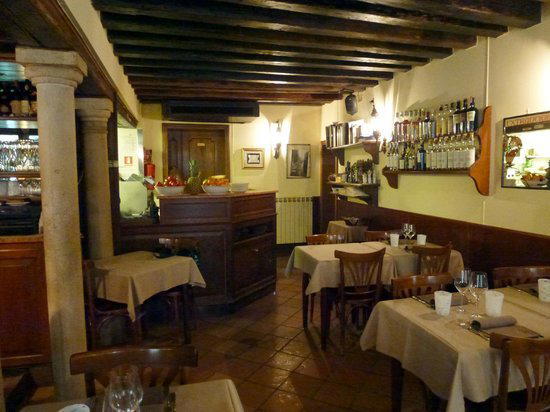
A Michelin Plate-recognised trattoria in Setagaya, Gigio sits a short walk from Shoin Shrine and occupies a stone-walled room designed after Tuscan interiors. The à la carte menu ranges across Italian regional traditions, with pici in tomato ragú and vegetable sformato among the anchoring dishes. At the ¥¥ price point, it represents one of Tokyo's more considered mid-range arguments for Italian cooking outside the central districts.

Pearl is the En Primeur Club membership app, where members save venues, book tables and use the concierge.
Stone Walls in Setagaya: How Tokyo's Residential Neighbourhoods House Italy's Daily Cooking
Tokyo's Italian dining scene splits along a fairly clear fault line. On one side sit the flagship European imports and high-concept tasting menus: restaurants like Aroma Fresca, Gucci Osteria da Massimo Bottura Tokyo, and PRISMA, all occupying central real estate and pricing to match. On the other side sit the trattorie, a category often overlooked in the city's dining conversation precisely because the format resists spectacle. Gigio belongs to the second group. Situated in Setagaya's Wakabayashi district, steps from Shoin Shrine, it operates in the register of Italian daily life rather than Italian occasion dining.
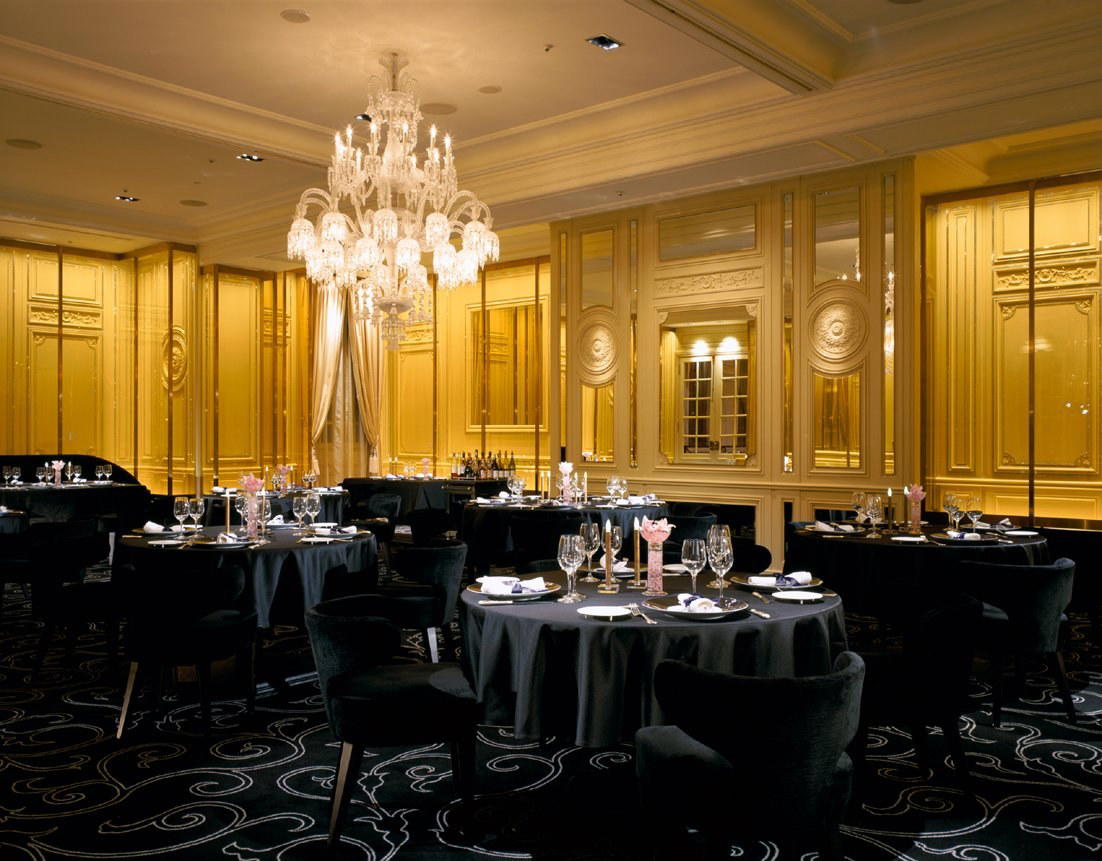
The physical space signals this immediately. Tuscan-style stone walls and a marble bar counter set the room's tone before a single dish arrives. This is not the neutral white-tablecloth formality that defines Tokyo's higher-end European dining tier, nor the pared-back minimalism favoured by the city's Japanese-European hybrids. It is a deliberate evocation of regional Italian interior character, the kind of environment in which à la carte dining feels natural rather than, and where the meal's pace belongs to the guest rather than the kitchen's ticketing rhythm.
À La Carte as Position, Not Afterthought
In a Tokyo dining environment where tasting menus have become the dominant format across fine and near-fine dining alike, the explicit encouragement of à la carte ordering at Gigio reads as a statement of culinary identity. Italy's regional trattorie tradition is built on choice: the ability to order a bowl of pici because that is what you want tonight, not because it follows a composed sequence designed to demonstrate technique. Gigio's comprehensive menu, spanning regional Italian cuisines, is structured around that same logic.
The progression through a meal here reflects how trattorie actually function in their home context. The sequence begins with antipasti designed to establish appetite rather than to impress, moves through pasta dishes carrying the weight of the meal's substance, and arrives at secondi and contorni that complete rather than escalate. That architecture is worth understanding before you sit down, because it invites a different mode of eating from what Tokyo's tasting-menu culture has normalised.
Following the Meal: Pici, Ragú, and the Flavours of the Italian Countryside
The dishes recorded by the Michelin 2025 inspection reflect this philosophy with precision. Pici served with tomato ragú carrying substantial garlic through the sauce is pasta in its most direct form: hand-rolled, thick, without the textural delicacy that signals technical intervention. The point is flavour density and honesty of preparation, not refinement. In the context of Tokyo Italian cooking, where technique and presentation standards are high across even mid-range venues, a dish like this registers as a considered choice to resist those pressures.
Vegetable sformato extends the same logic. The Italian sformato, an oven-set preparation that sits between a flan and a savory pudding, is one of those preparations that travels poorly when separated from its regional context. It requires restraint rather than flourish. In Setagaya rather than Aoyama, in a stone-walled room rather than a glass-and-steel tower, the dish has room to be what it is.
The Michelin Plate recognition (2025) signals that the cooking here clears the threshold of technical competence and culinary identity that the guide uses to separate recommended restaurants from the general field, without carrying the starred ranking that would reposition the venue's pricing and audience expectations. For Italian trattoria cooking specifically, the Plate may be the more honest designation: it rewards consistent quality and regional authenticity rather than the kind of creative ambition that earns stars.
Setagaya and the Geography of Tokyo's Neighbourhood Dining
Understanding Gigio requires understanding why its postcode matters. Setagaya is one of Tokyo's most populated wards, a residential area characterised by low-rise density, local commerce, and a dining culture oriented around regular neighbourhood use rather than destination visits. The proximity to Shoin Shrine, a local Shinto site dedicated to Yoshida Shoin, places the restaurant in a community with a strong sense of local identity.
Restaurants in this kind of Tokyo neighbourhood occupy a different position in the city's dining ecology from their central counterparts. They earn loyalty through consistency and value rather than through novelty or prestige signalling. The ¥¥ price designation at Gigio aligns with this context: mid-range by Tokyo standards, which means accessible relative to the Italian fine dining tier represented by AlCeppo or Principio, while still operating at a quality level that warrants the Michelin Plate. The comparison is instructive: for the price bracket, this is what recognition looks like when the category is trattoria rather than ristorante.
Tokyo's interest in Italian regional cooking is not new. What distinguishes venues like Gigio is not the novelty of Italian food in Japan but the fidelity to a format, the neighbourhood trattoria, that does not travel as legibly as the higher-profile formats. For comparable Italian cooking rooted in regional tradition elsewhere in Japan, cenci in Kyoto operates in a similarly considered register, and in Hong Kong, 8 1/2 Otto e Mezzo Bombana represents the more formally ambitious end of the same Italian-in-Asia conversation.
For a broader map of where Gigio sits within Tokyo's dining options, our full Tokyo restaurants guide covers the city's range across price tiers and cuisines. If you're planning a wider trip, our full Tokyo hotels guide, bars guide, wineries guide, and experiences guide map the city's wider offer. For regional Japanese dining context, HAJIME in Osaka, Gion Sasaki in Kyoto, akordu in Nara, Goh in Fukuoka, 1000 in Yokohama, and 6 in Okinawa round out the picture of serious dining across the archipelago.
Planning a Visit
The table below positions Gigio against a selection of reference points in Tokyo's dining tier:
| Venue | Cuisine | Price | Recognition | Format |
|---|---|---|---|---|
| Gigio | Italian (regional trattoria) | ¥¥ | Michelin Plate 2025 | À la carte |
| Den | Innovative Japanese | ¥¥¥ | Michelin 2 Stars | Tasting menu |
| RyuGin | Kaiseki | ¥¥¥¥ | Michelin 3 Stars | Tasting menu |
| Harutaka | Sushi | ¥¥¥¥ | Michelin 3 Stars | Omakase counter |
| L'Effervescence | French | ¥¥¥¥ | Michelin 3 Stars | Tasting menu |
Gigio is located at 4 Chome-24-19 Wakabayashi, Setagaya City, Tokyo 154-0023, a short walk from Shoin Shrine and accessible from Setagaya line stations.
Frequently asked questions
Where is Gigio in Tokyo?
Gigio is located at 4 Chome-24-19 Wakabayashi, Setagaya City, Tokyo 154-0023, Japan, Tokyo.
What does dinner at Gigio typically cost?
Pricing at Gigio is listed as ¥¥.
What kind of recognition has Gigio received?
Gigio has received recognition including: A trattoria where à la carte dining is encouraged with a comprehensive menu of regional cuisines. Pici served with tomato ragú laden with garlic and vegetable sformato are all flavours learned in the Italian countryside. A marble bar counte….
What's the signature dish at Gigio?
The Michelin 2025 inspection singles out pici with tomato ragú as a defining plate, hand-rolled Tuscan pasta carrying garlic-forward ragú that references the Italian countryside directly. Vegetable sformato also appears in the inspection record, reflecting the same countryside-rooted approach. Both dishes sit within an à la carte menu that spans regional Italian cooking rather than a single fixed format.
What type of food is Gigio known for?
Should I book Gigio in advance?
Gigio holds a Michelin Plate (2025) and sits in Setagaya, a residential ward where neighbourhood restaurants with recognised credentials fill quickly among local regulars. Booking ahead is advisable, particularly for evening sittings. Contact details are not listed publicly, so checking via local reservation platforms or visiting in person to enquire is the practical approach.
Same-City Peers
| Venue | Cuisine | Price | Awards | Notes |
|---|---|---|---|---|
| GigioThis venue (the venue you are viewing) | Regional Italian Trattoria | $50–100 | Michelin Bib Gourmand | Not listed |
| Harutaka | Edo-Style Omakase Sushi | $200–300 | 3 Michelin Stars · World's 50 Best #76 | Sushi |
| RyuGin | Modern Kaiseki | $500+ | 3 Michelin Stars · World's 50 Best #41 | Kaiseki, Japanese |
| L'Effervescence | Modern French with Japanese Influences | $200–300 | 3 Michelin Stars · World's 50 Best #69 | French |
| HOMMAGE | Modern French with Japanese Influences | $150–200 | 2 Michelin Stars · World's 50 Best #78 | Innovtive French, French |
| MAZ | Innovative Peruvian-Japanese Fusion | $150–200 | 2 Michelin Stars · World's 50 Best #28 | Innovative |
Recognition history
Dated appearances from independent guides and award organizations, with the underlying list record or original source where available.
Michelin Bib Gourmand
Michelin
Full recognition history (2 entries)
Michelin Plate
Michelin