Our verdict
This listing is retired after a June 2026 status audit found the place inactive at its stored address.
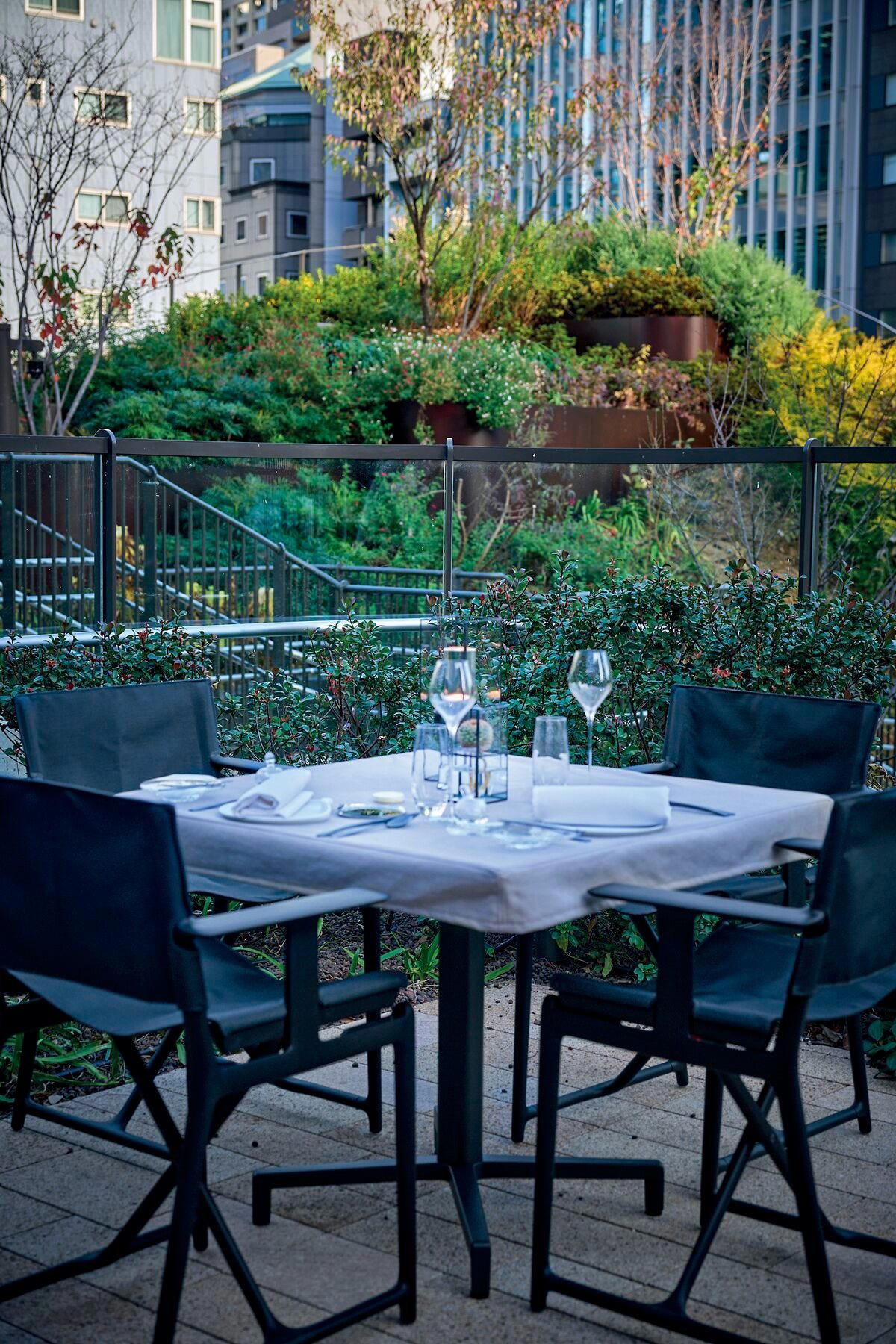
Azabudai Hills and the Repositioning of Tokyo's Fine Dining Geography
When the Azabudai Hills complex opened in late 2023, it did not simply add retail and office space to Minato's already dense fabric. It reorganised the gravitational pull of premium dining in the city's western arc, drawing a cohort of upper-bracket restaurants into a single address and, in doing so, creating a new competitive reference point. ル・サロン・プリべ, located on the second floor of Garden Plaza A at 5-8-1 Toranomon, arrived inside that context.
Tokyo's French-influenced private dining tier has historically concentrated in Minami-Aoyama, Roppongi, and pockets of Ginza. The arrival of significant culinary investment in the Toranomon-Azabudai corridor introduces a third pole. Venues in this newer cluster compete not on neighbourhood legacy but on the quality of their physical environment and the coherence of the experience they construct around a meal. That is a different brief, and it rewards venues that think in terms of total hospitality rather than kitchen output alone.
The Service Architecture of the Private Room Format
The salon privé format, borrowed from European private dining tradition, operates on a different logic than an open-room restaurant. The separation of guests from the wider dining room shifts the balance of the experience: the sommelier and front-of-house team become the primary mediators of pace and atmosphere rather than the kitchen pass alone. In Tokyo, this format has found particular traction among corporate and celebratory diners who prioritise discretion, but it has also attracted a generation of guests who want the meal structured around conversation rather than spectacle.
What distinguishes the better practitioners of this format across Tokyo is the integration between the beverage program and the service rhythm. At properties where the sommelier operates in genuine collaboration with the floor team, the meal's pacing can be modulated in real time: a second glass held back, a course slowed, a digestif introduced early. This kind of coordination requires rehearsal and trust between roles, and it is one reason why team continuity matters more in private room formats than in high-turnover open dining rooms. For comparison, L'Effervescence and Sézanne have each built reputations partly on this integration, with beverage directors who function as co-authors of the guest experience rather than supporting cast.
Where This Venue Sits in Tokyo's Premium Tier
Tokyo's premium dining market is stratified enough that peer-set placement matters more than it does in most other cities. At the upper end, Michelin three-star counters like Harutaka operate on omakase logic, where the chef's sequencing is the experience. The kaiseki tradition, represented by venues such as RyuGin, grounds luxury in seasonal Japanese produce and centuries of codified technique. French-influenced rooms like Crony occupy an innovative middle ground, applying French structure to local ingredients with less formal constraint.
The salon privé model sits adjacent to all of these but competes most directly with private dining rooms embedded in major hotels and the upper floors of department stores. Its distinguishing proposition is exclusivity of space rather than exclusivity of technique, which means the guest experience depends more heavily on who is in the room with you and whether the team running the evening can hold the standard across a full booking cycle. That is an operational challenge that pure kitchen-led restaurants do not face in the same way.
For readers planning travel across Japan's broader fine dining circuit, the contrast between Tokyo's European-influenced private formats and what regional kitchens offer is instructive. HAJIME in Osaka applies a rigorous, ecological framework to its menus; Gion Sasaki in Kyoto works within kaiseki's seasonal grammar; akordu in Nara brings a cross-cultural lens to Japanese ingredients. Each of these frames an evening around a different organising principle. The salon format in Tokyo is, by contrast, deliberately neutral in its culinary identity, which gives it flexibility but requires the team to supply the evening's coherence through service rather than concept.
The Azabudai Hills Effect on Booking and Timing
Complexes like Azabudai Hills tend to generate their own booking patterns in the first two to three years after opening. Demand is driven initially by novelty and media attention, then settles into a rhythm dictated by repeat corporate clients and occasion-based bookings from individuals. For venues in this position, the autumn and winter quarter typically sees the heaviest demand, as end-of-year entertaining concentrates in the final months of the calendar. Visitors planning a meal at ル・サロン・プリべ should factor this seasonality into their timeline, particularly for December bookings, when Tokyo's corporate dining calendar compresses and availability across the premium tier tightens across the city.
Japan's broader dining calendar rewards early planning. For reference, high-demand rooms in the Minato and Roppongi corridor typically require reservations of four to eight weeks in advance during quieter months, extending to twelve weeks or more for December and the spring cherry blossom window. Venues embedded in major developments can attract both organic demand and group bookings, which further constrains last-minute availability.
Beyond Tokyo, the editorial extends to Goh in Fukuoka and regional venues including 一本杉川島料亭 in Nanao, 古代山乃幸 in Sapporo, 湖畔荘 in Takashima, 若鮎屋 in Nishikawa Machi, Birdland in Sakai, and Bistro Ange in Toyohashi. For international comparison points in the private dining and collaborative service category, Le Bernardin in New York City and Atomix in New York City offer useful reference frames for how team-led hospitality operates at the upper end of the market.
Planning Your Visit
Comparable Spots
Comparable venues nearby, for context on price, style, and recognition.
| Venue | Cuisine | Price | Awards | Notes |
|---|---|---|---|---|
| ル・サロン・プリべThis venue — the venue you are viewing | Modern French Fine Dining | Not listed | Not listed | Not listed |
| ル・ブルギニオン | Classic Burgundy French | $100–150 | Michelin Plate · Tabelog 100 #60 | Minato |
| ナオト ケイ | Modern French Omakase | $200–300 | Tabelog 100 #63 | Chiyoda |
| ラ・ブーシェリー・デュ・ブッパ | French Wild Game Brasserie | $150–200 | Not listed | Meguro |
| ボンシュマン | Modern French with Japanese Influences | $50–100 | Michelin Plate | Meguro |
| Paris Yugao | Neo-French Japonism & Teppanyaki in Ginza | $150–200 | Tabelog 100 #18 | Chūō |
Continue exploring
More in Tokyo
Restaurants in Tokyo
All restaurants in Tokyo →
Bars in Tokyo
All bars in Tokyo →



Details
- Serene
- Elegant
- Sophisticated
- Intimate
- Modern
- Date Night
- Special Occasion
- Open Kitchen
- Private Dining
- Sake Program
- A La Carte