Situated on the fourth floor of a low-key building in Ebisuminami, 恵比寿えんどう occupies a quieter register than the headline counters of Ginza or Roppongi. The address places it within Ebisu's established dining corridor, where smaller, format-driven rooms have accumulated a reputation distinct from the city's trophy-restaurant tier.
Pearl is the En Primeur Club membership app — saves, bookings, and concierge access live there. Same editors, same standards.
- Address
- Japan, 〒150-0022 Tokyo, Shibuya, Ebisuminami, 1 Chome−17−2 Rホール 4F
- Phone
- +81363031152
- Website
- ebisu-endo.jp
- Directions
- Get directions
 Saves & bookings on Pearl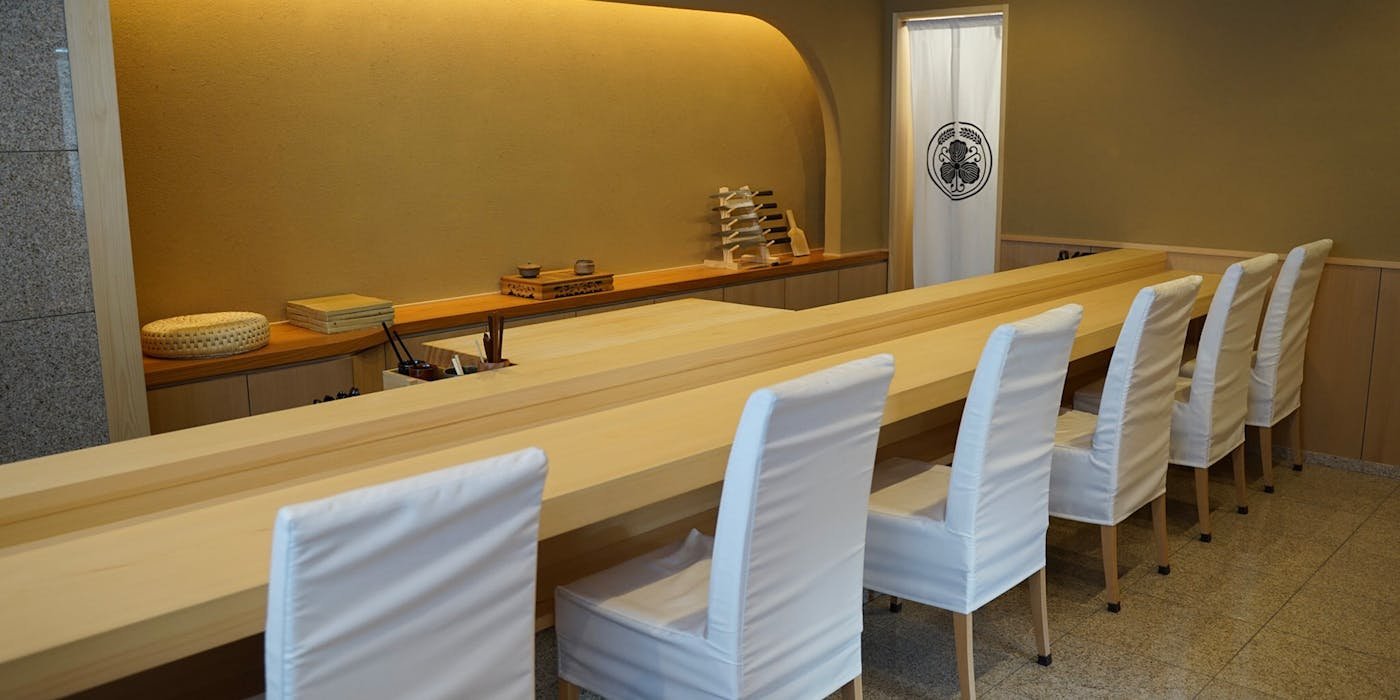
Ebisu's Quieter Dining Register
Tokyo's premium restaurant geography has consolidated around a handful of postcode clusters: Ginza for omakase, Roppongi for international-facing kaiseki, Azabu-Juban for French. Ebisu sits slightly apart from that hierarchy. The neighbourhood built its dining reputation incrementally, through mid-sized rooms and chef-led projects that attract locals as readily as destination diners. 恵比寿えんどう, addressed at Ebisuminami 1-chome on the fourth floor of R Hall, belongs to that pattern: a venue positioned within a residential-commercial pocket that keeps foot traffic selective and atmosphere self-contained.
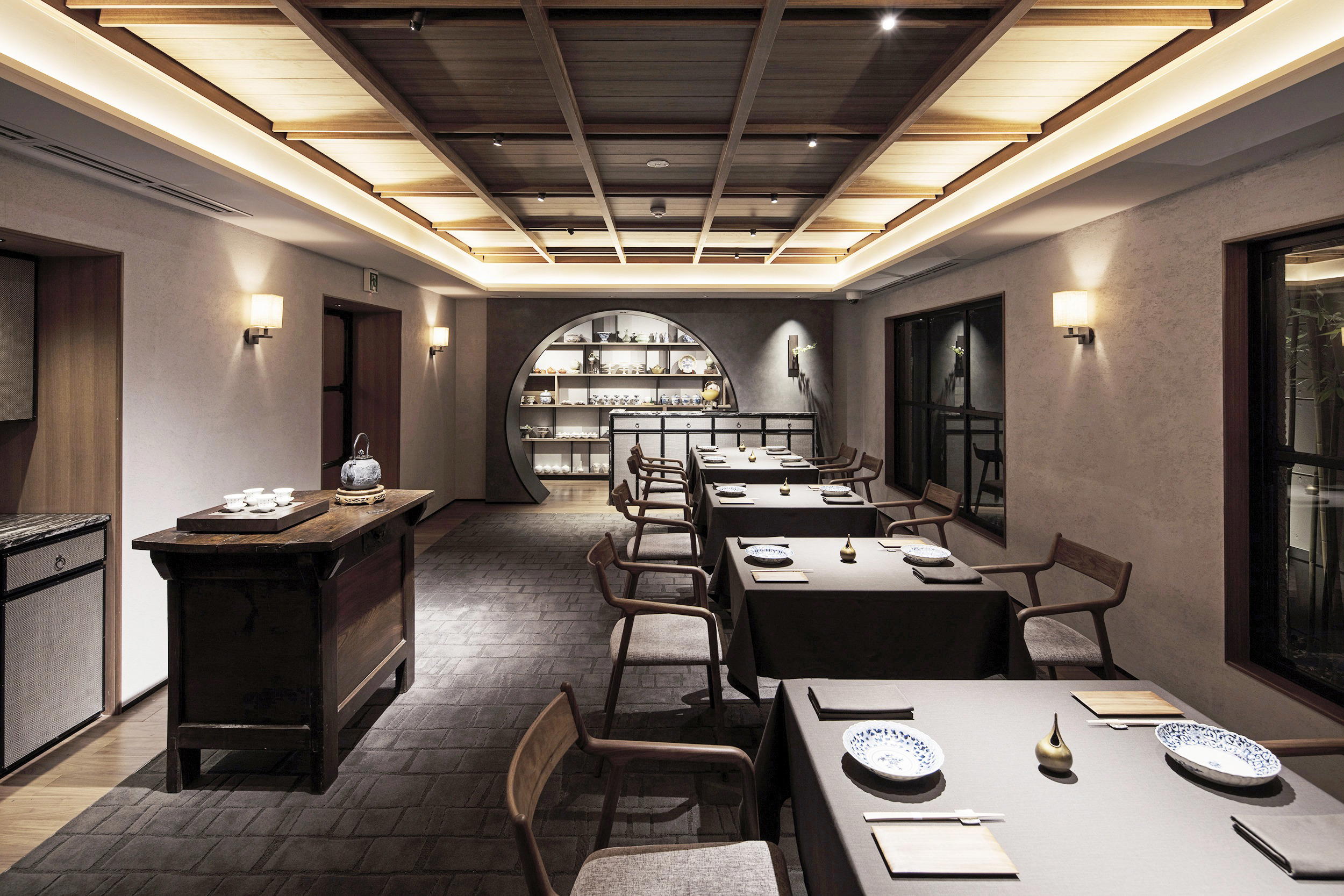
That vertical placement matters atmospherically. Fourth-floor dining in Tokyo has its own character: the street noise drops away, the sightlines shift, and the room becomes its own closed system rather than an extension of the pavement below. Venues like Crony in nearby Minami-Aoyama demonstrate how that kind of spatial remove can support a more concentrated dining atmosphere. The trade-off is reduced walk-in visibility, which tends to filter the room toward guests who sought the address out deliberately.
The Sensory Logic of the Space
Ebisuminami's built fabric runs toward mid-century commercial blocks repurposed for food and retail, which produces rooms that are typically compact, acoustically intimate, and lit at a register more suited to conversation than spectacle. This is the atmospheric counterpoint to the high-ceilinged kaiseki formats of somewhere like RyuGin or the studied minimalism of L'Effervescence in Nishi-Azabu. Where those venues deploy space as a deliberate signal of occasion, smaller rooms in Ebisu neighbourhoods tend to make proximity their aesthetic, with sound contained, scent carried further, and the gap between kitchen and table reduced to something genuinely close.
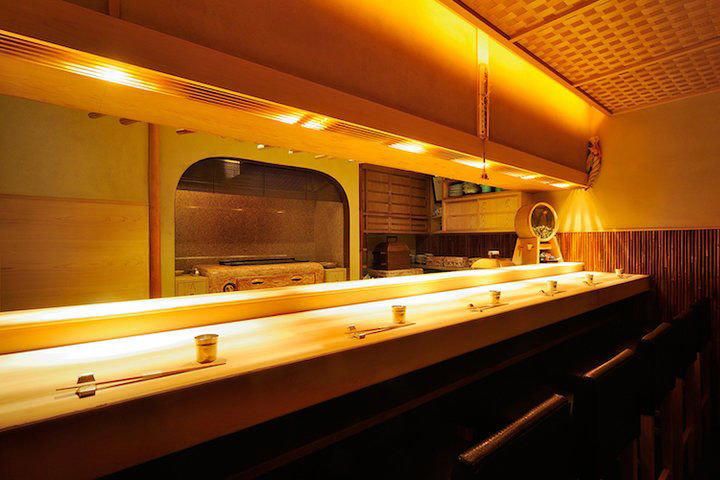
That sensory compression suits formats built around sequence and detail rather than ceremony and scale. Tokyo has a long tradition of small-room dining where the physical intimacy of the space is part of how the food registers: the warmth of a counter, the sound of a knife on board, the ambient heat from a live grill, the smell of dashi before the bowl arrives. Whether 恵比寿えんどう deploys that logic or works against it is information the room itself would answer quickly on arrival.
Where This Address Sits in the Tokyo Dining Picture
Tokyo's dining scene has stratified sharply over the past decade. At the upper tier, counters like Harutaka in Ginza operate at price points and booking lead times that function as their own form of curation. Below that, a broader mid-tier of serious, format-driven restaurants in residential neighbourhoods has become the more interesting editorial space: less performed, often more technically focused, and accessible at booking windows that don't require a three-month calendar horizon.
Ebisu and its adjoining addresses sit in that second tier by geography if not necessarily by ambition. The neighbourhood has attracted serious food investment without becoming a destination circuit in the way Ginza has, which keeps the texture of an evening there different: fewer groups on restaurant tours, more regulars, a lower baseline noise level. For visitors working through Tokyo's wider dining geography, this part of Shibuya-ku offers a counterpoint to the set-piece experiences available further east. Venues across Japan worth holding alongside any Tokyo planning include HAJIME in Osaka, Gion Sasaki in Kyoto, and akordu in Nara for anyone building an itinerary around Japan's serious restaurant corridor.
Other regional points of comparison include Goh in Fukuoka, 一本木 長谷川 in Nanao, 古市庵久乃 in Sapporo, 湖畔荘 in Takashima, and 庄羽屋 in Nishikawa Machi. For international frame of reference, Le Bernardin in New York City and Atomix in New York City represent how upper-tier tasting formats operate outside Japan, while Birdland in Sakai and Bistro Ange in Toyohashi show how serious dining has spread well beyond Japan's major cities. Sézanne in Tokyo's Four Seasons Marunouchi remains the clearest benchmark for French-influenced precision at the Tokyo apex.
Planning a Visit
恵比寿えんどう is a restaurant in Tokyo's Ebisuminami district serving Edomae Omakase Sushi. The venue sits on the fourth floor at R Hall 4F, Ebisuminami 1-17-2, Shibuya, Tokyo, 150-0022, Japan. The physical address is R Hall 4F, Ebisuminami 1-17-2, Shibuya, Tokyo. Visitors should plan ahead. Reservations are essential, and the venue is priced at about $300 per person.
Price and Recognition
Comparable venues nearby, for context on price, style, and recognition.
| Venue | Cuisine | Price | Notes |
|---|---|---|---|
| 恵比寿えんどうThis venue — the venue you are viewing | Shibuya, Edomae Omakase Sushi | $$$$ | Not listed |
| Akasaka Asada | Not listed | $$$$ | Akasaka, Traditional Kaga Kaiseki (Ryotei) |
| 焼肉 いぶさな | Not listed | $$$$ | Shibuya (Yoyogi/Sendagaya), Heritage Wagyu Yakiniku |
| Atelier Morimoto XEX | Not listed | $$$$ | Minato, Modern Japanese Teppanyaki and Edomae Sushi |
| Higuchi | Shibuya, Modern Japanese Kappo Omakase | $$$$ | Not listed |
| Chidori | Not listed | $$$$ | Minato, Chicken Omakase (Toriryori) Counter |












At a Glance
- Intimate
- Sophisticated
- Special Occasion
- Date Night
- Chefs Counter
- Sake Program
Current opening hours
- Monday
- 12 PM–12 AM
- Tuesday
- 12 PM–12 AM
- Wednesday
- 12 PM–12 AM
- Thursday
- 12 PM–12 AM
- Friday
- 12 PM–12 AM
- Saturday
- 12 PM–12 AM
- Sunday
- 12 PM–12 AM
Hours can change for holidays and private events. Last verified .
Intimate 8-seat counter setting in a quiet 4th-floor location, focused on the sushi experience with simple, essential atmosphere.