Our verdict
Yakiniku いぶさな occupies a Yoyogi address in Shibuya-ku, where Tokyo's neighbourhood-level grilling culture operates well below the noise of the city's Michelin circuit. The format is intimate, centred on charcoal and smoke rather than ceremony. For travellers who want to understand how central Tokyo actually eats — unpretentious, precise, and anchored in ritual — this is a useful reference point.

Pearl is the En Primeur Club membership app — saves, bookings, and concierge access live there. Same editors, same standards.
- Address
- 代々木4-10-7, 渋谷区, 東京都, 151-0053
- Directions
- Get directions
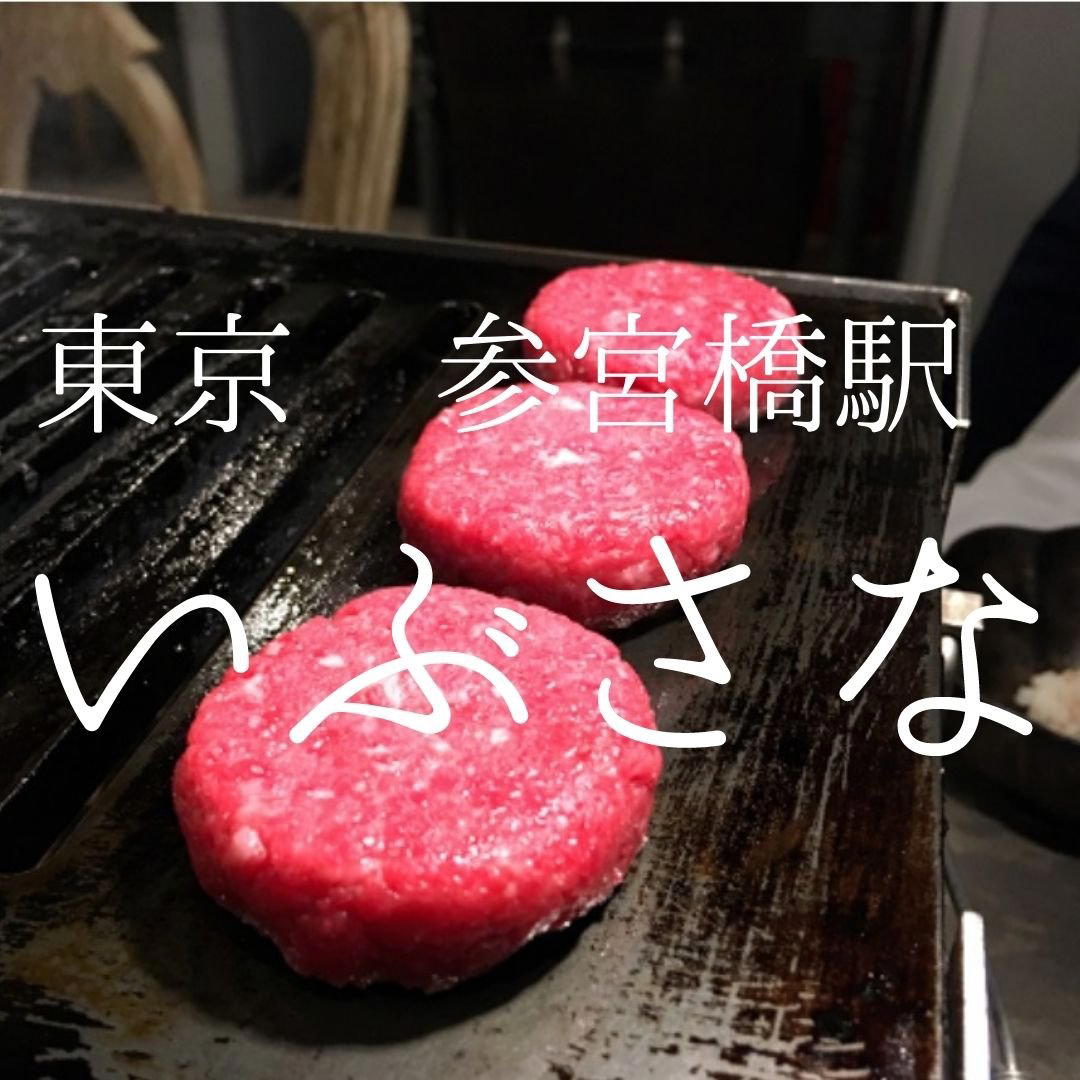
The menu
What to order
- Takenoya Manebull
- Ibusana Hybrid Wagyu
- Beef Tartare
- Grilled Wagyu Steak
Smoke Before Ceremony: Yakiniku in Yoyogi's Residential Belt
Tokyo's yakiniku culture has two registers. One is the prestige tier: reservation-only counters in Minami-Aoyama or Ginza, where A5 wagyu grades are discussed with the vocabulary of wine vintages, and dinner bills approach those at Harutaka or RyuGin. The other is the neighbourhood grill — less mediated, more direct — where the charcoal does most of the talking and the room fills with smoke before the first round of beer arrives. 焼肉 いぶさな, located on a side street in Yoyogi's residential quarter of Shibuya-ku, belongs to the second register. That positioning is not a compromise; in a city where the most interesting dining often happens outside the formal award circuit, it is a specific choice about what the meal should feel like.
Yoyogi sits between Shinjuku's commercial density and the quieter southward drift toward Sangenjaya. It is not a dining destination in the sense that Ginza or Nishi-Azabu are, which means the restaurants that survive here do so on local loyalty rather than tourist flow or critical attention. For a yakiniku-ya, that is exactly the right soil. The cuisine rewards repetition: regulars who know the menu, who have a preferred cut and a preferred grill temperature, who arrive as the coals are being prepared rather than after the room has already peaked. 焼肉 いぶさな sits in that category, an address that rewards the reader who is building a picture of how Tokyo eats across its whole range, not only its formal upper tier.
The Mechanics of Smoke: What Yakiniku Actually Involves
Yakiniku as a dining format has its own sensory logic, distinct from both kaiseki's restraint and the omakase counter's submission to the chef's sequence. Here, the diner is the final cook. Thin-sliced beef, offal cuts, and vegetables arrive raw; the grill at the table, typically charcoal in serious establishments, provides the heat, and the timing is the diner's responsibility. The skill transfer is part of the pleasure. You learn, across a meal, how long a slice of kalbi takes to release its fat, how quickly tongue browns at the edges, when to pull a piece before it tightens. It is an interactive format in a way that a tasting menu is not, and the sound and smell of it, fat hitting charcoal, smoke rising through a ceiling duct, the low hiss of a piece placed correctly on the grate, are as much the meal as the eating.
This sensory texture is what separates a well-run yakiniku-ya from a mediocre one. The quality of the smoke extraction matters: too little and the room becomes oppressive; too much and the atmosphere drains away. The coals matter more than most diners register, binchotan, the white charcoal used in premium Japanese grilling, burns at a consistent temperature without the chemical aftertaste of compressed alternatives, and it is the baseline expectation at any serious neighbourhood grill in Tokyo. The meat sourcing matters in ways that never appear on a menu but show immediately in the texture of the slice and the way the fat renders. These are the variables that define the tier a place occupies, and they operate entirely beneath the level of awards and press coverage.
For travellers who have spent evenings at L'Effervescence or Sézanne, a Yoyogi yakiniku-ya offers a genuinely different angle on what Tokyo's dining culture values: not spectacle, but calibration. The same precision that defines the city's fine dining applies here at a different scale, in how the cuts are prepared, how the grill is tended, how the meal moves from lighter cuts to richer ones.
Yoyogi as a Dining Address
Understanding 焼肉 いぶさな requires some understanding of the Yoyogi neighbourhood itself. The area around Yoyogi Station, served by the JR Yamanote Line and the Oedo subway line, is primarily residential and commercial in the mid-range sense, without the high-design density of Daikanyama or the tourist infrastructure of Shibuya's main corridors. Restaurants here set their prices for people who live nearby and eat regularly, not for one-time visitors comparing experiences across the city's highest tiers. That price orientation, combined with a cuisine format that is inherently communal and tactile, produces a specific atmosphere: rooms that fill early, tables that turn over at a natural pace, and a noise level calibrated by the activity of the grill rather than a programmed soundtrack.
The address, 代々木4-10-7, places it in the fourth chome of Yoyogi, away from the main station exits and deeper into the residential grid. This is relevant logistical information: the walk from the station is short but requires some attention to navigation in a neighbourhood without strong landmark density. Arriving early in the evening, when the coals are fresh and the room is beginning to fill, is the sensible approach to any charcoal grill restaurant of this type. Tokyo's yakiniku rooms tend to peak between 7pm and 9pm, and waiting for a table after that window, without a reservation, is a reasonable expectation rather than an exceptional inconvenience.
For readers building a broader picture of Japanese dining beyond Tokyo, the neighbourhood grill format has strong regional equivalents: Goh in Fukuoka represents a very different register of that city's dining culture, while HAJIME in Osaka and Gion Sasaki in Kyoto show how the western Kansai cities approach formal dining. The contrast between those formal addresses and a Yoyogi yakiniku-ya is itself instructive: Japan's dining culture is not a single spectrum from casual to formal, but a set of parallel tracks, each with its own logic and its own standards. A meal at 焼肉 いぶさな belongs to a different track than Crony or akordu in Nara, but it is not a lesser meal, it is a different argument about what eating well means.
Readers interested in the full range of Tokyo's dining, from neighbourhood grills to multi-starred counters, should consult our full Tokyo restaurants guide for context across price tiers and cuisine types.
Planning Your Visit
焼肉 いぶさな is located at 代々木4-10-7, Shibuya-ku, Tokyo 151-0053, accessible from Yoyogi Station on the JR Yamanote Line. Given the charcoal-grill format and likely compact room size, typical of Yoyogi's residential dining stock, groups of two to four are the natural unit. Comparable neighbourhood yakiniku addresses in Tokyo operate in the ¥3,000–¥8,000 per person range depending on cut selection and beverage orders, though this figure is contextual rather than venue-specific.
For reference points at other price tiers across Japan, see 一本木 長谷川製 in Nanao, 夕利寿司乃 in Sapporo, 湖畔荘 in Takashima, 羽根屋 in Nishikawa Machi, Birdland in Sakai, and Bistro Ange in Toyohashi. For international comparison on the high-precision end, Le Bernardin in New York City and Atomix in New York City represent what serious destination dining looks like in a different culinary tradition.
Quick reference:
Frequently asked questions
Do I need a reservation for 焼肉 いぶさな?
If the venue operates as a typical compact Yoyogi yakiniku-ya, arriving early on weekday evenings reduces wait risk; weekend evenings at popular neighbourhood grills in Tokyo often fill by 7:30pm. Attempting direct contact before visiting is the practical step where no online booking channel is confirmed.
How does 焼肉 いぶさな fit into Tokyo's broader yakiniku scene?
Tokyo's yakiniku offer runs from affordable neighbourhood grills in residential wards to high-end wagyu-specialist counters in Minami-Aoyama and Ginza where per-person costs approach those of Michelin-starred kaiseki. 焼肉 いぶさな's Yoyogi address and residential-quarter positioning place it in the former category, a local-facing grill operating outside the formal award circuit, which in Tokyo's dining culture is a coherent and respected tier rather than a default.
Quick Comparison
| Venue | Cuisine | Price | Awards | Notes |
|---|---|---|---|---|
| 焼肉 いぶさなThis venue — the venue you are viewing | Heritage Wagyu Yakiniku | $500+ | Not listed | Not listed |
| Harutaka | Edo-Style Omakase Sushi | $200–300 | 3 Michelin Stars · World's 50 Best #76 | Sushi |
| L'Effervescence | Modern French with Japanese Influences | $200–300 | 3 Michelin Stars · World's 50 Best #69 | French |
| RyuGin | Modern Kaiseki | $500+ | 3 Michelin Stars · World's 50 Best #41 | Kaiseki, Japanese |
| Crony | Modern French with Japanese Influences | $150–200 | 2 Michelin Stars · World's 50 Best #34 | Innovative, French |
| Florilège | Modern French-Japanese Plant-Based Fine Dining | $50–100 | 2 Michelin Stars · World's 50 Best #31 | French |












Details
- Elegant
- Intimate
- Minimalist
- Sophisticated
- Special Occasion
- Celebration
- Business Dinner
- Private Dining
- Open Kitchen
- Chefs Counter
- Local Sourcing
- Omakase
- Set Menu
- Counter Dining
Minimalist steakhouse aesthetic with refined, understated elegance; described as not appearing like a traditional yakiniku restaurant despite the genre.