Our verdict
餃子歩兵 occupies a counter position inside Shinjuku's underground west-exit arcade, serving gyoza in the straightforward, repetitive format that defines Tokyo's standing-bar gyoza culture. The address places it squarely in one of the city's densest commuter corridors, where quick, precise eating is the norm rather than the exception. For visitors mapping Tokyo's casual dining rituals alongside its fine dining tier, this is a reference point worth understanding.

Pearl is the En Primeur Club membership app, where members save venues, book tables and use the concierge.
The menu
What to order
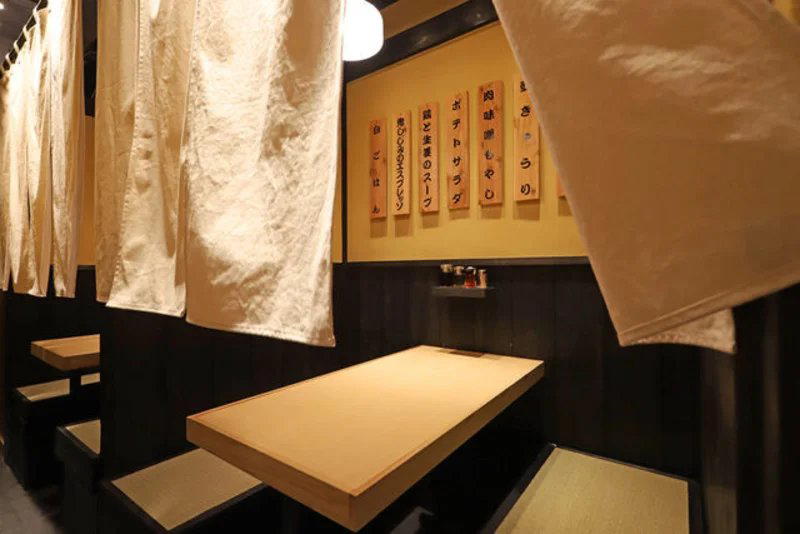
- 生姜ぎょうざ
- ぎょうざ
Shinjuku Underground and the Gyoza Counter Tradition
Tokyo's west-exit underground arcade at Shinjuku is not a dining destination in the conventional sense. It is a transit corridor that happens to sustain some of the city's most functional eating, the kind shaped entirely by the rhythm of commuters who have roughly twenty minutes and a specific craving. Gyoza counters here do not compete with the kaiseki rooms of Roppongi or the omakase counters of Ginza; they exist in a parallel register where the ritual is speed, repetition, and a very specific sensory payoff: hot, crisped dumplings with a cold beer or a small cup of shochu, eaten standing or perched at a narrow ledge. 餃子歩兵 sits inside that tradition, at 西新宿1 (西口地下街1号), and its address alone tells you what kind of experience you are entering.
The gyoza counter format in Tokyo has deep roots in postwar food culture. The dish itself arrived through the repatriation of Japanese soldiers from Manchuria and northern China after 1945, and its spread through working-class neighbourhoods, Utsunomiya, Hamamatsu, and eventually Tokyo's commuter belts, followed the logic of affordable protein and high-heat cooking that could be executed in minimal kitchen space. The underground arcade format extends that logic spatially: low rent, high footfall, a customer base that self-selects for efficiency. Counters like 餃子歩兵 are not trying to be something else. They are the thing itself.
The Ritual of Eating Here
The dining ritual at a gyoza counter of this type is close to frictionless by design. You arrive, you order, typically a fixed number of dumplings, a drink, and the transaction is complete in seconds. What follows is a focused act of eating that Tokyo's food culture treats with quiet seriousness. The gyoza arrives in a specific configuration: a row of pan-fried pieces, browned on one flat side, soft and steamed on the curved leading, with a thin, lacy skirt of crisped starch at the base if the kitchen is running a hanetsuki style. The dipping ritual matters: a small dish, a measured pour of rice vinegar, a streak of rayu chili oil, soy sauce to taste. The proportions are personal and the counter regulars know their own formula.
Pacing at a counter like this is dictated by the gyoza itself. You eat them hot. Letting them cool is not an option anyone who takes the format seriously would consider. This is not a meal designed for extended conversation or a second wine list consultation, it is a meal designed to be eaten with full attention for the twelve minutes it takes, and then you leave, satisfied in a very specific way. That economy of experience is, for Tokyo's food culture, a form of respect for the craft rather than a limitation of it.
For context, the premium end of Tokyo dining operates on entirely different coordinates. Counters like Harutaka in Ginza, where the omakase format runs across multiple courses over two hours, or RyuGin, where kaiseki pacing is measured in seasonal narrative, represent the city's high-investment tier. The gyoza counter does not aspire to that register and gains nothing by being compared to it. What connects them is the same underlying principle: a disciplined format executed with fidelity to its own logic.
Shinjuku's Underground as a Food Geography
The west-exit underground at Shinjuku handles some of the highest pedestrian volumes of any transit node in the world. The food operations that survive here over years do so because they serve a genuine need with enough consistency to generate repeat custom from commuters who pass through twice daily. That selection pressure produces a different kind of reliability than Michelin vetting, not prestige, but functional durability. A counter that does not perform gets replaced. One that works stays, and its regulars are intensely loyal in the specific, undemonstrative way that Tokyo food loyalty tends to operate.
The broader Shinjuku eating geography is worth orienting to. Above ground, the east side of the station feeds into Kabukicho and the dense mid-range izakaya and ramen corridors. The west side supports the corporate towers of Nishi-Shinjuku and the underground arcade, which runs its own micro-economy of counters, small bars, and specialty shops. The visitor arriving from the refined fine dining circuits of central Tokyo, perhaps from L'Effervescence in Minami-Aoyama or Sézanne in the Four Seasons Marunouchi, will find the register shift abrupt but instructive. This is how most people in this city eat most of the time.
Japan's casual dining rituals extend well beyond Tokyo. In Osaka, the equivalent logic plays out in standing bars near Namba and Tennoji. HAJIME represents Osaka's fine dining ceiling, but the city's food identity is equally defined by its standing counters. In Kyoto, Gion Sasaki operates at the formal kaiseki tier, while the surrounding streets sustain a quieter economy of specialist counters. akordu in Nara and Goh in Fukuoka anchor the regional fine dining conversation, but Fukuoka's gyoza culture, the hakata variety differs from Tokyo's thinner-skinned styles, runs on the same counter logic. For a fuller picture of Tokyo's dining range, the EP Club Tokyo restaurants guide maps the city across price tiers and cuisines.
Further afield, counters with regional specificity include 一本杉 川藤 in Nanao, 古今東西 in Sapporo, and 湖隣庵 in Takashima, each operating within their own regional food logic. The 庄羽屋 in Nishikawa Machi and Birdland in Sakai round out the picture of Japan's specialist counter culture operating below the Michelin visibility line. For a different frame of reference on what serious informal eating looks like in another culinary city, Le Bernardin and Atomix in New York, or Bistro Ange in Toyohashi and Crony in Tokyo, show how different cities calibrate the relationship between format, price, and ritual. Crony is particularly instructive as a Tokyo venue that sits at the intersection of innovation and informality at the ¥¥¥¥ tier, a different solution to the same underlying question of how to structure a meal.
Planning Your Visit
餃子歩兵 is located at 西新宿1 (西口地下街1号), inside Shinjuku's west-exit underground arcade, accessible directly from Shinjuku Station's west exit without surfacing. The underground arcade context means the venue operates within a pedestrian corridor, arrival is direct from the main station exits. Counter formats of this type in the Shinjuku underground typically do not require reservations, but capacity is limited by the counter itself, so timing around peak commuter hours, early evening on weekdays, will affect wait times. Cash payment is conventional at counters of this format in Japan, though this should be confirmed on arrival.
Frequently asked questions
What's 餃子歩兵's location?
餃子歩兵 is located at 西新宿1 (西口地下街1号), 新宿区, 東京都, 160-0023, Tokyo.
Where exactly is 餃子歩兵 inside Shinjuku Station's underground, and how do I find it without getting lost?
餃子歩兵 is addressed at 西新宿1 (西口地下街1号), inside the west-exit underground arcade at Shinjuku Station in Tokyo. The arcade runs directly off the station's west exit concourse and requires no street-level navigation. Shinjuku Station has multiple underground exits, so following signage specifically for 西口 (west exit) and then looking for the 地下街 arcade level keeps you on the correct path.
What's the must-try dish at 餃子歩兵?
The venue name translates roughly to 'gyoza foot soldier,' and gyoza is the point of the operation. At counters of this format inside Shinjuku's west-exit underground arcade, orders typically centre on pan-fried dumplings served in fixed portions alongside beer or a soft drink. The menu does not extend far beyond that core.
Is 餃子歩兵 reservation-only?
Gyoza counters in transit arcades like Shinjuku's west-exit underground (西口地下街1号) operate on a walk-in basis by design, the format exists to serve commuter traffic moving through one of Tokyo's highest-volume pedestrian corridors. No reservation infrastructure has been documented for 餃子歩兵.
What do critics highlight about 餃子歩兵?
What draws attention to this type of venue is context rather than accolade: surviving inside Shinjuku's west-exit underground arcade, where pedestrian volume is among the highest of any transit node in the world, requires consistent, fast throughput. That operational durability is its own credential.
Do they accommodate allergies at 餃子歩兵?
No allergy or dietary accommodation information is documented for 餃子歩兵. Gyoza wrappers and fillings typically contain wheat, pork, and aromatics such as garlic and chive. Anyone with specific allergen concerns should confirm directly at the counter before ordering, as no contact details or website are currently available for advance enquiry.
Is eating at 餃子歩兵 worth the cost?
At venues like this, inside Shinjuku's 西口地下街, the proposition is speed and directness rather than occasion dining. If you are passing through Shinjuku's west exit, the detour is minimal, the arcade is accessible without surfacing from the station.
A Pricing-First Comparison
Comparable venues nearby, for context on price, style, and recognition.
| Venue | Cuisine | Price | Awards | Notes |
|---|---|---|---|---|
| 餃子歩兵This venue (the venue you are viewing) | Kyoto-style Gyoza | $10–20 | Not listed | Not listed |
| Maidreamin Shibuya Store | Japanese Maid Cafe | $10–20 | Not listed | Shibuya, Japanese Maid Cafe |
| Gyukatsu Motomura Behind Shinjuku Alta Branch | Japanese Beef Cutlet (Gyukatsu) | $10–20 | Not listed | Shinjuku, Japanese Beef Cutlet (Gyukatsu) |
| Okonomiyaki Fukutake | Kansai-style okonomiyaki | $30–50 | Tabelog 100 #43 | Ōta, Kansai-style okonomiyaki |
| Muromachi Sunaba Nihonbashi hon ten | Traditional Edo-style soba | $20–30 | Tabelog 100 #67 | Chūō, Traditional Edo-style soba |
| Nihon Saisei Sakaba | Traditional Japanese Grilled Offal Izakaya | $20–30 | Not listed | Shinjuku, Traditional Japanese Grilled Offal Izakaya |