Our verdict
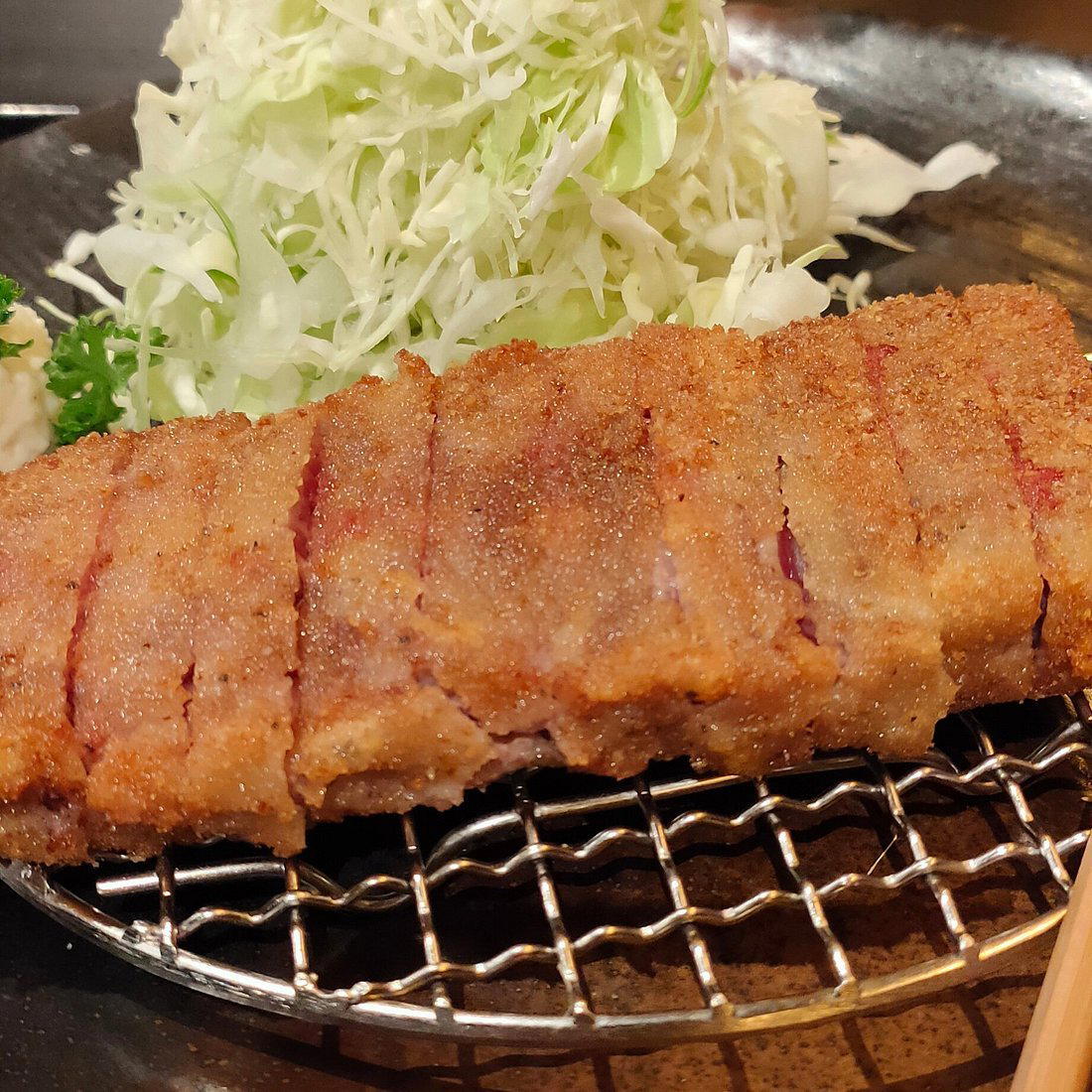
Gyukatsu Motomura's Shinjuku Alta branch operates from a basement floor in one of central Tokyo's busiest shopping corridors, serving the chain's signature beef katsu in a format built around speed, consistency, and accessible pricing. The gyukatsu category, lightly breaded, rare-to-medium beef cutlet finished tableside on a small iron grill, has expanded steadily across Tokyo, and Motomura remains one of its most recognised names in that space.

Pearl is the En Primeur Club membership app, where members save venues, book tables and use the concierge.
The menu
What to order
- Gyukatsu (130g)
- Gyukatsu (195g)
- Gyukatsu (260g)
A Basement Counter in the Middle of Everything
Shinjuku is not a neighbourhood that rewards hesitation. The area around Alta, the shopping building whose name marks this branch's address, sits at the intersection of the station's east exit pedestrian flow and the commercial density of Shinjuku-dori, making it one of the highest foot-traffic pockets in a city not short on high-traffic pockets. Gyukatsu Motomura's decision to occupy a basement floor here, rather than a street-level or upper-floor position, follows a logic common to Tokyo's mid-range dining scene: rents drop below grade, queues form on the stairs, and the format does the selling. That format is gyukatsu, and understanding where Motomura sits within it requires a short account of how the category arrived at its current shape.
How Gyukatsu Became a Tokyo Staple
Tonkatsu, pork cutlet, deep-fried, served with shredded cabbage and a thick sauce, has been a fixture of the Japanese Western-style dining (yoshoku) tradition for well over a century. Gyukatsu, its beef equivalent, occupied a narrower niche for most of that period. The format as it now appears across Tokyo, with a thin, lightly breaded beef cutlet served rare or medium-rare and finished by the diner on a small stone or iron grill at the table, gained significant commercial traction in the 2010s. Motomura is frequently cited in that expansion: the brand's accessible price point and consistent execution helped move gyukatsu from a specialist curiosity into an everyday dining category. What the chain refined was not the cooking technique itself but the service model around it, the individual grills, the dipping sauces, the communal efficiency of a format that moves quickly even at full capacity.
That evolution matters when assessing what the Shinjuku Alta branch represents today. Gyukatsu Motomura is no longer the only name in the category; the format has attracted competitors across Tokyo at a range of price points. But Motomura's longevity in the segment, and its ability to maintain consistent queues at multiple locations including this one, reflects something durable about the offer: the tableside cooking element functions as both a practical tool and a low-key piece of theatre that keeps the format engaging across repeat visits. For international visitors comparing Tokyo's dining options, this positions gyukatsu, and Motomura specifically, at a very different point on the spectrum from the ¥¥¥¥ omakase counters at Harutaka or the kaiseki progression at RyuGin. It is a different argument altogether: volume, value, and a format that requires no reservation to appreciate.
The Format and What It Asks of the Diner
The gyukatsu experience at Motomura is built around participation. The cutlet arrives cooked to a point deliberately short of done, rare to medium-rare at the centre, with a small iron grill heated at the table. The diner controls the final degree of cooking, moving pieces across the grill surface according to preference. This is not precision cookery in the sense that the tasting menus at L'Effervescence or Sézanne are, it is an accessible, forgiving format designed to be approachable on a first visit. The accompaniments typically include a dipping sauce, wasabi, and salt options that allow the diner to adjust flavour incrementally. The result is a meal that rewards attention without demanding expertise.
The Shinjuku Alta basement location adds a specific physical texture to that experience. Basement dining in Tokyo ranges from the utilitarian to the deliberately atmospheric; this branch falls in the former category. The surroundings are functional, the turnover is visible, and the ambient noise level reflects the volume of the surrounding neighbourhood. Diners arriving from the Shinjuku station east exit will find the queue, when one exists, forming on or near the building's lower entrance. The format is not designed for long evenings; most visits complete within 45 to 60 minutes, which is part of the model's durability in a location this busy.
Where Gyukatsu Sits in Tokyo's Wider Dining Range
Tokyo's dining scope runs from late-night ramen counters to multi-course experiences at venues with years-long waiting lists. The gyukatsu category occupies a specific band in that range: casual, moderately priced, format-driven, and increasingly well-documented among international visitors who have moved past the assumption that serious eating in Tokyo requires either significant expenditure or advance planning. Motomura benefits from both its early positioning in the category and from the volume of English-language coverage that gyukatsu has received as a format over the past decade.
For visitors building a broader picture of Tokyo's food culture, the chain's Shinjuku Alta branch functions as a useful data point about how the city handles casual dining at scale. It is not the register of Crony's Franco-Japanese precision, but it is also not trying to be. The gyukatsu category's continued growth, with new entrants at both the budget and premium ends, suggests the format has sufficient depth to sustain further differentiation. Whether Motomura continues to hold its position at the accessible, high-volume centre of that category, or whether premiumisation pulls more diners toward higher-spec beef and smaller formats, is the live question for the brand across all its locations.
For context on Japan's broader dining range, HAJIME in Osaka, Gion Sasaki in Kyoto, and Goh in Fukuoka each represent the opposite end of the format spectrum, long-reservation, high-price, deeply choreographed. Regional options further afield include akordu in Nara, 一本杉 川島家 in Nanao, 吉井山乃 in Sapporo, 琵琶荘 in Takashima, 庭羽屋 in Nishikawa Machi, Birdland in Sakai, and Bistro Ange in Toyohashi. For a complete picture of Tokyo's dining scene, see our full Tokyo restaurants guide. International comparisons in the high-end register include Le Bernardin in New York City and Atomix in New York City.
Planning Your Visit
Reservations: Walk-in only; queues form during lunch and dinner peaks, particularly on weekends. Location: B1F, Shinjuku 3-22-7, behind Shinjuku Alta, Shinjuku City, a short walk from the east exit of Shinjuku Station. Budget: Gyukatsu sets at Motomura locations are typically priced in the affordable to mid-range bracket for Tokyo casual dining; confirm current pricing at the venue. Timing: Arriving at opening or well before peak meal times reduces wait time significantly. Format note: The tableside grill is part of the meal's structure, diners control the final cooking of the beef cutlet themselves.
Frequently asked questions
Where is Gyukatsu Motomura Behind Shinjuku Alta Branch in Tokyo?
Gyukatsu Motomura Behind Shinjuku Alta Branch is located at Japan, 〒160-0022 Tokyo, Shinjuku City, Shinjuku, 3 Chome−22−7 指田ビル B1F, Tokyo.
Is Gyukatsu Motomura's Shinjuku Alta branch suitable for solo diners visiting Tokyo?
Counter seating at the B1F Shinjuku location makes it a practical choice for solo visitors: the format is self-contained, the menu requires no Japanese-language navigation beyond pointing at the cutlet size, and the tableside stone grill gives solo diners a clear focal point. Tokyo's gyukatsu category as a whole skews toward fast, individual meals rather than group dining, and Motomura's walk-in model reinforces that.
What's the best thing to order at Gyukatsu Motomura Behind Shinjuku Alta Branch?
Order the gyukatsu set. The beef cutlet is the sole reason the chain exists, and the set format bundles it with rice, miso soup, and cabbage, the standard accompaniments that complete the meal. There is no need to strategise further; the menu is tightly focused by design.
How hard is it to get a table at Gyukatsu Motomura Behind Shinjuku Alta Branch?
No reservation system operates at Motomura locations, so access is purely a function of queue length on arrival. The Shinjuku Alta branch sits in one of Tokyo's highest foot-traffic corridors, which means weekend lunch and dinner peaks can produce waits of 30 to 60 minutes. Arriving just before the meal-period rush, around 11:30 or 17:30, reduces wait time considerably.
What's the standout thing about Gyukatsu Motomura Behind Shinjuku Alta Branch?
The format is the defining feature: the beef cutlet is served deliberately rare, and the diner finishes it on a small stone grill at the table. This puts the cooking decision, how much crust, how much pink, in the hands of the person eating, which is structurally different from how tonkatsu or most fried-cutlet formats work. For a basement counter in central Shinjuku, the concept is unusually specific.
Cost Snapshot
| Venue | Cuisine | Price | Awards | Notes |
|---|---|---|---|---|
| Gyukatsu Motomura Behind Shinjuku Alta BranchThis venue (the venue you are viewing) | Japanese Beef Cutlet (Gyukatsu) | $10–20 | Not listed | Not listed |
| Harutaka | Edo-Style Omakase Sushi | $200–300 | 3 Michelin Stars · World's 50 Best #76 | Sushi |
| L'Effervescence | Modern French with Japanese Influences | $200–300 | 3 Michelin Stars · World's 50 Best #69 | French |
| RyuGin | Modern Kaiseki | $500+ | 3 Michelin Stars · World's 50 Best #41 | Kaiseki, Japanese |
| Crony | Modern French with Japanese Influences | $150–200 | 2 Michelin Stars · World's 50 Best #34 | Innovative, French |
| Florilège | Modern French-Japanese Plant-Based Fine Dining | $50–100 | 2 Michelin Stars · World's 50 Best #31 | French |
Continue exploring
More in Tokyo
Restaurants in Tokyo
All restaurants in Tokyo →



Bars in Tokyo
All bars in Tokyo →





Details
- Trendy
- Casual Hangout
- Open Kitchen
- Sake Program
- A La Carte
- Counter Dining
Current opening hours
- Monday
- 11 AM–10 PM
- Tuesday
- 11 AM–10 PM
- Wednesday
- 11 AM–10 PM
- Thursday
- 11 AM–10 PM
- Friday
- 11 AM–10 PM
- Saturday
- 11 AM–10 PM
- Sunday
- 11 AM–10 PM
Hours can change for holidays and private events. Last verified .
Casual hideout in a basement with a lively atmosphere due to long queues and popularity.