ペレグリーノ sits in Ebisu, one of Tokyo's quieter residential-commercial districts, where a smaller cohort of European-inflected restaurants has taken root away from the denser fine-dining corridors of Ginza and Minami-Aoyama. The address places it in a neighbourhood that rewards deliberate visitors rather than foot-traffic browsers, consistent with the format discipline Tokyo's specialist dining tier tends to favour.
Pearl is the En Primeur Club membership app — saves, bookings, and concierge access live there. Same editors, same standards.
- Address
- 2 Chome-3-4 Ebisu, Shibuya, Tokyo 150-0013, Japan
- Phone
- +81362774697
- Website
- pellegrino.jp
- Directions
- Get directions
 Saves & bookings on Pearl
Ebisu and the Shift Away from Ginza's Gravity
Tokyo's fine-dining geography has been in motion for the better part of two decades. Through the 2000s and into the early 2010s, the implicit assumption was that serious restaurants belonged in Ginza or, at a stretch, Minami-Aoyama. The concentration of luxury retail, corporate entertaining budgets, and international hotel infrastructure made those districts natural hosts for the city's most formal tables. What has changed since is a gradual dispersal: chefs and formats that once required the validation of a central address have demonstrated, repeatedly, that diners will travel to Ebisu, Daikanyama, Shinjuku's side streets, and beyond, provided the proposition is specific enough to justify the detour.
Ebisu sits inside that dispersal pattern. The district's dining character is shaped by its mix of long-term residents, creative-industry professionals, and proximity to Daikanyama's boutique density. It is not a destination neighbourhood in the way Ginza remains for international visitors, but it has accumulated a cohort of restaurants with enough focus and consistency to sustain the kind of regular local custom that keeps a room alive between tourist seasons. ペレグリーノ, at 2 Chome-3-4 Ebisu in Shibuya, occupies that context, a neighbourhood that functions on repeat visits and word-of-mouth rather than walk-in volume.
A Name That Points Somewhere
The name ペレグリーノ is the Japanese rendering of the Italian word for pilgrim or wanderer. It carries obvious connotations: movement across traditions, a certain restlessness about staying in one culinary place. In Tokyo's current dining environment, that framing is neither arbitrary nor unusual. The city's most discussed restaurants of the past decade have frequently operated across genre lines, Japanese technique applied to European structure, or European sourcing logic applied to Japanese ingredient hierarchies. The name positions the restaurant within that cross-cultural conversation before a single dish arrives.
What the address and the name together suggest is a restaurant that has chosen its neighbourhood and its identity deliberately.
Evolution as the Operating Mode
The restaurants that have lasted longest in Tokyo's competitive fine-dining environment are rarely the ones that opened with a fixed concept and held it unchanged. The more durable pattern involves continuous re-calibration: seasonal adjustments that go beyond ingredient swaps, structural changes to format or seating that reflect shifting diner expectations, and periodic reinvention that keeps a kitchen from calcifying around its own opening statement. This evolutionary posture is particularly marked in European-influenced rooms, where the original reference point (a French technique, an Italian ingredient logic, a Spanish structural influence) must be periodically renegotiated against what Japanese sourcing and Japanese diner expectations actually support.
But the Ebisu address, the cross-cultural name, and the restaurant's position in a neighbourhood that rewards specialist commitment over volume all point toward a format that has had to define and redefine its niche rather than simply riding the momentum of a famous postcode. That process of definition, what the room is for, who it is for, and how it sits relative to Tokyo's louder, more decorated tables, is the more interesting editorial story than any fixed snapshot of a menu.
Placing ペレグリーノ in Tokyo's European-Inflected Tier
Tokyo's European-influenced fine dining now spans a wide range of price points, formats, and levels of institutional recognition. At the upper end of the recognised tier, rooms like L'Effervescence and Sézanne operate with Michelin backing and international press profiles that attract both domestic regulars and visiting diners. Crony represents the more recent cohort of innovative French-influenced rooms that have built recognition through sustained cooking quality rather than inherited prestige. Below that decorated tier, a larger cohort of restaurants operates without the same level of award validation but with a distinct local following and a format that serves a different kind of diner: one who has already worked through the headliner list and is now looking for something with less ceremony and more specificity.
ペレグリーノ's position in that structure remains to be fully established by public record. Its Shibuya-ward address and its naming choices suggest it is not aiming at the same bracket as the Ginza omakase counters, Harutaka and its peers, nor is it operating in the same formal register as RyuGin, which anchors the kaiseki end of Tokyo's ¥¥¥¥ tier. The Italian name points toward a different competitive set: European-concept restaurants in residential-adjacent neighbourhoods, where the room's character and consistency matter more than Michelin column inches.
For readers building a Tokyo itinerary around the full range of the city's serious cooking, the broader Japanese context is worth tracking. HAJIME in Osaka and Gion Sasaki in Kyoto illustrate how the European-Japanese dialogue plays out differently when it is grounded in a different city's ingredient culture and hospitality register. akordu in Nara and Goh in Fukuoka extend that map further.
Beyond the city's headline rooms, Japan's wider restaurant geography rewards lateral movement: 一本杉 川嶋 in Nanao, 大地のうた in Sapporo, 湖畔荘 in Takashima, 羽黒屋 in Nishikawa Machi, Birdland in Sakai, and Bistro Ange in Toyohashi each represent the kind of regional specialist dining that the Tokyo-centred conversation tends to crowd out.
Planning Your Visit
The table below compares ペレグリーノ with its most immediate peer group on practical logistics.
| Venue | Neighbourhood | Cuisine Type | Price Tier | Booking Lead Time |
|---|---|---|---|---|
| ペレグリーノ | Ebisu, Shibuya | Not confirmed | Not confirmed | |
| L'Effervescence | Minami-Aoyama | French | ¥¥¥¥ | Several weeks minimum |
| Crony | Tokyo | Innovative / French | ¥¥¥¥ | Advance booking advised |
| Sézanne | Marunouchi | French | ¥¥¥¥ | Weeks to months ahead |
Same-City Peers
Comparable venues nearby, for context on price, style, and recognition.
| Venue | Cuisine | Price | Notes |
|---|---|---|---|
| ペレグリーノThis venue — the venue you are viewing | Traditional Parma Italian Fine Dining | $$$$ | Not listed |
| アルマーニ / リストランテ | Modern Italian with Japanese Seasonal Influences | $$$$ | Chūō |
| Etruschi | Innovative Italian | $$$$ | Minato |
| Chanfe Tokyo | Modern Italian with Japanese Influences | $$$$ | Taitō |
| Cignale | Italian–Japanese Fusion Omakase Enoteca | $$$$ | Komaba |
| リストランテ イ・ルンガ | Northern Italian Fine Dining | $$$$ | Setagaya |













At a Glance
- Intimate
- Elegant
- Sophisticated
- Special Occasion
- Chefs Counter
- Sake Program
Current opening hours
- Monday
- Closed
- Tuesday
- 11:45 AM–3 PM, 7–10:15 PM
- Wednesday
- 5–9:30 PM
- Thursday
- 5–9:30 PM
- Friday
- 5–9:30 PM
- Saturday
- 5–9:30 PM
- Sunday
- 5–9:30 PM
Hours can change for holidays and private events. Last verified .
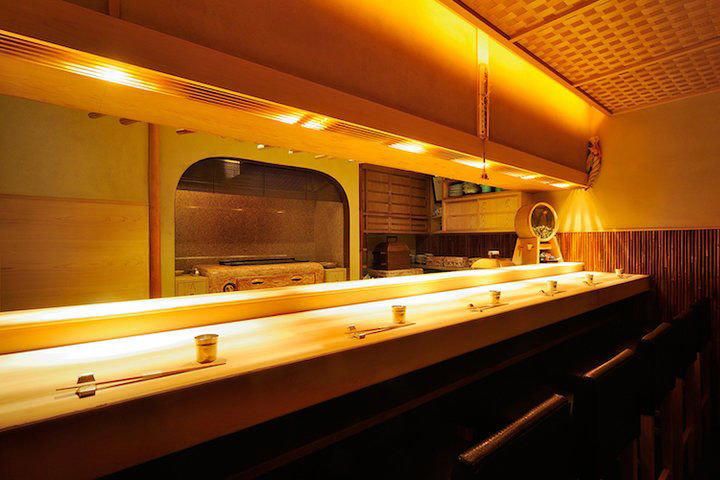
Set in a quiet alley, the intimate 6-seat space offers a serene and sophisticated atmosphere focused on the chef's precise culinary performance.