

1 Michelin Star · Tabelog Bronze #166
Our verdict
A Michelin-starred kappo house in Shimogyo Ward, Ayanokoji Karatsu operates from just 12 seats across a counter and private room, with Tabelog Bronze recognition every year from 2021 through 2026. The kitchen's emphasis on personally sourced seasonal ingredients, from wild plants in Miyama to sweetfish from Shiga, places it firmly in Kyoto's ingredient-led dining tradition. Dinner runs JPY 20,000–29,999; lunch, when available, considerably less.

Pearl is the En Primeur Club membership app, where members save venues, book tables and use the concierge.
Where Shimogyo Ward Meets the Kappo Tradition
Kyoto's dining geography tends to cluster recognition in Gion and Higashiyama, where kaiseki institutions and their centuries of pedigree draw the most attention. Shimogyo Ward, the district south of Shijo that contains Ayanokoji Karatsu's address on Yadacho, operates at a quieter register. The streets here run between textile wholesalers and the older residential fabric of the city, and a restaurant of this scale, 12 seats, reservation-only, operating inside what Tabelog classifies as a house restaurant, fits that character precisely. Arriving here, rather than at a formal kaiseki townhouse in Gion, signals something about what the meal is going to be: closer, more direct, less ceremonially managed.
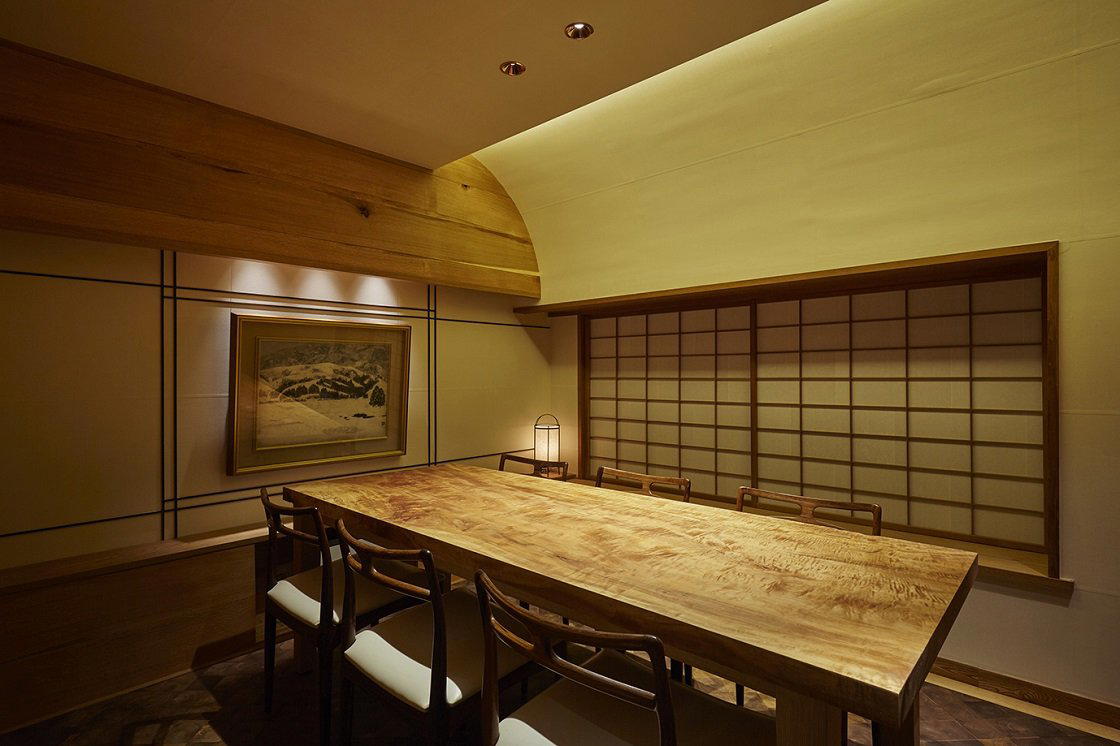
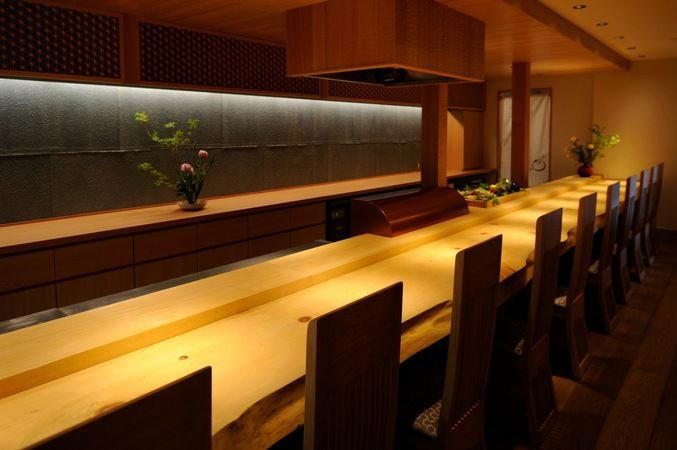
The physical format is a counter of eight seats plus a private room for four, and that configuration shapes everything. Counter dining in this tradition is not simply a seating arrangement. It positions the guest inside the kitchen's logic, where the sequence of courses corresponds to what the season and the market have produced, and where the distance between preparation and service is measured in seconds. The Sukiya-style atmosphere described in the venue's documentation, a design idiom rooted in the wabi sensibility of the tea ceremony, favouring natural materials, asymmetry, and a deliberate absence of ornamentation, reinforces that register. Tranquility here is structural, not decorative.
A Kitchen Built Around the Source
The cultural argument for Kyoto cuisine, kyo-ryori in its broader sense, has always rested on ingredient relationships rather than technique spectacle. The city's cooking traditions developed around proximity to specific growing regions, mountain foragers, and river fisheries. Daikon from Fushimi, yuba from temple districts, sweetfish from the rivers flowing into Lake Biwa: these are not romanticised marketing claims but documented supply relationships that define what appears on the plate and when.
Ayanokoji Karatsu positions itself squarely inside that tradition. These are not passive procurement decisions. Miyama is a farming and mountain village northwest of Kyoto, still known for traditional thatched-roof farmhouses and genuine mountain produce. Shiga Prefecture borders Kyoto to the east and provides access to the rivers and streams feeding Lake Biwa, which remain among the most prized sources for ayu in the region. The discipline here is geographical as much as culinary: knowing the season means knowing the place.
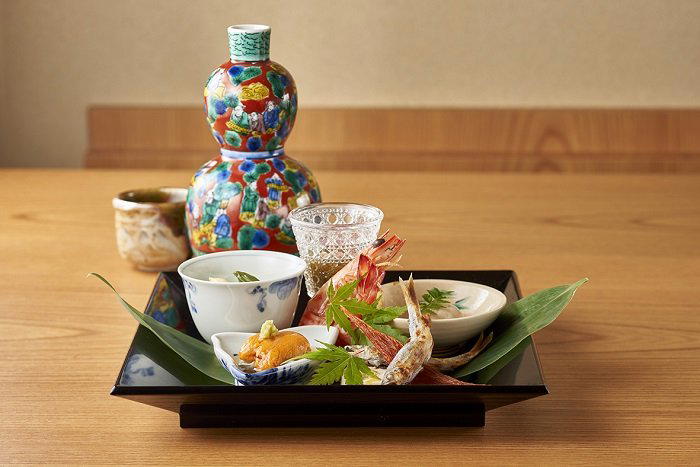
The kitchen is also noted as being particular about fish, and the ceramics on which food arrives are made in-house by the chef himself, under the instruction of a potter. That detail matters because it closes the loop between sourcing and presentation. The vessel carrying Miyama mushrooms or river fish is not a neutral surface but something the kitchen has shaped by hand. This is not a common practice, even among Kyoto's more serious kappo operators, and it places Ayanokoji Karatsu in a distinct position relative to restaurants that source both ingredients and tableware from specialist suppliers.
Where It Sits in Kyoto's Recognition Tier
The Kyoto restaurant scene at the ¥¥¥ dinner price point, roughly JPY 20,000 to 29,999 per head at Ayanokoji Karatsu, spans a wide range of formats and ambitions. Comparison venues in the same city at ¥¥¥¥ pricing include Michelin two- and three-star kaiseki operations such as Ifuki, Kyokaiseki Kichisen, and Gion Sasaki, where the ceremonial scale of the meal and the size of the team behind it justify higher spend. Ayanokoji Karatsu's positioning is meaningfully different: it earns its recognition through depth of sourcing and format restraint rather than through the elaborate multi-brigade production of formal kaiseki.
On Tabelog, the platform that functions as Japan's most detailed domestic restaurant database, the venue holds a score of 3.82 and has received the Tabelog Bronze Award consecutively from 2021 through 2026. It has also been selected for the Tabelog Japanese Cuisine WEST "Tabelog 100" list in 2021, 2023, and 2025, a separate designation identifying the hundred highest-rated Japanese cuisine restaurants in western Japan by peer and critic review. That combination of consistent annual awards and repeated 100-list selection over five years represents a level of sustained recognition that separates it from restaurants that appear once and fade. And the 2024 Michelin one star adds a second verification layer from a different assessment framework, one that weights culinary consistency and ingredient quality alongside format.
For context on how this sits within the broader Japanese dining scene, comparable ingredient-focused counter formats earning similar or adjacent recognition can be found at Myojaku in Tokyo and Azabu Kadowaki in Tokyo, both operating in the Japanese cuisine category with similar counter-centred formats. Outside the capital, HAJIME in Osaka, akordu in Nara, and Goh in Fukuoka represent other regional expressions of kitchen-led dining at serious recognition levels. Further afield, Harutaka in Tokyo, 1000 in Yokohama, and 6 in Okinawa round out a picture of what serious, small-format Japanese dining looks like across the country.
Sake, Season, and the Logic of the Drinks List
The drinks programme at Ayanokoji Karatsu reflects the same directional focus as the food. The venue is noted as being particular about both sake and shochu, with wine also available. In the context of a kappo meal built around river fish and mountain vegetables, nihonshu, sake brewed from polished rice, is the natural pairing logic. Japan's premium sake regions, including Fushimi in southern Kyoto itself, produce sake with the kind of clean, mineral-edged profiles that work alongside delicate dashi-led broths and lightly prepared seasonal vegetables without competing. A kitchen that cares this much about sourcing its proteins from specific rivers tends to apply similar care to what fermented rice it pours alongside them.
Planning a Visit
Ayanokoji Karatsu operates Tuesday through Saturday, with lunch service running 12:00 to 14:00 (noted as irregular, so confirmation is advisable) and dinner from 17:30 to 22:00. The restaurant is closed on Sundays and Mondays, and may close on additional irregular days. Reservations are required, there is no walk-in option for a 12-seat room, and the venue takes major credit cards including Visa, Mastercard, JCB, Amex, and Diners. No electronic money or QR code payment. The maximum party size at the counter is eight; the private room accommodates four. There is no parking on site.
Transport access is direct: the address in Shimogyo Ward sits approximately 376 metres from Shijo Station on the Kyoto City Subway and around 400 metres from Karasuma Station on the Hankyu line, making it reachable on foot from either. Dinner pricing at JPY 20,000 to 29,999 per person (excluding tax, service charge included) places it at the lower end of Michelin-starred dining in Kyoto, a market where one-star operations vary considerably in their per-head cost. Lunch, when available, runs JPY 8,000 to 9,999, a notably lower entry point for the same kitchen and the same sourcing philosophy.
For broader planning, see our full Kyoto restaurants guide, our full Kyoto hotels guide, our full Kyoto bars guide, our full Kyoto wineries guide, and our full Kyoto experiences guide.
Frequently asked questions
What does dinner at Ayanokoji Karatsu typically cost?
Pricing at Ayanokoji Karatsu is listed as ¥¥¥.
What awards or recognition does Ayanokoji Karatsu have?
Ayanokoji Karatsu has received recognition including:
What's the best thing to order at Ayanokoji Karatsu?
Ayanokoji Karatsu operates on a set or omakase basis consistent with the kappo format, so individual dish selection is not how the menu works. The kitchen is noted on Tabelog as being particular about fish, and the chef sources ingredients directly from producing regions including wild plants and mushrooms from Miyama and sweetfish from Shiga. Courses are served on ceramics the chef makes himself, which shapes the experience as much as what's on the plate. Dinner runs JPY 20,000 to 29,999 per person before tax.
Where is Ayanokoji Karatsu located?
Ayanokoji Karatsu is located at Japan, 〒600-8442 Kyoto, Shimogyo Ward, Yadacho, 113-1, Kyoto.
Comparable Options
| Venue | Cuisine | Price | Awards | Notes |
|---|---|---|---|---|
| Ayanokoji KaratsuThis venue (the venue you are viewing) | Traditional Japanese Kaiseki | $150–200 | 1 Michelin Star · Tabelog Bronze #166 | Not listed |
| Gion Sasaki | Modern Kaiseki | $300–500 | 3 Michelin Stars · La Liste Top Restaurants | Kaiseki, Japanese |
| cenci | Innovative Italian-Japanese Fusion | $100–150 | 1 Michelin Star · World's 50 Best #76 | Italian |
| Ifuki | Sumibi Kappo Kaiseki | $200–300 | 2 Michelin Stars · La Liste Top Restaurants | Kaiseki |
| Kyokaiseki Kichisen | Kyoto Kaiseki | $200–300 | 2 Michelin Stars · La Liste Top Restaurants | Japanese |
| Kyo Seika | Modern Chinese Fine Dining | $150–200 | 1 Michelin Star · Tabelog Bronze #216 | Chinese |
Recognition history
Dated appearances from independent guides and award organizations, with the underlying list record or original source where available.
Michelin 1 Star
Michelin
Tabelog Bronze #166
Tabelog
Full recognition history (5 entries)
Tabelog 100 #36 · No. 36
Tabelog · Tabelog 100 - Japanese cuisine - WEST - 2025
Tabelog Bronze
Tabelog
Michelin 1 Star
Michelin
Continue exploring
More in Kyoto
Restaurants in Kyoto
All restaurants in Kyoto →

Bars in Kyoto
All bars in Kyoto →
Hotels in Kyoto
All hotels in Kyoto →
Wineries in Kyoto
Browse all →
Details
- Elegant
- Romantic
- Intimate
- Sophisticated
- Quiet
- Date Night
- Special Occasion
- Private Dining
- Sake Program
- Local Sourcing
- Garden
- Omakase
- Sake
Current opening hours
- Monday
- 5:30–10 PM
- Tuesday
- 5:30–10 PM
- Wednesday
- 5:30–10 PM
- Thursday
- 5:30–10 PM
- Friday
- 5:30–10 PM
- Saturday
- 5:30–10 PM
- Sunday
- Closed
Hours can change for holidays and private events. Hours as of .
Refined Sukiya-style with tsubo garden, earthen walls, elegant and tranquil atmosphere.