
Tabelog 100 #78
Our verdict
Oryori Mukyu occupies a third-floor address in Roppongi 6-chome, operating within a Minato ward dining scene that has quietly consolidated around small-format, counter-led Japanese cooking. With minimal public-facing information and no listed awards, it positions itself at the discreet end of Tokyo's specialist restaurant register, the kind of address that circulates through recommendation rather than press coverage.

Pearl is the En Primeur Club membership app, where members save venues, book tables and use the concierge.
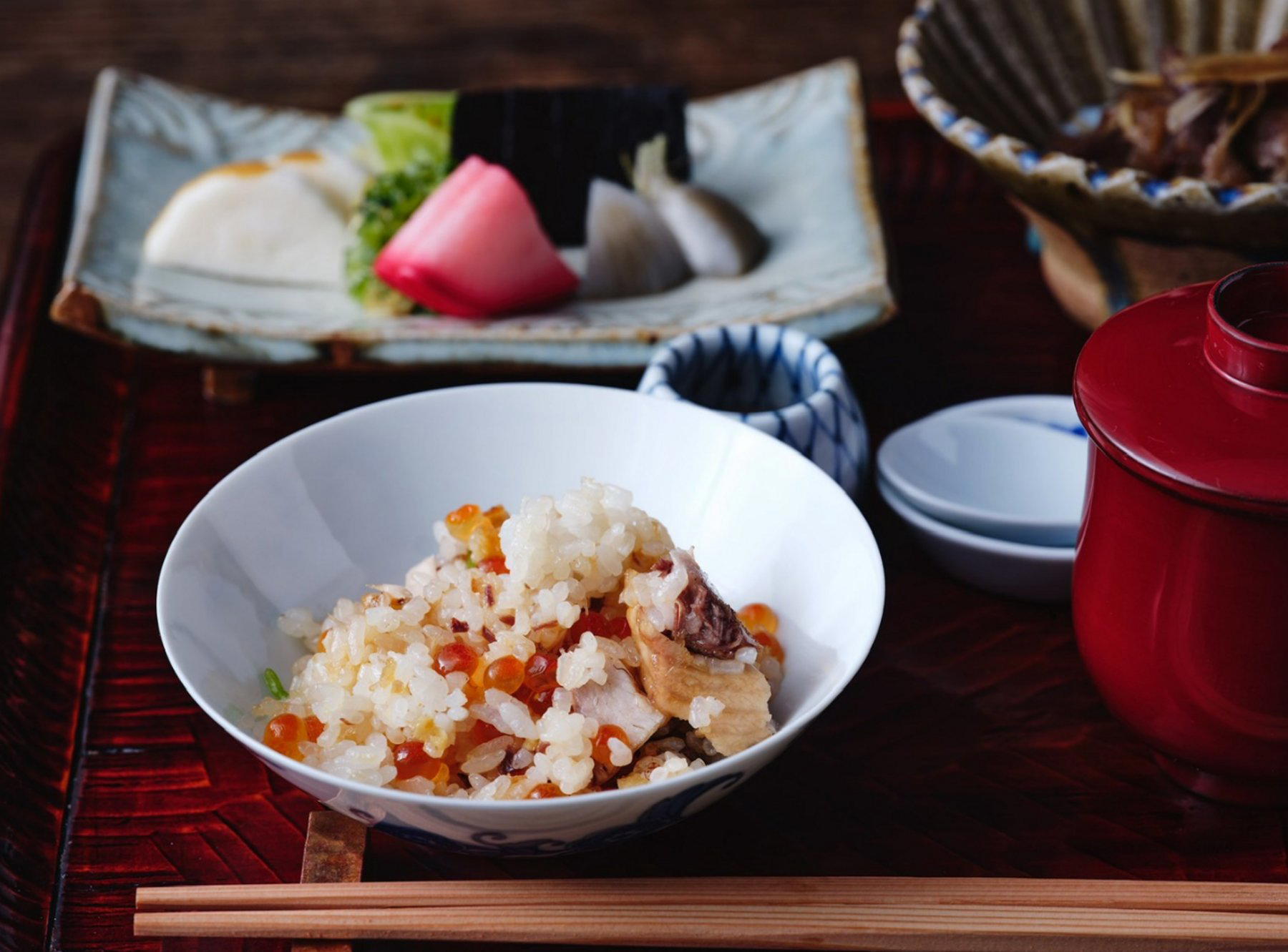
Roppongi's Quieter Register
Roppongi's dining reputation has long been split between the internationally visible and the deliberately inconspicuous. The district's main arteries are lined with the kind of restaurants that appear in guidebooks, earn awards cycles, and maintain bilingual booking systems. The third-floor addresses and unmarked doors are a different category entirely, venues that survive on repeat custom and word-of-mouth within Tokyo's close-knit professional dining networks. Oryori Mukyu, on the sixth block of Roppongi's main chome, belongs to this second type. The building it occupies, above street level and away from the pedestrian flow that moves between Roppongi Hills and the crossing, signals something about its operating logic before you arrive at the door.
This positioning is not accidental. Over the past decade, Minato ward has seen a quiet stratification of its small-format Japanese cooking scene. As Michelin attention and international press coverage concentrated on a smaller number of named counters, a parallel tier of unlisted, reservation-only operations expanded. These are restaurants that have no public phone number, no English-language website, and no social media presence to speak of, venues where the friction of access is itself a form of curation. Oryori Mukyu fits that pattern closely.
How the Format Has Shifted
The evolution of intimate Japanese dining in central Tokyo over the past fifteen years follows a recognisable arc. The early 2000s saw a proliferation of kappo-style counters, where the chef's visible technique was the primary draw and menus were broad. By the mid-2010s, the format had tightened: fewer seats, fewer courses, fewer distractions. The most discussed addresses in Minato ward began operating on terms closer to private dining than restaurant service, fixed seatings, pre-submitted dietary information, and a bill structure that made the experience comparable in price to the top tier of French cuisine in the same city. For comparison, the ¥¥¥¥ tier at peers like RyuGin and Harutaka reflects exactly this consolidation of format and price point.
Oryori Mukyu appears to sit within this evolved format. The address in a multi-tenant building on Roppongi 6-chome, the absence of a listed phone number or website, and the near-total lack of public-facing information all suggest a venue operating on terms set by the current, tighter end of the market. This is not a restaurant in transition, it reads as a venue that has already arrived at a settled operating model, one shaped by the same pressures that have defined the high-end Japanese dining category since roughly 2018.
Reading the Absence of Information
The near-total absence of public data on Oryori Mukyu is itself informative. In Tokyo's serious dining tier, information scarcity is not evidence of obscurity, it is often evidence of deliberate positioning. The venues that circulate most effectively within Japan's private dining networks frequently have no English-language presence, no publicly listed awards, and no reservation infrastructure accessible to walk-in visitors. The process of booking passes through introductions, concierge relationships, or hotel connections. For international visitors, the most reliable access route typically runs through the concierge desk of a Tokyo hotel operating at the level of properties in Minato or Chiyoda wards.
This matters for planning. Visitors who have booked counter seats at L'Effervescence or Sézanne through conventional channels will find Oryori Mukyu requires a different approach. The same is true of addresses like Crony, which sits at the innovative end of the Tokyo French counter scene, accessible but not casual. Oryori Mukyu appears to operate at a more private register than any of these. See our full Tokyo restaurants guide for broader context on how to approach the city's private dining tier.
The Roppongi Counter Scene in Context
Roppongi is not, in culinary terms, a single neighbourhood. The zone immediately around the Roppongi Hills complex supports a density of high-visibility international and French-influenced dining. The quieter residential and office-building streets of the same chome support something different: small Japanese operators whose clientele is almost entirely domestic, often corporate, and deeply habitual. These are the counters where the same twelve seats are occupied by the same group of regulars across a given week, and where a new face at the counter is genuinely unusual.
This dynamic has regional parallels worth understanding. The intimate counter format at the serious tier is replicated across Japanese cities: HAJIME in Osaka and Gion Sasaki in Kyoto both represent the formal, acclaimed end of the format in their respective cities. In smaller markets, venues like akordu in Nara and Goh in Fukuoka demonstrate how the small-seat, high-craft model has distributed beyond Tokyo. Even outside the major cities, operations such as 一本杉 川島酒造 in Nanao, 古代山乃 in Sapporo, 湖畔荘 in Takashima, and 羽根屋 in Nishikawa Machi follow a version of the same logic. The format scales down, but the operating principle, tight capacity, personal introduction, no public reservation system, holds. For international reference points, the private-access counter model has equivalents at Atomix in New York City, though the cultural mechanics differ significantly. At the other end of the formality register, Le Bernardin in New York City represents what happens when serious cooking scales into full public accessibility, a contrast worth keeping in mind when assessing why Tokyo's most discreet addresses deliberately resist that model. Further afield, Birdland in Sakai and Bistro Ange in Toyohashi show how Japanese provincial dining operates on similar principles of intimacy and local loyalty.
Planning Your Visit
The logistics of visiting Oryori Mukyu require more preparation than most Tokyo dining reservations. No phone number or website is publicly available, which means direct booking by international visitors is not straightforwardly possible. The most reliable approach is through a hotel concierge with established Tokyo dining relationships, or through a dining concierge service that operates specifically in the Japanese private restaurant market.
Logistical Comparison
| Venue | Cuisine | Price Tier | Booking Access |
|---|---|---|---|
| Oryori Mukyu | Japanese (format unconfirmed) | Unconfirmed | Private / introduction-based |
| RyuGin | Kaiseki | ¥¥¥¥ | Online / concierge |
| Harutaka | Sushi | ¥¥¥¥ | Introduction / concierge |
| L'Effervescence | French | ¥¥¥¥ | Online / hotel concierge |
| Crony | Innovative French | ¥¥¥¥ | Online |
Frequently asked questions
What should I eat at Oryori Mukyu?
No specific dishes or menu details are publicly available for Oryori Mukyu. Based on the venue's address in Roppongi and its positioning within Tokyo's private-counter tier, the format is likely to be set-menu and seasonally driven, consistent with how comparable Japanese restaurants in Minato ward operate. For confirmed cuisine details, contact the venue through a concierge relationship before visiting.
Should I book Oryori Mukyu in advance?
Given the absence of a public booking system, advance planning is not optional, it is the only viable approach for most visitors. Small-format counter restaurants at this tier of Tokyo dining typically fill weeks or months ahead through existing guest relationships. International visitors should allow at least four to eight weeks, and ideally longer, when approaching through a hotel concierge. Venues in the same price bracket, such as RyuGin and Harutaka, also require significant lead time.
What is the defining idea at Oryori Mukyu?
What the address and operating model suggest is a venue aligned with the discretion-first tier of Tokyo Japanese cooking: low capacity, no public presence, and access through personal networks. That operating posture is itself a statement about the kind of experience being offered, even before cuisine style is confirmed.
Can Oryori Mukyu adjust for dietary needs?
No phone number or website is publicly available, so there is no direct channel for confirming dietary accommodation. The standard approach at private Tokyo counters is to communicate restrictions at the point of reservation, typically through the intermediary who arranges the booking. A hotel concierge or specialist dining service would be the appropriate channel for this conversation.
Is Oryori Mukyu part of a broader group or multi-venue operation?
The venue's single third-floor address in Roppongi, combined with the complete absence of public corporate or brand information, is consistent with an independent, owner-operated format, the dominant model among Tokyo's private-counter restaurants in Minato ward and the pattern seen at peer addresses across the city's discreet Japanese dining tier.
Cuisine and Credentials
Comparable venues nearby, for context on price, style, and recognition.
| Venue | Cuisine | Price | Awards | Notes |
|---|---|---|---|---|
| Oryori MukyuThis venue (the venue you are viewing) | Seasonal Japanese Fine Dining | $100–150 | Tabelog 100 #78 | Not listed |
| Yoshizawa | Seasonal Kaiseki in Roppongi Hills | $150–200 | Tabelog 100 #54 | Minato |
| T nakameguro | Modern Japanese Wagyu T-Bone Steakhouse | $150–200 | Tabelog 100 #11 | Meguro |
| Hiroyuki | Creative Japanese "luxurious home cooking" course at an 8-seat Ginza counter | $150–200 | Tabelog 100 #80 | Chūō |
| Yakiniku Ushigoro Shinjuku sanchome ten | Luxury Wagyu Yakiniku | $100–150 | Tabelog 100 #28 | Shinjuku |
| てんぷら 小野 | Seasonal Tempura Omakase | $200–300 | Not listed | Chūō |
Recognition history
Dated appearances from independent guides and award organizations, with the underlying list record or original source where available.
Tabelog 100 #78 · No. 78
Tabelog · Tabelog 100 - Japanese cuisine - TOKYO - 2025
Continue exploring
More in Tokyo
Restaurants in Tokyo
All restaurants in Tokyo →
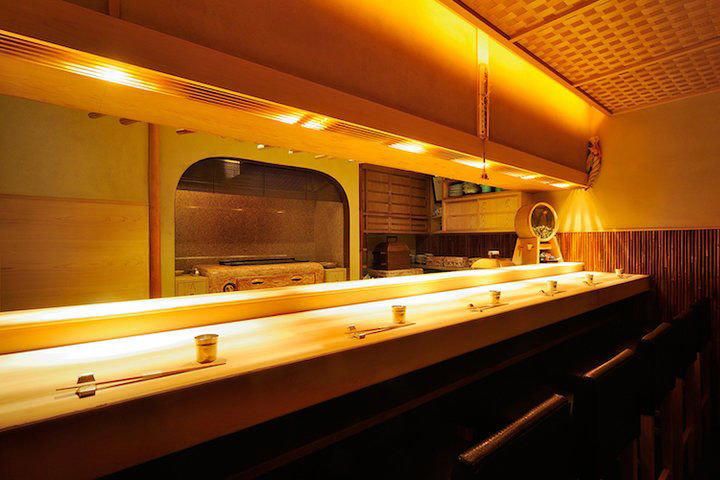
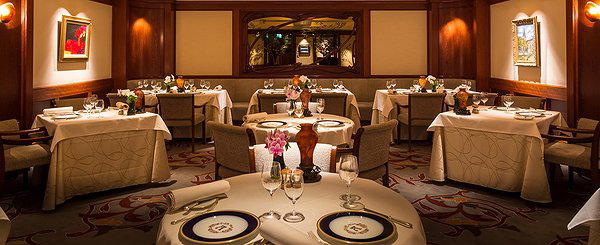

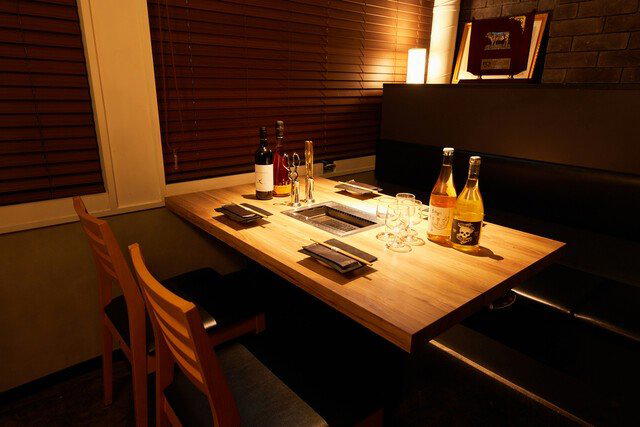






Details
- Quiet
- Elegant
- Special Occasion
- Private Dining
- Local Sourcing
- Set Menu
Current opening hours
- Monday
- 6–11 PM
- Tuesday
- 6–11 PM
- Wednesday
- Closed
- Thursday
- 6–11 PM
- Friday
- 6–11 PM
- Saturday
- 6–11 PM
- Sunday
- 6–11 PM
Hours can change for holidays and private events. Hours as of .
Quiet and elegant atmosphere.