A basement-level Japanese cuisine address in Kita-Aoyama, Minato City, Nihon Ryori Taian sits within a neighbourhood that has long supported serious, quietly ambitious dining. The venue operates at a remove from Tokyo's louder fine-dining circuit, positioning itself alongside the city's reservation-driven specialists rather than its tourist-facing establishments. For those tracking the full range of Japanese culinary expression across the capital, it warrants attention alongside peers such as RyuGin and Harutaka.
 Discover on Pearl
Pearl is the En Primeur Club membership app — saves, bookings, and concierge access live there. Same editors, same standards.
- Address
- Japan, 〒107-0061 Tokyo, Minato City, Kita-Aoyama, 3 Chome−13−1 関根ビル B1F
- Phone
- +81364505991
- Website
- tagetsu.tokyo
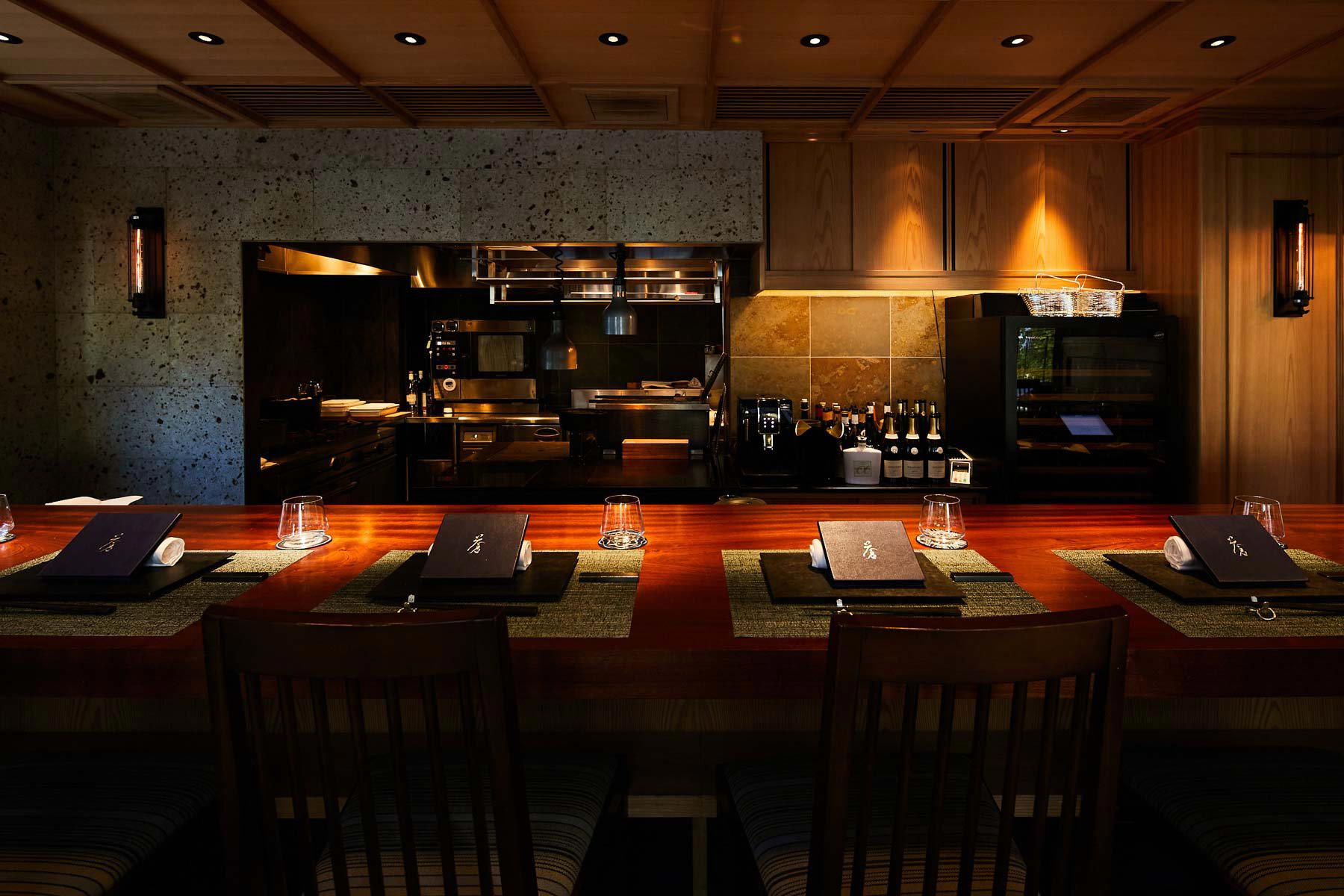
Below Street Level in Kita-Aoyama: The Setting
Basement dining rooms carry a particular weight in Tokyo. Descending below the street in a neighbourhood like Kita-Aoyama, where the blocks between Omotesando and Gaienmae have quietly accumulated some of the city's most considered restaurants, changes the acoustic and social atmosphere immediately. The noise of the city drops away. Lighting becomes the primary spatial tool. The interaction between diner and cook, or diner and room, sharpens by necessity. 日本料理 太月, located at B1F at the address in Kita-Aoyama's 3-chome, operates in exactly this register. The address itself signals something about the venue's orientation: this is not a ground-floor destination engineered for casual visibility, but a room that rewards those who have already decided to be there.
Kita-Aoyama sits between the retail density of Omotesando to the south and the gallery-and-office grain of Gaienmae to the north. The dining ecosystem here tends toward precision and deliberate restraint rather than spectacle. L'Effervescence has represented the neighbourhood's French-leaning fine dining for years, while Crony occupies a more experimental bracket in the same broader district. Nihon Ryori Taian belongs to the Japanese-cuisine half of that spectrum.
Nihon Ryori: What the Category Actually Means
The name reads plainly in Japanese: nihon ryori means Japanese cuisine, and taian is a term from the traditional Japanese almanac denoting an auspicious day, one considered favourable for important undertakings. Together, the naming positions the restaurant not as a specialist in a single format (sushi, tempura, yakitori) but as a practitioner of Japanese cuisine in a broader, more encompassing sense. This is the territory of washoku: the integrated approach to seasonal ingredients, broth-based cooking, fermented condiments, and the careful calibration of flavour that has defined Japan's culinary identity for centuries.
Washoku received UNESCO Intangible Cultural Heritage recognition in 2013, a designation that acknowledged not just techniques but the entire philosophy of balance, seasonality, and presentation that underpins serious Japanese cooking. Restaurants operating under the nihon ryori banner are, in effect, stewards of that framework. The expectation is a menu that shifts with the seasons, ingredients sourced with attention to provenance, and a presentation that reflects the aesthetic discipline, ma, negative space, asymmetry, that distinguishes Japanese plating from its Western counterparts.
In Tokyo's current fine-dining environment, this positioning places Nihon Ryori Taian in a cohort that includes kaiseki-oriented rooms and multi-course Japanese specialists. RyuGin, in Roppongi, is perhaps the most prominent address in that comparable set, with its Michelin three-star standing and Chef Seiji Yamamoto's modernist approach to kaiseki structure. Nihon Ryori Taian operates without the same public profile, which places it in the quieter, appointment-only tier of Japanese dining that Tokyo sustains in considerable depth.
Tokyo's Capacity for Quiet Specialists
One of the less-examined features of Tokyo's restaurant economy is its tolerance for venues that do not court attention. The city's dining culture, particularly at the serious end of Japanese cuisine, has long supported small rooms operating on word-of-mouth and repeat custom rather than press cycles. Harutaka in Ginza is a useful example from the sushi category: a counter that books weeks ahead on reputation alone, with minimal external signage. The pattern repeats across categories.
日本料理 太月's profile is sparse in ways that are themselves informative. In some contexts, this would signal a venue still establishing itself. In Tokyo, it often means the opposite: a room with a settled clientele that has no structural need for discovery-platform visibility. The address in an established fine-dining neighbourhood and the deliberate naming convention suggest a restaurant that knows its audience.
For comparison: Sézanne, Daniel Calvert's French address in the Four Seasons Marunouchi, sits at the opposite end of the transparency spectrum, Michelin-starred, widely reviewed, and bookable through standard channels. The Japanese cuisine specialists that occupy a more private position, including many of the city's leading kaiseki rooms, operate differently. They are not secretive for effect; they are simply not optimised for the international discovery market.
Japan's Broader Culinary Geography
Understanding Nihon Ryori Taian also means understanding where Tokyo sits within Japan's restaurant hierarchy. The capital concentrates prestige, but the tradition of serious Japanese cuisine is distributed across the country. Gion Sasaki in Kyoto represents the Kyoto kaiseki tradition with Michelin recognition; HAJIME in Osaka takes Japanese ingredients into an experimental European-influenced format with three Michelin stars; Goh in Fukuoka works within Kyushu's distinct ingredient culture. Regional specialists like akordu in Nara, Abon in Ashiya, affetto akita in Akita, Aji Arai in Oita, Ajidocoro in Yubari District, Akakichi in Imabari, and aki nagao in Sapporo each represent the depth that exists outside the capital. The cross-reference matters: a Tokyo nihon ryori specialist draws on the same culinary lineage as all of these, but operates within the capital's particular competitive density and international diner expectations.
For international reference points, the investment in a long-tasting Japanese dinner is structurally similar to the commitment required at Le Bernardin in New York City or Lazy Bear in San Francisco, a fixed format, a significant time allocation, and a room where the kitchen's decisions shape the evening rather than the diner's ordering choices. The cultural grammar differs entirely, but the diner posture required is comparable.
Know Before You Go
| Detail | Information |
|---|---|
| Address | Kankon Building B1F, 3-13-1 Kita-Aoyama, Minato City, Tokyo 107-0061 |
| Nearest Station | Omotesando (approx. 5 min walk) or Gaienmae (approx. 8 min walk) |
| Cuisine Category | Nihon Ryori (Japanese cuisine, broad format) |
| Price Range | not listed; contact directly for current pricing |
| Booking | No public online booking channel identified; direct contact recommended |
| Phone / Website | not listed at time of publication |
At a Glance
Comparable venues nearby, for context on price, style, and recognition.
| Venue | Cuisine | Price | Notes |
|---|---|---|---|
| 日本料理 太月This venue — the venue you are viewing | Shibuya, Japanese Traditional | , | |
| Tantantei | Hamadayama, Old-School Chuka Soba | $$ | |
| Kinozen | Kagurazaka, Traditional Japanese Sweets | $$ | |
| Nonokura | Kameari, Chuutakansuimen Ramen | $$ | |
| Takenoshita Soba | Shibuya, Traditional Japanese Soba | $$ | |
| USHIO | $$ | Minato, Okonomiyaki & Japanese comfort food |











At a Glance
- Sake Program
classic Japanese dining atmosphere.